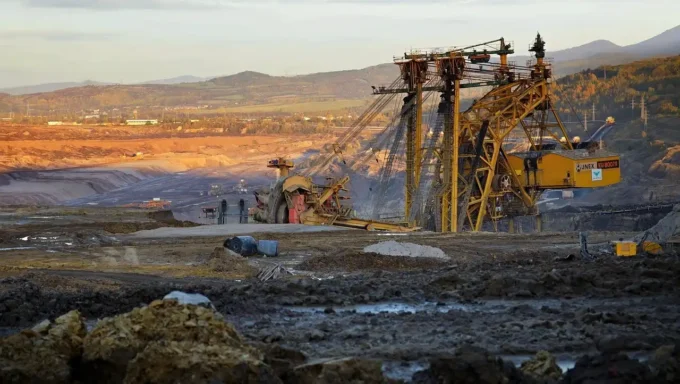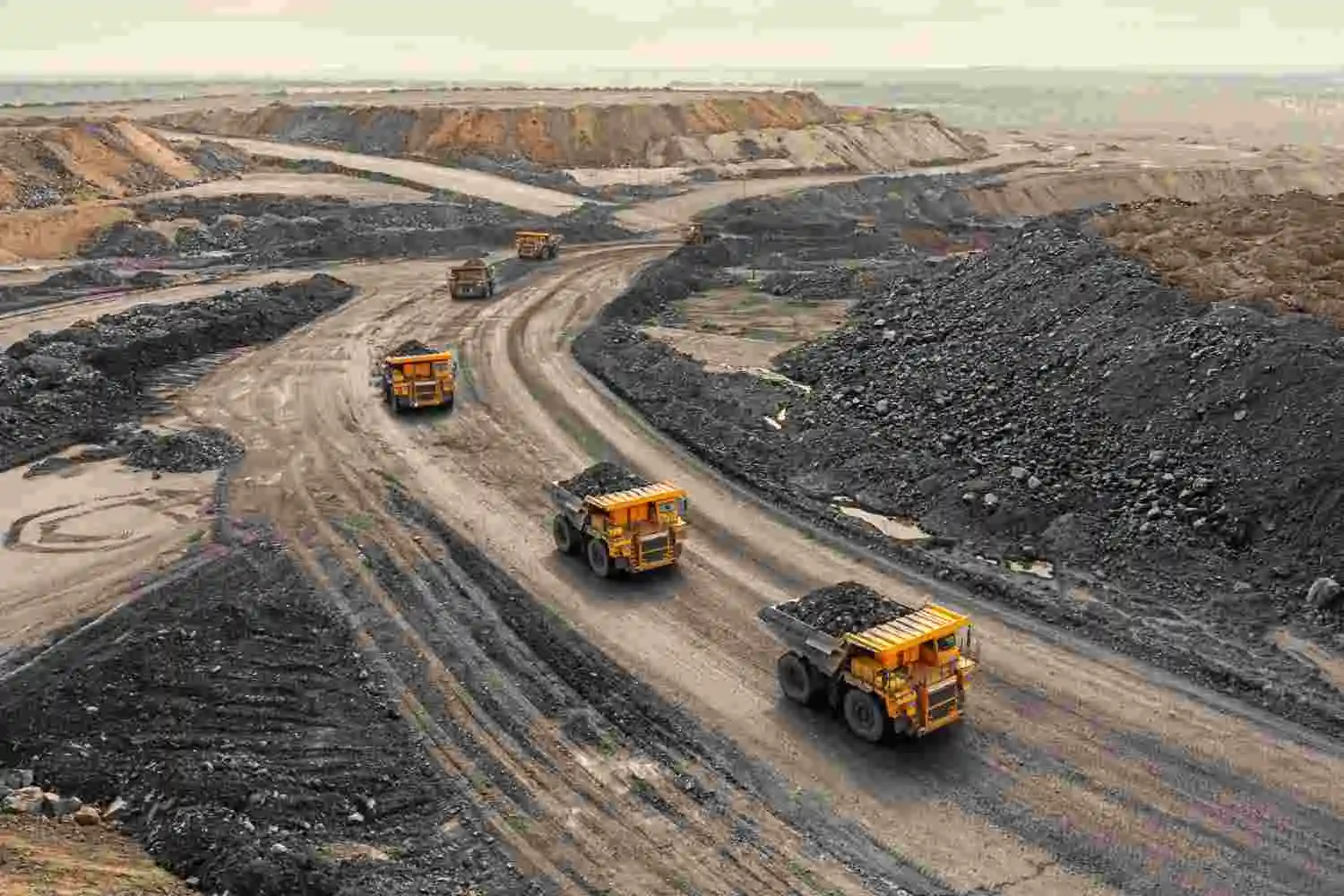
African mining markets are experiencing an unprecedented surge in greenfield exploration, as governments and private investors race to secure new mineral reserves and expand production pipelines at a time when global demand for critical minerals is accelerating faster than supply can keep up.
Countries including South Africa, Ghana, and Namibia are at the forefront of this expansion, issuing new prospecting rights, attracting billions in investment, and overhauling licensing frameworks to position themselves as essential links in global supply chains. The push comes as demand for critical minerals is projected to quadruple by 2040, driven by the global shift toward electric vehicles, renewable energy systems, and battery storage technologies. High commodity prices — particularly record-setting gold — are further accelerating the trend, making exploration a strategic priority for economic growth, job creation, and industrial diversification across the continent.
Africa is uniquely positioned to benefit. According to researchers at the University of the Witwatersrand, the continent holds 55 percent of the world’s cobalt deposits, nearly 48 percent of global manganese, over 21 percent of natural graphite, and significant shares of copper, nickel, lithium, and iron ore. South Africa alone possesses between 80 and 90 percent of the world’s platinum group metals and more than 70 percent of global chromium and manganese resources. Yet for decades, the vast majority of these minerals have been exported in raw or semi-processed form, with value-added manufacturing concentrated in more advanced economies overseas.
That pattern is now beginning to shift, as African governments look to not only extract but also process and manufacture — turning geological wealth into broader industrial development.
Markets move fast; don’t get left behind. We’ve paired the Serrari Group Market Index with a curated Marketplace and a comprehensive Financial Literacy Course to ensure you have the data—and the skills—to act on it.
South Africa: Mobilising R2 Trillion to Unlock Mineral Wealth
South Africa sits at the centre of the continent’s mining ambitions. The country is the world’s largest producer of platinum group metals, chrome, and manganese, and it is now working to revitalise its gold and iron ore sectors while expanding into higher-value downstream processing.
In 2025, the government issued 358 new prospecting rights and 32 mining rights, marking a significant acceleration in licensing activity. To stimulate early-stage exploration, it allocated R2 billion to a dedicated Junior Mining Exploration Fund, supported in part by a R600 million commitment from Anglo American. These moves form part of a broader and more ambitious plan: President Cyril Ramaphosa announced during the 2026 State of the Nation Address a target of mobilising R2 trillion in investment over five years for the critical minerals sector, with the aim of unlocking an estimated R40 trillion in untapped iron ore resources.
The strategy is undergirded by South Africa’s Critical Minerals and Metals Strategy, released in May 2025, which identifies 21 minerals grouped by criticality and outlines a roadmap for industrialisation, innovation, and regional integration. According to the strategy document, South Africa possesses ore reserves valued at more than US$2.5 trillion, with 16 commodities ranked in the global top 10.
However, the country faces significant structural headwinds. The Minerals Council of South Africa has flagged persistent bottlenecks in electricity, rail, and port infrastructure that constrain growth. Industrial electricity tariffs have surged more than 900 percent since 2008, while logistics challenges — including a sharp decline in Transnet’s rail volumes since 2017 — continue to hamper exports. To address these issues, the government has announced a 35.6 percent electricity tariff reduction for ferrochrome producers and secured billions in international financing for Transnet, including €300 million from France’s AFD and €350 million from the European Investment Bank.
Skills development is another critical frontier. The mining sector supports nearly 900,000 direct jobs, and the government aims to create opportunities for 1.8 million young people by 2030. A new EU-South Africa partnership worth €2 million is establishing a platform to strengthen skills training across the critical minerals and battery value chain, as part of a broader EU commitment of €15.5 billion to the sector.
Ghana: Africa’s Gold Leader Diversifies Into Critical Minerals
Ghana has cemented its position as Africa’s leading gold producer, recording record output of approximately 6 million ounces in 2025 — a 21 percent increase from the previous year. Gold exports now generate over US$10 billion annually and account for roughly 90 percent of the country’s total mineral export revenue. This performance has helped stabilise the cedi, which ranked as the second-best performing currency globally in 2025 according to multiple reports.
A major driver of this growth has been the formalisation of artisanal and small-scale mining through the establishment of the Ghana Gold Board (GoldBod) in March 2025. The board has become the sole legal aggregator and exporter of artisanal gold, helping to reduce smuggling and bring previously unaccounted production into the formal economy. Within its first four months of operation, GoldBod purchased and exported 41.5 tonnes of artisanal gold valued at approximately US$4 billion. Meanwhile, the Bank of Ghana’s gold reserves have surged 56 percent in the past year to reach 30.5 tonnes.
But Ghana’s ambitions extend well beyond gold. The country currently hosts more than 90 active exploration projects and has attracted over US$20 billion in mining and exploration investment in the past two years. Speaking in Cape Town earlier this year, Ghana’s Minister for Lands and Natural Resources, Emmanuel Armah-Kofi Buah, highlighted the country’s diverse resource base, which includes significant deposits of bauxite, manganese, iron ore, cobalt, and nickel. Ghana Bauxite Company Limited has set a target of producing six million tonnes of bauxite by the end of 2025, investing over US$120 million in infrastructure upgrades.
The Ewoyaa lithium project, developed by Atlantic Lithium in partnership with Piedmont Lithium, is expected to become Ghana’s first lithium-producing mine, although Parliament withdrew the mining lease in December 2025 following criticism over royalty concessions, and negotiations remain ongoing.
Ghana has climbed to fifth place in the 2026 ranking of Africa’s top mining destinations, advancing five places from its 2024 position, according to a joint analysis by The Africa Report and Jeune Afrique.
Namibia: Digital Licensing and Strategic Mineral Reforms
Namibia, long recognised as a stable and attractive jurisdiction for mining investment, is undergoing its own transformation. The country is a leading global producer of diamonds and uranium and holds substantial reserves of gold, copper, zinc, lithium, and rare earth elements.
Mining Commissioner Isabella Chirchir confirmed in Cape Town that Namibia is deploying digital licensing platforms to accelerate the processing of more than 800 new exploration licence applications, alongside more than 600 pending environmental approvals. The overhaul is designed to reduce backlogs, improve regulatory efficiency, and attract increased investment into exploration.
At the legislative level, Namibia is finalising a new Minerals Bill to replace its 2002 legislation. Chirchir has said the reform seeks to “attract capital to diversify production beyond diamonds and uranium toward strategic metals such as lithium and rare earths.” The new framework introduces stricter requirements for local content, beneficiation, and corporate social responsibility, while also proposing the establishment of a national mining company to hold equity in strategic projects.
The mining industry directly employed 20,843 people at the end of 2024, according to Deputy Minister of Industries, Mines and Energy, Gaudentia Krohne. With diversification underway into rare earths, copper, and lithium, Namibia is positioning itself to expand both its workforce and its share of global critical mineral production.
Context is everything. While you follow today’s updates, use the Serrari Market Index and Marketplace to spot emerging shifts. Need to sharpen your edge? Our Financial Literacy Course turns these insights into a professional-grade strategy.
The Continental Picture: Zambia, Guinea, and Beyond
The exploration wave is not confined to southern and western Africa. Across the continent, countries are ramping up activity to support long-term mining development and capture a larger share of mineral value chains.
Zambia, Africa’s second-largest copper producer after the Democratic Republic of Congo, has set an ambitious target of tripling copper output to 3 million metric tonnes annually by 2031. The country produced 890,346 tonnes last year — an 8 percent increase but still below the government’s one-million-tonne annual target. Mining Minister Paul Kabuswe has said the government is in discussions with multiple international partners, including the United States, as Washington seeks to diversify supply chains away from Chinese-controlled networks. Several major mining firms are already investing: Vedanta Resources has committed US$1.5 billion to expand production at its Konkola mine, Barrick Gold plans to double output at Lumwana through a US$2 billion investment, and China’s JCHX intends to inject US$300 million into its Lubambe mine. Mining generates over 70 percent of Zambia’s export earnings and nearly 30 percent of government revenue.
In West Africa, Guinea is advancing exploration around the US$20 billion Simandou iron ore project, the world’s largest untapped iron ore deposit, which is central to a broader economic diversification plan stretching to 2040. Guinea already dominates African bauxite production, accounting for 98.3 percent of the continent’s total output in 2024.
The DRC continues to play a leading role in critical mineral output, accounting for 97.2 percent of Africa’s cobalt production in 2024 and expanding copper production at a compound annual growth rate of 3.3 percent through 2030. Further afield, Madagascar has lifted a 16-year moratorium on new mining permits, and Tanzania aims to expand exploration to 50 percent of its territory by 2030. Across the continent, countries are modernising mining codes: Mali adopted a new code in 2023, Burkina Faso revised its framework in 2024, and Liberia is preparing to introduce its own new code within months.
A Geopolitical Battleground
Africa’s mineral wealth is increasingly the subject of great-power competition. The United States, European Union, and China are all accelerating efforts to secure supply agreements and strategic partnerships across the continent.
The U.S. signed a critical minerals agreement with the DRC in December 2025 focused on mineral extraction, value addition, and trade. President Trump has signed executive orders aimed at strengthening mineral supply chains through deeper partnerships with African nations. The EU has committed €15.5 billion to South Africa’s critical minerals sector alone. Meanwhile, China continues to dominate global processing, accounting for 87 percent of the processing of strategic and rare earth minerals, a concentration that is driving Western efforts to diversify sourcing.
The Africa Finance Corporation, which has directed $700 million in mining investments generating over 15,000 jobs — with up to 70 percent of that funding flowing to critical minerals — has emphasised the need for deeper partnerships between African investors and global financiers to unlock new funding at scale.
Risks and the Road Ahead
Despite the optimism, challenges remain formidable. The Africa Center for Strategic Studies has warned that previous eras of resource extraction from the continent have been “highly disruptive and destabilizing”, contributing to the so-called resource curse where mineral-rich nations often become more autocratic, corrupt, and conflict-prone. Infrastructure gaps — particularly in electricity, transportation, and water — persist across much of the continent. Regulatory uncertainty in some jurisdictions continues to deter long-term investment, and the risk of remaining locked into raw material exports without capturing downstream value remains ever-present.
The global mining market is expected to reach approximately US$3.35 trillion in 2026, and Africa’s share of that market is growing. Whether the continent can translate its geological endowment into broad-based prosperity — rather than repeating the extractive patterns of the past — will depend on the strength of its institutions, the quality of its regulatory reforms, and the willingness of both governments and investors to prioritise long-term value creation over short-term gains.
African Mining Week, scheduled for October 14–16, 2026 in Cape Town, will serve as a key platform for governments, investors, and industry leaders to assess progress and chart the next phase of the continent’s mineral-led transformation.
Don’t just read the news—navigate it. Track trends with the Serrari Group Market Index, discover your next move in the Serrari Marketplace, and master the “how” with our Financial Literacy Course.
Photo Source: Google
By: Montel Kamau
Serrari Financial Analyst
17th March, 2026