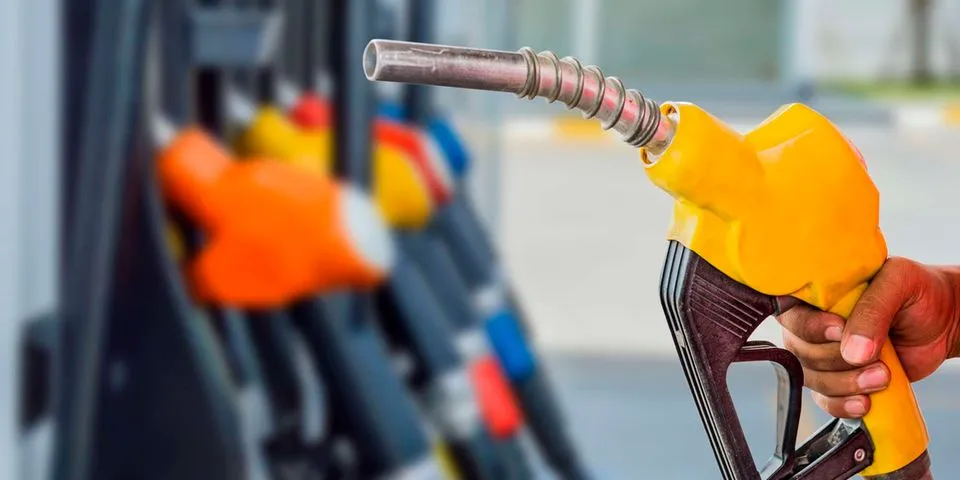
Ethiopia has launched an emergency fuel subsidy programme to shield households and businesses from the full force of a global oil shock — one triggered thousands of kilometres away by the near-total closure of the Strait of Hormuz following the US-Israel military campaign against Iran. The intervention, announced on March 11 by Finance Minister Ahmed Shide, is costing the government billions of birr in accelerated subsidy payments each week and has thrust the East African nation’s energy security vulnerabilities into sharp relief at a moment when its broader economy had been tracking its strongest growth trajectory in nearly a decade.
The scale of the price shock hitting global markets is striking. The global price of white diesel has surged from 53.68 birr ($0.34) to 238.13 birr ($1.52) per litre — a near four-fold increase driven by fears that the Strait of Hormuz, through which approximately 20 percent of global oil flows transit daily, will remain blocked for weeks or even months. Ethiopia, which produces no commercially significant crude oil of its own and spends more than $4.2 billion annually importing fuel — the bulk of it sourced from Gulf states — is among the most exposed economies in Africa to any sustained disruption of Gulf energy exports.
Markets move fast; don’t get left behind. We’ve paired the Serrari Group Market Index with a curated Marketplace and a comprehensive Financial Literacy Course to ensure you have the data—and the skills—to act on it.
The Numbers Behind the Subsidy
Minister Shide, in a statement on his X account on March 11, laid out the stark arithmetic of the government’s intervention. Diesel, which would cost consumers 238.13 birr per litre at unsubsidised market rates, is being sold domestically at 139.84 birr — a government subsidy of 98 birr ($0.63) per litre. Petrol, whose global price has risen to 205.74 birr ($1.31) per litre, is being held at 132.18 birr ($0.84) at the pump through a subsidy of 73.56 birr ($0.47) per litre.
Before the latest Middle East escalation began on February 28, gasoline in Ethiopia was sold at 129 birr per litre. Without subsidies, the price would have reached 157 birr — meaning the government was previously covering 28.77 birr per litre. The new subsidy rates dwarf that figure, with the gap between market and consumer prices now more than three times what it was just weeks ago. Minister Shide acknowledged the surge in global fuel prices was “frightening,” urging citizens and institutions to use fuel products wisely and to avoid overconsumption.
The fiscal pressure is being managed through the state-owned Ethiopian Petroleum Supply Enterprise (EPSE), the country’s sole fuel importer, which generated close to 460 billion birr in revenue last year and has drawn more than 40 billion birr from the federal fuel price stabilisation fund to offset mounting import costs. Without government intervention, consumers would pay well over 200 birr per litre at petrol stations — a level that would devastate transport, food supply chains, and small businesses across the country.
A Landlocked Nation at the Mercy of Chokepoints
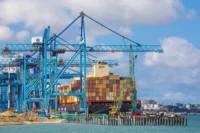
Ethiopia’s acute exposure to the Hormuz crisis stems from a structural vulnerability that predates the current conflict. As a landlocked country, 90 to 95 percent of its petroleum imports pass through a single chokepoint: the Port of Djibouti. Any disruption to Gulf supply chains — whether from the Strait of Hormuz, rising shipping insurance costs, or renewed Houthi activity in the Red Sea — translates directly and immediately into inflated import prices and potential shortages.
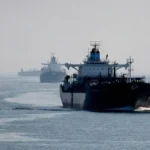
The Strait of Hormuz has been effectively closed to most commercial shipping since February 28, when the United States and Israel launched coordinated strikes against Iran. Iran responded by targeting US military bases in Gulf states, closing the waterway, and attacking vessels across the Arabian Gulf. The International Energy Agency has described the resulting supply disruption as the largest in the history of the global oil market. Brent crude has traded as high as $126 per barrel and closed above $100 for multiple consecutive sessions — the highest level since August 2022, when Russia’s full-scale invasion of Ukraine sent energy markets into crisis.
The disruption has raised shipping insurance costs dramatically, meaning that even alternative routing — such as diverting vessels around the Cape of Good Hope — carries significant additional freight costs that ultimately flow through to energy-importing nations like Ethiopia. Analysts at the Ethiopian Finance Ministry note that the country’s heavy reliance on Gulf-sourced petroleum makes each dollar increase in the Brent crude price an immediate fiscal burden, widening the trade deficit and pressuring already strained foreign exchange reserves.
On the Ground: Fuel Hoarding and Black Market Pressure
The crisis has not remained an abstraction in Addis Ababa’s policy corridors. Ethiopians are directly feeling the pinch of rising prices, particularly in rural areas and on the country’s inter-city transport networks. Tasew Tesfaye, a bus driver who operates routes between Ethiopian cities, told Xinhua that fuel station operators are hoarding petroleum products and selling them on black markets, driving up prices far above official rates. The problem is especially severe in the countryside, where petrol stations “deliberately hide fuel products or sell them at exaggerated prices,” causing cascading increases in transport costs and food prices for communities far from major urban centres.
Responding to the surge in illegal trading, Minister Shide announced that the government has launched a nationwide crackdown on the illegal fuel trade, in which petroleum products are being sold outside the official supply chain at prices well above the government-set ceiling. “Strengthened enforcement measures” are being taken against individuals and businesses involved in price gouging or distributing fuel through unauthorised channels. The minister emphasised that fuel purchased with scarce foreign currency must be distributed strictly through the legally established supply system.
Moges Mekonnen, an energy expert at Ethiopian Electric Power, told Xinhua that the soaring oil prices are already putting pressure on Ethiopia’s economy, disrupting supply chains and delaying the arrival of essential goods and food supplies. However, he noted that the consequences may not be as severe as in some peer economies, pointing to Ethiopia’s significant and growing adoption of electric vehicles — the government banned fossil fuel-powered vehicle imports in 2024 and cut tariffs on electric models, and large numbers of electric-powered vehicles are now operating in major cities.
Context is everything. While you follow today’s updates, use the Serrari Market Index and Marketplace to spot emerging shifts. Need to sharpen your edge? Our Financial Literacy Course turns these insights into a professional-grade strategy.
How Long Could the Crisis Last?
The big unknown hovering over Ethiopia’s fiscal calculations is the duration of the Hormuz closure. Alpine Macro, an Oxford Economics company, has revised its conflict assessment significantly, now estimating the Strait shutdown could last approximately two months rather than the initially projected one to three weeks. Dan Alamariu, chief geopolitical strategist at Alpine Macro, said both sides face enormous political risks from a prolonged war, creating a “self-limiting dynamic” — but cautioned that asymmetric leverage on the Iranian side means the situation remains highly unpredictable.
US President Donald Trump had previously indicated that the operation in Iran could take approximately five weeks. The extended timeline — if it materialises — would place considerable additional strain on Ethiopia’s subsidy bill and foreign exchange reserves. The government has responded by making emergency fuel purchases and releasing supplies from strategic reserves in parallel with the expanded subsidy programme, aiming to prevent any physical shortage in the domestic market even as global prices continue to climb.
Ethiopian analysts have noted the historical resonance of the current crisis. The oil shock of 1973, arising from the OPEC embargo following the Yom Kippur War, triggered protests and civil unrest in Addis Ababa that contributed directly to the collapse of the imperial regime and the rise of the Derg military government. While the present crisis has not yet reached that magnitude, the historical precedent underscores why the government has moved decisively to absorb the price shock rather than allow it to pass through to consumers.
Abiy Ahmed’s Abu Dhabi Visit: Diplomacy Under Pressure
The economic fallout formed an essential backdrop to Prime Minister Abiy Ahmed’s working visit to Abu Dhabi on March 12, where he met with UAE President Sheikh Mohamed bin Zayed Al Nahyan and Vice President Sheikh Mohammed bin Rashid Al Maktoum. The UAE is Ethiopia’s primary fuel supplier, making the bilateral relationship a matter of direct economic importance, not merely diplomatic courtesy.
According to Gulf Today, the discussions covered bilateral cooperation in economic, trade, and development sectors, as well as the escalating regional situation. Abiy Ahmed condemned the Iranian attacks targeting the UAE and other Gulf states, describing them as a “violation of state sovereignty and international law,” and expressed Ethiopia’s solidarity with the UAE. The UAE president in turn conveyed condolences over flooding and landslides that recently struck southern Ethiopia.
The visit was preceded by a phone call between Abiy and US Secretary of State Marco Rubio, in which the two leaders discussed regional stability, counterterrorism cooperation, and long-term security in the Horn of Africa. Analysts at the Horn Review observed that Ethiopia’s approach to the conflict has been characterised by measured restraint — avoiding declaratory positioning while reinforcing practical ties with the Gulf partners on whom its energy security most directly depends.
A Reform Story Put Under Stress
The timing of the oil shock is particularly challenging for Ethiopia given the trajectory its economy had been on just weeks earlier. Prime Minister Abiy Ahmed announced in February that Ethiopia’s GDP was projected to expand by 10.2 percent in the current fiscal year ending July 2026 — the first time growth has been forecast above 10 percent since 2016-17, and a significant upgrade from the 8.9 percent projection issued just months prior. The revision reflected stronger-than-expected performance in the first half of the fiscal year, driven by record export earnings and improved foreign exchange access.
That reform momentum was built on several years of difficult policy work. Since taking office in 2018, Abiy has pursued economic liberalisation after decades of state control, liberalising the foreign exchange regime, opening key sectors to foreign investors, and pursuing a sweeping restructuring of Ethiopia’s external debt under the G20 Common Framework. The reforms have been supported by a 48-month IMF Extended Credit Facility worth approximately $3.4 billion, under which the IMF disbursed $261 million in January 2026 following its fourth programme review — citing strong growth, higher exports, improved revenue collection, and rising foreign exchange reserves.
However, the same foreign exchange constraints that the IMF programme has worked to ease are now being tested by the oil shock. Ethiopia’s foreign exchange reserves, which had been recovering under the reform programme, are under renewed pressure as the cost of fuel imports spikes. As of mid-2024, reserves covered less than one month of imports — a structural fragility that makes any prolonged surge in the import bill an acute concern for policymakers.
The Electric Vehicle Hedge and the Long Game
Despite the immediate pressure, there is a school of thought among Ethiopian policymakers and energy experts that the crisis — however painful — may accelerate a structural transition that reduces the country’s long-term fuel import dependency. Mekonnen told Xinhua that the situation is “a wake-up call for African governments to focus on the adoption of electric vehicles and look for alternative energy sources, mainly renewables.”
Ethiopia is arguably better positioned than most African economies to make that pivot. The country generates approximately 95 percent of its electricity from renewable sources, primarily hydro, anchored by the Grand Ethiopian Renaissance Dam on the Blue Nile — one of the largest hydroelectric projects in Africa. Several industries have already shifted to electric power for operations, and the government’s 2024 ban on fossil fuel-powered vehicle imports was explicitly designed to accelerate a shift toward electric mobility across the transport sector.
The long-term logic is sound: a country with abundant renewable electricity and a government committed to electrifying transport has a credible pathway to reducing the structural import bill that is currently making it so vulnerable to Hormuz-linked shocks. In the short term, however, that transition provides no relief. The immediate task remains managing the fiscal cost of subsidies, securing sufficient fuel supply, and preventing the kind of inflationary spiral in food and transport prices that could undermine the hard-won gains of Ethiopia’s reform agenda.
Outlook: Resilience Tested
Ethiopia enters this crisis with more fiscal and institutional resilience than at many previous stress points in its history. The IMF programme remains on track, the growth outlook is among the strongest on the continent, and the government’s response — while expensive — has been swift and targeted. The emergency fuel purchases, strategic reserve releases, subsidy expansion, and crackdown on illegal trading reflect a coherent, multi-pronged approach to managing a shock that was entirely externally generated.
The key variable remains the duration of the Hormuz closure. If Alpine Macro’s revised two-month estimate proves accurate, the subsidy bill will be large but manageable. If the conflict extends further — or if Iranian strikes on UAE and other Gulf infrastructure intensify — the strain on Ethiopia’s foreign exchange reserves and fiscal position could become significantly more acute. The Reporter Ethiopia’s analysis cautions that while the current crisis is not yet on the same level as the 1973 oil embargo that contributed to imperial Ethiopia’s collapse, the potential for escalation means the government cannot afford complacency.
What is not in doubt is that Ethiopia’s experience illustrates a broader truth about the Hormuz crisis: its consequences extend far beyond the combatants, the tankers, and the oil markets where prices are reported. For landlocked, import-dependent nations like Ethiopia — whose citizens depend on affordable fuel to transport food, run businesses, and heat homes — a maritime chokepoint thousands of kilometres away can determine whether the lights stay on and whether the bread on the table is affordable.
Don’t just read the news—navigate it. Track trends with the Serrari Group Market Index, discover your next move in the Serrari Marketplace, and master the “how” with our Financial Literacy Course.
photo source: Google
By: Montel Kamau
Serrari Financial Analyst
16th March, 2026