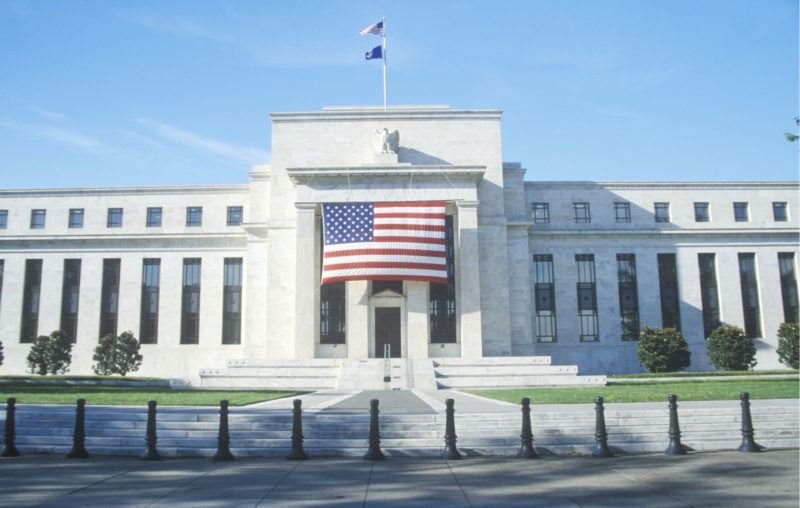
The Federal Reserve, in an unexpected turn of events, has announced significant losses exceeding $100 billion, as disclosed in central bank data released on Thursday. This alarming financial situation has raised concerns about the possibility of further losses in the foreseeable future.
The central bank of the United States finds itself in an unsettling financial predicament, with its interest costs surpassing the income it generates from bond holdings and financial sector services. While the road ahead remains uncertain, experts believe that these losses, which began approximately a year ago, could potentially double before showing signs of improvement.
To account for these losses, the Fed employs a deferred asset mechanism, an accounting practice that calculates its obligations for future coverage before it can return its profits to the Treasury. Although it is uncommon for the Fed to find itself in a deficit position, it has consistently emphasized that this situation does not hinder its ability to conduct monetary policy and fulfill its objectives.
The Fed’s financial challenges are a direct result of its aggressive campaign to increase interest rates. This campaign has raised the benchmark overnight interest rate from near-zero levels in March 2022 to its current range of 5.25% to 5.50%. While inflationary pressures appear to be subsiding, there is a prevailing belief that the Fed may have concluded its rate hikes or is nearing their completion.
However, this does not imply an immediate end to mounting losses. Current short-term interest rates will continue to contribute to a negative net income for the foreseeable future. Ultimately, these losses will taper off primarily due to the Fed’s ongoing effort to reduce its balance sheet, which complements its interest rate adjustments.
During the pandemic and its immediate aftermath, the Fed made significant bond purchases. In just the past year, it has shed approximately $1 trillion in Treasury and mortgage bonds. Fed officials have indicated further reduction efforts, implying that the central bank will spend less on interest as liquidity is withdrawn from the financial system. Analysts anticipate this process to conclude in the second or third quarter of 2024.
Liquidity, in the context of the Fed, primarily resides in bank reserves and inflows to the central bank’s reverse repo facility. The Fed compensates various institutions, including banks and money managers, to deposit funds in its accounts. As liquidity diminishes, the central bank’s expenses decrease, even if its policy rates remain unchanged.
Bank reserves have fallen by approximately $1 trillion since their peak at the end of 2021, now standing at $3.3 trillion as of Wednesday. Simultaneously, the daily outstanding levels of the reverse repo facility have dropped from over $2 trillion per day between June 2022 and the end of June this year to $1.5 trillion on Thursday. A recent research note from money market trading firm Curvature Securities suggests that all funds may exit the reverse repo facility by the end of next year, essentially returning it to its position just over two years ago.
Photo source: aier.org
By: Montel Kamau
Serrari Financial Analyst
18th September, 2023