South Africa’s central bank has slammed the brakes on what had been a cautious but steady cycle of interest rate cuts, holding its benchmark repo rate at 6.75 percent on Thursday amid growing fears that the war in the Middle East will drive a sharp and sustained rise in inflation.
The decision by the South African Reserve Bank’s Monetary Policy Committee was unanimous, with all five members voting to keep rates unchanged. It matched the expectations of all 15 economists surveyed by Bloomberg and the consensus forecast from a separate Reuters poll. The prime lending rate, which commercial banks use as a reference for consumer and business loans, remains at 10.25 percent.
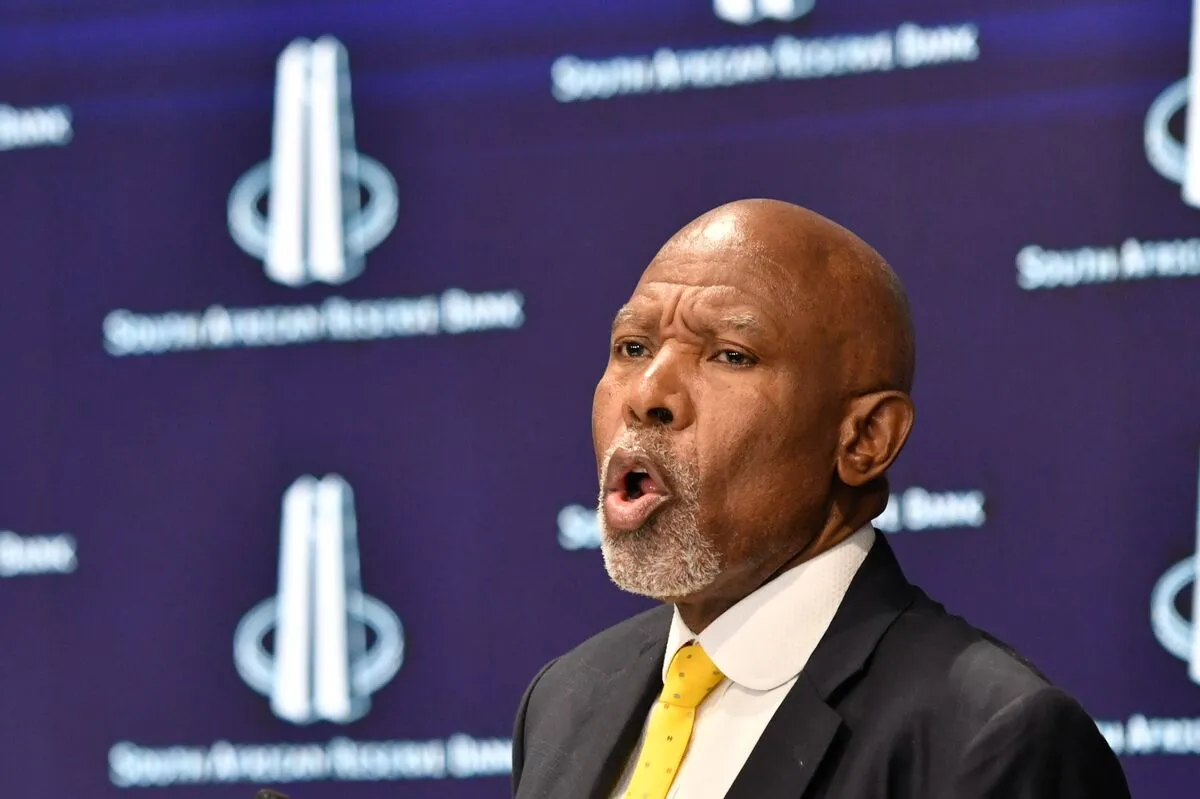
Governor Lesetja Kganyago made clear that the pause was a direct response to the oil shock unleashed by the U.S.-Israel war against Iran, which broke out in late February and has thrown global energy markets into turmoil. He described the conflict as a textbook supply shock — one that raises prices while simultaneously weakening demand — and cautioned that the central bank must remain alert to the risk that what starts as a temporary price spike becomes embedded across the broader economy.
“We warned of elevated risks, and we have been proceeding cautiously in our rate setting,” Kganyago said during a media briefing in Pretoria. “Now a crisis has hit, this prudent approach is proving appropriate.”
Markets move fast; don’t get left behind. We’ve paired the Serrari Group Market Index with a curated Marketplace and a comprehensive Wealth Builder Course to ensure you have the data—and the skills—to act on it.
A Sharp U-Turn From the Easing Path
The hold represents a significant shift in the monetary policy outlook. The SARB had been on a gradual easing trajectory since late 2024, cutting the repo rate by a cumulative 150 basis points from its 2024 peak of 8.25 percent to 6.75 percent. Inflation had been declining steadily, reaching the central bank’s 3 percent target in February for the first time under the newly adopted framework.
Before the war, the SARB’s own quarterly projection model had signalled further gradual cuts through 2026 and into 2027. Economists had broadly expected two to three more reductions this year, with at least one in the first half.
Those expectations have now been shelved. Kganyago confirmed on Thursday that the projection model now shows rates unchanged for a longer period, effectively postponing cuts that had been anticipated as recently as January. Market-implied forward rate agreements, which had previously pointed to easing, briefly signalled a small chance of a hike at this meeting — an indication of how dramatically sentiment has shifted.
Analysts at Investec and FNB now project that any further easing may be pushed into the second half of 2026 or later, with the outcome highly dependent on developments in the Middle East and how long the conflict persists.
Inflation Set to Accelerate
The central bank’s updated forecasts paint a sobering picture. Headline inflation is projected to accelerate to around 4 percent in the near term, driven primarily by fuel costs. The SARB now expects fuel inflation to exceed 18 percent during the second quarter, a dramatic revision from the benign outlook that prevailed just weeks ago.
Kganyago highlighted several imminent shocks. Energy costs are expected to rise as early as next week, with petrol price forecasts suggesting a record-breaking increase of more than R5 per litre — the steepest hike in recent years. The latest data from the Central Energy Fund shows that diesel prices could surge by even more, with projections pointing to increases of between R9.37 and R9.81 per litre for the cleaner 50ppm grade. If those figures hold, the diesel price would cross the R30 mark for the first time in the country’s history.
Compounding the oil shock, Finance Minister Enoch Godongwana announced during his February budget speech that fuel taxes would rise by 21 cents per litre from April 1, through increases to the General Fuel Levy, Carbon Levy and Road Accident Fund Levy. The Democratic Alliance has pushed for a temporary 50 percent cut to the fuel levy to offset the international price shock, though the government has indicated there is limited fiscal space to provide meaningful relief.
Two War Scenarios, Both Unfavourable
In an unusually detailed disclosure, the Reserve Bank laid out two adverse scenarios for the trajectory of the Iran conflict and its implications for monetary policy.
In the first scenario, where the conflict lasts another two months or more, inflation remains above the 3 percent target and requires higher interest rates to contain price pressures. In the second and more severe scenario, where the war extends beyond a year, inflation breaches 5 percent and does not return to target until 2028. Both scenarios would necessitate tighter monetary policy than the baseline.
Earlier this month, Kganyago told Reuters that the SARB’s previous adverse scenario was already outdated. That scenario, presented at the January meeting, had assumed an average oil price of $75 per barrel and a rand exchange rate of 18.50 to the dollar. With Brent crude having since surged above $100 per barrel and the rand trading weaker than R17 to the dollar, the governor acknowledged those assumptions had been overtaken by events.
Kganyago noted that a 10 percent move in the exchange rate would have a much stronger impact on inflation than a similar jump in oil prices — a critical observation given that the rand has weakened by more than 6 percent against the dollar since the war began.
Context is everything. While you follow today’s updates, use the Serrari Group Market Index and Marketplace to spot emerging shifts. Need to sharpen your edge? Our Wealth Builder Course turns these insights into a professional-grade strategy.
The Rand Under Pressure
South Africa’s currency has been one of the more visible casualties of the geopolitical upheaval. The rand weakened to around 17.1 per dollar in late March, retreating to levels not seen since November 2025, as persistent uncertainty about the duration of the Iran conflict weighed on risk appetite.
On the first trading day after the war erupted, the rand fell 1.4 percent as investors fled to safer assets. Brief relief came when U.S. President Donald Trump appeared to step back from plans to target Iran’s energy infrastructure, but sentiment turned cautious again after Iran denied holding negotiations with Washington, reviving fears of a prolonged energy shock.
Annabel Bishop, chief economist at Investec, warned that the rand would remain vulnerable to shifts in global sentiment, with the effective rand having weakened by close to 5 percent since the start of the conflict. She added that hefty fuel price increases in the second quarter would have a depressing effect on retail, wholesale and vehicle sales if the war persists.
Diesel Shortages Already Being Felt
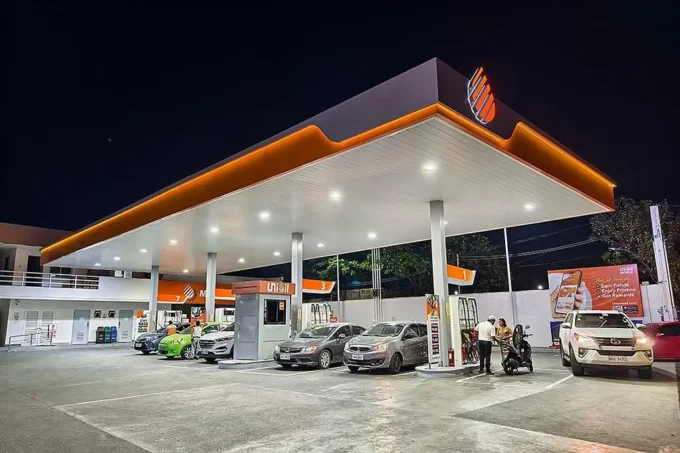
While the Reserve Bank’s concerns are forward-looking, the fuel crisis is already manifesting on the ground. Diesel shortages have been reported at petrol stations across several provinces, including Gauteng, the Western Cape, the Free State, North West and the Northern Cape. Stations in key agricultural and transport corridors such as Paarl, Saldanha, Beaufort West and Swellendam have run out of 50ppm diesel.
The Department of Mineral and Petroleum Resources has insisted that national supply remains stable and described the shortages as isolated logistical issues. Minister Gwede Mantashe told the National Assembly that South Africa’s crude oil is primarily sourced from Africa, not the Middle East, and that shipments continue to arrive through the Strait of Hormuz without interruption.
However, reports from the ground tell a different story. Agri Western Cape CEO Jannie Strydom said that 75 percent of feedback from members indicated they did not have access to fuel. Western Cape Premier Alan Winde said some farmers were receiving only about 20 percent of their usual monthly diesel allocations, with the effects most acute in the Garden Route and West Coast districts.
Wholesale fuel suppliers have described the situation in starker terms. Lily Piroddi-Bessick, a wholesale supplier, told the Sunday Independent that there was effectively no supply of diesel being released to wholesalers through normal distribution channels, leaving them unable to meet contractual obligations to government entities and private sector clients.
Mantashe warned that some suppliers appeared to be withholding diesel in anticipation of higher prices, calling the practice illegal and threatening legal action.
Economic Ripple Effects
South Africa moves more than 80 percent of its freight by road, making diesel the lifeblood of the logistics industry. A price increase of more than R8 per litre means transport companies face a stark choice: absorb the cost or pass it on through the supply chain, ultimately hitting consumers through higher food and goods prices.
The agricultural sector is particularly exposed. Farmers are heading into the fruit picking and winter grain planting season at a time when a single combine harvester consumes between 30 and 60 litres of diesel per hour. Major cooperatives have reportedly imposed emergency purchase limits capping farmers at 80 litres per day — barely enough for 90 minutes of harvester operation.
The SARB kept its economic growth forecasts for 2026 and 2027 unchanged at 1.4 percent and 1.9 percent respectively, though Kganyago acknowledged that downside risks to the outlook had increased. Data revisions that lowered the 2025 growth figure made 2026 look slightly stronger by comparison, partially offsetting the impact of the current shock.
Labour unions and the Automobile Association have called on the government to consider emergency measures, including suspending the fuel levy and releasing strategic reserves. South Africa holds an estimated six to eight weeks of fuel reserves, though how effectively those can be deployed remains unclear given the distribution bottlenecks already evident.
The government has also raised the prospect of encouraging work-from-home arrangements as a practical way to reduce fuel consumption, mirroring a similar suggestion from the International Energy Agency at the global level.
What Comes Next
The next MPC meeting is scheduled for 28 May, by which time updated growth and inflation projections should offer greater clarity on the economic trajectory. Kganyago emphasised that only a few weeks had passed since the conflict began and that the coming months would be crucial for assessing longer-term inflation consequences.
For ordinary South Africans, the practical implications are immediate and painful. Bond repayments will not come down. Petrol and diesel prices will spike from next Wednesday. Grocery bills will follow as transport costs filter through. And the prospect of interest rate relief, which had seemed within reach at the start of the year, has receded into an uncertain future shaped by events thousands of kilometres away.
As Kganyago put it: “Before the war, conditions were favourable and it looked like inflation would settle around the 3 percent target fast. Now there has been a negative shock, and it could take a bit longer.”
For a country that has spent years battling the economic scars of load shedding, sluggish growth and constrained consumer spending, the timing could hardly be worse. The Reserve Bank has chosen caution over quick relief — and for everyday South Africans, that means holding steady a little longer, even as the cost of living tests their resilience.
Your financial future isn’t something you wait for—it’s something you build.
The real question is: when do you begin?
Move beyond simply staying informed.
Navigate the markets with clarity—track trends through the Serrari Group Market Index, uncover opportunities in the Serrari Marketplace, and build practical knowledge with our Curated Wealth Builder Course.
Stay connected to what truly matters.
Get daily insights on macro trends and financial movements across Kenya, Africa, and global markets—delivered through the Serrari Newsletter.
Growth opens doors.
Advance your career through professional programs including ACCA, HESI A2, ATI TEAS 7 , HESI EXIT , NCLEX – RN and NCLEX – PN, Financial Literacy!🌟—designed to move you forward with confidence.
See where money is flowing—clearly and in real time.
Track Money Market Funds, Treasury Bills, Treasury Bonds, Green Bonds, and Fixed Deposits, alongside global and African indexes, key economic indicators, and the evolving Crypto and stablecoin landscape—all within Serrari’s Market Index.