The International Finance Corporation (IFC) has announced a $45 million investment in IPT PowerTech, a Beirut-headquartered telecom energy service company, to deploy clean and reliable power systems for mobile networks in Ethiopia, Liberia, and Sierra Leone. The deal is designed to tackle one of the most persistent barriers to digital connectivity across Africa: the lack of stable, affordable electricity to keep telecom towers operational, particularly in remote and underserved areas.
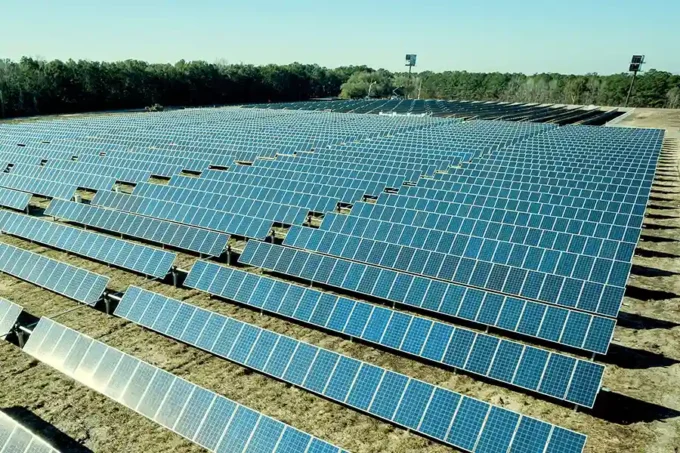
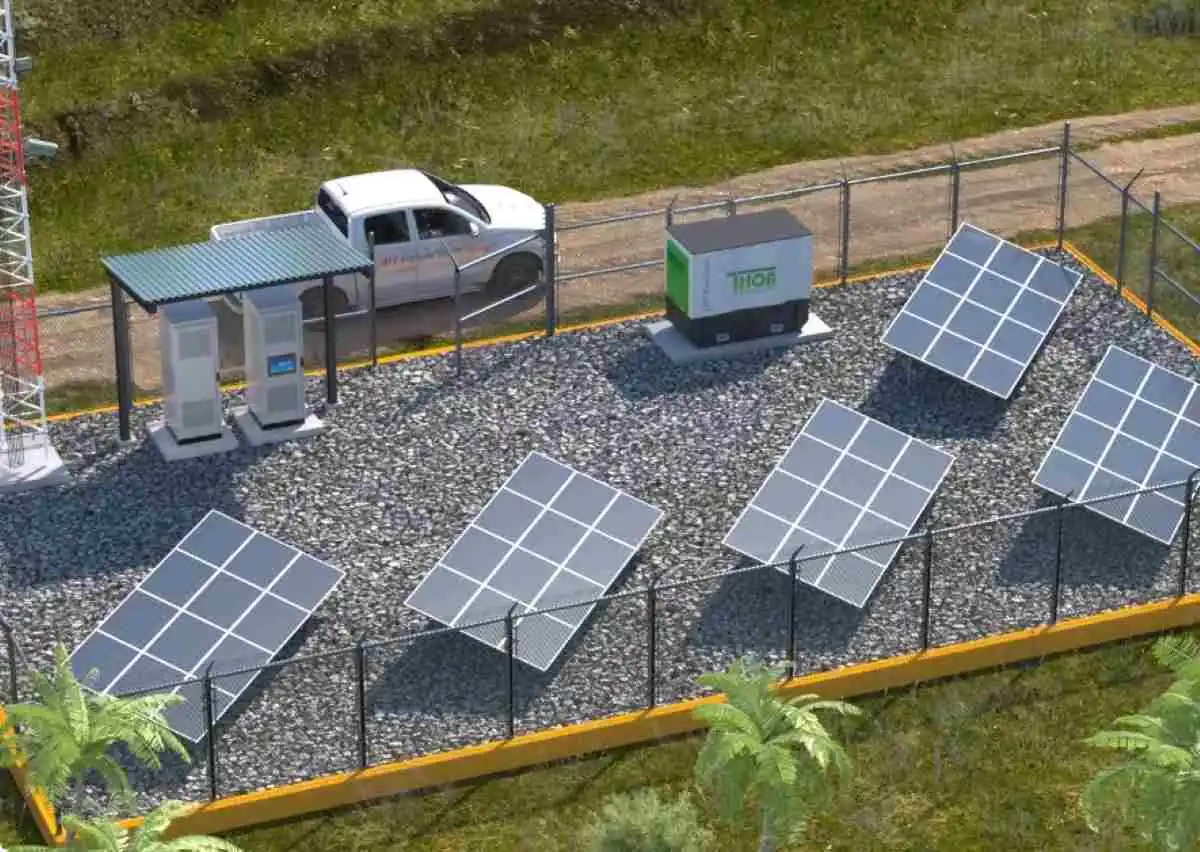
The investment will finance the modernisation, operation, and maintenance of 2,235 telecom sites across the three countries, more than 90 percent of which are located in off-grid or weak-grid environments. By installing solar panels and battery storage systems at these sites, the project aims to dramatically reduce the towers’ reliance on diesel generators — the dominant but costly and polluting power source for telecom infrastructure across much of the continent.
Markets move fast; don’t get left behind. We’ve paired the Serrari Group Market Index with a curated Marketplace and a comprehensive Wealth Builder Course to ensure you have the data—and the skills—to act on it.
A Blended Finance Structure
IFC is structuring the investment as a $45 million corporate financing package, composed of a $27 million A-Loan and $18 million in blended finance. The blended finance component draws on two concessional funding mechanisms: the Canada-IFC Blended Climate Finance Program, a CA$250 million partnership between the Government of Canada and IFC launched in 2018 to mobilise private capital for global climate action, and the IDA20 Private Sector Window Blended Finance Facility, a World Bank instrument designed to catalyse private sector investment in the poorest and most fragile countries.
The use of blended finance is significant here. Ethiopia, Liberia, and Sierra Leone all present elevated risk profiles for private investors due to limited grid infrastructure, political fragility, and thin capital markets. By layering concessional capital beneath commercial lending, IFC is effectively de-risking the investment in a way that would not be achievable through standard commercial financing alone. This structure has proven effective in prior IFC engagements in the African clean energy space, including its $80 million financing of the FEI Fund to support small-scale renewable energy generation across approximately 15 African countries.
The transaction is also notable for representing IFC’s first direct infrastructure engagement in Liberia in a decade and in Sierra Leone in six years, signalling the corporation’s willingness to re-enter challenging frontier markets when the right private sector partner and deal structure are in place.
The Cost of Diesel Dependence
The economic case for the investment is underpinned by the staggering cost burden that diesel power imposes on African telecom operators. According to GSMA research, energy costs can account for as much as 40 percent of network operating expenditure for a typical tower site in Africa. Off-grid sites consume roughly 13,000 litres of diesel annually, generating approximately 35 metric tonnes of CO₂ emissions per site. Frequent refuelling visits to remote locations — sometimes required every 10 days — add further logistical costs and operational complexity.
The problem has intensified in recent years. A July 2025 analysis by CrossBoundary Energy found that more than half a million telecom towers across Africa remain dependent on diesel, with fuel accounting for 30 to 60 percent of a tower’s operational costs in some remote areas. Geopolitical tensions and supply chain disruptions have caused diesel costs to surge by 40 to 60 percent in many African markets over the past two years, making the transition to renewable alternatives increasingly urgent.
Against this backdrop, optimising the energy mix at the 2,235 IPT PowerTech sites is estimated to reduce power costs for operators by up to 30 percent in Liberia, 26 percent in Sierra Leone, and 52 percent in Ethiopia. The transition is also expected to cut emissions by more than 10,624 tonnes of CO₂ equivalent annually — a meaningful contribution in countries where national carbon budgets are small but growing.
GSMA has noted that 88 percent of off-grid and bad-grid towers in low- and middle-income countries are still powered by non-renewable sources, highlighting the vast remaining opportunity for green energy conversion in the telecom sector. The industry body has recommended that African operators expand renewable energy usage to mitigate energy-related operational risks, a recommendation that the IFC-IPT PowerTech partnership directly addresses.
IPT PowerTech: From Beirut to Africa’s Towers
IPT PowerTech Group is a Lebanon-based energy systems integrator founded in 1993 that has evolved from a provider of specialty batteries and power systems into one of the leading telecom energy service companies operating across the Middle East and Africa. The company now operates in over 50 countries, serving more than 60 clients with a workforce of over 4,300 professionals.
Its T-ESCO (Telecom Energy Service Company) model is central to its value proposition. Under this model, IPT PowerTech takes full responsibility for powering telecom sites — from the design and installation of hybrid solar-battery-diesel systems to ongoing operation and maintenance — allowing mobile network operators and tower companies to outsource energy management entirely. The company offers several commercial structures including guaranteed savings models, consumption-based pricing, and full-OPEX arrangements, giving operators flexibility in how they engage.
The company has attracted significant development finance institution backing. In 2019, the European Investment Bank signed a $60 million financing agreement with IPT PowerTech to improve the energy efficiency of telecom infrastructure in Lebanon and Guinea — the EIB’s first-ever financing for a T-ESCO in Africa. That deal was part of a broader $115 million package that included co-financing from European development finance institutions DEG, Proparco, and Finnfund. More recently, the EIB has been assessing additional financing for IPT PowerTech’s energy efficiency projects across Sub-Saharan Africa, underscoring the continued appetite from European development lenders for the company’s model.
Nabil Haddad, CEO of IPT PowerTech Group, described the IFC partnership as reflecting a shared vision for a greener telecom industry. He said the agreement empowers the company to scale its innovative energy platforms and deliver measurable environmental and operational impact across its global footprint.
Context is everything. While you follow today’s updates, use the Serrari Group Market Index and Marketplace to spot emerging shifts. Need to sharpen your edge? Our Wealth Builder Course turns these insights into a professional-grade strategy.
Connectivity as a Development Priority
Beyond the energy transition dimension, the investment carries significant implications for digital connectivity and economic inclusion in three countries where mobile access remains constrained by infrastructure gaps.
By improving the quality and stability of power to telecom towers, the initiative will strengthen mobile coverage and ensure that households, schools, health centres, and small businesses can depend on more consistent digital services. In countries like Liberia and Sierra Leone, where large portions of the population remain outside the reach of reliable mobile networks, even incremental improvements in tower uptime can have outsized effects on economic participation.
Nathalie Kouassi-Akon, IFC’s Division Director for West Africa Gulf of Guinea, described the investment as supporting a scalable, private sector-led solution that enables mobile operators to extend coverage and reach underserved communities more sustainably. She noted that the investment demonstrates how innovative infrastructure technology solutions can simultaneously strengthen connectivity, reduce emissions, and unlock economic opportunity at scale.
The partnership will also promote gender inclusion by expanding opportunities for women in technical, operational, and leadership roles within the sector — an area where the Canada-IFC Blended Climate Finance Program has placed particular emphasis, recognising that climate change disproportionately affects women and girls. Beyond the financing itself, IFC will work with IPT PowerTech to strengthen the company’s environmental and social practices and reinforce global standards across its operations.
Alignment With Mission 300
The deal is explicitly positioned as advancing the Mission 300 initiative, a landmark partnership between the World Bank Group and the African Development Bank that aims to connect 300 million people in Sub-Saharan Africa to electricity by 2030. Launched at the 2024 Spring Meetings and officially kicked off at the Africa Energy Summit in Dar es Salaam in January 2025, Mission 300 has been endorsed by 48 African countries and the African Union.
With nearly 600 million people in Sub-Saharan Africa still lacking access to electricity, the initiative represents one of the most ambitious energy access programmes ever attempted. The World Bank estimates that around $30 billion in public funding and at least $10 billion in private investment will be needed to meet the goal, with the private sector central to filling financing gaps.
The IFC-IPT PowerTech investment also aligns with the World Bank Group’s broader Digital Economy for Africa strategy and the institution’s Country Partnership Framework priorities in Ethiopia, Liberia, and Sierra Leone. IFC has previously made significant telecom infrastructure investments in Ethiopia, including backing the entry of Safaricom’s consortium into the Ethiopian market — a deal designed to bring affordable, reliable internet and mobile services to millions more Ethiopians.
The Broader Trend: ESCOs and Africa’s Telecom Energy Transition
The IPT PowerTech deal is part of a broader wave of investment flowing into telecom energy service companies operating in Africa. The T-ESCO model has gained significant traction over the past decade as mobile operators and tower companies have increasingly sought to outsource the complex and capital-intensive challenge of powering remote sites. GSMA research has documented a sharp rise in ESCO-operated mobile towers worldwide between 2015 and 2024, with contracts typically spanning 10 years or more, providing ESCOs with the runway to depreciate renewable energy equipment and generate attractive financial returns.
The GSMA has advocated for deploying solar-powered mini-grids and Energy-as-a-Service models as the most viable pathways for operators to reduce costs, lower carbon emissions, and extend digital access to underserved communities. The growing maturity of the sector has also been enabled by declining international prices for key solar components, increased donor support, and regulatory reforms across multiple African markets.
For IPT PowerTech, the IFC investment represents a significant step-up in its African ambitions. The company had been looking to enter three new African markets as recently as January 2025, and the $45 million IFC package — combined with the institutional credibility that comes with a World Bank Group partnership — positions it to compete more aggressively for T-ESCO contracts across the continent.
What Comes Next
The investment arrives at a pivotal moment for Africa’s telecom infrastructure. As 5G rollout accelerates across the continent and data consumption continues to surge, the energy demands on tower sites will only grow. The operators and energy companies that can crack the code on reliable, affordable, and clean power at scale stand to capture enormous value — both commercial and developmental.
For IFC, the deal exemplifies its strategy of using blended finance tools to unlock private sector participation in the most challenging markets, where the development need is greatest but the commercial risks have historically kept investors on the sidelines. The involvement of Canadian concessional capital and the IDA Private Sector Window further demonstrates how multilateral instruments can be layered to make frontier market investments viable.
Whether the model can be replicated and scaled across the hundreds of thousands of diesel-dependent tower sites across Africa remains the central question. But with the IFC now backing one of the sector’s most established T-ESCO operators in three of its most underserved markets, the partnership offers a concrete proof point that clean energy and digital connectivity can advance together — and that the private sector, properly supported, can lead the way.
Your financial future isn’t something you wait for—it’s something you build.
The real question is: when do you begin?
Move beyond simply staying informed.
Navigate the markets with clarity—track trends through the Serrari Group Market Index, uncover opportunities in the Serrari Marketplace, and build practical knowledge with our Curated Wealth Builder Course.
Stay connected to what truly matters.
Get daily insights on macro trends and financial movements across Kenya, Africa, and global markets—delivered through the Serrari Newsletter.
Growth opens doors.
Advance your career through professional programs including ACCA, HESI A2, ATI TEAS 7 , HESI EXIT , NCLEX – RN and NCLEX – PN, Financial Literacy!🌟—designed to move you forward with confidence.
See where money is flowing—clearly and in real time.
Track Money Market Funds, Treasury Bills, Treasury Bonds, Green Bonds, and Fixed Deposits, alongside global and African indexes, key economic indicators, and the evolving Crypto and stablecoin landscape—all within Serrari’s Market Index.