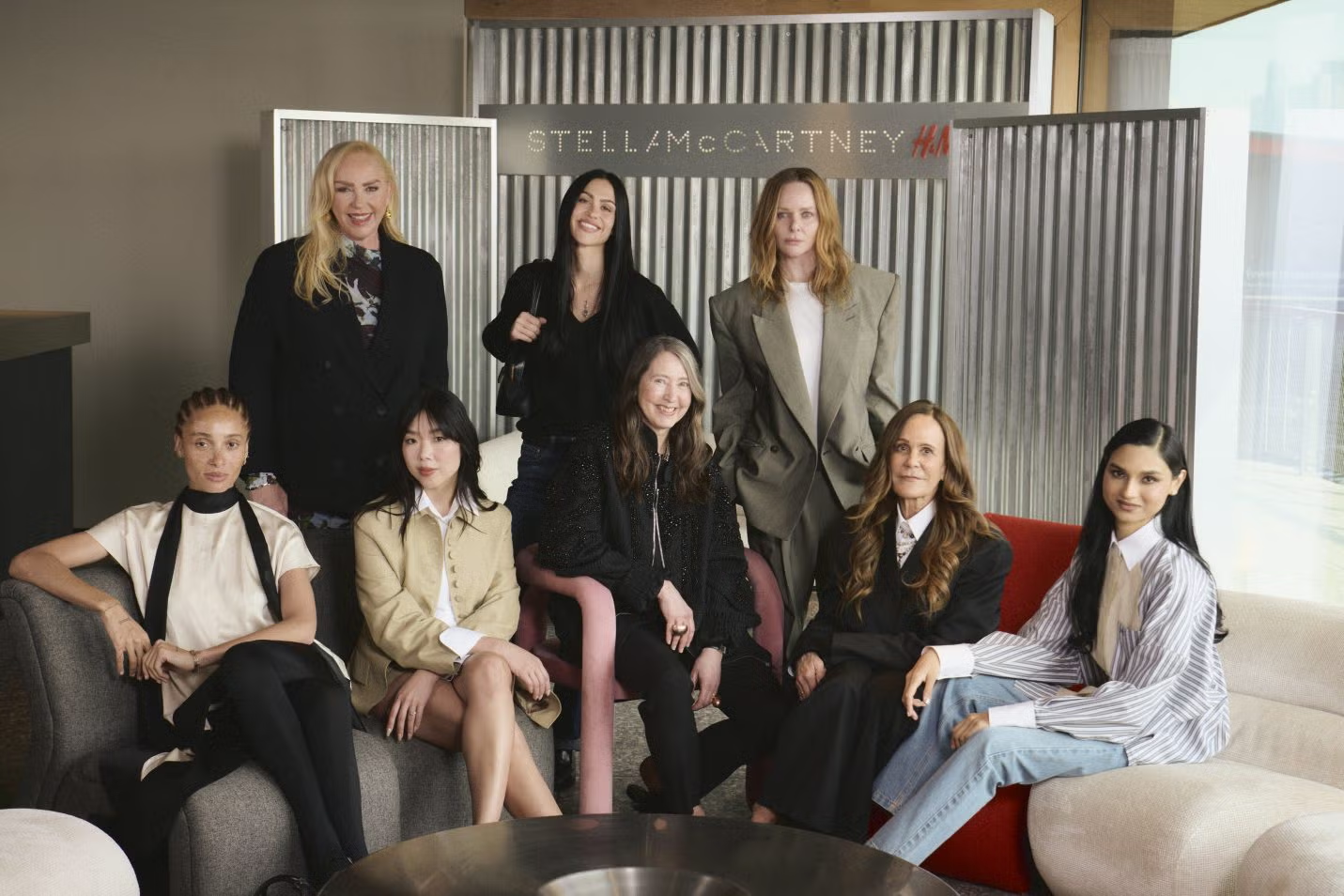
Global fashion retailer H&M has launched a new multi-stakeholder sustainability governance initiative, forming an Insights Board in partnership with designer Stella McCartney as the company accelerates its transition toward 100% sustainably sourced materials by 2030.
The board convened for the first time in London, bringing together voices from across fashion, culture, technology, and activism to examine one of the industry’s most pressing challenges: how to embed sustainability deeply into both the creative and operational foundations of global fashion brands.
The initiative reflects a growing shift in the industry, where environmental and social considerations are no longer confined to supply chain management but are increasingly integrated into corporate governance structures and long-term business strategy.
As regulatory scrutiny of fashion supply chains intensifies across Europe and other major markets, brands are facing rising expectations from policymakers, investors, and consumers to demonstrate greater transparency, traceability, and accountability in how materials are sourced and products are manufactured.
By creating an external advisory structure that incorporates voices beyond corporate leadership, H&M is attempting to build a platform that connects innovation, cultural influence, and sustainability expertise.
Markets move fast; don’t get left behind. We’ve paired the Serrari Group Market Index with a curated Marketplace and a comprehensive Wealth Builder Course to ensure you have the data—and the skills—to act on it.
Addressing Fashion’s Sustainability Challenge
The fashion industry has long faced criticism for its environmental footprint. From resource-intensive textile production to complex global supply chains, the sector is responsible for significant levels of carbon emissions, water consumption, and textile waste.
In response, many fashion companies have introduced sustainability commitments aimed at reducing environmental impact. However, implementing these commitments across vast global supply chains remains a complex challenge.
H&M’s new Insights Board is designed to address this complexity by encouraging dialogue around several interconnected themes, including:
- Sustainable and next-generation materials
- Circular design and textile recycling
- Innovation in fashion production
- Animal welfare and ethical sourcing
- Communication and consumer engagement
The initiative signals a broader recognition that sustainability in fashion is not only about improving production methods but also about reshaping how fashion brands communicate, design products, and influence consumer behavior.
In many ways, the board represents an attempt to bring together diverse perspectives that can challenge industry assumptions and push companies toward more ambitious solutions.
A Diverse Group of Voices from Fashion, Culture, and Technology
One of the most distinctive features of the Insights Board is its diverse composition.
Rather than relying solely on corporate executives or sustainability consultants, the board includes individuals from across the cultural and creative landscape.
The conversations are moderated by fashion industry strategist Julie Gilhart.
This mix of voices highlights the growing recognition that sustainability conversations must extend beyond corporate boardrooms.
Cultural figures and creative leaders play an increasingly important role in shaping public perceptions of sustainability and influencing consumer behavior.
For H&M, incorporating these voices helps ensure that discussions around sustainability remain grounded not only in technical expertise but also in cultural relevance and consumer engagement.
Moving Sustainability Beyond Marketing
For many years, sustainability messaging in fashion has been criticized as superficial or marketing-driven.
The Insights Board aims to move the conversation beyond slogans and public relations campaigns toward practical and measurable change.
Fashion journalist Susie Lau emphasized the importance of challenging established industry norms.
According to Lau, fashion thrives on dialogue, critique, and curiosity, and the board offers an opportunity to question existing assumptions about how sustainability is discussed and implemented within the industry.
By fostering open conversations and critical perspectives, the board hopes to help fashion brands move toward genuine operational change rather than symbolic sustainability gestures.
Strategic Alignment with H&M’s 2030 Materials Commitment
The launch of the board aligns closely with H&M’s commitment to source 100 percent sustainable materials by 2030.
This target places the company among the more ambitious players within the fast-fashion sector, where achieving sustainability goals often requires fundamental changes to sourcing practices and product design.
Sustainable materials include:
- Recycled textiles
- Organic or responsibly sourced fibers
- Innovative next-generation materials designed to reduce environmental impact
Transitioning entirely to these materials will require substantial changes across the company’s procurement processes, supplier relationships, and product development strategies.
It will also require significant investment, as sustainable materials often carry higher upfront costs and limited global supply compared with conventional fabrics.
However, many industry analysts believe that investing in sustainable materials today could help fashion brands reduce regulatory risks and strengthen long-term brand value.
CEO Emphasizes Importance of Dialogue
Speaking about the initiative, H&M Group CEO Daniel Ervér highlighted the importance of collaboration and open dialogue in addressing the fashion industry’s sustainability challenges.
According to Ervér, the Insights Board provides a unique opportunity to connect perspectives from across the fashion world while encouraging deeper reflection about how brands can move the industry forward.
He emphasized that the initiative is intended to create a space for listening, learning, and exploring new ideas, rather than imposing predetermined solutions.
In an industry that often moves at high speed and is driven by seasonal trends, creating structured spaces for reflection and dialogue can play an important role in shaping long-term sustainability strategies.
Context is everything. While you follow today’s updates, use the Serrari Group Market Index and Marketplace to spot emerging shifts. Need to sharpen your edge? Our Wealth Builder Course turns these insights into a professional-grade strategy.
Stella McCartney’s Role in Driving Sustainable Fashion
The partnership with Stella McCartney is particularly significant.
McCartney has long been recognized as one of the fashion industry’s most prominent sustainability advocates.
Her brand has consistently avoided the use of leather and fur, investing instead in alternative materials and innovative textile technologies.
Over the years, McCartney has built a reputation for pushing the fashion industry to rethink traditional production practices and embrace more ethical and environmentally responsible approaches.
Her involvement in the Insights Board therefore brings both credibility and heightened expectations.
According to McCartney, the initiative is about encouraging fashion brands to lead with honesty, transparency, and a willingness to challenge themselves.
She emphasized that the board is intended to foster open conversations and inspire hope for meaningful change within the industry.
Turning Dialogue into Action
While the board is primarily designed as a forum for discussion and exploration, its organizers stress that the ultimate goal is to generate tangible outcomes.
The conversations are expected to focus on identifying practical steps that brands can take to accelerate sustainability progress.
These could include:
- New approaches to circular fashion systems
- Adoption of innovative textile technologies
- Improved communication around sustainable fashion choices
- Greater collaboration across fashion supply chains
Participants say the aim is to ensure that discussions produce clear action points that can be translated into real-world initiatives.
In this sense, the Insights Board is positioned not just as a discussion forum but as a strategic platform for industry experimentation and collaboration.
Collaboration Extends to Sustainable Fashion Collection
The partnership between H&M and Stella McCartney extends beyond governance initiatives.
The two companies are also collaborating on a Spring 2026 fashion collection, which will feature certified and recycled materials.
The collection is intended to demonstrate how sustainable materials and design principles can be incorporated into commercially viable products.
By linking governance discussions with actual product development, the collaboration aims to bridge the gap between conceptual sustainability strategies and real-world fashion offerings.
Such collaborations are becoming increasingly common as brands experiment with new materials and circular design models.
Implications for Investors and Corporate Governance
For corporate leaders and investors, the establishment of the Insights Board reflects a broader evolution in ESG governance practices within the fashion sector.
Traditionally, sustainability initiatives were managed internally through corporate responsibility teams or supply chain departments.
Today, however, companies are increasingly adopting multi-stakeholder governance frameworks that incorporate perspectives from outside the organization.
These structures can enhance credibility by demonstrating that sustainability strategies are being shaped through dialogue with independent voices.
However, they also introduce new levels of accountability.
Public advisory boards create expectations that companies will deliver measurable progress on key sustainability metrics such as emissions reductions, sustainable materials sourcing, and circular product design.
As ESG disclosures become more standardized and investors gain greater visibility into corporate sustainability performance, governance initiatives like this could increasingly influence brand reputation and capital allocation decisions.
A Broader Shift in Fashion’s ESG Landscape
The launch of H&M’s Insights Board illustrates how fashion companies are adapting to a rapidly evolving ESG landscape.
Consumers are demanding more transparency about where and how their clothes are made. Governments are introducing new regulations aimed at improving supply chain accountability. Investors are increasingly evaluating companies based on sustainability performance.
Against this backdrop, fashion brands must rethink not only how they produce clothing but also how they govern sustainability decisions.
Collaborative governance models that bring together designers, technologists, activists, and cultural figures may become more common as companies seek new ways to navigate these complex challenges.
Outlook: Can Fashion Operationalize Sustainability at Scale?
The creation of the Insights Board highlights the fashion industry’s growing recognition that sustainability must be embedded across every stage of the value chain.
From materials sourcing and product design to marketing and consumer engagement, the industry is under pressure to demonstrate that sustainability commitments translate into measurable action.
For H&M, the real test will be whether initiatives like the Insights Board can help accelerate progress toward its ambitious 2030 sustainable materials target.
If successful, the initiative could provide a model for other fashion companies seeking to integrate sustainability more deeply into corporate governance and brand strategy.
Ultimately, the challenge facing the industry is not whether sustainability is discussed, but whether it can be implemented at scale without compromising creativity, affordability, or commercial viability.
Your financial future isn’t something you wait for—it’s something you build.
The real question is: when do you begin?
Move beyond simply staying informed.
Navigate the markets with clarity—track trends through the Serrari Group Market Index, uncover opportunities in the Serrari Marketplace, and build practical knowledge with our Curated Wealth Builder Course.
Stay connected to what truly matters.
Get daily insights on macro trends and financial movements across Kenya, Africa, and global markets—delivered through the Serrari Newsletter.
Growth opens doors.
Advance your career through professional programs including ACCA, HESI A2, ATI TEAS 7 , HESI EXIT , NCLEX – RN and NCLEX – PN, Financial Literacy!🌟—designed to move you forward with confidence.
See where money is flowing—clearly and in real time.
Track Money Market Funds, Treasury Bills, Treasury Bonds, Green Bonds, and Fixed Deposits, alongside global and African indexes, key economic indicators, and the evolving Crypto and stablecoin landscape—all within Serrari’s Market Index.