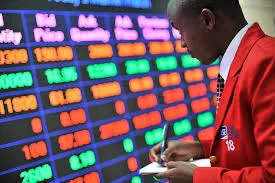
The Nairobi Securities Exchange (NSE) is currently presenting investors with a paradox that challenges conventional market wisdom. On the surface, the numbers suggest optimism: key indices are trending upward, market capitalization is inching higher, and there appears to be a sense of resilience in the Kenyan equity market. However, beneath this seemingly positive performance lies a more fragile reality—trading activity has declined sharply, participation is weakening, and liquidity has thinned to concerning levels.
This divergence between rising stock prices and falling trading volumes is not just a statistical anomaly. It is a structural signal—one that raises important questions about the sustainability of the current rally, the health of the market, and the risks facing both retail and institutional investors.
To understand what is truly happening at the NSE, one must look beyond the headline figures and examine the deeper forces shaping the market.
Markets move fast; don’t get left behind. We’ve paired the Serrari Group Market Index with a curated Marketplace and a comprehensive Wealth Builder Course to ensure you have the data—and the skills—to act on it.
The Numbers Tell Two Stories
Data from the Central Bank of Kenya’s Weekly Bulletin released on March 19, 2026, paints a picture of modest gains in key market indicators.
- The Nairobi All-Share Index (NASI) rose slightly by 0.11%, closing at 211.29
- The NSE 25 Share Index recorded a stronger gain of 1.19%
- The NSE 20 Share Index advanced by 0.50%
- Market capitalization increased marginally by 0.12%, reaching approximately Ksh 3,503.94 billion
At first glance, these figures suggest a market that is stabilizing, if not gradually recovering. However, a closer examination reveals a starkly different narrative.
- Total shares traded fell by 60.45%
- Equity turnover dropped by 63.25%, declining to 81.33 million shares and Ksh 2,448.04 million
- The number of equity deals decreased by 23.83%
This sharp contraction in activity indicates that fewer investors are participating in the market, and those who are active are trading significantly smaller volumes.
In essence, prices are rising—but fewer people are involved in driving that rise.
A Market Moving Without Depth
The central issue defining the NSE in March 2026 is the disconnect between price movements and market participation. In a healthy market, rising prices are typically supported by increasing volumes, signaling strong demand and broad-based investor confidence.
That is not what is happening here.
Instead, the current rally appears to be driven by a narrow set of transactions. This lack of market depth creates several structural weaknesses.
Narrow Participation
When fewer investors are active, price movements can be disproportionately influenced by a small number of trades. This means that:
- A single large transaction can move prices significantly
- Price trends may not reflect true market consensus
- Volatility can increase unexpectedly
Inefficient Price Discovery
Price discovery—the process through which markets determine the fair value of assets—relies on active participation from a diverse group of buyers and sellers.
When trading volumes are low:
- Prices may not accurately reflect underlying fundamentals
- Valuations can become distorted
- Investors may make decisions based on misleading signals
Increased Vulnerability for Retail Investors
Retail investors are particularly exposed in such environments. Without the stabilizing presence of institutional capital and high trading volumes:
- Price swings can be sharp and unpredictable
- Entry and exit points become harder to time
- Portfolio valuations may fluctuate without clear reasons
Historical Context: Thin Markets Are Not New
The current situation at the NSE is not unprecedented. Emerging and frontier markets have historically experienced periods where liquidity dries up even as prices move upward.
Lessons from Past Cycles
In previous market cycles—both in Kenya and across other African exchanges—similar patterns have emerged:
- Post-crisis recoveries often begin with low volumes as cautious investors test the waters
- Liquidity droughts can occur when global investors withdraw capital due to external shocks
- Narrow rallies driven by a few large-cap stocks can create the illusion of broader market strength
For example, during periods of global uncertainty, foreign institutional investors—who play a significant role in NSE activity—often reduce exposure to frontier markets. This leads to:
- Reduced liquidity
- Lower trading volumes
- Increased reliance on local investors
The current environment may reflect a similar dynamic.
What Is Driving the Decline in Liquidity?
Several factors may explain the sharp drop in trading activity at the NSE.
1. Investor Caution Amid Global Uncertainty
Global financial markets are currently navigating a complex environment characterized by:
- Interest rate uncertainty
- Geopolitical tensions
- Shifting capital flows
In such conditions, investors often adopt a wait-and-see approach, reducing trading activity until there is greater clarity.
2. Anticipation of Economic Data
Market participants may be holding back ahead of key economic releases. This is a common pattern:
- Investors delay decisions until new data confirms trends
- Trading volumes decline temporarily
- Markets become more sensitive to small trades
3. End-of-Week Positioning
The timing of the data—covering the week ending March 18—suggests that some of the decline in activity may be due to:
- Portfolio rebalancing
- Profit-taking
- Reduced trading toward the end of the week
4. Structural Liquidity Constraints
Beyond short-term factors, the NSE faces ongoing structural challenges:
- Limited participation from institutional investors
- Concentration of activity in a few large stocks
- Low retail investor penetration
These issues can amplify periods of low liquidity.
Why Rising Indices Can Be Misleading
A key risk in the current market environment is the tendency to interpret rising indices as a sign of recovery.
This assumption deserves scrutiny.
Index Concentration
Indices such as the NSE 20 and NSE 25 are weighted toward larger companies. This means that:
- Gains in a few large-cap stocks can lift the entire index
- Smaller stocks may not be participating in the rally
- The overall market may be weaker than it appears
Illusion of Momentum
When prices rise without strong volume support:
- The rally may lack sustainability
- Momentum can reverse quickly
- Investors may be caught off guard by sudden corrections
Misalignment with Fundamentals
If prices are driven by limited trading activity rather than fundamental improvements:
- Valuations may become disconnected from earnings
- Risk levels may increase
- Long-term investors may face unexpected losses
Context is everything. While you follow today’s updates, use the Serrari Group Market Index and Marketplace to spot emerging shifts. Need to sharpen your edge? Our Wealth Builder Course turns these insights into a professional-grade strategy.
Risks Investors Should Consider
The current NSE environment presents several risks that investors must carefully evaluate.
Volatility Risk
Thin trading conditions can amplify price swings. Even small trades can lead to:
- Sudden spikes or drops in prices
- Increased uncertainty
- Difficulty in predicting market movements
Liquidity Risk
Investors may find it harder to buy or sell shares at desired prices. This can lead to:
- Wider bid-ask spreads
- Delays in executing trades
- Potential losses when exiting positions
Information Risk
With fewer transactions occurring, the information embedded in prices becomes less reliable. This can:
- Distort investment signals
- Lead to misinformed decisions
- Increase reliance on speculation
A Skeptical Perspective: Is This Really a Rally?
It is worth challenging the assumption that the NSE is experiencing a genuine recovery.
An informed skeptic might argue that:
- The rise in indices is too modest to signal a strong trend
- The sharp decline in volumes suggests weakening confidence
- The market may be in a transitional phase rather than a recovery
In this view, the current environment is not one of strength, but of fragility—where prices are drifting upward in the absence of meaningful participation.
Why This Matters for the Kenyan Market
The implications of this divergence extend beyond short-term trading dynamics.
Market Confidence
Sustained low liquidity can erode investor confidence. If participants perceive the market as:
- Illiquid
- Volatile
- Unpredictable
They may choose to allocate capital elsewhere.
Capital Formation
The NSE plays a critical role in raising capital for businesses. Weak trading activity can:
- Reduce the attractiveness of public listings
- Limit access to funding for companies
- Slow economic growth
Retail Investor Protection
Retail investors are increasingly participating in the market. Ensuring that:
- Prices reflect true value
- Markets are transparent
- Risks are understood
is essential for long-term market development.
Challenges Facing the NSE
The current situation highlights several broader challenges for the exchange.
Deepening Market Participation
Expanding the investor base—both local and international—is crucial. This includes:
- Encouraging retail participation
- Attracting institutional investors
- Enhancing market accessibility
Improving Liquidity
Liquidity is the lifeblood of any exchange. Addressing structural constraints will require:
- Policy support
- Market reforms
- Innovation in trading mechanisms
Enhancing Transparency
Clear communication and data availability can help:
- Build trust
- Improve decision-making
- Reduce uncertainty
Looking Ahead: What Comes Next?
The future direction of the NSE will depend on several key factors.
Economic Developments
Upcoming economic data and policy decisions will play a significant role in shaping investor sentiment.
Global Market Trends
As a frontier market, the NSE is influenced by global capital flows. Changes in:
- Interest rates
- Risk appetite
- Currency dynamics
can impact liquidity and valuations.
Market Reforms
Efforts to deepen and modernize the market could improve:
- Liquidity
- Participation
- Stability
Strategic Takeaways for Investors
In navigating the current environment, investors should adopt a cautious and informed approach.
Focus on Fundamentals
Rather than relying on index movements, investors should:
- Analyze company performance
- Assess financial health
- Consider long-term prospects
Be Mindful of Liquidity
Understanding the liquidity profile of investments is essential. Investors should:
- Avoid overexposure to illiquid stocks
- Plan entry and exit strategies carefully
Stay Informed
Keeping track of market developments, economic data, and global trends can help:
- Anticipate changes
- Manage risks
- Make better decisions
Conclusion: A Market at a Crossroads
The Nairobi Securities Exchange is currently navigating a delicate balance between optimism and caution. While rising indices suggest resilience, the sharp decline in trading volumes reveals underlying fragility.
This is not a straightforward recovery story. It is a complex, evolving situation where signals are mixed, risks are elevated, and outcomes remain uncertain.
For investors, the key is not to be swayed by headline figures alone, but to understand the deeper dynamics at play.
Because in markets like these, what is not visible—liquidity, participation, and confidence—can matter just as much as what is.
Your financial future isn’t something you wait for, it’s something you build.
The real question is: when do you begin?
Move beyond simply staying informed.
Navigate the markets with clarity—track trends through the Serrari Group Market Index, uncover opportunities in the Serrari Marketplace, and build practical knowledge with our Curated Wealth Builder Course.
Stay connected to what truly matters.
Get daily insights on macro trends and financial movements across Kenya, Africa, and global markets—delivered through the Serrari Newsletter.
Growth opens doors.
Advance your career through professional programs including ACCA, HESI A2, ATI TEAS 7 , HESI EXIT , NCLEX – RN and NCLEX – PN, Financial Literacy!🌟—designed to move you forward with confidence.
See where money is flowing—clearly and in real time.
Track Money Market Funds, Treasury Bills, Treasury Bonds, Green Bonds, and Fixed Deposits, alongside global and African indexes, key economic indicators, and the evolving Crypto and stablecoin landscape—all within Serrari’s Market Index.