Introduction
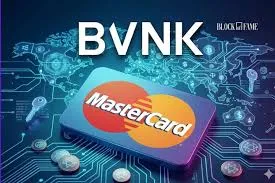
The global payments landscape is undergoing a profound transformation as digital assets move from the fringes of finance into mainstream infrastructure. In a major strategic move, Mastercard has announced a definitive agreement to acquire BVNK for up to $1.8 billion, including $300 million in contingent payments tied to future performance.
This acquisition represents more than an expansion of Mastercard’s digital capabilities—it signals a decisive bet on the future of stablecoins and their role in global value transfer. As digital currency use cases scale rapidly, reaching at least $350 billion in transaction volume in 2025, traditional financial giants are positioning themselves to capture this emerging opportunity.
By integrating BVNK’s infrastructure, Mastercard aims to strengthen its ability to support transactions across currencies, payment rails, and geographies—effectively bridging the gap between traditional finance and blockchain-based systems.
Markets move fast; don’t get left behind. We’ve paired the Serrari Group Market Index with a curated Marketplace and a comprehensive Wealth Builder Course to ensure you have the data—and the skills—to act on it.
Understanding the Strategic Fit
What BVNK Brings
Founded in 2021, BVNK has quickly established itself as a key player in stablecoin infrastructure.
Its platform enables businesses to:
- Send and receive payments in both fiat and stablecoins
- Operate across 130+ countries
- Access multiple blockchain networks
- Integrate digital asset payments into existing systems
This capability is critical in a world where businesses increasingly demand faster, cheaper, and more flexible payment solutions.
What Mastercard Gains
For Mastercard, the acquisition provides:
- Direct exposure to stablecoin payment flows
- Enhanced cross-border payment capabilities
- Integration of blockchain-based rails into its network
- Access to a fast-growing segment of digital finance
Rather than building this infrastructure from scratch, Mastercard is effectively buying speed, expertise, and market positioning.
The Bigger Trend: Stablecoins Moving Into the Mainstream
Stablecoins—digital tokens pegged to traditional assets such as the US dollar—are increasingly being used for real-world financial transactions.
Key Use Cases
- Cross-border remittances
- Merchant payments
- Peer-to-peer (P2P) transfers
- Business-to-business (B2B) settlements
- Payouts in global marketplaces
Unlike traditional cryptocurrencies, stablecoins aim to maintain price stability, making them more practical for everyday transactions.
Why Stablecoins Are Gaining Momentum
1. Speed and Efficiency
Traditional cross-border payments can take days to settle. Stablecoins enable near-instant transfers.
2. Lower Costs
By bypassing intermediaries, stablecoin transactions can reduce fees significantly.
3. Global Accessibility
Stablecoins operate on blockchain networks, allowing transactions across borders without relying on traditional banking infrastructure.
4. Integration With Existing Systems
Crypto wallets increasingly use cards—issued by companies like Mastercard—to enable spending of digital assets.
Mastercard’s Broader Digital Asset Strategy
The BVNK acquisition is part of a wider push by Mastercard into digital assets.
Crypto Partner Program
Recently, Mastercard launched its Crypto Partner Program, bringing together more than 85 companies across the digital asset and payments ecosystem.
The goal is to:
- Connect blockchain infrastructure with traditional payment networks
- Enable seamless movement of value between fiat and digital currencies
- Accelerate adoption of digital assets in everyday transactions
The Deal Structure: A Strategic Signal
The structure of the $1.8 billion deal provides important insight into Mastercard’s strategy.
Performance-Based Component
- $300 million is contingent on future performance
This means a portion of the deal value depends on:
- Growth in stablecoin transaction volumes
- Expansion of use cases
- Market adoption
Why This Matters
This structure suggests that Mastercard is:
- Confident in long-term growth
- Cautious about short-term uncertainty
- Aligning incentives with future performance
In other words, the company is not just buying current capabilities—it is betting on future scale.
Historical Context: From Cards to Digital Assets
Traditional Payment Networks
For decades, companies like Mastercard built global networks enabling card-based transactions.
Rise of Digital Payments
The 2000s and 2010s saw the growth of:
- Online payments
- Mobile wallets
- Contactless transactions
Emergence of Crypto
The introduction of Bitcoin in 2009 marked the beginning of decentralized finance.
However, early cryptocurrencies were:
- Volatile
- Difficult to use
- Limited in real-world applications
Stablecoins as a Bridge
Stablecoins emerged as a solution, combining:
- The stability of fiat currencies
- The efficiency of blockchain technology
The BVNK acquisition reflects this evolution.
Context is everything. While you follow today’s updates, use the Serrari Market Index and Marketplace to spot emerging shifts. Need to sharpen your edge? Our Wealth Builder Course turns these insights into a professional-grade strategy.
Why This Development Matters
1. This Is Not About Crypto—It’s About Control of Payment Infrastructure
Common Assumption
Mastercard is “entering crypto.”
Reality Check
Mastercard is not chasing speculation—it is targeting infrastructure control.
Stablecoins are simply a means to an end:
- Faster settlement
- Lower costs
- Cross-border efficiency
But the real prize is:
Owning the rails through which value moves globally
Strategic Insight
If Mastercard successfully integrates BVNK:
- It extends its dominance beyond card networks
- It becomes relevant in blockchain-based payments
- It reduces dependence on legacy banking rails (SWIFT, correspondent banking)
Skeptical View
If stablecoins fail to scale, Mastercard risks investing heavily in infrastructure that never becomes dominant.
2. Stablecoins Are Becoming the “New Settlement Layer”
Assumption
Stablecoins are just another payment method.
Alternative Framing
They may become the back-end settlement layer of global finance.
Think of it like this:
- Users see cards, apps, wallets
- Behind the scenes → settlement happens via stablecoins
Why This Matters
If true:
- Settlement times shrink from days → seconds
- Intermediaries (and their fees) shrink
- Global payments become more programmable
Counterpoint
This assumes:
- Regulatory approval globally
- Trust in stablecoin issuers
- Stable infrastructure across blockchains
None of these are guaranteed.
3. This Signals Institutional Validation—But Not Final Victory
Assumption
Big players entering = success is inevitable.
Reality Check
Institutional entry signals interest, not certainty.
Historical parallel:
- Many banks invested in blockchain in 2017
- Few use cases scaled meaningfully
What’s Different Now
- Real transaction volume (~$350B)
- Clear use cases (remittances, B2B)
- Better infrastructure
Still Missing
- Universal standards
- Regulatory alignment
- Clear monetization models
4. The Data War Is Intensifying
Overlooked Insight
Payments = data.
By acquiring BVNK, Mastercard gains:
- Transaction-level insights
- Cross-border flow data
- Merchant behavior analytics
Why This Is Critical
Data enables:
- Credit scoring
- Fraud detection
- Product personalization
Strategic Truth
The real competition is not just payments—it’s who owns financial data at scale.
Risks and Challenges
1. Regulatory Risk Is Not a Side Issue—It’s the Core Risk
Assumption
Regulation will adapt to innovation.
Reality Check
Regulation may restrict or reshape the entire model.
Key Unknowns:
- Will stablecoins be treated like banks?
- Will issuers need full reserves?
- Will cross-border flows face restrictions?
Worst-Case Scenario
Governments:
- Limit private stablecoins
- Promote central bank digital currencies (CBDCs) instead
Implication
Mastercard’s investment thesis could be undermined by policy shifts.
2. The “Stable” in Stablecoins Is Conditional
Assumption
Stablecoins are safe because they’re pegged.
Reality Check
Stability depends on:
- Reserve backing
- Liquidity
- Market confidence
Historical Reminder
Several stablecoins have lost their peg.
Implication
If trust breaks:
- Adoption collapses quickly
- Systemic risk emerges
3. Adoption Risk: The Hardest Problem Is Behavior
Assumption
Better technology → automatic adoption.
Reality Check
Users don’t switch easily.
Barriers:
- Existing systems already “good enough”
- Lack of understanding of stablecoins
- Trust in traditional finance
Example
Most users don’t care how payments settle—they care that they work.
Implication
Stablecoins must be:
- Invisible
- Seamless
- Cheaper
Otherwise, adoption stalls.
4. Integration Complexity Is Underestimated
Assumption
Traditional finance + blockchain = smooth integration.
Reality Check
These systems are fundamentally different.
Challenges:
- Legacy systems vs decentralized networks
- Compliance vs permissionless systems
- Real-time vs batch processing
Implication
Execution risk is high—even for a company like Mastercard.
5. Competitive Response Risk
Assumption
Mastercard gains first-mover advantage.
Reality Check
Competition is already intense:
- Visa expanding crypto capabilities
- Banks exploring tokenized deposits
- Fintechs building native solutions
Likely Outcome
Ecosystem competition, not winner-takes-all.
Challenges Facing the Stablecoin Ecosystem (Structural Issues)
1. Fragmentation Across Chains and Coins
Problem
- Multiple blockchains (Ethereum, Solana, etc.)
- Multiple stablecoins (USDT, USDC, etc.)
Result
- Lack of standardization
- Integration complexity
- Liquidity fragmentation
Insight
This is similar to early internet protocols—eventually, consolidation or standardization will be required.
2. Trust and Transparency Deficit
Core Question
Are stablecoins fully backed?
Issue
- Not all issuers provide clear, real-time audits
- Reserve composition can vary
Implication
Institutional adoption depends on:
Verifiable transparency, not promises
3. Dependence on Traditional Finance
Paradox
Stablecoins aim to disrupt traditional finance—but depend on it.
Why:
- Reserves held in banks
- Fiat on/off ramps required
- Regulatory frameworks tied to traditional systems
Insight
Stablecoins are not replacing banks—they are layering on top of them.
4. Scalability and Network Limitations
Technical Constraint
Blockchain networks face:
- Congestion
- High fees (in some cases)
- Throughput limitations
Implication
For global adoption:
- Infrastructure must scale massively
- Costs must remain low
5. Regulatory Fragmentation Globally
Issue
Different countries:
- Define stablecoins differently
- Apply inconsistent rules
Result
- Limited cross-border scalability
- Compliance complexity
Looking Ahead: A More Realistic Outlook
1. Hybrid Financial Systems Will Dominate
Not:
- Full crypto takeover
- Nor complete traditional dominance
Instead:
Hybrid systems
Where:
- Users interact with traditional interfaces
- Settlement happens via blockchain
2. Stablecoins Will Win in Specific Niches First
Most Likely Early Winners:
- Cross-border payments
- Remittances
- Emerging markets
- B2B settlements
Less Likely (Short Term):
- Everyday retail payments in developed markets
3. Consolidation Is Inevitable
Current State
Too many:
- Stablecoins
- Platforms
- Networks
Future
- Fewer dominant players
- Standardized infrastructure
4. Regulation Will Shape the Industry More Than Technology
Key Insight
The winners will not be:
- The most innovative
But: - The most compliant and scalable
5. The Real Competition: Banks vs Networks vs Blockchain
Emerging Battle Lines:
| Player Type | Strength |
| Banks | Trust, regulation |
| Payment Networks (e.g. Mastercard) | Global reach |
| Blockchain Platforms | Speed, programmability |
Likely Outcome
Convergence, not replacement.
Final Synthesis
The acquisition of BVNK by Mastercard is often framed as a bold step into the future of finance.
But a more precise interpretation is this:
It is a defensive and offensive move at the same time.
- Defensive: Protect relevance as payments evolve
- Offensive: Capture emerging infrastructure early
Bottom Line
The narrative that “stablecoins will transform payments” is directionally correct—but incomplete.
What’s Actually Happening:
- Infrastructure is being rebuilt
- Power is shifting toward those who control rails and data
- Regulation will determine the pace of change
The Critical Insight:
This is not a finished revolution—it is a contested transition phase.
And deals like this are not the conclusion…
They are the opening moves.
Looking Ahead: The Future of Payments
The acquisition points to several future trends.
Hybrid Financial Systems
The future may involve systems that combine:
- Traditional banking
- Blockchain technology
- Digital currencies
Growth in Tokenized Assets
Beyond stablecoins, tokenized deposits and assets could expand.
Increased Institutional Participation
More financial institutions are likely to enter the digital asset space.
Evolution of Payment Models
Payments may become:
- Faster
- Cheaper
- More global
Conclusion
The acquisition of BVNK by Mastercard for up to $1.8 billion marks a significant milestone in the evolution of global payments.
By investing in stablecoin infrastructure, Mastercard is positioning itself at the forefront of a rapidly changing financial landscape.
While challenges such as regulation, adoption, and integration remain, the deal underscores a broader trend: the gradual merging of traditional finance with digital asset ecosystems.
If successful, this strategy could redefine how value moves across the global economy—making payments faster, more efficient, and more accessible.
However, whether stablecoins ultimately fulfill their promise will depend not just on technology, but on trust, regulation, and real-world utility.
Your financial future isn’t something you wait for, it’s something you build.
The real question is: when do you begin?
Move beyond simply staying informed.
Navigate the markets with clarity—track trends through the Serrari Group Market Index, uncover opportunities in the Serrari Marketplace, and build practical knowledge with our Curated Wealth Builder Course.
Stay connected to what truly matters.
Get daily insights on macro trends and financial movements across Kenya, Africa, and global markets—delivered through the Serrari Newsletter.
Growth opens doors.
Advance your career through professional programs including ACCA, HESI A2, ATI TEAS 7 , HESI EXIT , NCLEX – RN and NCLEX – PN, Financial Literacy!🌟—designed to move you forward with confidence.
See where money is flowing—clearly and in real time.
Track Money Market Funds, Treasury Bills, Treasury Bonds, Green Bonds, and Fixed Deposits, alongside global and African indexes, key economic indicators, and the evolving Crypto and stablecoin landscape—all within Serrari’s Market Index.