Key Overview
- Vietnam is amending housing and real estate laws to improve efficiency
- Property prices rose 10–15% annually, with spikes up to 30%
- Over 128,000 new housing units launched in 2025
- Supply heavily skewed toward mid- and high-end housing
- Affordable housing remains critically underserved
- Social housing progress reached 62% of national target
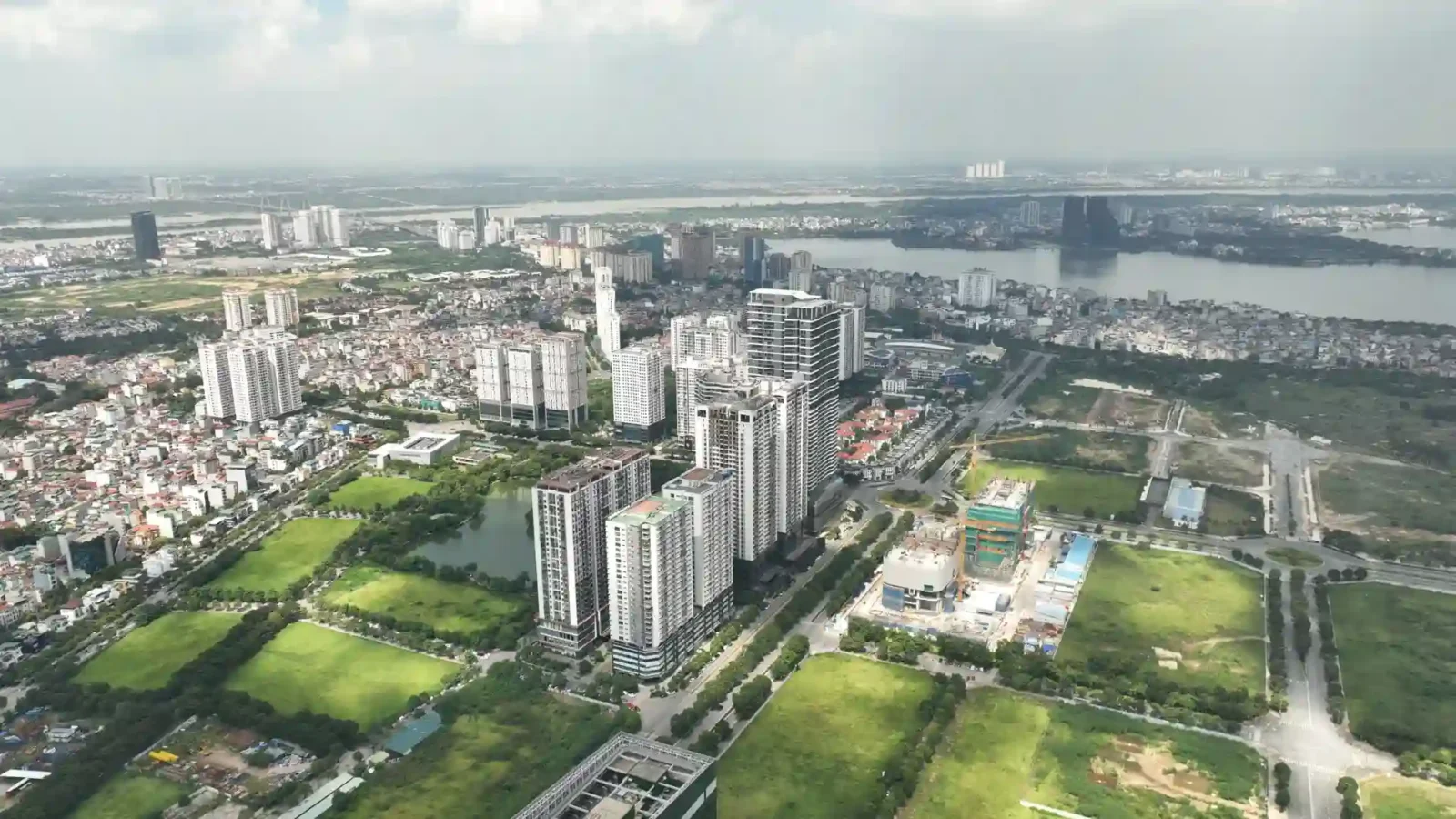
Vietnam is taking steps to reshape its housing and real estate sector, as policymakers push forward amendments to the Law on Housing and the Law on Real Estate Business in response to rising property prices and persistent supply imbalances.
At a high-level meeting chaired by Deputy Minister of Construction Nguyen Van Sinh on March 23, government officials, industry stakeholders, and policymakers gathered to review proposed changes aimed at improving market efficiency, enhancing regulatory clarity, and expanding access to housing.
The move comes at a time when Vietnam’s real estate market is experiencing strong growth—but also increasing strain—particularly for low- and middle-income households.
Markets move fast; don’t get left behind. We’ve paired the Serrari Group Market Index with a curated Marketplace and a comprehensive Wealth Builder Course to ensure you have the data—and the skills—to act on it.
Why the Law Reforms Are Being Proposed
The proposed amendments are not just technical adjustments—they reflect a broader attempt to address structural issues in Vietnam’s housing market.
According to the Ministry of Construction, the review focuses on three key areas:
- Decentralisation of authority within a two-tier local government system
- Simplification of administrative procedures and business conditions
- Alignment with existing legal frameworks to ensure consistency
These changes are designed to make the market more efficient and reduce bureaucratic bottlenecks that have historically slowed down project approvals and development timelines.
At a deeper level, the reforms aim to support Vietnam’s vision of a “socialist-oriented market economy,” where market forces operate within a structured and policy-guided framework.
Rising Prices Highlight Structural Pressure
One of the most pressing challenges facing the market is the rapid increase in housing prices.
Between 2024 and 2025, housing and land prices in major cities rose by an average of 10–15% annually, with some periods experiencing spikes of up to 30%.
This level of price growth raises critical concerns.
On one hand, rising prices reflect strong demand, urbanization, and economic expansion. On the other, they highlight a growing disconnect between affordability and market supply.
For many urban households, especially those in lower and middle income brackets, homeownership is becoming increasingly out of reach.
Supply Growth Masks a Deeper Imbalance
At first glance, Vietnam’s housing supply appears to be improving.
In 2025, more than 128,000 new housing units were launched, representing an 88% increase compared to 2024 and the highest level in recent years.
However, this growth tells only part of the story.
The majority of new developments are concentrated in the mid- to high-end segments, leaving a significant gap in affordable housing. Low-cost apartments and entry-level housing options remain largely absent from the primary market.
This imbalance creates a structural problem:
- Supply is increasing, but not in the segments where demand is strongest
- Developers are focusing on higher-margin projects
- Lower-income households are effectively excluded from the market
As a result, increased supply does not necessarily translate into improved affordability.
Context is everything. While you follow today’s updates, use the Serrari Group Market Index and Marketplace to spot emerging shifts. Need to sharpen your edge? Our Wealth Builder Course turns these insights into a professional-grade strategy.
The Role of Social Housing
To address affordability challenges, Vietnam has been expanding its social housing programs.
By the end of 2025, the country had:
- 1,114 commercial housing and urban projects, totaling over 529,000 units
- 698 social housing projects, with more than 657,000 units under development
This represents approximately 62% of the government’s target of 1 million social housing units for the 2021–2030 period.
In 2025 alone, more than 102,000 social housing units were completed, exceeding the annual target.
While this progress is notable, it also highlights a key limitation: social housing still accounts for only a small portion of total market supply.
This means that, despite government efforts, the broader market remains heavily skewed toward higher-priced segments.
Why This Matters
The proposed legal reforms and current market conditions carry significant implications.
First, they underscore the importance of regulatory frameworks in shaping housing markets. Laws governing land use, development approvals, and investment conditions directly influence what gets built—and for whom.
Second, they highlight a growing affordability crisis. Rising prices combined with limited affordable supply can lead to increased inequality and reduced social mobility.
Third, they reflect the tension between market-driven development and policy objectives. While developers respond to profitability, governments must ensure that housing remains accessible.
Finally, they signal a broader effort to modernize Vietnam’s real estate sector, making it more transparent, efficient, and aligned with long-term economic goals.
Risks and Challenges
Despite the proposed reforms, several challenges remain.
One key issue is implementation. Legal changes alone may not be sufficient if administrative processes remain slow or inconsistent across regions.
There is also the risk of continued market imbalance. Without targeted incentives or mandates, developers may continue to prioritize higher-end projects.
Another concern is price sustainability. Rapid price increases can lead to speculative behavior, potentially creating bubbles that may destabilize the market.
Financing constraints also play a role. Access to affordable credit is critical for both developers and buyers, and any tightening of financial conditions could further limit housing accessibility.
A Critical Perspective: Reform vs Reality
While the proposed amendments aim to improve the market, it is important to question whether they address the root causes of the problem.
Simplifying procedures and decentralizing authority may improve efficiency, but they do not automatically guarantee that affordable housing will be built.
The core issue lies in incentives.
As long as high-end developments remain more profitable, developers will naturally gravitate toward those segments. Without strong policy mechanisms—such as subsidies, zoning requirements, or public-private partnerships—the supply-demand imbalance may persist.
In other words, regulatory reform is necessary, but not sufficient.
Looking Ahead
Vietnam’s real estate market is at a critical juncture.
The combination of strong demand, rising prices, and evolving regulatory frameworks creates both opportunities and risks.
If the proposed legal amendments are effectively implemented, they could:
- Streamline development processes
- Improve market transparency
- Encourage more balanced supply
However, achieving meaningful change will require coordinated efforts across government agencies, developers, and financial institutions.
The success of these reforms will ultimately be measured by one key outcome: whether more people can access affordable housing.
Conclusion
Vietnam’s move to amend its housing and real estate laws reflects a growing recognition of the challenges facing its property market.
While supply is increasing and the sector remains active, rising prices and structural imbalances continue to limit access for many households.
The proposed reforms aim to address these issues by improving efficiency, reducing barriers, and aligning policies with broader economic goals. However, their effectiveness will depend on how well they translate into real changes on the ground.
In a rapidly evolving market, the balance between growth and accessibility will define the future of Vietnam’s housing sector.
Your financial future isn’t something you wait for, it’s something you build.
The real question is: when do you begin?
Move beyond simply staying informed.
Navigate the markets with clarity—track trends through the Serrari Group Market Index, uncover opportunities in the Serrari Marketplace, and build practical knowledge with our Curated Wealth Builder Course.
Stay connected to what truly matters.
Get daily insights on macro trends and financial movements across Kenya, Africa, and global markets—delivered through the Serrari Newsletter.
Growth opens doors.
Advance your career through professional programs including ACCA, HESI A2, ATI TEAS 7 , HESI EXIT , NCLEX – RN and NCLEX – PN, Financial Literacy!🌟—designed to move you forward with confidence.
See where money is flowing—clearly and in real time.
Track Money Market Funds, Treasury Bills, Treasury Bonds, Green Bonds, and Fixed Deposits, alongside global and African indexes, key economic indicators, and the evolving Crypto and stablecoin landscape—all within Serrari’s Market Index.