











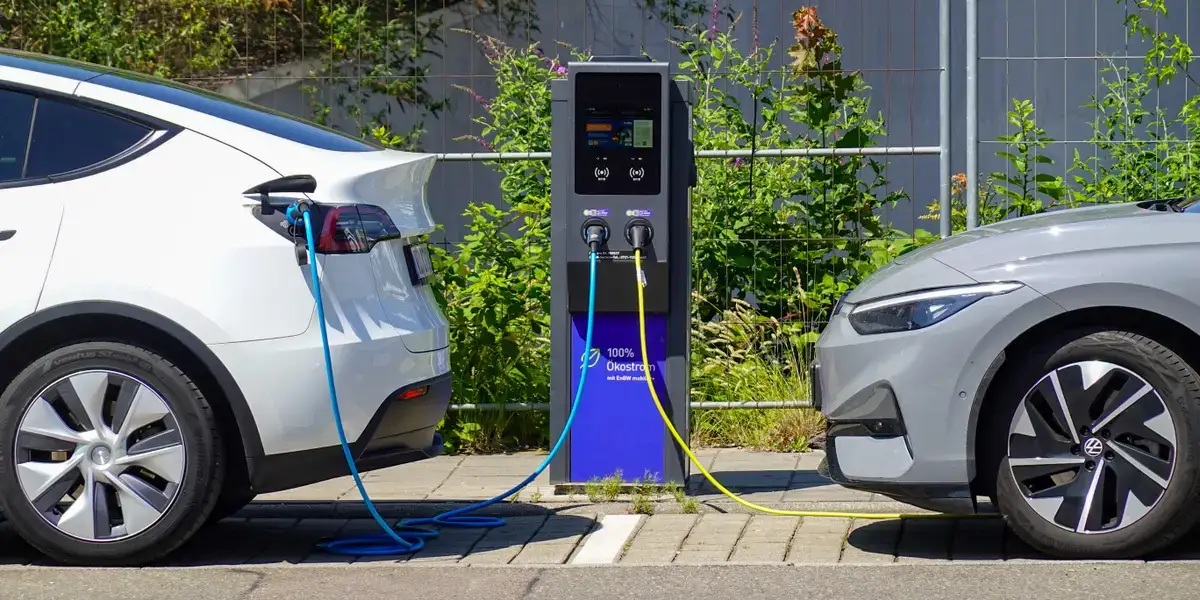
Electric vehicle (EV) adoption in the United States reached a new milestone in 2025, with total sales climbing to 1.2 million units, according to recent industry data. The figure highlights the growing role of electric vehicles in the country’s transportation system as consumers increasingly shift toward cleaner and more energy-efficient mobility options.
The rise in EV sales reflects a broader transformation taking place in the automotive industry. Electric vehicles, once considered a niche technology primarily adopted by early adopters, are now entering the mainstream as automakers expand their electric lineups and governments promote low-emission transportation solutions.
Electric vehicle adoption in the United States has accelerated steadily over the past decade. A major turning point came in 2018, when plug-in vehicle sales surged to about 360,800 units, an 81% increase from 2017, driven largely by the launch of the Tesla Model 3, which quickly became one of the best-selling electric cars in the country. The breakthrough helped push EVs into wider consumer adoption and set the stage for continued growth in the years that followed.
With EVs now representing approximately 8–9 percent of new vehicle sales in the United States, analysts say the transition toward electric mobility is steadily gaining momentum. Surveys also indicate that nearly two-thirds of American consumers are considering purchasing an electric vehicle for their next car, suggesting that adoption could accelerate further in the coming years.
The surge in EV ownership is also beginning to reshape travel habits, particularly during peak travel seasons such as Spring Break, when families traditionally embark on road trips across the country.
Build the future you deserve. Get started with our top-tier Online courses: ACCA, HESI A2, ATI TEAS 7, HESI EXIT, NCLEX-RN, NCLEX-PN, and Financial Literacy. Let Serrari Ed guide your path to success. Enroll today.
Spring Break Road Trips Becoming Increasingly Electric
Spring Break has long been associated with long drives to beaches, national parks, and vacation destinations. However, the growing popularity of electric vehicles is transforming the traditional road trip experience.
As school calendars stretch Spring Break across several weeks, millions of Americans take to the road during this period. Increasingly, a portion of those journeys are now being completed in electric vehicles.
Industry observers say the rising number of EV road trips highlights how rapidly the technology has evolved. Early concerns about range limitations and charging availability are gradually being addressed through improvements in battery performance and the expansion of public charging infrastructure.
For many families, electric vehicles are becoming a viable option for long-distance travel. Drivers are discovering that road trips in EVs can be both practical and cost-effective, particularly as fuel prices fluctuate and electricity costs remain comparatively stable.
However, EV road trips can still present unique challenges, particularly for drivers who are new to electric mobility.
EV Road Trips Come With Unique Planning Needs
While traditional gasoline vehicles allow drivers to refuel quickly at widely available service stations, electric vehicles require more deliberate planning when traveling long distances.
One of the key considerations for EV drivers is range management — the distance a vehicle can travel before needing to recharge.
Although many modern EVs offer ranges exceeding 250 to 350 miles per charge, real-world driving conditions can significantly affect battery performance.
Factors that influence EV range include:
- Highway driving speeds
- Cold or extremely hot weather
- Passenger and luggage weight
- Elevation changes
- Use of heating or air-conditioning systems
These factors can reduce an EV’s effective range by 10 to 30 percent, making accurate trip planning important for drivers who want to avoid running low on battery power during long journeys.
For first-time EV road trippers, learning how to manage these variables is often part of the learning curve of owning an electric vehicle.
Charging Infrastructure Expanding Rapidly
Despite these challenges, the availability of EV charging infrastructure in the United States has expanded significantly in recent years.
Today, the country has more than 60,000 public charging stations and over 170,000 individual charging ports, providing growing coverage across major highways, urban centers and tourist destinations.
Federal and state governments have also been investing heavily in EV infrastructure through programs designed to accelerate the transition to clean transportation.
One of the most significant initiatives is the U.S. National Electric Vehicle Infrastructure (NEVI) program, which aims to create a nationwide network of fast-charging stations along major interstate highways.
Automakers and private companies are also investing heavily in charging infrastructure, with major charging networks expanding their presence across the country.
As the charging network continues to grow, EV road trips are becoming increasingly practical for drivers traveling long distances.
Preparing for an Electric Road Trip
To help EV owners prepare for long journeys, insurance provider Mercury Insurance has shared several recommendations designed to reduce stress and improve travel experiences during busy travel periods such as Spring Break.
These tips focus on helping drivers better understand how EVs behave during long-distance travel and how to plan routes efficiently.
- Plan Charging Stops Ahead of Time
One of the most important steps for EV road trips is identifying charging stations along the travel route before departing.
Drivers are encouraged to use route-planning tools or navigation apps that highlight compatible fast-charging stations along highways.
These tools help drivers determine where and when to stop for charging, allowing them to avoid unnecessary delays.
Experts also recommend identifying backup charging locations in case a station is occupied or temporarily unavailable.
One decision can change your entire career. Take that step with our Online courses in ACCA, HESI A2, ATI TEAS 7, HESI EXIT, NCLEX-RN, NCLEX-PN, and Financial Literacy. Join Serrari Ed and start building your brighter future today
- Understand Real-World Driving Range
Many drivers rely on the official range figures advertised by automakers, but real-world driving conditions often produce different results.
Highway speeds, elevation changes and heavy cargo loads can reduce a vehicle’s battery efficiency.
For this reason, experts recommend building a range cushion into travel plans rather than waiting until the battery reaches very low levels before recharging.
Planning charging stops with extra buffer distance helps prevent unexpected range anxiety.
- Download Charging Network Apps
Another helpful step is installing charging network apps before starting the journey.
Many public charging stations require drivers to activate chargers using mobile applications or membership accounts.
Setting up accounts, payment methods and login details in advance can help avoid delays at charging stations.
These apps often provide additional useful information, including:
- charger availability
- charging speed
- pricing information
- user reviews of specific stations
Having this information available allows drivers to plan charging stops more efficiently.
- Bring Portable Charging Equipment
Drivers should also make sure their portable charging cables are packed and functioning properly.
While fast-charging stations are common along major highways, travelers staying in vacation rentals, hotels or private homes may have access to standard electrical outlets that can be used for overnight charging.
Although home charging is slower than public fast charging, it can be useful for maintaining battery levels during extended stays.
- Review Insurance Coverage for Electric Vehicles
Another factor EV owners should consider before traveling is insurance coverage.
Electric vehicles often contain sophisticated battery systems and advanced electronic components that can increase repair costs compared with traditional vehicles.
Drivers are encouraged to review their insurance policies to ensure their coverage reflects the full value of their EV.
This is particularly important for newer electric vehicles, which may require specialized parts and repair expertise.
- Prepare for Holiday Traffic and Congestion
Holiday travel periods such as Spring Break often bring increased traffic on highways and major travel routes.
Congestion can result in longer travel times and increased energy consumption due to stop-and-go driving.
Drivers are encouraged to monitor traffic conditions and adjust charging strategies if necessary.
Planning additional charging stops or leaving earlier in the day can help reduce travel delays during peak travel periods.
Electric Vehicles Reshaping Road Travel
The rapid increase in EV adoption suggests that electric vehicles will play an increasingly important role in how Americans travel.
As the number of EV drivers grows, road trips that once relied exclusively on gasoline vehicles are gradually becoming more electric.
Advances in battery technology have played a major role in this transition. Modern EV batteries are capable of storing more energy while charging faster and lasting longer than earlier generations of electric vehicles.
Automakers are also introducing a wider range of EV models at different price points, making electric vehicles more accessible to a broader range of consumers.
This growing diversity of models — from compact cars to SUVs and pickup trucks — means that EVs can now meet the needs of many different types of drivers.
Outlook
The milestone of 1.2 million EV sales in the United States in 2025 illustrates the accelerating shift toward electric transportation.
While electric vehicles still represent a minority of total vehicle sales, their share of the market continues to grow steadily each year.
As charging infrastructure expands and battery technology improves, EVs are expected to become even more practical for long-distance travel.
Road trips — once seen as a challenge for electric vehicles — are gradually becoming a routine part of EV ownership.
For families planning Spring Break journeys or summer vacations, electric vehicles are increasingly proving capable of handling the demands of extended travel.
With careful planning and the continued expansion of charging networks, the American road trip is slowly entering a new era — one powered by electricity rather than gasoline.
As EV adoption continues to grow, drivers may find themselves spending less time worrying about fuel costs and more time focusing on the destinations ahead.
Ready to take your career to the next level? Join our Online courses: ACCA, HESI A2, ATI TEAS 7 , HESI EXIT , NCLEX – RN and NCLEX – PN, Financial Literacy!🌟 Dive into a world of opportunities and empower yourself for success. Explore more at Serrari Ed and start your exciting journey today! ✨
Track GDP, Inflation and Central Bank rates for top African markets with Serrari’s comparator tool.
See today’s Treasury bonds and Money market funds movement across financial service providers in Kenya, using Serrari’s comparator tools.
Photo Source: Google
By: Rosemary Wambui
12th March 2026
Article, Financial and News Disclaimer
The Value of a Financial Advisor
While this article offers valuable insights, it is essential to recognize that personal finance can be highly complex and unique to each individual. A financial advisor provides professional expertise and personalized guidance to help you make well-informed decisions tailored to your specific circumstances and goals.
Beyond offering knowledge, a financial advisor serves as a trusted partner to help you stay disciplined, avoid common pitfalls, and remain focused on your long-term objectives. Their perspective and experience can complement your own efforts, enhancing your financial well-being and ensuring a more confident approach to managing your finances.
Disclaimer: This article is for informational purposes only and does not constitute financial advice. Readers are encouraged to consult a licensed financial advisor to obtain guidance specific to their financial situation.
Article and News Disclaimer
The information provided on www.serrarigroup.com is for general informational purposes only. While we strive to keep the information up to date and accurate, we make no representations or warranties of any kind, express or implied, about the completeness, accuracy, reliability, suitability, or availability with respect to the website or the information, products, services, or related graphics contained on the website for any purpose. Any reliance you place on such information is therefore strictly at your own risk.
www.serrarigroup.com is not responsible for any errors or omissions, or for the results obtained from the use of this information. All information on the website is provided on an as-is basis, with no guarantee of completeness, accuracy, timeliness, or of the results obtained from the use of this information, and without warranty of any kind, express or implied, including but not limited to warranties of performance, merchantability, and fitness for a particular purpose.
In no event will www.serrarigroup.com be liable to you or anyone else for any decision made or action taken in reliance on the information provided on the website or for any consequential, special, or similar damages, even if advised of the possibility of such damages.
The articles, news, and information presented on www.serrarigroup.com reflect the opinions of the respective authors and contributors and do not necessarily represent the views of the website or its management. Any views or opinions expressed are solely those of the individual authors and do not represent the website's views or opinions as a whole.
The content on www.serrarigroup.com may include links to external websites, which are provided for convenience and informational purposes only. We have no control over the nature, content, and availability of those sites. The inclusion of any links does not necessarily imply a recommendation or endorsement of the views expressed within them.
Every effort is made to keep the website up and running smoothly. However, www.serrarigroup.com takes no responsibility for, and will not be liable for, the website being temporarily unavailable due to technical issues beyond our control.
Please note that laws, regulations, and information can change rapidly, and we advise you to conduct further research and seek professional advice when necessary.
By using www.serrarigroup.com, you agree to this disclaimer and its terms. If you do not agree with this disclaimer, please do not use the website.
www.serrarigroup.com, reserves the right to update, modify, or remove any part of this disclaimer without prior notice. It is your responsibility to review this disclaimer periodically for changes.
Serrari Group 2025