President William Ruto has broken his silence on the fuel crisis building across Kenya, issuing a pointed warning to oil marketers while acknowledging that the country faces real and growing risks from the war in the Middle East. His intervention came on the same day that Kenya’s largest fuel retailer confirmed stock-outs at its stations and shipping data revealed that no petroleum tanker is expected to arrive at the Port of Mombasa for at least two weeks.
Speaking at State House on Thursday, March 26, after bilateral talks with Mozambican President Daniel Chapo, Ruto said the ongoing U.S.-Israel conflict with Iran is disrupting logistics across the Strait of Hormuz, a critical chokepoint for global energy trade, and that the effects are beginning to reach Kenya’s economy.
“The challenge of the Middle East crisis is going to pose to our economies both in terms of fuel supply, commodity supply, which is a reality because of the challenges of logistics and transport across the Strait of Hormuz and the attendant changes of routes,” the President said, according to Kenyans.co.ke.
But the core of Ruto’s message was aimed squarely at the domestic oil industry. He warned that his administration would not tolerate the creation of artificial shortages designed to inflate profits at the expense of ordinary Kenyans.
“We have also been very clear to our oil marketers and those who have storage capabilities that the government of Kenya is not going to entertain any artificial shortages that are meant to benefit profiteers,” Ruto stated, adding that every licensed operator is being monitored and that any company found operating outside its licence conditions will face consequences.
Markets move fast; don’t get left behind. We’ve paired the Serrari Group Market Index with a curated Marketplace and a comprehensive Wealth Builder Course to ensure you have the data—and the skills—to act on it.
Shell Stations Confirm Fuel Stock-Outs
Ruto’s remarks came just hours after Vivo Energy Kenya, the company that distributes and markets Shell-branded fuel across the country, publicly confirmed that it was experiencing stock-outs at major filling stations nationwide. In a statement on Thursday, Vivo attributed the shortfall to a sharp increase in demand driven by the Iran conflict’s impact on Gulf oil imports.
Vivo Energy controls approximately 20 percent of the Kenyan market, the largest share among the country’s 149 licensed oil marketing companies. Reports earlier in the week showed that the company’s outlet at Kipande House in Nairobi had run out of diesel, while stations along Magadi Road and in Kiserian had been intermittently lacking petrol or diesel since the previous weekend. Other retailers including TotalEnergies and Rubis, which hold market shares of 14.01 percent and 13.77 percent respectively, have also faced pressure.
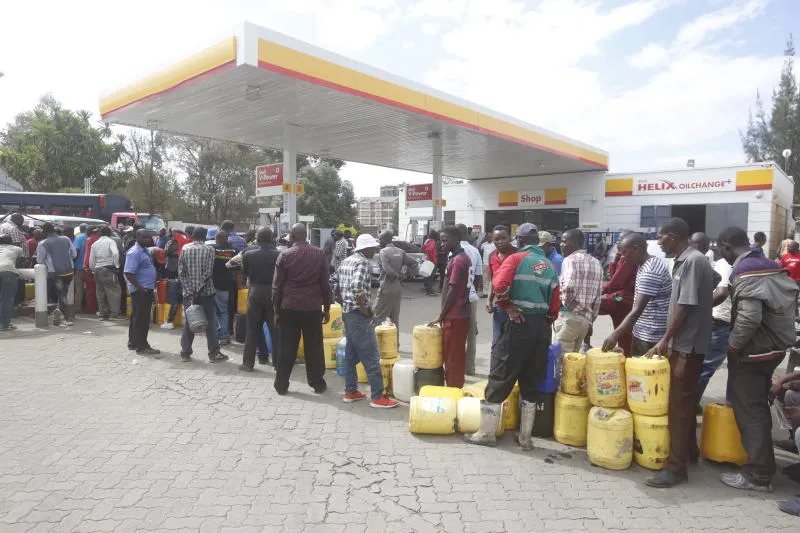
The situation on the ground has been severe in several parts of the country. A spot check by The Star revealed long queues at the few stations still dispensing fuel in Nairobi, while many others were conspicuously dry. Taxi drivers and boda boda operators reported traversing multiple estates without success. One taxi driver based in Westlands said he had to abandon his vehicle and use a motorcycle to locate fuel after driving across South B, South C and Nairobi West without finding an open pump.
Outside the capital, conditions have been even worse. In the North Rift region, towns including Eldoret, Kitale, Kapsabet, Bungoma and parts of West Pokot have experienced widespread diesel shortages, with many stations exhausting their reserves entirely. The timing has been especially damaging for farmers in the middle of the planting season, who rely on diesel-powered machinery for field preparation and transport. One large-scale farmer near the Elgeyo border told the Daily Nation that the unexpected shortages had significantly affected operations.
No Oil Tankers Headed for Mombasa
The most alarming indicator of the supply strain came from shipping data. According to the Kenya Ports Authority, of the 52 vessels scheduled to dock at Mombasa port up to early April, none was carrying fuel. The scheduled arrivals included container vessels, general cargo ships and palm oil carriers, but not a single petroleum tanker.
A spot check at the Kipevu Oil Terminal showed no petroleum tanker waiting to offload, while only a handful of trucks sat in the waiting bay at the Shimanzi oil depots. Fuel transporters told the Business Daily that they had been alerted to possible shortages at the Shimanzi depot in the coming days.
Kenya imports 100 percent of its petroleum products through Mombasa, making the port a single point of vulnerability for the entire country’s energy supply. Regulations require importers to maintain operational reserves lasting 20 to 25 days, but industry sources say most marketers hold stocks for only 15 to 18 days, leaving the country exposed to disruptions lasting more than two to three weeks.
Reports suggest that around 20 percent of fuel stations are already experiencing stock-outs, with industry players warning that the situation could escalate rapidly if tanker arrivals are not restored.
Government Insists Supply Is Secure
Despite the evidence of growing shortages, the government has maintained a firm line that national fuel reserves remain adequate. Energy Cabinet Secretary Opiyo Wandayi told reporters on March 25 that the country holds 102 million litres of petrol, 146 million litres of diesel and 167 million litres of kerosene and Jet A-1 through the Kenya Pipeline Company, and that there is no shortage.
“There is no fuel shortage,” Wandayi stated plainly. “Our systems are working. Our stocks are sufficient. There is absolutely no cause for alarm.”
But his assurances were accompanied by a sharp warning to industry operators. Wandayi said the ministry had noted reports of product hoarding and speculative withholding of stocks by some oil marketing companies, and warned that companies found engaging in such conduct would face sanctions.
Petroleum Principal Secretary Mohamed Liban attributed the localised shortages to a combination of operational challenges, hoarding and panic buying driven by speculation over rising global prices. He added that more than 100 million litres of super petrol have already been released into the market, enough to stabilise supply for over 10 days.
Context is everything. While you follow today’s updates, use the Serrari Group Market Index and Marketplace to spot emerging shifts. Need to sharpen your edge? Our Wealth Builder Course turns these insights into a professional-grade strategy.
The Strait of Hormuz and Kenya’s Exposure
At the heart of the global disruption is the Strait of Hormuz, the narrow waterway between Oman and Iran through which roughly 21 percent of the world’s oil and liquefied natural gas passes. The ongoing military conflict has effectively crippled traffic through the strait, with over 3,200 vessels reported stranded and shipping companies rerouting or suspending operations altogether.
For Kenya, the implications extend well beyond fuel. The country depends on Middle East trade routes for key exports including flowers, coffee, tea and other agricultural products. President Ruto acknowledged this broader vulnerability, noting that the disruption threatens commodity supply chains as well as energy.
Kenya imports its petroleum under a government-to-government arrangement struck in March 2023 with Saudi Aramco, Abu Dhabi National Oil Company and Emirates National Oil Company. The G-to-G deal replaced the previous open tender system and has been credited with stabilising fuel prices and easing pressure on foreign exchange reserves. However, all three suppliers have reported attacks on their refineries since the war began, leading to shutdowns at some facilities and raising serious questions about supply continuity.
The disruption has already forced Kenya to import smaller fuel cargoes, triggering erratic supply that industry players warn could worsen in the coming weeks.
The Search for Alternative Suppliers
To ease the pressure, President Ruto revealed that he has tasked the Ministry of Petroleum and Energy with engaging existing suppliers and identifying alternative oil sources. While he did not specify new partners, he confirmed that progress has been made in securing alternative supply options.
One of the most prominent alternatives being pursued across Africa is Nigeria’s Dangote Petroleum Refinery. According to Bloomberg, Kenya is among several African countries that have approached the $20 billion facility, which has a refining capacity of 650,000 barrels per day and began operations in 2024. Dangote told The Economist that the current challenge is not pricing but availability, as demand from across the continent continues to outstrip supply.
However, analysts caution that the refinery alone cannot fully bridge Africa’s fuel deficit. Approximately 75 percent of its output is reserved for domestic consumption in Nigeria, leaving limited volumes available for export. Around 75 percent of refined fuel imports in east and southern Africa come from the Middle East, according to energy consultancy CITAC, underscoring the scale of the diversification challenge.
Airlines Hike Fares as Jet Fuel Costs Surge
The fuel crisis has also reached the aviation sector. Skyward Airlines, one of Kenya’s domestic carriers, announced on March 26 that it would introduce a fuel surcharge on all tickets effective April 1, citing sustained pressure from rising global fuel costs. Other airlines are expected to follow suit.
The fare increases reflect a dramatic spike in jet fuel prices. According to the International Air Transport Association, jet fuel in Africa cost approximately $211 per barrel as of late March, representing a 122 percent increase from the February average of approximately $95 per barrel, before the war began. Aviation fuel typically accounts for between 30 and more than 40 percent of operating costs for African carriers, well above the global average of 20 to 25 percent.
Kenya’s aviation industry imports 100 percent of its jet fuel, making it acutely sensitive to supply disruptions and price volatility. The combination of higher fares and potential fuel scarcity threatens to compound the economic burden already felt by consumers dealing with rising transport and food costs.
Hoarding Allegations and Rationing on the Ground
While the government maintains that aggregate supply is adequate, a pattern of localised rationing and stock manipulation has emerged that contradicts the official narrative. Most retail outlets have started rationing fuel per customer, while others are prioritising cash payments over card or mobile money transactions.
The Petroleum Outlets Association of Kenya, the national umbrella body for fuel retailers, declined to comment on the shortages and referred enquiries to the Energy and Petroleum Regulatory Authority, which did not immediately respond. The association’s chairman, Martin Chomba, has previously noted that the impact is being felt more severely in rural areas, where some fuel stations have been forced to shut down entirely.
Some industry players have accused major suppliers of withholding diesel in anticipation of the next monthly fuel price review, when prices are expected to rise sharply. The Energy and Petroleum Regulatory Authority recently announced that fuel prices would remain unchanged for the March-April cycle, with super petrol at Ksh 178.28, diesel at Ksh 166.54 and kerosene at Ksh 152.78 in Nairobi. But the freeze was based on vessel arrivals from before the conflict escalated, and the next review is expected to reflect significantly higher global costs.
A Broader Economic Threat
Kenya’s fuel vulnerability is a structural problem, not just a temporary one. The country lacks national strategic fuel reserves meeting the 90-day standard recommended by the International Energy Agency, and no African country is a member of the agency. The National Oil Corporation of Kenya, which was mandated to maintain strategic reserves, has faced prolonged financial difficulties.
Fuel is a core input across nearly every sector of the economy, including transport, manufacturing, agriculture and electricity generation. A sustained shortage would drive up the cost of moving goods across the country, push food prices higher and potentially derail the economic gains Kenya has made in recent years.
President Ruto acknowledged that a prolonged conflict would have ripple effects across regional and global markets, but expressed hope that the war would de-escalate through dialogue. He said his administration would be very tough on licences, ensuring that no player exploits the crisis at the expense of Kenyans.
For now, the situation remains precarious. The government’s assurances of stable supply sit uncomfortably alongside empty pumps in Nairobi, dry depots in Mombasa and a shipping schedule that shows no fuel headed for Kenya’s shores. Whether Ruto’s warnings to oil marketers will be matched by enforcement, and whether alternative supply channels can be secured before current stocks run out, will determine how deeply this crisis cuts into the lives of ordinary Kenyans in the weeks ahead.
Your financial future isn’t something you wait for—it’s something you build.
The real question is: when do you begin?
Move beyond simply staying informed.
Navigate the markets with clarity—track trends through the Serrari Group Market Index, uncover opportunities in the Serrari Marketplace, and build practical knowledge with our Curated Wealth Builder Course.
Stay connected to what truly matters.
Get daily insights on macro trends and financial movements across Kenya, Africa, and global markets—delivered through the Serrari Newsletter.
Growth opens doors.
Advance your career through professional programs including ACCA, HESI A2, ATI TEAS 7 , HESI EXIT , NCLEX – RN and NCLEX – PN, Financial Literacy!🌟—designed to move you forward with confidence.
See where money is flowing—clearly and in real time.
Track Money Market Funds, Treasury Bills, Treasury Bonds, Green Bonds, and Fixed Deposits, alongside global and African indexes, key economic indicators, and the evolving Crypto and stablecoin landscape—all within Serrari’s Market Index.