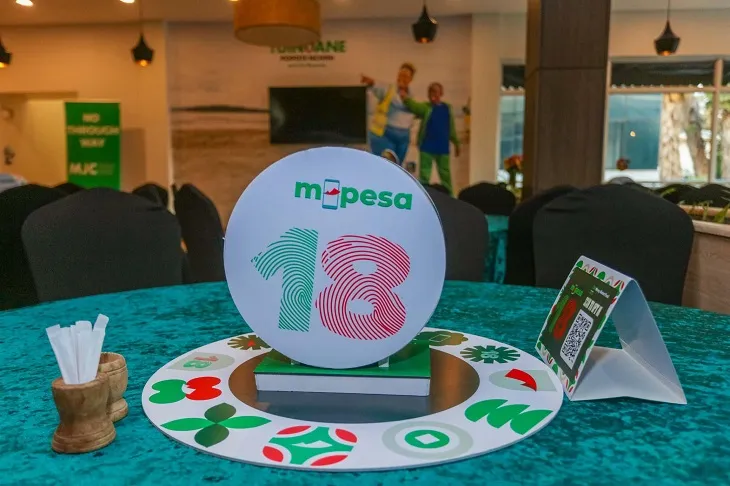
Kenya’s mobile money revolution is poised to converge with blockchain and stablecoin technology as M-Pesa, the dominant mobile money platform with over 60 million monthly users across Africa, integrates digital asset infrastructure into its service ecosystem. The memorandum of understanding between M-Pesa and the ADI Foundation, signed by Safaricom with support from Middle Eastern capital through the ADI Foundation, signals an ambitious initiative to deploy blockchain infrastructure supporting stablecoin payments across Kenya and broader African markets. The integration represents a convergence of two revolutionary financial technologies—mobile money and blockchain—that could fundamentally transform how payments and value transfer function in East Africa. Understanding the implications requires examining the technical architecture, the economic rationale, and the potential for M-Pesa’s blockchain integration to establish new paradigms for financial inclusion and cross-border commerce.
Build the future you deserve. Get started with our top-tier Online courses: ACCA, HESI A2, ATI TEAS 7, HESI EXIT, NCLEX-RN, NCLEX-PN, and Financial Literacy. Let Serrari Ed guide your path to success. Enroll today.
The ADI Chain blockchain infrastructure that M-Pesa is integrating represents a specialized blockchain designed to support high-volume, low-cost payment processing optimized for African financial inclusion contexts. Unlike Bitcoin’s proof-of-work architecture optimized for decentralization and censorship resistance, or Ethereum’s platform supporting complex smart contracts, the ADI Chain prioritizes transaction throughput, settlement speed, and cost efficiency. The blockchain’s architecture enables settlement of high volumes of transactions at minimal cost, aligning with the requirements of African payment systems where transaction costs must remain extremely modest to serve low-income populations. The ADI Foundation’s backing and the involvement of Middle Eastern capital suggest that the blockchain infrastructure represents a strategic investment in African financial technology rather than a speculative venture.
The integration timeline indicates that stablecoin payments through M-Pesa could commence as early as early 2026, enabling nearly instantaneous deployment to M-Pesa’s 60 million monthly user base once the technology infrastructure is operational. The immediate addressable market—existing M-Pesa users, many of whom already transact through informal financial channels and alternative payment methods—represents extraordinary potential for stablecoin volume and adoption. Rather than requiring development of new user bases or infrastructure investments to reach new customer segments, the integration leverages existing M-Pesa usage patterns and customer relationships to bootstrap stablecoin adoption. The potential for rapid deployment to massive user populations represents a fundamental difference from emerging stablecoin platforms that must painstakingly build user bases from zero.
The economic value proposition of stablecoin integration into M-Pesa’s ecosystem is compelling from multiple perspectives. For domestic payments, stablecoin settlement enables more transparent pricing and accounting, as merchants and consumers can denominate transactions in stable dollar terms while maintaining shilling familiarity for consumer psychology. For cross-border payments, stablecoin settlement eliminates the currency conversion risks and delays that characterize traditional international money transfers through banking channels. A Kenyan exporter receiving payment in stablecoins through M-Pesa eliminates currency conversion risk entirely, receiving value immediately denominated in stable dollars rather than uncertain shilling-denominated deposits. The economic efficiency of stablecoin-based payments should translate into reduced transaction costs relative to current payment mechanisms.
Payment infrastructure interoperability between M-Pesa and blockchain-based stablecoin systems requires solving technical challenges regarding data synchronization, settlement finality, and regulatory compliance. The existing M-Pesa system operates through centralized servers operated by Safaricom, while blockchain systems are decentralized by design. The integration must therefore establish governance structures enabling M-Pesa to interface with blockchain infrastructure while maintaining Safaricom’s operational control and regulatory compliance responsibilities. The technical solution likely involves M-Pesa acting as a fiat on/off ramp enabling users to convert between shillings and stablecoins, with blockchain handling value transfer and settlement. The architecture maintains Safaricom’s regulatory responsibilities while enabling blockchain-based settlement for sophisticated users requiring direct blockchain access.
Cross-border payment implications represent the most transformative potential of M-Pesa blockchain integration. Current remittance flows from Kenyans working abroad rely on banking channels, informal networks, or specialist remittance providers, each with substantial transaction costs and settlement delays. Stablecoin remittances through M-Pesa would enable instantaneous settlement of value from Kenya’s diaspora directly to domestic recipients, with minimal friction and transparent costs. The competitive threat to traditional remittance services could force substantial fee reductions or enhancement of service quality, with ultimate benefits accruing to remittance senders and recipients. The potential for blockchain-enabled remittances to revolutionize diaspora capital flows could have significant macro-economic implications for Kenya’s foreign exchange position and development financing.
Regional expansion across East African countries (Kenya, DRC, Egypt, Ethiopia, Ghana, Lesotho, Mozambique, and Tanzania) would amplify the network effects and economic benefits of the ADI Chain infrastructure deployment. A unified stablecoin payment system accessible across multiple African countries could facilitate intra-African trade, which has historically been constrained by currency conversion costs, regulatory barriers, and lack of payment infrastructure. The potential for blockchain-based payment infrastructure to enable faster, cheaper intra-African commerce could constitute a structural transformation of regional trade patterns and economic integration. The geopolitical implications of such a transformation—potentially enabling African economies to trade and settle value without reliance on US dollar-denominated banking channels—are substantial.
One decision can change your entire career. Take that step with our Online courses in ACCA, HESI A2, ATI TEAS 7, HESI EXIT, NCLEX-RN, NCLEX-PN, and Financial Literacy. Join Serrari Ed and start building your brighter future today.
Regulatory coordination across multiple African jurisdictions presents a critical challenge to the multi-country deployment strategy. Each country where M-Pesa operates has distinct regulatory frameworks governing telecommunications, financial services, and digital assets. The ADI Foundation and Safaricom must navigate regulatory approval processes in each jurisdiction, securing licenses and compliance frameworks for blockchain-based payment infrastructure. The regulatory complexity could potentially delay deployment or require the platform to operate in legal gray zones lacking explicit authorization. However, given the strategic importance of fintech in African development and the receptivity of many African regulators to financial innovation, there is reasonable possibility that regulatory cooperation can be achieved.
The relationship between stablecoin systems integrated into M-Pesa and the development of local cryptocurrency markets warrants consideration. The presence of stablecoin access through M-Pesa could accelerate cryptocurrency adoption more broadly, as users with stablecoin holdings become exposed to cryptocurrency wallets and blockchain-based systems. The gradual expansion of user comfort with digital assets could drive migration toward other cryptocurrencies and more sophisticated blockchain applications. However, the dominance of stable value preservation motivation over speculative cryptocurrency trading suggests that the primary value driver will remain stablecoin utility for payments and value preservation rather than cryptocurrency speculation.
The outlook for M-Pesa blockchain integration appears constructively anchored to the economic value proposition of stablecoin-based payments and Safaricom’s strategic commitment to the initiative. The involvement of major Middle Eastern capital and technical expertise suggests that the project possesses resources sufficient to navigate technical and regulatory challenges. The deployment timeline indicating commencement in early 2026 suggests that substantial progress has already been achieved and that the initiative represents more than speculative proposal. If successfully implemented, the M-Pesa blockchain integration could represent a watershed moment for African financial technology, establishing a template for how legacy financial infrastructure can incorporate blockchain and digital asset technologies to enhance financial services and economic integration.
Kenya’s position as the lead market for M-Pesa blockchain integration provides opportunity for the country to establish leadership in African fintech and position Kenyan financial institutions and technology companies as regional hubs for blockchain-based financial innovation. The successful integration could position Kenya as the center of gravity for African stablecoin and blockchain development, attracting talent, capital, and institutional attention. For Kenyan investors and entrepreneurs, the transformation of M-Pesa into a blockchain-integrated platform could create new opportunities for value creation and business development in emerging fintech segments. The convergence of mobile money and blockchain represents a genuinely transformative development for Kenya’s financial infrastructure and economic potential.
Ready to take your career to the next level? Join our Online courses: ACCA, HESI A2, ATI TEAS 7 , HESI EXIT , NCLEX-RN and NCLEX-PN, Financial Literacy! 🌟 Dive into a world of opportunities and empower yourself for success. Explore more at Serrari Ed and start your exciting journey today! ✨
Track GDP, Inflation and Central Bank rates for top African markets with Serrari’s comparator tool.
See today’s Treasury bonds and Money market funds movement across financial service providers in Kenya, using Serrari’s comparator tools.
Photo Source: Google
By: Montel Kamau
Serrari Financial Analyst
9th March, 2026