Global investment markets are experiencing a volatility surge that is testing the convictions of even the most steadfast bulls. The escalation of the Middle East conflict — particularly the closure of the Strait of Hormuz — has driven a sharp near-term selloff across equities and risk assets in Asia and Europe, while simultaneously delivering a dramatic windfall to energy sector investors. The divergence between those sectors that benefit from geopolitical risk and those that suffer from it is one of the defining investment dynamics of the moment.
Yet beneath the near-term noise, the structural bull case that has powered global equity markets through 2024 and 2025 remains largely intact. Artificial intelligence continues to drive real earnings growth. Corporate balance sheets are healthy. Consumer spending, particularly in the United States, has proved more durable than pessimists predicted. And the prospect of interest rate cuts in the second half of 2026 continues to function as a backstop for asset valuations. The question is whether the geopolitical shock is large enough to overwhelm these structural tailwinds — and, at least for now, leading investment houses are saying no.
Build the future you deserve. Get started with our top-tier Online courses: ACCA, HESI A2, ATI TEAS 7, HESI EXIT, NCLEX-RN, NCLEX-PN, and Financial Literacy. Let Serrari Ed guide your path to success. Enroll today.
Asian and European Equities Sell Off Sharply
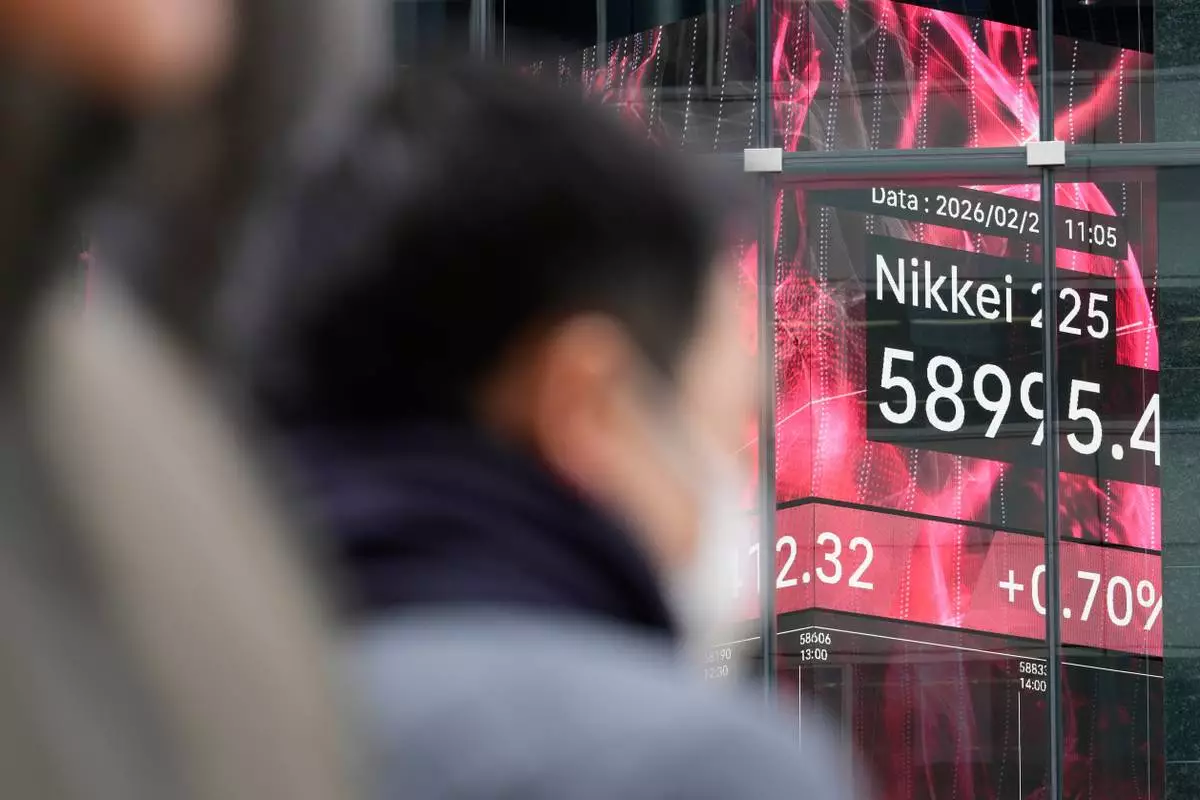
The immediate market reaction to the Middle East escalation has been unambiguously negative for broad equity indices. Japan’s Nikkei 225 fell nearly 2%, while South Korea’s Kospi shed more than 3% in early session trading. The MSCI Asia-Pacific ex-Japan Index also declined approximately 2%, reflecting broad risk-off sentiment across the region. European bourses opened weaker, with Germany’s DAX and France’s CAC 40 declining as investors digested the implications of a 50%-plus surge in European gas prices for manufacturing competitiveness and corporate margins.
Currency markets also shifted. The Japanese yen — traditionally a safe-haven currency that strengthens in periods of global stress — appreciated modestly against the U.S. dollar, while emerging market currencies in oil-importing economies (notably South Korea, India, and Turkey) came under selling pressure as investors priced in the deteriorating current account implications of sharply higher crude prices.
However, the picture for energy stocks was the polar opposite of the broad market decline. In U.S. premarket trading, Exxon Mobil gained more than 4%, while Chevron and ConocoPhillips advanced 3% and more than 5%, respectively. European oil majors Shell and TotalEnergies also posted strong gains. For energy sector investors who have long argued that energy equities provide a natural geopolitical risk hedge within a diversified portfolio, this week’s action represents a powerful validation of that thesis.
Nikkei 225: -2.0%
Korea Kospi: -3.0%+
MSCI Asia-Pacific: -2.0%
Exxon Mobil: +4.0%+
ConocoPhillips: +5.0%+
AI: The Investment Mega-Theme That Is Proving Durable
Beyond the immediate geopolitical disruption, the defining investment narrative of 2026 is the continued dominance of Artificial Intelligence as a returns driver. Fidelity International has called AI the defining theme for equity markets in 2026, while the BlackRock Investment Institute has argued that AI will likely ‘keep trumping tariffs and traditional macro drivers’ as the primary determinant of corporate earnings growth and equity market performance.
The fundamental data supports this thesis. Analysts are projecting 14% to 16% annual earnings-per-share (EPS) growth for the S&P 500 in 2026 — a robust figure by historical standards, and one that is increasingly broad-based. Critically, the 493 S&P 500 companies outside the famed ‘Magnificent 7’ mega-cap technology group (Apple, Microsoft, NVIDIA, Alphabet, Amazon, Meta, and Tesla) are expected to grow earnings at roughly double the pace of 2025. This broadening of the AI-driven earnings cycle — from a concentrated group of technology titans to a wider set of companies across multiple sectors — is exactly the development that investment strategists have been watching for as evidence that the AI bull case is durable rather than narrowly concentrated.
AI’s impact is being felt most profoundly in sectors beyond pure technology. Financial services companies are deploying AI for fraud detection, credit underwriting, and customer service automation at scale. Healthcare organisations are using AI-driven diagnostics and drug discovery tools that are accelerating pharmaceutical R&D timelines. Industrial companies are applying AI to predictive maintenance, quality control, and supply chain optimisation. Each of these deployments is driving real, measurable productivity improvements that translate into higher margins and earnings — the ultimate foundation of equity market returns.
S&P 500 EPS Growth Forecast (2026): 14% – 16%
EPS Growth Broadening: 493 ex-Magnificent 7 stocks doubling pace vs. 2025
One decision can change your entire career. Take that step with our Online courses in ACCA, HESI A2, ATI TEAS 7, HESI EXIT, NCLEX-RN, NCLEX-PN, and Financial Literacy. Join Serrari Ed and start building your brighter future today.
Morgan Stanley’s Year Four Bull Market Case
Morgan Stanley’s Global Investment Committee published its latest market outlook, projecting that the current bull market will extend into its fourth consecutive year with near double-digit percentage returns for the S&P 500. The firm has set a year-end S&P 500 target of approximately 7,500, implying meaningful upside from current trading levels. The case rests on three pillars: continued AI-driven earnings growth, eventual Federal Reserve rate cuts in the second half of 2026, and resilient U.S. consumer spending that has consistently defied pessimistic forecasts.
Morgan Stanley acknowledges significant risks to its base case. A prolonged Strait of Hormuz closure that drives energy prices materially higher would represent a stagflationary shock — combining slower growth with reaccelerated inflation — that central banks would be unable to offset with rate cuts without jeopardising their inflation credibility. A re-acceleration of U.S. inflation to 3% or above would likely force the Fed to pause or reverse rate cut plans, removing a key pillar of the bull case. And a sharper-than-expected deterioration in the U.S. labour market would threaten the consumer spending resilience that has been the economy’s most consistent source of strength.
Gold Above $5,400: Safe-Haven Demand Reaches New Heights
Gold’s performance over the past week has been nothing short of extraordinary. Spot gold prices briefly pierced the $5,400 per troy ounce level for the first time before settling around $5,376 — still representing a 2% gain in a single session and the highest sustained price level in over a month. The surge reflects multiple demand drivers converging simultaneously: safe-haven buying amid geopolitical uncertainty, inflation hedging against energy-driven price pressures, and continued central bank accumulation by emerging market institutions pursuing de-dollarisation strategies.
For portfolio managers, gold’s strong performance in an environment where equities have also generally been performing well creates an unusual and welcome dynamic. Historically, gold tends to underperform in bull equity markets as investors opt for higher-returning risk assets. The fact that both gold and equities have been performing strongly suggests that markets are pricing two different outcomes simultaneously — a structural AI-driven growth scenario for equities, and a geopolitical risk/inflation scenario for gold. The question of which narrative ultimately dominates will be one of the key investment stories of the remainder of 2026.
Amundi and J.P. Morgan: Strategic Recommendations for March 2026
Leading institutional investment managers are offering measured and nuanced guidance for the current environment. Amundi’s March 2026 Global Investment Views recommend maintaining strategic equity exposure while selectively hedging geopolitical risk through energy sector overweights and gold allocations. The firm favours developed market equities — particularly the U.S. and, increasingly, Europe — over emerging markets, citing the relative clarity of AI adoption timelines in developed markets and the structural improvement in European fiscal policy following Germany’s spending expansion.
J.P. Morgan’s 2026 Market Outlook continues to favour U.S. equities and select emerging market opportunities, with emphasis on companies directly benefiting from AI infrastructure build-out — data centres, power generation, semiconductor equipment, and network infrastructure providers. Both Amundi and J.P. Morgan caution that the second half of 2026 will present a more challenging environment if the Federal Reserve’s rate cut cycle is delayed or curtailed, tightening financial conditions at precisely the point when geopolitical risks are potentially peaking.
The consensus view across institutional investment managers appears to be: stay long equities, particularly in AI-exposed sectors and U.S. large-caps; use the geopolitical uncertainty to build or maintain gold and energy hedges; and be prepared for a more volatile second half of the year in which the competing narratives of AI-driven growth optimism and geopolitical risk will periodically clash. It is an environment that rewards disciplined, research-driven allocation over momentum chasing.
Ready to take your career to the next level? Join our Online courses: ACCA, HESI A2, ATI TEAS 7 , HESI EXIT , NCLEX – RN and NCLEX – PN, Financial Literacy!🌟 Dive into a world of opportunities and empower yourself for success. Explore more at Serrari Ed and start your exciting journey today! ✨
Track GDP, Inflation and Central Bank rates for top African markets with Serrari’s comparator tool.
See today’s Treasury bonds and Money market funds movement across financial service providers in Kenya, using Serrari’s comparator tools.
photo source: Google
By: Montel Kamau
Serrari Financial Analyst
4th March, 2026