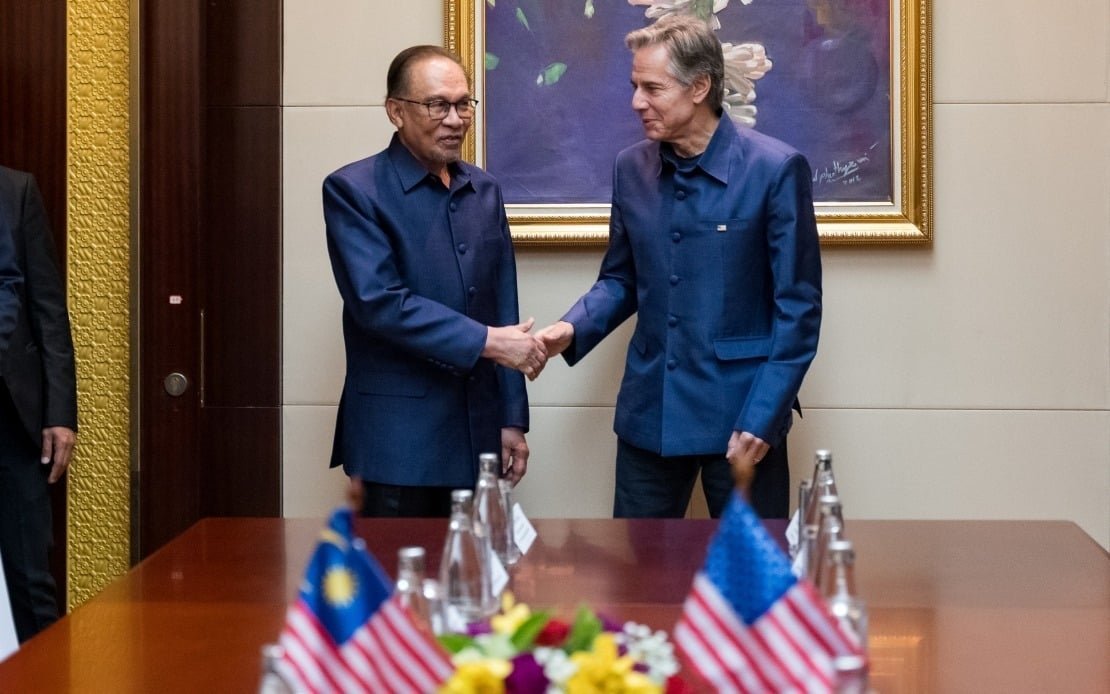
In a significant boost to Malaysia’s growing reputation as a hub for foreign investment, Prime Minister Datuk Seri Anwar Ibrahim announced today that the country welcomes a proposed investment of US$14.7 billion from several leading U.S. technology giants. The announcement came during a bilateral meeting between Anwar and U.S. Secretary of State Antony Blinken, held on the sidelines of the 44th and 45th Association of Southeast Asian Nations (ASEAN) Summits in Vientiane, Laos.
The proposed investment involves some of the most influential U.S. tech companies, including Google, Microsoft, Enovix Corporation, Amazon Web Services (AWS), Abbott Laboratories, and Boeing. According to Anwar, the new wave of investment would be critical in helping Malaysia accelerate its ambitions to become a regional leader in the technology and digital economy sectors.
Strengthening Ties with U.S. Tech Giants
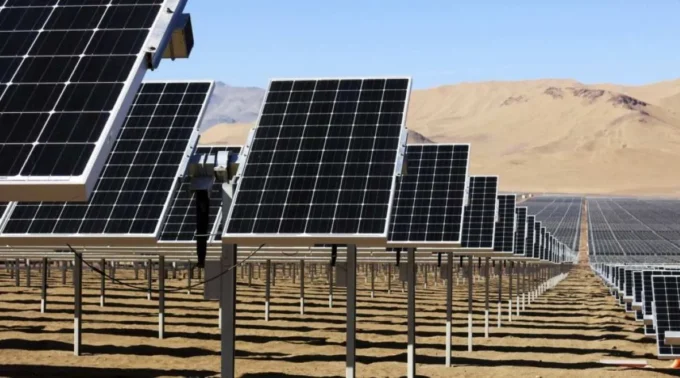
Malaysia’s strategic location in Southeast Asia, coupled with its robust infrastructure and skilled labor force, makes it an attractive destination for tech giants looking to expand in Asia. The proposed investment, totaling US$14.7 billion (approximately RM63.2 billion), will cover various industries, with a strong focus on sectors such as cloud computing, semiconductors, renewable energy, and advanced manufacturing.
Microsoft and Google, in particular, are expected to expand their cloud computing operations in Malaysia, offering services that will cater to a wide array of industries such as finance, healthcare, and education. These investments are likely to significantly enhance Malaysia’s digital economy and support the government’s push towards greater digitalization, especially in the wake of the COVID-19 pandemic that accelerated the need for digital transformation across the country.
Enovix Corporation, a U.S.-based company specializing in advanced lithium-ion battery technology, is anticipated to invest in Malaysia’s growing electric vehicle (EV) industry. The development of this sector aligns with Malaysia’s commitment to becoming a green technology hub in the region. With global interest in EVs rising, Enovix’s investment could propel Malaysia forward as a major player in the production of high-tech batteries, which are critical for the future of transportation and energy storage.
Amazon Web Services (AWS) is another big player, and its commitment to Malaysia could further solidify the country as a major cloud computing hub. AWS’s expansion would offer improved cloud-based services, enabling businesses of all sizes to access critical digital infrastructure and foster innovation. This will help Malaysia stay competitive, especially with neighboring countries like Singapore and Indonesia also vying to be technology leaders in Southeast Asia.
Additionally, Abbott Laboratories’ investment is expected to contribute to the healthcare sector, while Boeing’s involvement may focus on aerospace technology and defense cooperation, further strengthening bilateral ties between Malaysia and the U.S.
A Path Toward Enhanced Cooperation
During the meeting, Prime Minister Anwar Ibrahim expressed optimism about the deepening economic relationship between Malaysia and the U.S. He noted that the investments reflect the confidence of U.S. corporations in Malaysia’s long-term economic potential and political stability.
“The proposed investments by these U.S. tech giants are a testament to Malaysia’s attractiveness as an investment destination in Southeast Asia. We are eager to strengthen cooperation with the United States, particularly in emerging industries such as green technology, artificial intelligence, and cloud computing,” Anwar said.
The Prime Minister also underscored the importance of enhancing Malaysia’s human capital through these partnerships. He noted that collaborations with U.S. tech firms could open new avenues for skills development and capacity building for Malaysians, especially in high-tech fields. This would help Malaysia create a workforce ready for Industry 4.0, driven by automation, data exchange, and smart technologies.
Furthermore, Anwar welcomed the U.S. delegation to the next Senior Officials Dialogue, scheduled to take place in Putrajaya at the end of October. This dialogue comes at a pivotal moment, as Malaysia and the U.S. mark the 10th anniversary of their Comprehensive Partnership, a framework designed to elevate bilateral ties across multiple domains, including trade, defense, education, and culture.
U.S. Emphasizes Support for Malaysia’s ASEAN Chairmanship
In addition to discussing economic cooperation, U.S. Secretary of State Antony Blinken expressed the U.S. government’s support for Malaysia’s upcoming ASEAN chairmanship in 2025. Blinken reiterated the U.S.’s commitment to working with Malaysia to enhance regional stability and security in Southeast Asia, particularly in support of a free, open, secure, resilient, and prosperous Indo-Pacific region.
Blinken also emphasized the importance of the U.S.-Malaysia Comprehensive Partnership, particularly in fostering people-to-people ties, economic cooperation, and security collaboration. The U.S. State Department issued a statement following the meeting, reaffirming the significance of the bilateral relationship and the mutual desire to address global challenges together.
Both Blinken and Anwar discussed regional security issues, including the ongoing conflict in Gaza. Anwar praised the U.S. for its role in the passage of United Nations Security Council (UNSC) Resolution 2735, which called for an immediate ceasefire of all hostilities in Gaza. He urged the U.S. to use its influence to swiftly implement the resolution to alleviate the humanitarian crisis in the region.
Regional Stability and Humanitarian Concerns
Blinken and Anwar also addressed broader regional issues affecting ASEAN and the Indo-Pacific. As Malaysia prepares to chair ASEAN in 2025, the U.S. has pledged its support for Malaysia’s leadership role in navigating critical regional challenges, including tensions in the South China Sea, cybersecurity threats, and economic inequality.
The leaders further emphasized the need for cooperation in addressing the humanitarian crisis in Gaza. Both parties called for the immediate release of hostages and an urgent influx of humanitarian aid to support the people of Gaza. They also agreed on the importance of starting reconstruction efforts as soon as possible to rebuild infrastructure and restore stability in the region.
Malaysia’s Economic Outlook Amid Global Uncertainty
Despite global economic challenges, Malaysia has remained a focal point for foreign investors, especially those from the U.S. In recent years, Malaysia has leveraged its strategic location, well-developed infrastructure, and strong trade relations to attract foreign direct investment (FDI). The country’s tech and digital sectors have particularly benefited from this influx of capital, as Malaysia aims to become a regional hub for high-tech industries.
The U.S. remains one of Malaysia’s largest trading partners, with bilateral trade in goods and services reaching US$67.2 billion in 2023. The U.S. is also a significant source of FDI, particularly in sectors such as electronics, aerospace, healthcare, and manufacturing. With the proposed US$14.7 billion investment, these numbers are expected to increase further, solidifying Malaysia’s position as a key partner for the U.S. in Southeast Asia.
Looking Ahead: A Strengthened Partnership
The deepening of U.S.-Malaysia economic ties marks a critical juncture in the evolving landscape of Southeast Asia. The investments from U.S. tech giants not only provide immediate economic benefits but also contribute to Malaysia’s long-term vision of becoming a high-income nation driven by innovation and technology.
As both countries celebrate the 10th anniversary of their Comprehensive Partnership, the outlook remains bright. The mutual commitment to strengthening people-to-people ties, boosting regional stability, and enhancing economic and security cooperation sets the stage for an even closer partnership in the coming years.
With the U.S. backing Malaysia’s ASEAN chairmanship and continued investments in key sectors, the bilateral relationship is poised to evolve into a strategic alliance that will play a pivotal role in shaping the future of Southeast Asia and the Indo-Pacific region.
Photo source: Google
By: Montel Kamau
Serrari Financial Analyst
11th October, 2024