










Lithium Africa Corp. (TSXV: LAF) has signed a definitive agreement to acquire a substantial lithium asset in South Africa’s Namaqualand region, marking a significant strategic expansion for the recently listed Canadian junior miner as global demand for battery-grade lithium inches toward what analysts increasingly describe as a supply inflection point.
The company announced on February 25, 2026 that it had entered into a deal to acquire 70% of Namli Exploration & Mining Proprietary Limited, which holds the Springbok Project — a 1,675 km² land package in the Northern Cape province that includes a past-producing spodumene mine, a known field of mapped lithium-caesium-tantalum (LCT) pegmatites, and a near-term monetizable ore stockpile of more than 30,000 tonnes.
The deal is structured as a staged acquisition. Lithium Africa will take an initial 30% stake upon receipt of authorisation under South Africa’s Currency and Exchanges Act, with the remaining 40% following upon receipt of consent from the South African Department of Mineral and Petroleum Resources — a process known as s11 Consent. The total consideration includes US$1.35 million in cash, a US$150,000 payment to settle a third-party claim, and US$2.5 million payable over 24 months at roughly US$106,000 per month. A US$200,000 consulting fee, payable in company shares, is also included pending TSX Venture Exchange approval.
Build the future you deserve. Get started with our top-tier Online courses: ACCA, HESI A2, ATI TEAS 7, HESI EXIT, NCLEX-RN, NCLEX-PN, and Financial Literacy. Let Serrari Ed guide your path to success. Enroll today.
The Springbok Project: Geography and Geological Setting
The Springbok Project sits in a sparsely populated but strategically accessible corner of Namaqualand, approximately 80 kilometres north of the town of Springbok and directly south of the Orange River near the Namibian border. The region is well established as a host of LCT-type pegmatite systems — coarse-grained igneous rocks enriched in lithium, caesium, and tantalum. These pegmatite belts, which run broadly east-west across the Namaqualand Metamorphic belt, span approximately 450 kilometres in length and 30 kilometres in width, and have historically yielded notable spodumene production in the region.
The project land package encompasses an active 5-hectare mining permit — home to the past-producing Norrabees I pegmatite mine and its associated ore stockpile — surrounded by a much larger 1,675 km² prospecting right. While prior operators directed most of their attention toward the Norrabees area, Lithium Africa’s geological team has used reconnaissance mapping to identify the project’s far broader district-scale potential. A 30-day mapping program conducted in 2025 identified 30 newly discovered spodumene-bearing pegmatites within a mineralized trend extending more than 20 kilometres — a discovery that elevates the Springbok Project well beyond a single-asset acquisition.
Tyron Breytenbach, CEO of Lithium Africa Corp., framed the deal as a calculated complement to the company’s wider African portfolio. “The acquisition of the Springbok Project provides Lithium Africa with an advanced brownfields operation to complement our exciting but earlier stage grassroots programs across Africa,” he said. “The >30,000 tonne stockpile provides a near-term source of cash flow that Lithium Africa will seek to monetize to provide a non-dilutive source of exploration capital. This is in line with our business plan of offering the most exploration potential at the lowest share count.”
Norrabees Mine and Historical Resource Estimate
The centrepiece of the acquisition is the Norrabees I pegmatite, an LCT-type system with lithium mineralization dominated by spodumene and subordinate lepidolite — the same mineral pairing found in many of the world’s most productive hard-rock lithium deposits.
A NI 43-101 technical report prepared by Dr. Johan Hattingh of Creo Design (Pty) Ltd. in January 2024 for Moonbound Mining Ltd. (now Cape Lithium Corp.) documents an inferred mineral resource of 41,420 tonnes grading 1.005% Li₂O for the in-situ pegmatite, and 30,259 tonnes grading 1.61% Li₂O for the intermediate stockpile, for a combined total of 71,679 tonnes at 1.27% Li₂O. The 2018–2019 diamond drilling program underpinning this estimate comprised 10 boreholes totalling 321.77 metres, with reported intercepts including 18.34 metres at 1.92% Li₂O and 32.66 metres at 1.09% Li₂O.
The historical estimate is classified as inferred and has not been independently verified by a qualified person under the current operators. Lithium Africa has been transparent in flagging this, noting that the company considers the historical data relevant as a guide for future exploration, and that its work program will include re-drilling at least 20% of the drillholes using oriented core to better define the geometry and continuity of the known mineralisation.
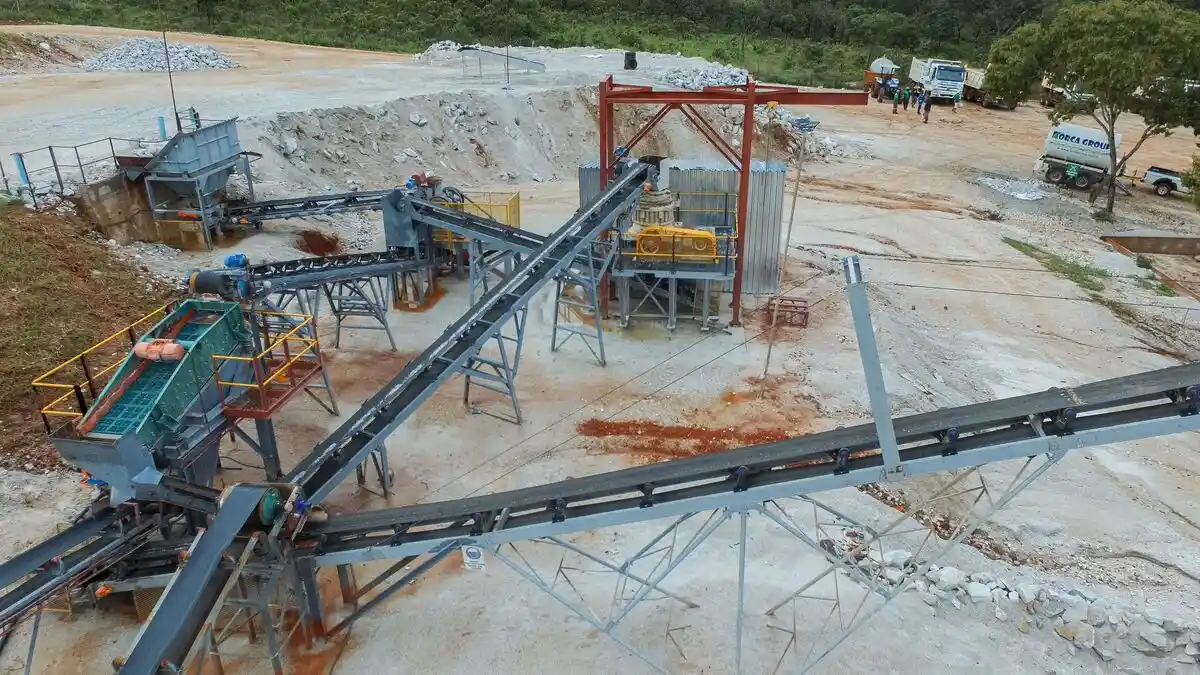
Perhaps more commercially significant in the near term is the metallurgical performance of the stockpile material. Pilot-scale dense media separation (DMS) test work conducted in September 2020 on Norrabees I stockpile material produced first-stage DMS concentrate averaging 4.89% Li₂O. Re-processing of a ~50 kg fraction of that concentrate returned grades of 6.41% Li₂O and 6.76% Li₂O — results broadly in line with battery-grade spodumene concentrate specifications, which typically require grades above 6% Li₂O. Lithium Africa intends to partner with a third party to monetize the stockpile, reinvesting proceeds into the broader regional exploration program.
Africa Rising: The Continental Lithium Context
Lithium Africa’s Springbok acquisition arrives at a moment when the African continent is assuming an increasingly prominent role in the global lithium supply chain. According to the African Energy Chamber’s State of African Energy 2026 Outlook, Africa produced 124,230 tonnes of lithium carbonate equivalent (LCE) in 2024, primarily from hard-rock spodumene deposits, and holds 26.7 million tonnes of identified lithium resources — representing 5% of the global total. African lithium production costs, ranging from $250 to $650 per tonne of spodumene concentrate, remain competitive against an Australian benchmark of approximately $800 per tonne.
A peer-reviewed study published in Economic Geology in 2025, co-authored by researchers from multiple institutions including the University of Oxford and the British Geological Survey, found that Africa holds significant untapped lithium resources predominantly in lithium pegmatites — but that apart from Zimbabwe, large-scale commercial extraction across the continent remains limited. The study highlights that approximately 60% of the world’s lithium is currently sourced from rare metal pegmatites, with Australia, Chile, and China accounting for more than 80% of global supply, underscoring the diversification opportunity that African deposits represent.
Benchmark Mineral Intelligence reported at the Giga Africa conference in 2025 that despite a difficult year for lithium prices, lithium demand from batteries grew approximately 25% in 2025 — and that Africa was recording the largest lithium supply growth of any region globally. Benchmark’s chief research officer Adam Panayi summarized the opportunity starkly: “Find another commodity market with 25% growth in a bad year.” Fastmarkets’ long-term projections see African hard-rock mines supplying 18% of global lithium output by 2030.
South Africa itself sits within a zone of geological prospectivity that has attracted increasing attention from explorers. The Namaqualand Metamorphic belt — where the Springbok Project is located — has been documented as a corridor of pegmatite-hosted lithium and tantalum mineralisation, with several neighbouring projects operated by Marula Mining already targeting spodumene in the same district. That Lithium Africa has now independently identified 30 new spodumene-bearing pegmatites across a 20-km trend within the Springbok Project’s larger exploration licence suggests that the Norrabees mine was only ever the surface expression of a more substantial system.
One decision can change your entire career. Take that step with our Online courses in ACCA, HESI A2, ATI TEAS 7, HESI EXIT, NCLEX-RN, NCLEX-PN, and Financial Literacy. Join Serrari Ed and start building your brighter future today.
The Demand Landscape: Why the Timing Matters
The acquisition comes as the lithium market navigates a complex transition from oversupply to anticipated equilibrium. After lithium carbonate prices collapsed from their 2022 peaks — falling to multi-year lows in early 2025 — the second half of 2025 saw a 56% price recovery, with prices rising from approximately US$10,799 per metric tonne in January 2025 to US$16,883 by December. Fastmarkets has projected the supply surplus to shift to a deficit of approximately 1,500 tonnes LCE in 2026, driven by production cutbacks at high-cost mines and rising battery demand from the electric vehicle and stationary energy storage sectors.
The International Energy Agency confirmed in early 2026 that the global lithium-ion battery market exceeded US$150 billion in 2025 — an increase of over 20% from the prior year — and that electric vehicles now account for more than 70% of total battery deployment globally. One in four cars sold globally in 2025 was electric. The agency also flagged that the supply chain concentration risk is rising, with China manufacturing well over 80% of all batteries in 2025, prompting Western nations and their mining partners to accelerate upstream diversification.
S&P Global has projected that lithium carbonate prices will rebound in 2026 and continue rising into the 2030s. Analysts at Arcane Capital forecast global lithium demand reaching 4.6 million tonnes LCE by 2030, led by EVs, grid storage, and heavy-duty transport. The Grand View Research lithium-ion battery market report estimates the sector will grow from US$68.66 billion in 2025 to US$306.24 billion by 2033, a CAGR of 21.1% — making upstream access to lithium supply among the most strategically valuable positions in the broader energy transition economy.
For early-stage explorers like Lithium Africa, the Springbok Project represents a rare combination of near-term cash flow optionality — through the stockpile — and long-term exploration upside through the district-scale pegmatite field. The company’s strategy of monetizing existing stockpile material to fund drilling without shareholder dilution is a capital-efficient model well-suited to a market that rewards low-cost discovery.
Lithium Africa’s Pan-African Platform
Lithium Africa Corp. is a newly listed entity that completed its qualifying transaction on the TSX Venture Exchange in February 2026, when it acquired Lithium Africa Resources Corp. (LARC) and began trading under the ticker LAF. The company was formerly known as Lombard Street Capital Corp. and underwent a name change and share consolidation as part of its transformation into a dedicated African lithium explorer.
Beyond the Springbok Project, the company maintains a 50/50 joint venture with GFL International Co., Ltd. — the LAF-GFL JV — through which it holds an indirect 50% interest in a portfolio of hard-rock pegmatite exploration assets spanning Morocco, Ivory Coast, Guinea, Mali, and Zimbabwe. These earlier-stage grassroots projects span more than 2,500 km² of exploration licences across five of Africa’s most geologically prospective lithium-bearing regions.
The company’s acquisition of the Springbok Project is therefore not a standalone bet on a single mine, but a deliberate effort to anchor its diversified African platform with a near-production-ready brownfields asset. The Norrabees stockpile provides a tangible near-term revenue bridge while Lithium Africa’s geological team pursues systematic exploration of the wider Springbok licence area — work that will include a regional structural study and targeted drilling of the 30 newly identified pegmatite targets.
The African mining industry overall has seen a wave of early-stage lithium discoveries and project milestones in 2025: Rwanda’s first lithium find by UK-based Aterian and Rio Tinto at the HCK Lithium Project in July, Atlantic Lithium’s discovery of spodumene-bearing pegmatites in Ivory Coast, and first spodumene concentrate production from Kodal Minerals’ Bougouni project in Mali. These milestones collectively underscore that Africa is transitioning from a geological curiosity for lithium explorers into a commercially active supply chain contributor.
Regulatory Framework and Transaction Conditions
The transaction is subject to several regulatory conditions under South African mining law, most notably the s11 Consent — formal approval from the Department of Mineral and Petroleum Resources for a foreign entity to acquire majority ownership in a South African mineral rights holder. This consent mechanism reflects South Africa’s broader mineral sovereignty policy framework, under which foreign investment in domestic mining assets requires government sign-off on ownership transfer thresholds above 50%.
Namli holds two active licences comprising the Springbok Project: prospecting right NC13301PR and mining permit NC10950MP. The mining permit, covering the 5-hectare Norrabees area, remains active and underpins the near-term monetisation of the in-pit and stockpile material. The prospecting right over the surrounding 1,675 km² provides the exploration authority needed to systematically test the newly identified pegmatite targets.
Benjamin Gelber, P.Geo and VP Exploration of Lithium Africa Corp., has reviewed and approved the technical disclosures associated with the acquisition. The company has carried out a site visit including check sampling of the stockpile and regional pegmatites, GPS collar location verification for existing drillholes, and review of legacy exploration data supplied in electronic format by the vendor.
Outlook
The Springbok acquisition signals a maturation in Lithium Africa’s strategy — moving from a purely grassroots exploration model to one that pairs near-term cash generation with long-term resource building. In a market where junior miners face ongoing capital access challenges due to compressed lithium prices and cautious investor sentiment, the ability to fund exploration from stockpile monetization rather than equity dilution is a meaningful competitive advantage.
With the global lithium market expected to swing into deficit as early as 2026 and African hard-rock projects forecast to represent nearly a fifth of global supply by 2030, Lithium Africa’s timing in locking up the Springbok Project — with its 20-km pegmatite trend still largely untested by modern exploration — positions the company to benefit from what could be a structural re-rating of African lithium assets as supply security concerns intensify among battery manufacturers and their government backers worldwide.
Ready to take your career to the next level? Join our Online courses: ACCA, HESI A2, ATI TEAS 7 , HESI EXIT , NCLEX – RN and NCLEX – PN, Financial Literacy!🌟 Dive into a world of opportunities and empower yourself for success. Explore more at Serrari Ed and start your exciting journey today! ✨
Track GDP, Inflation and Central Bank rates for top African markets with Serrari’s comparator tool.
See today’s Treasury bonds and Money market funds movement across financial service providers in Kenya, using Serrari’s comparator tools.
photo source: Google
By: Montel Kamau
Serrari Financial Analyst
26th February, 2026
Article, Financial and News Disclaimer
The Value of a Financial Advisor
While this article offers valuable insights, it is essential to recognize that personal finance can be highly complex and unique to each individual. A financial advisor provides professional expertise and personalized guidance to help you make well-informed decisions tailored to your specific circumstances and goals.
Beyond offering knowledge, a financial advisor serves as a trusted partner to help you stay disciplined, avoid common pitfalls, and remain focused on your long-term objectives. Their perspective and experience can complement your own efforts, enhancing your financial well-being and ensuring a more confident approach to managing your finances.
Disclaimer: This article is for informational purposes only and does not constitute financial advice. Readers are encouraged to consult a licensed financial advisor to obtain guidance specific to their financial situation.
Article and News Disclaimer
The information provided on www.serrarigroup.com is for general informational purposes only. While we strive to keep the information up to date and accurate, we make no representations or warranties of any kind, express or implied, about the completeness, accuracy, reliability, suitability, or availability with respect to the website or the information, products, services, or related graphics contained on the website for any purpose. Any reliance you place on such information is therefore strictly at your own risk.
www.serrarigroup.com is not responsible for any errors or omissions, or for the results obtained from the use of this information. All information on the website is provided on an as-is basis, with no guarantee of completeness, accuracy, timeliness, or of the results obtained from the use of this information, and without warranty of any kind, express or implied, including but not limited to warranties of performance, merchantability, and fitness for a particular purpose.
In no event will www.serrarigroup.com be liable to you or anyone else for any decision made or action taken in reliance on the information provided on the website or for any consequential, special, or similar damages, even if advised of the possibility of such damages.
The articles, news, and information presented on www.serrarigroup.com reflect the opinions of the respective authors and contributors and do not necessarily represent the views of the website or its management. Any views or opinions expressed are solely those of the individual authors and do not represent the website's views or opinions as a whole.
The content on www.serrarigroup.com may include links to external websites, which are provided for convenience and informational purposes only. We have no control over the nature, content, and availability of those sites. The inclusion of any links does not necessarily imply a recommendation or endorsement of the views expressed within them.
Every effort is made to keep the website up and running smoothly. However, www.serrarigroup.com takes no responsibility for, and will not be liable for, the website being temporarily unavailable due to technical issues beyond our control.
Please note that laws, regulations, and information can change rapidly, and we advise you to conduct further research and seek professional advice when necessary.
By using www.serrarigroup.com, you agree to this disclaimer and its terms. If you do not agree with this disclaimer, please do not use the website.
www.serrarigroup.com, reserves the right to update, modify, or remove any part of this disclaimer without prior notice. It is your responsibility to review this disclaimer periodically for changes.
Serrari Group 2025