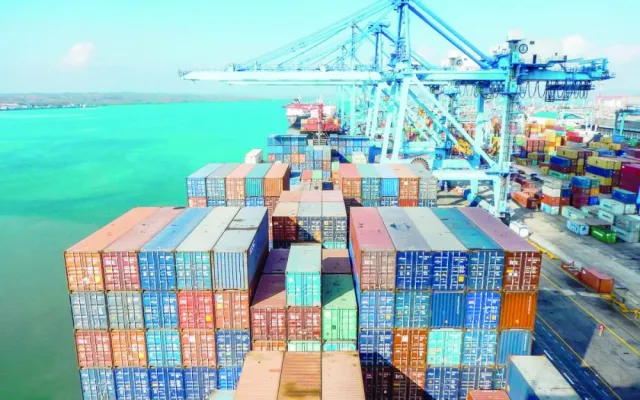
In a positive economic development for Kenya, the nation’s trade deficit for the first eight months of 2023 has shown substantial improvement, with a notable reduction of Sh108 billion. This significant decline in the trade deficit can be attributed to decreased spending on materials for factories, machinery for infrastructure projects, and fuel imports. Official provisional data released this week reveals the trade deficit, which represents the difference between merchandise exports and imports, has fallen from Sh1.12 trillion a year ago to Sh1.01 trillion.
This impressive 9.70 percent reduction in the merchandise trade has coincided with a slowdown in the manufacturing sector and a decrease in investments in large public infrastructure projects under the new administration. The statistics compiled by the Kenya National Bureau of Statistics indicate a marginal 2.05 percent decline in the value of imports, which now stands at Sh1.67 trillion for the January to August 2023 period compared to the same period last year.
In contrast, exports have seen a noteworthy increase of 12.63 percent, reaching Sh656.05 billion, partially due to the continued depreciation of the Kenyan shilling against major global currencies like the US dollar, the pound sterling, and the euro.
Looking ahead, Central Bank of Kenya Governor Kamau Thugge expressed confidence, stating, “We expect exports to increase by about 6.7 percent, primarily driven by tea and horticulture exports. Simultaneously, we anticipate imports to remain relatively stable. This equilibrium between export growth and import stability is expected to further improve our trade balance and current account deficit.”
The drop in import bills over the eight-month period is attributed to reduced spending on industrial supplies and intermediate goods, which decreased by 9.36 percent to Sh585.62 billion. Expenditure on fuel and lubricants also saw a decline, falling by 7.92 percent to Sh408.54 billion, reflecting a moderation in fuel costs compared to the peaks of the previous year. The value of machinery and other capital goods similarly contracted to Sh186.03 billion during the review period from Sh198.48 billion.
However, it’s worth noting that the import bill for food experienced a significant rise, increasing by 52.61 percent to nearly Sh240.10 billion. This now positions it as Kenya’s third largest import category, following industrial supplies and fuel. This shift underscores the challenge Kenya faces in narrowing its trade deficit, predominantly due to its reliance on traditional farm produce exports like tea, horticulture, and coffee, which are primarily marketed in raw form, resulting in lower earnings.
The global competitive landscape demands that Kenyan products find ways to compete effectively. Concerns over higher taxes on semi-processed or processed exports in destination markets have deterred value addition, making Kenyan products less competitive than those from Central Asia, such as Bangladesh and Sri Lanka.
This narrowing of Kenya’s trade deficit is a promising development and offers positive prospects for the nation’s economic stability and fiscal policies in the future. As Kenya continues to strike a balance between its imports and exports, it will need to diversify and enhance the value of its export products to bolster global competitiveness and secure long-term economic growth.
Photo: Herald Aloo
By: Montel Kamau
Serrari Financial Analyst
14th October, 2023