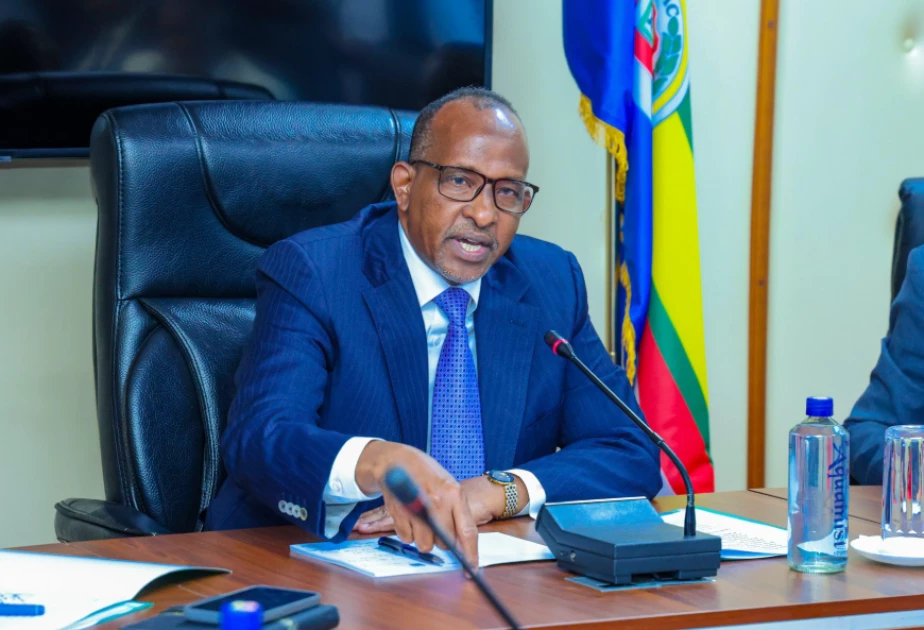
Kenya is sitting on a growing mountain of retirement savings — and according to Health Cabinet Secretary Aden Duale, the country is not making nearly enough use of it. On March 9, 2026, Duale used his social media platform to call attention to a paradox at the heart of Kenya’s financial landscape: pension and collective investment funds have grown to an estimated Ksh2.81 trillion, yet the overwhelming majority of that capital sits parked in Treasury bills and government bonds — generating safe but modest returns while the country’s infrastructure, small businesses, and housing sectors cry out for long-term investment.
“Kenya’s domestic capital holds immense potential, with pension and other collective funds totalling Ksh2.81 trillion, patient capital that can support national development while securing the future of pensioners,” Duale wrote. His remarks were brief, but they landed in the middle of a much larger policy conversation — one that now stretches from the Retirement Benefits Authority’s proposed structural reforms, to President William Ruto’s newly enacted pension laws, to a growing national debate about who gets to access retirement savings and when.
Build the future you deserve. Get started with our top-tier Online courses: ACCA, HESI A2, ATI TEAS 7, HESI EXIT, NCLEX-RN, NCLEX-PN, and Financial Literacy. Let Serrari Ed guide your path to success. Enroll today.
A Sector That Has Grown Rapidly — But Invested Conservatively
The scale of Kenya’s pension growth over the past decade is genuinely remarkable. According to the Retirement Benefits Authority (RBA), total pension fund assets surged to Ksh2.23 trillion in December 2024, up from Ksh1.84 trillion in 2023 — a 17.5% increase in a single year. The sector has since continued its climb, with AUM reaching Ksh2.531 trillion by June 2025, representing a further 12.22% growth over just six months.
Several forces have driven this expansion. The implementation of the National Social Security Fund (NSSF) Act of 2013 has progressively raised contribution limits, with the upper limit jumping from Ksh18,000 to Ksh36,000 during the second phase of implementation. Membership in pension schemes has also grown, reaching 7.53 million in 2024, driven by public awareness campaigns and targeted outreach. The pension sector now represents roughly 14.6% of Kenya’s GDP, making it the second-largest domestic savings pool after bank deposits.
But underneath this impressive growth story lies a structural problem that Duale and others have identified: the money is not working hard enough. As of mid-2025, government securities alone accounted for 52.53% of total pension assets. Quoted equities absorbed a further portion, while alternative asset classes — private equity, infrastructure bonds, REITs, and offshore investments — accounted for a thin and growing but still limited share. The top 5 fund managers controlled 91.9% of total externally managed assets, a concentration that further limits the diversity of investment strategy across the sector.
Duale’s concern is not that Treasury bills are bad investments — they are, by definition, among the safest. The problem is one of opportunity cost and economic purpose. When more than half of every pension shilling sits in risk-free government paper, it crowds out the kind of long-term, patient capital that could finance roads, hospitals, affordable housing, and growing businesses. It also means that pension funds are, in effect, lending money back to a government that already struggles with fiscal pressures — rather than channelling those funds into the productive economy.
What Diversification Could Look Like
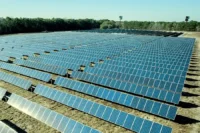
The case for redirecting even a small portion of pension assets into alternative investments is compelling. Andersen Kenya, in a detailed analysis of Kenya’s pension sector, estimated that redirecting just five percentage points of total AUM — roughly Ksh115 billion — into growth-oriented assets could seed mid-market private equity funds capable of recapitalising 150 to 200 firms, infrastructure trusts capable of financing two or three PPP roads or renewable energy parks, and SME securitisation pools capable of extending an estimated 50,000 working-capital loans.
The Kenya Pension Funds Investment Consortium (KEPFIC) already exists as a vehicle for exactly this purpose. Over the next five years, KEPFIC aims to mobilise USD 250 million from Kenyan pension funds and offshore co-investors for investment in impactful infrastructure assets, with an explicit focus on pooling capital from smaller schemes to give them access to infrastructure deal flow that would otherwise be beyond their reach individually. The model is sound; the question is whether the regulatory, governance, and incentive environment makes it attractive enough for pension trustees — who are legally obligated to prioritise the safety of members’ funds — to commit capital at scale.
Under current RBA investment regulations, schemes are subject to explicit exposure ceilings: up to 90% in government bonds, 70% in quoted equities, 30% in immovable property, 15% in offshore markets, and 10% in private equity. These caps reflect a conservative, capital-preservation philosophy — reasonable given the regulator’s mandate to protect members. But critics argue that raising the alternative asset ceiling, particularly for well-governed schemes with independent custodial oversight, would allow pension capital to do more economic work without meaningfully increasing risk. The RBA has itself acknowledged this, noting in its statistical digests that the sector needs to move beyond its current overconcentration in fixed income.
There are promising early signals. Private equity investments grew by 23.82% to Ksh20.1 billion in the first half of 2025, and offshore investments surged by 30.22% to Ksh84 billion over the same period — suggesting that pension fund managers are already beginning to diversify, even if cautiously. Real estate investment trusts (REITs) and Shariah-compliant funds also recorded strong growth. The trend exists; Duale’s call is for policymakers and regulators to accelerate and formalise it.
One decision can change your entire career. Take that step with our Online courses in ACCA, HESI A2, ATI TEAS 7, HESI EXIT, NCLEX-RN, NCLEX-PN, and Financial Literacy. Join Serrari Ed and start building your brighter future today.
The RBA’s Two-Pot Proposal: Flexibility Without Sacrificing Security
Duale’s comments arrived against the backdrop of another major pension reform debate: the Retirement Benefits Authority’s proposal to introduce a “two-pot” pension system. As reported by Business Daily Africa, the RBA has proposed dividing pension contributions into two separate sub-accounts. The first would remain locked until retirement, preserving the long-term security of members’ savings. The second would be accessible for short-term financial needs — school fees, medical emergencies, housing deposits, or starting a small business — providing a safety valve that the current system entirely lacks.
“There is consensus that members would want to have access to some of their savings. We still want to ring-fence the larger proportion of contributions,” RBA CEO Charles Machira told Business Daily. Under the proposal, access to the flexible sub-account would be capped — with Machira noting that members would not be permitted to access more than 30% of their total accumulated savings at any one time, regardless of the sub-account balance.
The reform is explicitly designed to address Kenya’s persistently low pension coverage. More than 70% of Kenyan workers currently retire without any formal pension coverage beyond the NSSF’s historically limited payouts. Informal sector workers — who make up the large majority of Kenya’s labour force — often cite the complete illiquidity of pension savings as a deterrent to joining formal retirement schemes. Why contribute money you can never touch until you are 60, when you may need it at 35 to keep a business running or a child in school?
Kenya is drawing lessons directly from South Africa, which implemented a comparable early-access system. South Africa’s version, introduced in 2023, led to the withdrawal of approximately Ksh425.83 billion (USD3.3 billion) from pension accounts by mid-2025 — a figure that illustrates both the pent-up demand for liquidity among pension savers and the risk that flexible access, without adequate ring-fencing, could erode long-term retirement security. The RBA’s proposal attempts to learn from that experience by limiting withdrawal access while still offering meaningful flexibility. The proposals are expected to feed into the FY 2026/2027 Budget Policy Statement, which will determine whether the reforms advance to legislative implementation.
Additional proposals being considered include exempting survivor benefits from taxation, ensuring that families of deceased members receive the full value of accrued savings, and removing VAT and excise duties currently paid by pension fund managers — a cost reduction that would improve net returns for members across the board. The RBA is also calling for quarterly reporting by pension funds and mandatory vetting of senior fund managers, strengthening governance and protecting members from mismanagement.
Judges Join the Contributory Pension World
The same day Duale made his remarks, President William Ruto signed the Judges’ Retirement Benefits Act into law at State House, Nairobi — a development that, while distinct from the broader pension reform debate, signals a wider government commitment to formalising contributory retirement frameworks across Kenya’s public institutions.
The new law replaces a system that had governed judicial pensions since the Pensions Act of 1946 — a colonial-era arrangement that lawmakers had long argued no longer reflected modern public service retirement principles. Under the Act, judges currently in office will remain under the existing defined benefits system, while future appointees will join a contributory retirement scheme requiring judges to contribute 7.5% of their basic salary and the government to contribute 15%.
The legislation also introduces a cost-of-living adjustment mechanism that caps annual pension increments at 5% — an improvement on the previous Pensions Increase Act’s 3% ceiling — along with supplementary post-retirement benefits including medical cover, diplomatic passports, and access to government airport lounges. “Now we have a legal framework that will give the opportunity for our judges to serve in an environment where they know their future and retirement is guaranteed,” Ruto said at the signing ceremony. The bill had been in development since the late 1990s and had previously stalled amid jurisdictional disputes between the Judicial Service Commission and the Salaries and Remuneration Commission over the scope of the legislation.
Pension Capital and the National Infrastructure Fund
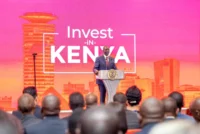
The broader context for Duale’s call is Kenya’s growing political appetite for deploying domestic savings into national development. On the same day as the Judges’ Retirement Benefits Act signing, Ruto also assented to the National Infrastructure Fund Bill — a law explicitly designed to mobilise Ksh5 trillion over the next decade for highways, railways, ports, agribusiness, and energy infrastructure.
In remarks at the signing ceremony, Ruto directly connected pension capital to infrastructure financing, noting that Kenyan pension fund assets grew by Ksh700 billion last year alone — surpassing the country’s total annual infrastructure financing requirement of approximately $4 billion. “Pension capital is naturally suited to financing long-term infrastructure,” he said, positioning the National Infrastructure Fund as a vehicle for channelling exactly the kind of domestic institutional capital that Duale’s comments referenced.
Africa’s annual infrastructure financing gap stands at $130 to $170 billion, according to Ruto, with Kenya alone requiring around $4 billion per year to sustain its development trajectory. Against that backdrop, the Ksh2.81 trillion sitting in pension schemes — growing at double-digit rates — represents a pool of capital that, if partly redirected toward productive long-term investment, could dramatically reduce Kenya’s dependence on sovereign debt and foreign borrowing for development spending.
Whether Duale’s call translates into concrete policy action will depend on the RBA’s ability to advance its proposed reforms, the government’s willingness to adjust investment regulations, and pension trustees’ readiness to accept higher-returning but less liquid asset allocations for the members they serve. The conversation, at least, is now firmly underway — and the numbers make the case impossible to ignore.
Ready to take your career to the next level? Join our Online courses: ACCA, HESI A2, ATI TEAS 7 , HESI EXIT , NCLEX – RN and NCLEX – PN, Financial Literacy!🌟 Dive into a world of opportunities and empower yourself for success. Explore more at Serrari Ed and start your exciting journey today! ✨
Track GDP, Inflation and Central Bank rates for top African markets with Serrari’s comparator tool.
See today’s Treasury bonds and Money market funds movement across financial service providers in Kenya, using Serrari’s comparator tools.
Photo Source: Google
By: Montel Kamau
Serrari Financial Analyst
10th March, 2026