Kenya has taken a defining step in its attempt to break free from a cycle of debt-fuelled infrastructure spending, with President William Ruto announcing on Monday that between 15 and 20 billion shillings — up to USD 155 million — from the proceeds of the Kenya Pipeline Company’s landmark IPO will serve as seed funding for the long-awaited expansion of Nairobi’s Jomo Kenyatta International Airport. The announcement came on the same day Ruto signed the National Infrastructure Fund Bill into law, formally establishing the financing architecture that his administration has spent months building political and legislative support for.
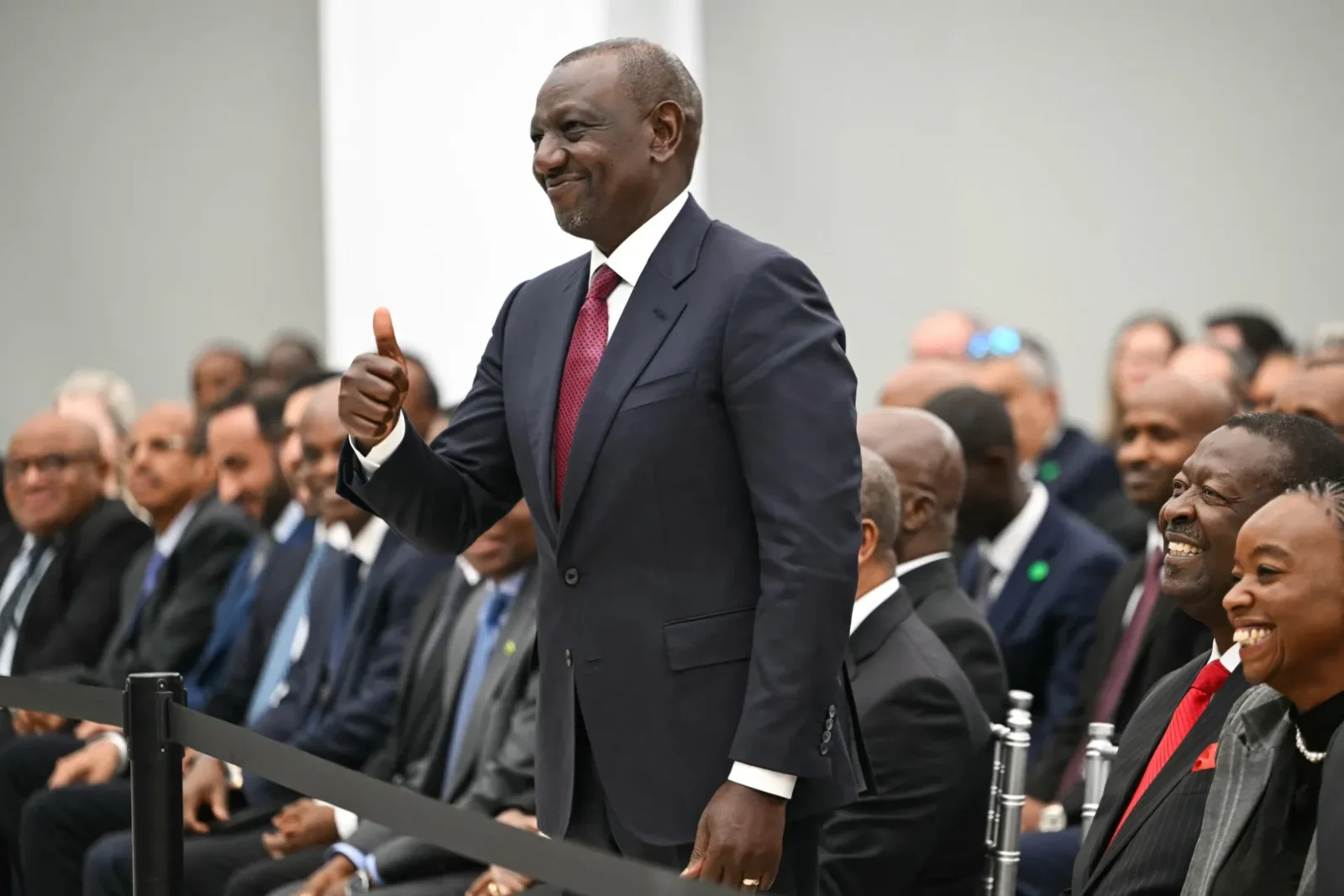
The sequence of events on March 9, 2026, was deliberate. The Kenya Pipeline Company shares began trading on the Nairobi Securities Exchange on the same morning, marking the culmination of East Africa’s largest initial public offering in local-currency terms. Within hours, Ruto had signed the NIF Bill into law at a State House ceremony attended by private sector leaders and senior government officials, before declaring that the airport expansion would be the first major project financed under the new fund. The choreography was unmistakable: this was a government signalling, emphatically, that a new era of infrastructure financing had begun.
Build the future you deserve. Get started with our top-tier Online courses: ACCA, HESI A2, ATI TEAS 7, HESI EXIT, NCLEX-RN, NCLEX-PN, and Financial Literacy. Let Serrari Ed guide your path to success. Enroll today.
The Pipeline IPO: East Africa’s Biggest in a Generation
To understand the scale of what Kenya has achieved — and what is now being deployed — it is necessary to start with the Kenya Pipeline Company IPO itself. When the subscription window opened on January 19, 2026, the government was offering a 65 per cent stake in KPC at nine shillings per share, targeting 106.3 billion shillings — approximately USD 825 million — in what was immediately described as East Africa’s largest-ever IPO in local-currency terms. The offering surpassed the previous regional record holder, the 2008 Safaricom IPO, which raised just over 50 billion shillings.
The subscription period closed on February 24. When Finance Minister John Mbadi announced results on March 4, the offering had achieved a 105.7 per cent subscription rate — fully subscribed with a modest overrun. Of the 12.4 billion shares offered, local institutional investors will control 41 per cent, retail investors 2.56 per cent, KPC employees 0.06 per cent, and licensed oil marketing companies 0.041 per cent. Foreign investor participation was deliberately marginal, at just 0.02 per cent — a point Finance Minister Mbadi had been careful to emphasise throughout the process, countering concerns that the country’s strategic energy infrastructure was being handed to overseas interests.
Crucially, regional participation from Uganda and Rwanda helped push the subscription over the line. East African Community investors collectively took up 3.8 billion shares, a development that deepens the regional dimension of what KPC does: the company operates 1,342 kilometres of petroleum pipelines linking the port of Mombasa to Nairobi and onward to landlocked neighbouring countries, making it a piece of infrastructure with genuine trans-boundary strategic significance.
KPC is also a financially strong asset. According to its IPO prospectus, for the year ended June 30, 2025, the company reported revenue of KSh 38.6 billion and a profit of KSh 7.49 billion. The company intends a post-listing dividend policy of distributing 50 per cent of net earnings — a structure designed to make it attractive to pension funds and long-term institutional holders who need predictable income streams.
JKIA: A Hub Running Out of Room
The destination for the first tranche of those proceeds — Nairobi’s Jomo Kenyatta International Airport — is, by every operational metric, a facility in urgent need of expansion. JKIA’s challenges are not projected or theoretical. They are documented, present, and worsening with each passing year.
In 2025, the airport handled approximately 8.93 million passengers, significantly exceeding its designed capacity of 7.5 million passengers annually. The Kenya Airports Authority’s own master plan notes that the facility operates with a single runway and a terminal complex that has evolved incrementally over time — a polite way of describing a facility that has been patched and extended rather than fundamentally redesigned for the volumes it now handles. Congestion during peak operating hours is visible across the runway system, passenger terminal facilities, aircraft apron areas, and even the landside access roads outside the terminal.
The urgency is reflected in the numbers. According to the Integrated Master Plan and Feasibility Study completed by the Kenya Airports Authority in February 2026, passenger volumes are projected to increase from 8.93 million in 2025 to approximately 22.31 million by 2045 — an average annual growth rate of 4.6 per cent. Air cargo volumes are expected to more than double, growing from 407,214 tonnes in 2025 to around 860,400 tonnes by 2045. At current growth rates, the airport’s existing facilities are forecast to reach operational breaking point within three years.
The master plan, developed with the technical expertise of Dar Al-Handasah, outlines a phased development approach. In the near term, this includes upgrading the existing runway, constructing a partial parallel taxiway, adding rapid-exit taxiways to reduce runway occupancy time, and reconfiguring passenger terminal facilities to ease bottlenecks. Digitisation of check-in, security screening, immigration, and baggage handling systems is also part of the short-term roadmap.
Over the longer term, the plan calls for a new passenger terminal capable of handling an additional 10 million passengers annually, with provision for future expansion. The Kenya Airports Authority also intends to develop an Airport City and a Special Economic Zone adjacent to JKIA — a concept that would position the airport not just as a transit point but as an integrated economic hub, attracting logistics, light manufacturing, agro-processing, pharmaceuticals, e-commerce fulfilment, and regional distribution operations that benefit from proximity to air freight.
The airfield expansion is particularly ambitious. The master plan targets aircraft movements capacity of around 63 per hour by the completion of the programme — compared to the current 14 movements per hour. That is a fourfold increase in throughput, reflecting the scale of transformation envisaged.
The National Infrastructure Fund: A New Financing Doctrine
What gives the airport announcement its broader significance is the institutional framework within which it sits. The 15 to 20 billion shillings for JKIA is not simply a budget line item. It is the inaugural deployment of an entirely new approach to how Kenya will finance its development ambitions going forward.
President Ruto has spent much of the past year making the case that Kenya’s traditional infrastructure financing models — debt and taxation — have reached their limits. The country carries one of the highest debt-service-to-revenue ratios in Africa, following a decade of heavy borrowing. Annual debt repayments now consume roughly 40 per cent of government revenues. Public protests in 2024 against proposed new tax measures forced the government to revise its Finance Act and triggered a broader rethink of fiscal strategy.
The National Infrastructure Fund, signed into law on March 9, 2026, is the legislative answer to that rethink. The NIF is designed to mobilise nearly KSh 5 trillion over the next decade to finance key national projects, including highways, railways, ports, agribusiness infrastructure, and energy systems. Funding sources will include government allocations, private investment, privatisation proceeds, grants, and loans — but critically, the model is built around attracting private and institutional capital rather than expanding sovereign debt.
Ruto has framed the fund’s logic in explicit terms: every shilling invested through the NIF is designed to crowd in multiple additional shillings from pension funds, sovereign wealth partners, and international development finance institutions. The government aims for a ten-to-one leverage ratio — KSh 10 in private capital for every KSh 1 of public seed money. The airport expansion, seeded with KPC IPO proceeds, is the first live test of whether that multiplier can be achieved.
National Assembly Majority Leader Kimani Ichung’wah, who sponsored the NIF Bill, described it as one of Kenya’s most significant pieces of legislation. He said the fund would help drive Kenya’s long-term development ambitions while reducing reliance on debt — comparing its importance to the country’s foundational economic policy documents of the 1960s.
One decision can change your entire career. Take that step with our Online courses in ACCA, HESI A2, ATI TEAS 7, HESI EXIT, NCLEX-RN, NCLEX-PN, and Financial Literacy. Join Serrari Ed and start building your brighter future today.
Privatisation as the Engine
The pipeline IPO is not a standalone transaction. It is the leading element in a broader privatisation programme that President Ruto has positioned as the primary fuel for the NIF’s ambitions. The government is also in the process of selling a 15 per cent stake in Safaricom to South Africa’s Vodacom in a deal worth approximately USD 1.6 billion. The National Treasury is also considering whether to offer stakes in KenGen, the electricity generator in which the government holds a 70 per cent share, and Kenya Power, the electricity distributor.
The government estimates it can raise approximately KSh 350 billion upfront from the partial privatisation of state-owned enterprises in the near term, including KPC, Safaricom, and East Africa Portland Cement. Beyond those immediate proceeds, the NIF will draw on pension funds, insurance companies, and international development finance institutions — channelling long-term institutional capital directly into large-scale infrastructure projects.
Ruto has been explicit about the historical failure of Kenya’s past privatisation efforts to generate lasting infrastructure. Speaking during the Jamhuri Day celebrations in December 2025, he noted that decades of asset sales — from Kenya Airways to KenGen to Safaricom — had generated proceeds that were absorbed into the national budget to pay salaries and service debts, leaving no enduring infrastructure to show for it. The NIF, with its ring-fencing of privatisation proceeds strictly for capital investment, is designed to break that pattern.
KPC’s Own Expansion Plans
While the government captures the IPO proceeds for infrastructure, the Kenya Pipeline Company itself has its own significant capital expenditure plans underway. The company plans to invest KSh 110 billion — approximately USD 852 million — between now and 2030, triple the total investment made between 2021 and 2025. Those plans include a new eastbound pipeline from Mombasa to Nairobi, the Eldoret-Malaba-Kampala pipeline extending into Uganda, a new LPG storage facility in Nairobi, and a crude oil storage facility in Mombasa.
The Ugandan dimension is particularly significant. Uganda, which expressed interest in buying a KPC stake through a portion of a USD 2 billion Vitol-backed loan, aims to begin oil production from its Albertine rift basin oilfields in the second half of 2026. TotalEnergies and CNOOC hold production-sharing agreements with Kampala and are expected to begin output later this year. KPC’s pipeline network is central to how that crude reaches export markets — and to how refined products flow back into landlocked Uganda and Rwanda.
What It Means for Kenya’s Economic Ambitions
Taken together, the KPC IPO, the JKIA expansion announcement, and the signing of the NIF Bill represent something more than a series of policy decisions. They are evidence of a government attempting to rewire how a developing economy with constrained fiscal space can still build the infrastructure its growth trajectory demands.
The JKIA expansion is the most visible and symbolically charged element of that ambition. Nairobi’s airport is the gateway through which an increasing share of East Africa’s international commerce, tourism, and business travel flows. Kenya Airways uses JKIA as its hub, and the airport’s congestion increasingly constrains not just the airline but the entire hospitality, logistics, and export ecosystem that depends on reliable air connectivity. An airport that cannot efficiently handle today’s 8.93 million passengers, let alone the 22.31 million projected for 2045, is a structural drag on the economy.
Ruto’s New Year’s address framed the goal plainly: Kenya intends to anchor its position as the aviation capital of the region, using infrastructure investment to strengthen trade and tourism sectors that are central to long-term growth. The 15 to 20 billion shillings from the pipeline IPO is the seed. Whether it attracts the private capital multiples the NIF model promises will determine how quickly that ambition translates from announcement into concrete, operational infrastructure.
Ready to take your career to the next level? Join our Online courses: ACCA, HESI A2, ATI TEAS 7 , HESI EXIT , NCLEX – RN and NCLEX – PN, Financial Literacy!🌟 Dive into a world of opportunities and empower yourself for success. Explore more at Serrari Ed and start your exciting journey today! ✨
Track GDP, Inflation and Central Bank rates for top African markets with Serrari’s comparator tool.
See today’s Treasury bonds and Money market funds movement across financial service providers in Kenya, using Serrari’s comparator tools.
photo source: Google
By: Montel Kamau
Serrari Financial Analyst
9th March, 2026