In a significant development aimed at boosting sustainable development efforts, the Kenyan government has unveiled a proposal that could see it taking a 25 percent share of the revenue generated by private companies from the sale of carbon emission reduction credits (CERs). The proposal, encapsulated in the draft Climate Change (Carbon Markets) Regulations 2023, awaits approval and is set to have a substantial impact on Kenya’s carbon market landscape.
“The share of proceeds in a carbon market project where a private entity is the proponent, shall be 25 percent of the aggregate earnings of the previous year,” reads the draft regulations.
This substantial revenue share, as stipulated in the draft regulations, will be directed towards the consolidated fund, earmarked specifically for supporting sustainable development initiatives across the country.
CERs, each equivalent to one tonne of carbon dioxide (CO2), play a pivotal role in global emission reduction efforts, falling under the purview of the Kyoto Protocol.
Carbon markets serve as a mechanism for public and private entities to facilitate the transfer and trading of emission reduction units, mitigation outcomes, or offsets generated through various carbon-related initiatives, programs, and projects, thereby contributing to a reduction in greenhouse gas emissions.
The draft regulations provide a classification system for carbon credit projects, categorizing them as national, community, or private. In the case of community projects, five percent of the generated revenues will be directed to their respective counties, with an additional five percent allocated to the national government’s consolidated fund.
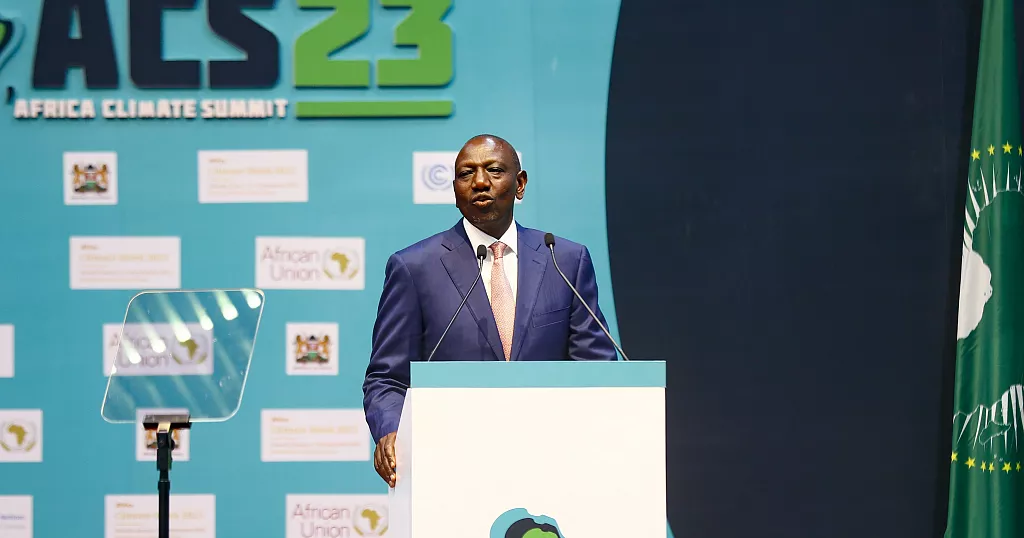
This move comes on the heels of President William Ruto’s recent rallying of Africa to pass the Nairobi Declaration on climate change. One of the key objectives of this declaration is to leverage the sale of carbon credits to fund the continent’s growth while incentivizing the reduction of carbon emissions.
Under the proposed regulations, the Kenyan government intends to establish a comprehensive national carbon registry, which will contain detailed information on the number of carbon credits issued or recognized by Kenya. Additionally, sector-specific registries, such as those for aviation, forestry, or energy, will be created. Entities looking to participate in carbon credit accumulation will need to pay a registration fee to the sector registrar to gain eligibility.
Notably, the draft regulations mandate that no individual or organization will be allowed to operate a carbon market project without proper registration.
“The registrar shall keep, maintain, and update a register of all carbon projects under these regulations,” states the draft.
Furthermore, those seeking to register carbon projects will be required to disclose ownership details and demonstrate how their initiatives contribute to the nation’s determined climate goals, as well as the number of jobs they are expected to create.
Kenya’s updated Nationally Determined Contribution, which aims to reduce greenhouse gas emissions by 32 percent by 2030, estimates a need for climate-related investments totaling $62 billion (approximately Sh9 trillion) by 2030.
The proposed regulations also empower the Cabinet Secretary for the environment to engage in international, multilateral, or bilateral agreements with approved countries for the trading of carbon credits to facilitate internationally-transferred mitigation outcomes.
This proposal marks a significant step in Kenya’s efforts to address climate change and promote sustainable development through the utilization of carbon credits. The outcome of its approval will have far-reaching implications for the country’s environmental and economic landscape.
Photo Source: Google
By: Delino Gayweh
Serrari Financial Analyst
21st September, 2023