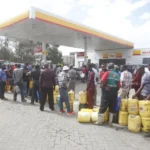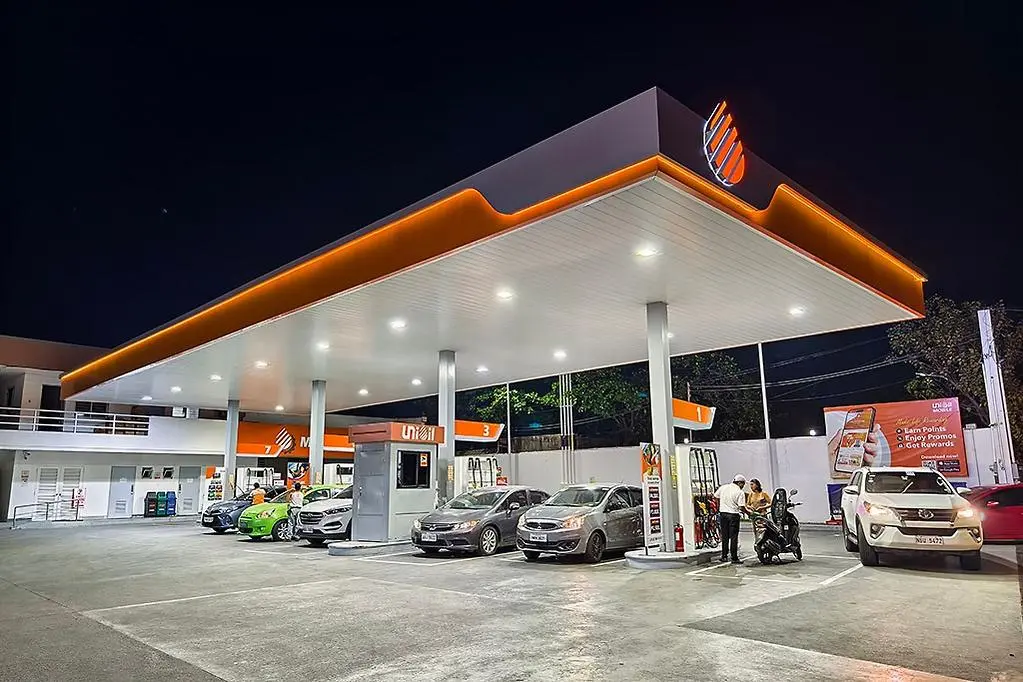
Australia is in the grip of its most severe fuel crisis in modern history. More than 500 service stations across the country have been left without at least one type of fuel, with dozens completely dry, as a volatile combination of panic buying, strained distribution networks and the ongoing conflict in the Middle East pushes the nation’s energy infrastructure to its limits.
Energy Minister Chris Bowen told Parliament on March 24 that 520 stations nationwide were experiencing shortages of at least one fuel type. By the following day, that number had climbed further, with Bloomberg reporting that at least 600 retail sites had run out of at least one grade of fuel. The shortages were most heavily concentrated in New South Wales and Victoria, the country’s two most populous states, where roughly 10 percent of total outlets were affected.
Markets move fast; don’t get left behind. We’ve paired the Serrari Group Market Index with a curated Marketplace and a comprehensive Wealth Builder Course to ensure you have the data—and the skills—to act on it.
New South Wales and Victoria Bear the Heaviest Burden
New South Wales has emerged as the epicentre of the crisis. According to the latest parliamentary update, at least 289 service stations in the state were without either diesel or petrol, including 164 stations that had completely run out of diesel and 48 with no fuel whatsoever. The state has approximately 2,400 service stations in total, meaning more than one in ten were impacted.
Victoria has not been far behind. The Victorian Energy Minister Lily D’Ambrosio told ABC Radio Melbourne that up to 162 service stations in the state had run out of one or more fuel types. She attributed the shortages primarily to panic buying rather than a genuine collapse in supply. In Queensland, 55 locations were reported without diesel and 35 without regular unleaded petrol. Similar disruptions were reported in Western Australia and South Australia, where service stations in regional towns such as Kulin and Corrigin imposed temporary purchase restrictions due to uncertain deliveries and panic-driven demand.
The Australian Capital Territory was the only jurisdiction to report no fuel shortages as of mid-week.
Officials across the country have characterised the shortages as a distribution problem rather than a collapse in overall supply. Every station that had run completely dry was located in a regional area, underscoring the growing divide between urban and rural access to essential resources.
Panic Buying Amplifies the Pressure
Government leaders have placed much of the blame for localised shortages on consumer behaviour. Fuel demand has spiked by up to 300 to 400 percent in some areas as motorists rushed to fill tanks and jerry cans in response to alarming headlines about global oil disruptions. The surge in buying has overwhelmed distribution networks that were already operating under stress.
Prime Minister Anthony Albanese addressed the situation directly during a media appearance in Burnie, Tasmania, urging Australians to stop hoarding fuel. He told reporters that every oil shipment scheduled to arrive in Australia had done so on time and that there had been no interruption to supply. Albanese called on citizens to think of others, describing excessive purchasing as contrary to the Australian spirit.
The Prime Minister also convened emergency National Cabinet talks with state and territory leaders, during which governments reportedly discussed fuel rationing scenarios. However, authorities have so far declined to impose formal rationing or spending caps, despite provisions under the Liquid Fuel Emergency Act of 1984 that would allow the minister to impose a $40-per-transaction limit at the pump.
The Middle East Conflict and the Strait of Hormuz
The root cause of the global supply disruption traces back to the escalating military conflict involving the United States, Israel and Iran, which began in late February 2026. Iran has effectively closed the Strait of Hormuz, a critical maritime chokepoint through which roughly one-fifth of the world’s seaborne oil and liquefied natural gas passes. The closure has sent shockwaves through international energy markets, with crude oil prices surging past $100 per barrel and freight rates reaching historic levels.
Dr Lurion De Mello, a Senior Lecturer of Applied Finance at Macquarie Business School, told The Lighthouse that insurers had withdrawn war-risk cover and that the combination of military escalation and shipping disruption had turned a long-imagined scenario into a real-time test of global energy security. For Australia, he said, the consequences were particularly acute given the nation’s overwhelming reliance on imported fuel.
Australia imports approximately 90 percent of its refined fuels, primarily from refineries in South Korea, Singapore and Japan, which themselves depend on Middle Eastern crude. Energy Minister Bowen confirmed that six oil tankers bound for Australia in April had been cancelled or deferred due to the intensifying conflict. Some of those shipments have been replaced with cargoes from the United States, though at a higher cost.
The country’s two remaining domestic refineries, Ampol’s Lytton facility in Brisbane and Viva Energy’s Geelong plant in Victoria, are operating at full capacity but together supply less than 20 percent of total demand. Both have been directed to prioritise the domestic market over exports, with government subsidies ensuring continued operations.
Government Response: Lowered Standards, Released Reserves and a New Taskforce
The federal government has deployed several measures to ease the pressure. On March 12, the Minister for Climate Change and Energy announced temporary changes to petrol quality standards, raising the allowable sulphur content from 10 parts per million to 50 parts per million for 60 days. This enabled fuel that had previously been marked for export to be redirected into the domestic market, adding an estimated 100 million litres per month to the local supply.
On March 24, Bowen followed up with a six-month adjustment to diesel standards, lowering the flashpoint threshold from 61.5 degrees Celsius to 60.5 degrees. The change was designed to widen the range of international suppliers from whom Australia could source diesel, including markets in the United States, Canada and Europe. The government stated that the modification had no impact on engine performance or emissions and was supported by the National Transport Commission and the Fuel Standards Consultative Committee.
In addition, the government released approximately 20 percent of the country’s strategic fuel reserves, amounting to roughly 762 million litres, into the domestic market. As of late March, Australia held about 38 days’ worth of petrol, 30 days of diesel and 30 days of jet fuel, according to government data published by the Heavy Vehicle Industry Australia.
The Prime Minister also appointed Anthea Harris, the former head of the Australian Energy Regulator and the Energy Security Board, as coordinator of a new national fuel supply taskforce. Harris is responsible for driving coordination between state and federal governments and providing regular updates on the fuel supply outlook.
Context is everything. While you follow today’s updates, use the Serrari Group Market Index and Marketplace to spot emerging shifts. Need to sharpen your edge? Our Wealth Builder Course turns these insights into a professional-grade strategy.
ACCC Investigation Into Major Fuel Suppliers
Amid the deepening crisis, the Australian Competition and Consumer Commission launched an enforcement investigation into allegations of anti-competitive conduct by the country’s four largest fuel suppliers: Ampol, BP Australia, Mobil Oil Australia and Viva Energy Australia. The investigation centres on reports that diesel supply to independent wholesalers and distributors in regional and rural areas had been restricted.
ACCC Chair Gina Cass-Gottlieb said the investigation was being made public due to the significance of the issue, a departure from the watchdog’s usual practice of not announcing enforcement actions at their outset. She stated that the ACCC would not hesitate to act swiftly to enforce competition and consumer laws.
The four companies under investigation collectively supply around 85 percent of Australia’s liquid fuels. Independent fuel businesses in regional areas have voiced concerns that they are being locked out of supply, leaving their communities without access to essential fuel.
The government has also moved to double maximum penalties for breaches of the Competition and Consumer Act related to false or misleading conduct and cartel behaviour, raising the cap from A$50 million to A$100 million per offence.
Agriculture and Food Supply Under Threat
The fuel crisis has cascaded rapidly into the agricultural sector. The National Farmers’ Federation warned that diesel shortages were threatening planting schedules, livestock transport and harvest operations. NFF President Hamish McIntyre said farmers were at the mercy of geopolitical tensions because of their heavy reliance on imported inputs and export markets.
McIntyre told The Daily Telegraph that food prices could rise by as much as 50 percent if diesel shortages persisted through seeding season. Primary Producers SA chair Simon Maddocks echoed the warning, telling The New Daily that farmers simply could not absorb the spiralling costs and that the increases would inevitably be passed on to consumers.
Supply chain experts have reinforced the concern. Elizabeth Jackson, a logistics specialist, told SBS News that every kilogram of food produced on an Australian farm is moved by a diesel-powered vehicle, making the entire food supply chain acutely vulnerable to diesel disruptions. Rabobank analysts identified dairy, frozen foods, fresh produce and beverages as the categories most exposed to the price hikes due to long transport distances and high fuel costs per unit.
The Australian Meat Industry Council confirmed severe and escalating disruptions to red meat exports to the Middle East, compounding the losses felt across the sector. Freight operators, meanwhile, have warned that without relief, smaller trucking businesses may be forced to park their vehicles and lay off drivers.
South Korea’s Export Curbs Add Further Pressure
Compounding Australia’s supply anxiety is the decision by South Korea, the country’s largest diesel supplier, to curb domestic fuel consumption in order to preserve its own reserves. The move has raised fears that Asian refining partners may increasingly prioritise their own markets over exports to Australia. Analysts at Wood Mackenzie have warned that Asian fuel production could drop by a fifth or more in the coming weeks if refiners cannot access Middle Eastern crude.
Prime Minister Albanese has been calling counterparts across the region to secure continued fuel shipments, with Assistant Foreign Minister Matt Thistlethwaite suggesting that Australia could leverage its position as the world’s second-largest liquefied natural gas exporter to incentivise countries like South Korea to maintain supply.
Fuel Theft and Community Tensions
Police in Western Australia have warned of a potential rise in fuel theft as anxiety over supply deepens. WA Police Commissioner Col Blanch told ABC radio that fear and uncertainty were motivating criminal behaviour even before any official shortage had been declared. Farmers in particular have been singled out as a key group at risk, with unattended storage tanks and equipment viewed as soft targets. The NRMA has reported a 15 percent increase in callouts for motorists running out of fuel in New South Wales during March, totalling roughly 306 incidents.
The Nationals party launched a community reporting platform called nofuelhere.com.au to map fuel shortages across regional Australia. Nationals Leader Senator Matt Canavan said the website was a direct response to what he described as the government’s failure to acknowledge the depth of the crisis in rural communities.
What Comes Next
Despite the government’s assurances that overall supply remains adequate, the crisis has exposed deep structural vulnerabilities in Australia’s fuel security. The nation has long failed to meet the International Energy Agency’s benchmark of 90 days of reserve supply, a shortcoming that experts have warned about for years.
Dr De Mello at Macquarie has called for a comprehensive overhaul, including transparent reporting of usable onshore fuel stocks, expanded multi-fuel storage capacity and regional fuel security partnerships with nations such as New Zealand, Vietnam and Malaysia. He has also advocated for a national fuel emergency plan that would identify priority sectors, including agriculture, for fuel allocation if imports slowed or ceased entirely.
The International Energy Agency has called on member countries to release a record 400 million barrels from emergency stockpiles, with Australia contributing its 762 million litre drawdown as part of that global effort.
For now, the government’s strategy rests on keeping supply lines open, managing consumer behaviour and hoping that the conflict in the Middle East does not further deteriorate. Energy Minister Bowen has described the situation as secure until mid-April, but if tanker arrivals face further cancellations and Asian refiners continue to cut output, that window could narrow quickly.
As Australians wait in queues at petrol stations and farmers scramble for diesel to keep their machinery running, the question is no longer whether the system is under strain. It is whether the country can build the resilience needed to prevent a distribution crisis from becoming a full-blown economic emergency.
Your financial future isn’t something you wait for—it’s something you build.
The real question is: when do you begin?
Move beyond simply staying informed.
Navigate the markets with clarity—track trends through the Serrari Group Market Index, uncover opportunities in the Serrari Marketplace, and build practical knowledge with our Curated Wealth Builder Course.
Stay connected to what truly matters.
Get daily insights on macro trends and financial movements across Kenya, Africa, and global markets—delivered through the Serrari Newsletter.
Growth opens doors.
Advance your career through professional programs including ACCA, HESI A2, ATI TEAS 7 , HESI EXIT , NCLEX – RN and NCLEX – PN, Financial Literacy!🌟—designed to move you forward with confidence.
See where money is flowing—clearly and in real time.
Track Money Market Funds, Treasury Bills, Treasury Bonds, Green Bonds, and Fixed Deposits, alongside global and African indexes, key economic indicators, and the evolving Crypto and stablecoin landscape—all within Serrari’s Market Index.