Financial markets over the past week have delivered a powerful reminder of how quickly sentiment can shift in today’s interconnected global economy. What began as a period of heightened anxiety—driven by escalating geopolitical tensions—quickly transformed into a relief rally, only to settle into a more cautious and uncertain equilibrium.
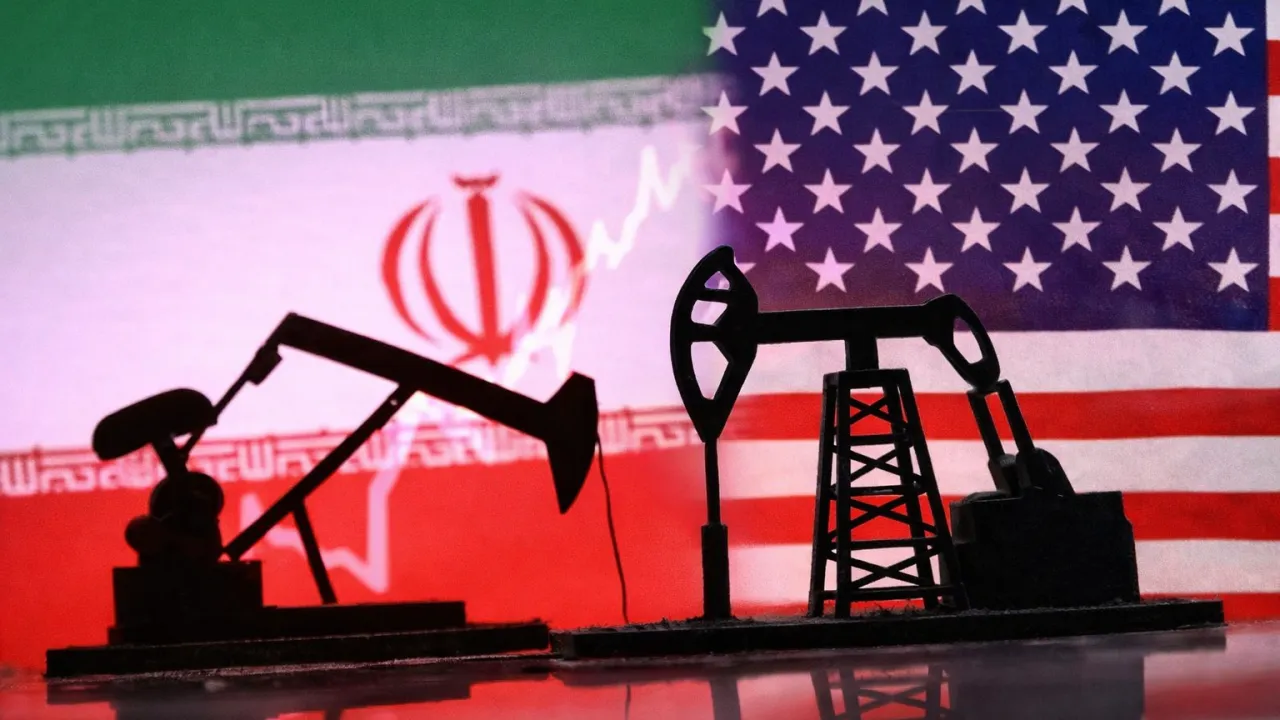
At the center of this volatility was a renewed confrontation between the United States and Iran, triggered by a firm ultimatum from President Donald Trump. The possibility of disruption to global energy supplies, particularly through the strategically critical Strait of Hormuz, sent shockwaves through global markets. Investors reacted swiftly, moving away from risk assets and into perceived safe havens, as fears of a broader conflict began to dominate market expectations.
However, just days later, sentiment reversed dramatically following announcements of “productive talks” between the two sides. Markets, which had been pricing in escalation, suddenly pivoted toward the possibility of diplomacy. This sharp shift underscores a deeper reality: modern financial markets are increasingly driven not just by economic fundamentals, but by rapidly changing geopolitical narratives.
Markets move fast; don’t get left behind. We’ve paired the Serrari Group Market Index with a curated Marketplace and a comprehensive Wealth Builder Course to ensure you have the data—and the skills—to act on it.
The Shock: Markets React to Rising Geopolitical Risk
The week opened under a cloud of uncertainty. Investors were confronted with the possibility of a major geopolitical escalation that could disrupt global energy flows and destabilize economic growth.
The Strait of Hormuz, through which a significant portion of the world’s oil supply passes, became the focal point of concern. Any disruption in this corridor would have immediate and far-reaching consequences, particularly for energy prices and inflation.
Markets responded accordingly.
Emerging market equities were among the hardest hit. The MSCI Emerging Markets Index fell by 2.5%, reflecting broad-based selling as investors reassessed risk exposure. In Asia, the reaction was even more pronounced. South Korea’s Kospi Index dropped 6.5% in early trading, signaling deep concern about the region’s vulnerability to global shocks.
This selloff was not simply a reaction to immediate events—it reflected a forward-looking assessment of what escalation could mean. Investors began pricing in scenarios where higher energy costs would suppress global growth, increase inflation, and tighten financial conditions.
As a result, emerging markets—often more sensitive to global capital flows and commodity price shifts—were pushed toward what could have become their steepest monthly decline since 2022.
Flight to Safety: The Classic Market Response
In times of uncertainty, financial markets tend to follow a familiar pattern: a shift away from risk and toward safety.
During the initial phase of the crisis, investors moved capital into traditional safe-haven assets. While the article does not detail specific flows into government bonds or gold, the broader behavior aligns with historical patterns where uncertainty drives demand for stability.
However, what makes this episode particularly interesting is what happened next.
The Reversal: From Crisis Pricing to Diplomatic Optimism
Midweek brought a dramatic shift in tone.
President Trump’s announcement of “productive talks” with Iran triggered a rapid reassessment of risk. Markets, which had been bracing for escalation, suddenly began to price in the possibility of de-escalation.
This shift had immediate and visible effects across asset classes.
Oil prices, which had surged on fears of supply disruption, reversed sharply. Brent crude fell by 10.9%, dropping from nearly $120 per barrel to around $100. This decline signaled that the market no longer viewed an energy shock as inevitable.
Equity markets responded with equal force. U.S. stocks rallied strongly, with the S&P 500 recording its most significant single-day gain since the onset of the crisis. The relief rally reflected renewed confidence that global growth might not face the severe disruption that had been feared just days earlier.
This kind of rapid sentiment reversal highlights the fragile nature of market confidence. When expectations are driven by uncertainty, even small shifts in narrative can produce outsized reactions.
Context is everything. While you follow today’s updates, use the Serrari Group Market Index and Marketplace to spot emerging shifts. Need to sharpen your edge? Our Wealth Builder Course turns these insights into a professional-grade strategy.
A Different Story in Bonds: Why Fixed Income Markets Remain Cautious
While equity markets embraced the relief narrative, the bond market told a more restrained and cautious story.
The Bloomberg Global Aggregate Index, a key benchmark for global bonds, has erased its gains for the year. After reaching a peak return of 2.1%, it has now fallen back to flat performance in 2026.
This divergence between equities and bonds is significant.
Equity markets tend to respond quickly to changes in sentiment, often reflecting optimism about future growth. Bond markets, on the other hand, are more sensitive to underlying macroeconomic risks—particularly inflation.
In this case, inflation concerns have remained persistent.
Even before the geopolitical tensions escalated, elevated oil prices had already begun to influence inflation expectations. The recent volatility has only reinforced these concerns, making investors wary of holding bonds that could lose value in an inflationary environment.
Inflation: The Underlying Driver of Market Anxiety
At the heart of the bond market’s caution is a single dominant concern: inflation.
Energy prices play a crucial role in shaping inflation expectations. When oil prices rise, they increase costs across the economy—from transportation and manufacturing to consumer goods.
With oil prices once again exceeding $100 per barrel, markets are increasingly concerned that inflation will remain elevated for longer than previously anticipated.
This has direct implications for monetary policy.
The U.S. Federal Reserve, which had been expected to begin cutting interest rates, may now face constraints. Persistent inflation reduces the central bank’s ability to ease monetary policy without risking further price instability.
As a result, investors are beginning to adjust their expectations. The likelihood of near-term rate cuts is diminishing, and the possibility of prolonged high interest rates is becoming more prominent.
Asian Corporate Bonds: The Role of Risk Premiums
The impact of these dynamics is particularly evident in the market for Asian corporate bonds.
A key measure in this segment is the option-adjusted spread (OAS), which represents the additional yield investors demand to compensate for risk. This spread is tracked by the ICE BofA Asia Emerging Markets Corporate Plus Index.
In a stable environment, spreads tend to remain relatively tight, reflecting confidence in credit conditions. However, when risks increase—whether due to inflation, economic uncertainty, or geopolitical tension—investors demand higher compensation.
The recent bond selloff reflects this shift.
As inflation risks rise, the expected returns on fixed-income investments become less certain. Investors respond by widening spreads, effectively increasing the cost of borrowing for companies.
This dynamic creates a feedback loop. Higher borrowing costs can slow economic activity, which in turn affects corporate earnings and credit quality.
Why This Matters
The events of the past week highlight several critical realities about today’s financial markets.
First, markets are increasingly sensitive to geopolitical developments. Events that may once have been considered peripheral can now trigger global reactions within hours.
Second, the relationship between asset classes is becoming more complex. The divergence between equities and bonds illustrates how different parts of the market can interpret the same events in different ways.
Third, inflation remains a central concern. Even as geopolitical tensions fluctuate, the underlying issue of price stability continues to shape market behavior.
For investors, this means that short-term market movements may not always reflect long-term fundamentals. A relief rally in equities does not necessarily indicate a resolution of deeper economic risks.
Risks and Challenges
The current environment presents a range of interconnected risks.
One of the most immediate is geopolitical risk. While recent developments suggest a move toward diplomacy, the situation remains fluid. Any renewed escalation could quickly reverse the gains seen in equity markets.
There is also inflation risk. Sustained high energy prices could keep inflation elevated, limiting the ability of central banks to support economic growth.
Another concern is policy uncertainty. If central banks are forced to maintain higher interest rates for longer, financial conditions could tighten, affecting both businesses and consumers.
In the bond market, duration risk becomes more pronounced in an inflationary environment. Investors holding long-term bonds may face losses as yields rise.
Finally, there is market volatility itself. Rapid swings in sentiment can create an environment where prices move more on headlines than on fundamentals, increasing the risk of mispricing.
A Critical Perspective: Are Markets Overreacting?
It is worth questioning whether the scale of recent market movements reflects underlying realities or emotional reactions.
Markets often oscillate between extremes—pricing in worst-case scenarios during periods of fear and overly optimistic outcomes during relief rallies.
In this case, the sharp decline in oil prices and the surge in equities may reflect an assumption that diplomatic progress will continue. However, geopolitical negotiations are rarely linear, and setbacks are common.
Similarly, the bond market’s caution may appear pessimistic, but it is grounded in structural concerns about inflation that are unlikely to disappear quickly.
This divergence suggests that markets are still searching for a stable narrative—one that balances geopolitical developments with economic fundamentals.
Looking Ahead: Navigating an Uncertain Environment
The coming weeks will likely be defined by the interaction between two key forces: geopolitical developments and inflation dynamics.
If diplomatic progress continues, markets may stabilize, and risk assets could regain momentum. However, if tensions re-escalate, volatility is likely to return.
At the same time, inflation will remain a critical factor. Even in the absence of geopolitical shocks, energy prices and broader economic conditions will influence central bank decisions and market expectations.
For investors, the challenge will be to navigate this uncertainty without overreacting to short-term movements. Diversification, risk management, and a focus on long-term fundamentals will be essential.
Conclusion
The past week has demonstrated how quickly financial markets can shift from panic to optimism and back again. While headlines may drive short-term movements, deeper forces—particularly inflation and structural economic risks—continue to shape the broader landscape.
The divergence between equities and bonds serves as a reminder that markets do not always move in unison. Each asset class reflects a different perspective on risk, growth, and stability.
As the global economy navigates an increasingly complex environment, the ability to interpret these signals—and separate noise from substance—will become more important than ever.
Your financial future isn’t something you wait for, it’s something you build.
The real question is: when do you begin?
Move beyond simply staying informed.
Navigate the markets with clarity—track trends through the Serrari Group Market Index, uncover opportunities in the Serrari Marketplace, and build practical knowledge with our Curated Wealth Builder Course.
Stay connected to what truly matters.
Get daily insights on macro trends and financial movements across Kenya, Africa, and global markets—delivered through the Serrari Newsletter.
Growth opens doors.
Advance your career through professional programs including ACCA, HESI A2, ATI TEAS 7 , HESI EXIT , NCLEX – RN and NCLEX – PN, Financial Literacy!🌟—designed to move you forward with confidence.
See where money is flowing—clearly and in real time.
Track Money Market Funds, Treasury Bills, Treasury Bonds, Green Bonds, and Fixed Deposits, alongside global and African indexes, key economic indicators, and the evolving Crypto and stablecoin landscape—all within Serrari’s Market Index.