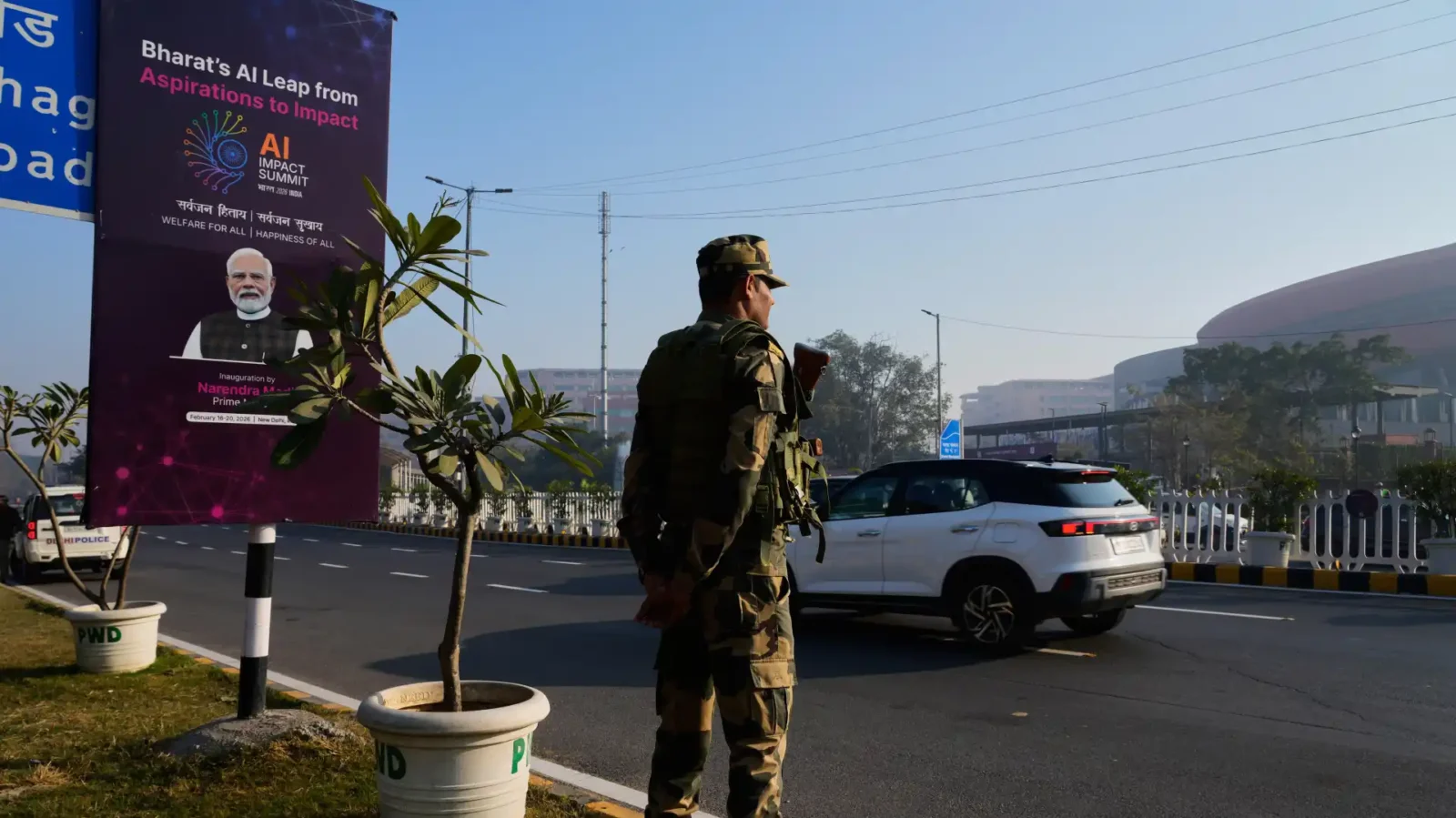
The countdown has ended. Starting tomorrow, February 16, 2026, New Delhi transforms into the global epicenter of artificial intelligence discourse as it hosts the India AI Impact Summit 2026, a five-day gathering that positions India at the forefront of international conversations about AI governance, deployment, and responsible innovation. This unprecedented event, scheduled to run through February 20 at the state-of-the-art Bharat Mandapam convention center, marks a pivotal moment not just for India but for the entire developing world.
Build the future you deserve. Get started with our top-tier Online courses: ACCA, HESI A2, ATI TEAS 7, HESI EXIT, NCLEX-RN, NCLEX-PN, and Financial Literacy. Let Serrari Ed guide your path to success. Enroll today.
The First Global AI Summit Hosted in the Global South
The India AI Impact Summit 2026 carries particular significance as the first-ever global AI summit to be hosted in the Global South, a distinction that underscores India’s growing influence in shaping international technology policy. Announced by Prime Minister Narendra Modi at the France AI Action Summit, this gathering follows a series of major international AI forums, including the UK’s Bletchley Park AI Safety Summit in 2023, the AI Seoul Summit in 2024, and the France AI Action Summit in February 2025.
However, unlike its predecessors that focused primarily on AI safety and governance, India’s summit emphasizes what organizers describe as a shift “from dialogue to demonstrable impact.” According to industry observers at Crowell & Moring, the changing summit titles seem to reflect a broader shift in focus away from abstract AI safety concerns toward practical impact, implementation, and measurable outcomes.
The summit is expected to draw delegations from over 100 countries, including 15–20 heads of government, more than 50 international ministers, and dozens of global industry leaders. This massive international participation reflects the summit’s ambition to serve as a truly global platform for AI cooperation rather than a forum dominated by developed nations.
A Gathering of Global Technology Architects
The India AI Impact Summit 2026 has attracted an impressive roster of international thought leaders, policymakers, and industry pioneers whose presence signals the event’s significance on the global stage. Among the distinguished participants are Erik Ekudden, Chief Technology Officer of Ericsson, who has spent over three decades shaping mobile technology from 2G to 5G and beyond. As Group CTO since 2017, Ekudden brings critical insights on how AI intersects with telecommunications infrastructure and the evolution of network technologies.
Tony Blair, Executive Chairman of the Tony Blair Institute for Global Change, represents another significant voice at the summit. His institute has been at the forefront of research on AI governance and sovereignty, publishing influential work on how nations can maintain agency in an AI ecosystem characterized by inherent interdependence. Blair’s presence underscores the summit’s focus on the intersection of AI, governance, and public service transformation.
From India’s corporate sector, Roshni Nadar Malhotra, Chairperson of HCLTech, brings the perspective of leading a $55 billion global technology organization. As the first woman to lead a listed IT company in India and a seven-time honoree on Forbes’ “World’s 100 Most Powerful Women” list, Nadar Malhotra represents the intersection of technological innovation and inclusive leadership. Her recent recognition with France’s highest civilian award, the Chevalier de la Légion d’Honneur, acknowledges her contributions to promoting economic ties between France and India and her commitment to social and environmental causes.
Shobana Kamineni, Executive Chairperson of Apollo HealthCo, adds crucial healthcare sector expertise to the dialogue. As the leader of India’s largest integrated digital healthcare platform, Apollo 24/7, and overseer of a pharmacy network with over 7,000 stores, Kamineni brings insights on how AI can transform healthcare delivery at scale. Her pioneering work in establishing a biobank recognized by Time Magazine among the top 10 ideas of the decade in Life Sciences demonstrates the potential for AI-driven innovation in healthcare.
Professor Alison Noble from the University of Oxford and Natalie Black, Group Director for Infrastructure and Connectivity at Ofcom, round out the diverse mix of academic and regulatory perspectives that will shape the summit’s discussions. This blend of technology executives, policymakers, healthcare innovators, and regulatory experts ensures that conversations will remain grounded in real-world complexity rather than abstract potential.
The IndiaAI Mission: A $1.3 Billion Commitment to AI Leadership
The summit unfolds against the backdrop of India’s ambitious IndiaAI Mission, a comprehensive national initiative launched on March 7, 2024, with Cabinet approval of over Rs 10,300 crore (approximately $1.3 billion) in funding over five years. This substantial financial commitment signals India’s determination to establish itself as a global AI leader while ensuring that AI benefits reach all strata of society.
The mission operates through seven interconnected pillars, each addressing critical aspects of AI development and deployment. The IndiaAI Compute Capacity pillar has already exceeded initial targets, expanding from an initial goal of 10,000 GPUs to achieving 38,000 GPUs available at a subsidized rate of just ₹65 per hour, making cutting-edge AI computing resources accessible to startups, researchers, and institutions.
Other pillars include the IndiaAI Innovation Centre, which promotes AI applications targeting problem statements from governmental sectors; the IndiaAI FutureSkills program, which expands AI education through undergraduate, master’s, and Ph.D. programs while establishing Data and AI Labs in Tier 2 and Tier 3 cities; and the IndiaAI Startup Financing initiative, which provides streamlined funding access for deep-tech AI startups. The mission also emphasizes the Safe & Trusted AI pillar, developing guidelines and frameworks to ensure responsible AI practices.
Implemented by IndiaAI, an independent business division under the Digital India Corporation of the Ministry of Electronics and Information Technology (MeitY), the mission has already demonstrated tangible results. In its first month alone, the mission received 67 proposals for building foundational AI models, with 22 focused on Large Language Models and 45 centered on domain-specific models targeting key sectors such as healthcare, education, and financial services.
Three Sutras, Seven Chakras: The Summit’s Philosophical Framework
The India AI Impact Summit 2026 is anchored on three foundational principles, or “Sutras” — a Sanskrit term meaning guiding threads that weave together wisdom and action. These three pillars define how AI can be harnessed through multilateral cooperation for collective benefit.
The People Sutra envisions AI as a force for human progress, respecting cultural diversity, preserving dignity, and ensuring inclusion in its design and deployment. This principle affirms that technology must remain human-centered, advancing people-first development while upholding safety, trust, and shared benefit. It reflects India’s commitment to ensuring that AI serves humanity in all its diversity, with no one left behind.
The Planet Sutra calls for AI that advances innovation responsibly, reducing its resource footprint while accelerating climate resilience and environmental protection. This pillar acknowledges the growing concerns about AI’s energy consumption and environmental impact while emphasizing that technological progress must align with planetary stewardship. It ensures that AI strengthens rather than undermines global sustainability efforts.
The Progress Sutra emphasizes that AI’s benefits must be equitably shared, advancing global development and prosperity. This principle recognizes that the transformative potential of AI should drive inclusive growth and foster social development that benefits all of society, not just privileged segments.
Building upon these foundational Sutras, the summit’s deliberations are organized around seven interconnected Chakras, or working groups, that translate broader principles into concrete areas of action. These include Human Capital, Inclusion, Safe & Trusted AI, Resilience, Science, Democratizing AI Resources, and Social Good. Over 100 countries have engaged through these working groups, reflecting broad global participation in shaping responsible and inclusive AI frameworks.
Each Chakra focuses on a core area of AI impact, fostering multilateral collaboration on AI’s societal effects — from building skills and ensuring ethical deployment to advancing research and promoting equitable access to AI resources. This structured approach aims to move beyond high-level political statements to demonstrable impact and tangible progress in global AI cooperation.
One decision can change your entire career. Take that step with our Online courses in ACCA, HESI A2, ATI TEAS 7, HESI EXIT, NCLEX-RN, NCLEX-PN, and Financial Literacy. Join Serrari Ed and start building your brighter future today.
An Unprecedented Scale of Engagement
The logistical scale of the India AI Impact Summit 2026 is staggering. The five-day event is expected to register over 200,000 participants at Bharat Mandapam and its adjacent areas, making it one of the largest AI-focused gatherings in history. The summit will feature more than 700 sessions spanning policy, technology, and societal impact.
To accommodate this massive influx, organizers have implemented comprehensive infrastructure support. Private players including Swiggy and Zepto have been permitted to set up food kiosks and dark stores within the venue to ensure delegates can access meals and essentials during the event. Telecommunications companies have been directed to increase network capacity around event venues to ensure smooth connectivity for the tens of thousands of participants expected each day.
The Delhi Police will deploy traffic teams at crucial intersections, while parking will be facilitated at locations such as Delhi Zoo, Jawaharlal Nehru Stadium, and India Gate, with shuttles running between these spots and Bharat Mandapam. Commuters have been encouraged to use metro services and public transportation to minimize road traffic congestion.
Alongside the main summit, the India AI Impact Expo is expected to feature over 300 exhibitors from 30 countries across more than 10 thematic pavilions, showcasing real-world AI applications in industry, governance, healthcare, education, and sustainability across a 70,000-square-meter exhibition space.
Showcasing Indigenous AI Innovation
A significant component of the summit will be the showcase of India’s growing AI innovation ecosystem. The event coincides with the launch of several flagship initiatives designed to accelerate AI development and adoption across the country. These include the AI for All: Global Impact Challenge, implemented in partnership with Startup India under the Department for Promotion of Industry and Internal Trade, which identifies AI solutions with potential for large-scale impact.
The summit will also highlight initiatives promoting inclusion and diversity in AI development. The Women Entrepreneurship Challenge, implemented in partnership with NITI Aayog’s Women Entrepreneurship Platform, invites women technologists to present AI solutions addressing large-scale public challenges, with awards up to INR 2.50 crore for selected solutions.
Youth engagement forms another critical pillar, with the YUVAi: Global Youth Challenge encouraging young innovators aged 13-21 to develop AI solutions for real-world challenges. Implemented in partnership with MyBharat and the National Institute of Electronics and Information Technology, this initiative offers prizes worth up to INR 85 lakh to selected participants.
The Research Symposium on AI and its Impact, organized on February 18, 2026, at Bharat Mandapam with IIIT Hyderabad as the knowledge partner, will provide a platform for academic researchers to present cutting-edge work on AI’s societal implications.
A key knowledge output of the summit will be the AI Compendium, scheduled for release on February 17, 2026. This comprehensive document comprises thematic casebooks documenting real-world applications of artificial intelligence across priority sectors, serving as a reference resource for practitioners and stakeholders to support continued collaboration and adoption of responsible AI solutions beyond the summit.
Prime Minister Modi to Address the Summit
Prime Minister Narendra Modi is scheduled to address the summit on February 17, a keynote appearance that underscores the Indian government’s commitment to positioning AI as a strategic enabler of national development. The address is expected to outline India’s vision for AI-led transformation and its role in achieving the government’s goal of Viksit Bharat (Developed India) by 2047.
To complement the summit’s formal proceedings, a 24×7 “Artificial Intelligence for Good” programme has been planned by officials from February 16 onward, designed to spread awareness about ethical AI usage among delegates and the broader public.
India’s Strategic Positioning in the Global AI Landscape
The timing and positioning of the India AI Impact Summit 2026 reflect India’s strategic ambitions in the global AI ecosystem. With one of the world’s largest digital user bases and expanding investments in AI capability, India represents both a significant market and a testing ground for large-scale innovation. The country’s linguistic and cultural diversity positions it strongly for advancing multi-lingual and multi-modal AI systems tailored to diverse public needs.
India’s approach through the summit focuses on translating global discussions into development outcomes aligned with national priorities under the IndiaAI Mission and Digital India Initiative. This development-oriented framework differentiates India’s vision from AI strategies centered primarily on competitive advantage or technological supremacy.
According to Stanford University’s Global AI Vibrancy ranking, India ranks among the top four countries alongside the United States, China, and the United Kingdom based on 42 indicators measuring AI skills, capabilities, and policies. GitHub, the developer community platform, has ranked India at the top with a global share of 24% of all AI-related projects, demonstrating the country’s substantial contribution to open-source AI development.
Expected Outcomes and Long-Term Impact
The India AI Impact Summit 2026 is expected to produce policy recommendations, partnerships, and innovation roadmaps that could influence how artificial intelligence is governed and deployed globally for years to come. Beyond the immediate deliverables, the summit aims to strengthen multilateral cooperation while advancing practical, people-centric AI frameworks relevant to India’s governance, economy, and society.
The summit charts a path toward a future where the transformative power of AI serves humanity, drives inclusive growth, fosters social development, and promotes people-centric innovations that protect the planet. By convening this unprecedented gathering, India is asserting its role not just as a participant in global AI discussions but as a convener capable of shaping the direction of AI governance and adoption.
As delegates and foreign guests began arriving in New Delhi on February 16, the world’s attention turns to this historic gathering. The conversations that unfold over the next five days at Bharat Mandapam could define how nations approach AI development, deployment, and governance for the remainder of the decade and beyond. For India, the summit represents an opportunity to demonstrate that the Global South can lead not just in AI adoption but in defining the ethical frameworks and practical implementations that ensure AI truly serves all of humanity.
The India AI Impact Summit 2026 is more than a conference — it is a statement of intent from the world’s most populous nation that AI’s future will be shaped not by a select few developed countries but through inclusive multilateral cooperation that respects cultural diversity, promotes sustainable development, and ensures equitable access to the benefits of technological progress. As the summit opens its doors tomorrow, the world watches to see whether this ambitious vision can translate into concrete action and lasting impact.
Ready to take your career to the next level? Join our Online courses: ACCA, HESI A2, ATI TEAS 7 , HESI EXIT , NCLEX – RN and NCLEX – PN, Financial Literacy!🌟 Dive into a world of opportunities and empower yourself for success. Explore more at Serrari Ed and start your exciting journey today! ✨
Track GDP, Inflation and Central Bank rates for top African markets with Serrari’s comparator tool.
See today’s Treasury bonds and Money market funds movement across financial service providers in Kenya, using Serrari’s comparator tools.
photo source: Google
By: Montel Kamau
Serrari Financial Analyst
16th February, 2026