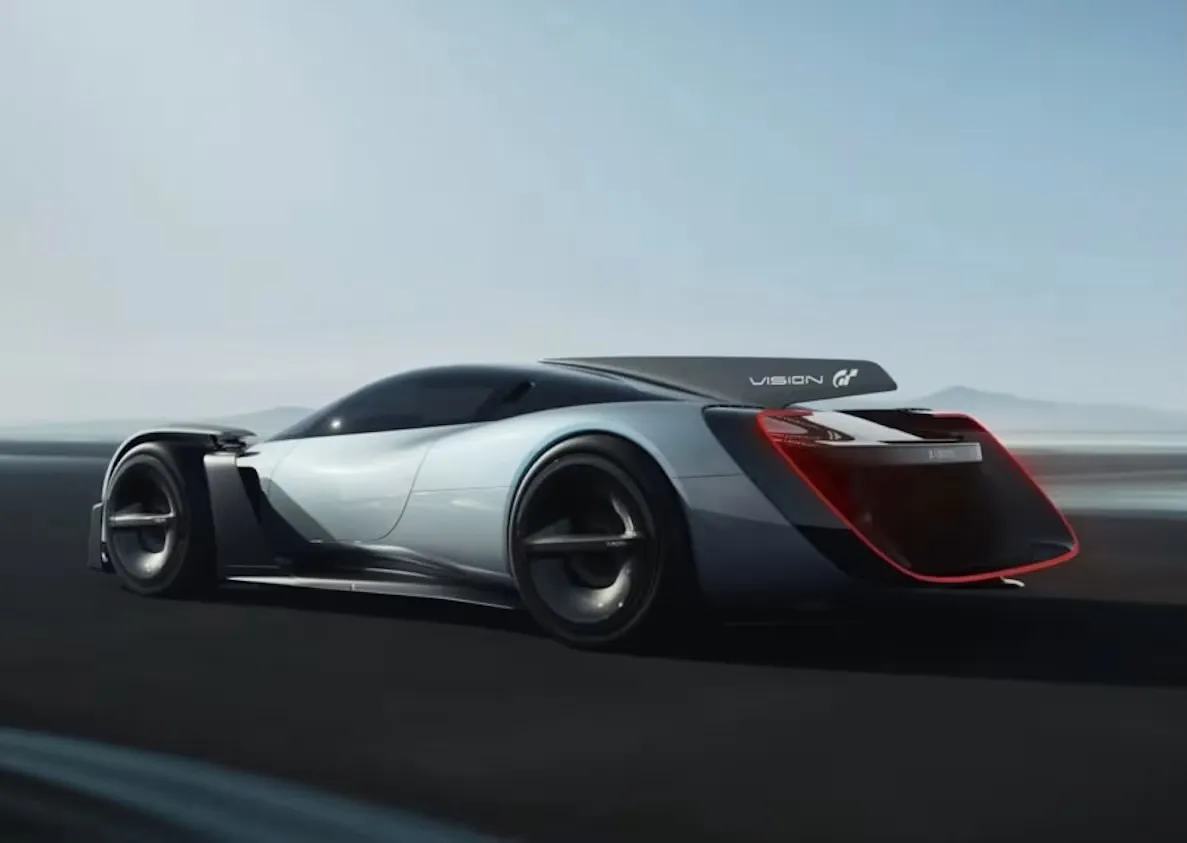
The landscape of the global automotive industry has reached a fever pitch in March 2026, characterized by a collision of virtual hypercar concepts, aggressive humanoid robotics integration, and unprecedented diplomatic shifts in electric vehicle (EV) trade. At the center of this whirlwind is Xiaomi, the consumer electronics giant turned automotive powerhouse, which recently dominated the Mobile World Congress (MWC) in Barcelona by unveiling a physical scale model of its first-ever Vision Gran Turismo supercar concept. This move marks Xiaomi as the first Chinese brand invited by Polyphony Digital to contribute to the legendary GT simulation platform, signaling a new era where digital design leads physical manufacturing.
Build the future you deserve. Get started with our top-tier Online courses: ACCA, HESI A2, ATI TEAS 7, HESI EXIT, NCLEX-RN, NCLEX-PN, and Financial Literacy. Let Serrari Ed guide your path to success. Enroll today.
Xiaomi’s Vision GT: The Intersection of Aerodynamics and Ecosystems
Xiaomi founder and CEO Lei Jun’s release of official images for the Vision GT is more than just a nod to gaming culture; it is a declaration of technical intent. The concept car features a “teardrop” cockpit silhouette and a drag coefficient of just 0.29, achieved through a sophisticated aerodynamic architecture. One of the most striking innovations is the Accretion Rims, which utilize a stationary magnetic wheel cover to reduce rotating drag while internal turbine fins actively cool the braking system.
Beyond its physical form, the Vision GT is a “Human x Car x Home” hub. Integrated with the XiaoAi AI Assistant, the vehicle is designed to perceive and respond to the driver through light, sound, and touch, dissolving the barrier between machine and operator. While the concept remains a “vision” for now, the data coming from Xiaomi’s production lines is very real. Despite a seasonal dip in February, Xiaomi EV confirmed that monthly deliveries exceeded 20,000 units, with the YU7 SUV currently serving as the brand’s primary sales driver.
February 2026: A Month of Surging Deliveries and “New Force” Rivalries
While February is traditionally a slower month in the Chinese market due to the Spring Festival, the 2026 data shows a resilient “New Force” sector. The competition between Leapmotor, Li Auto, and NIO has created a highly stratified market where volume and technology are the primary battlegrounds.
The Delivery Leaderboard
| Brand | Feb 2026 Deliveries | Notable Milestone |
| Leapmotor | 28,067 units | Top-ranked “New Force” for February |
| Li Auto | 26,421 units | Rolled out OTA v8.3 for VLA Driver model |
| NIO | 20,797 units | 57.6% year-over-year increase |
| ZEEKR | 23,867 units | 70% annual sales climb |
Leapmotor’s position at the top of the chart is bolstered by its user stickiness in the 100k-200k RMB range, specifically through its C-series and B-series models. Meanwhile, Li Auto is preparing for a second-quarter launch of the all-new Li L9, aiming to maintain its lead in the extended-range electric vehicle (EREV) segment. NIO’s performance was particularly notable for the diversity of its sub-brands; the deliveries included 2,981 units from ONVO and 2,657 from the high-end compact brand FIREFLY.
The Automation Frontier: Humanoid Robots and Moon Factories
As production volumes rise, the world’s leading automakers are turning to Physical AI to solve the challenges of high-precision, repetitive labor. In Germany, the BMW Group has officially launched its first humanoid robot pilot program at its Leipzig plant. The program utilizes robots like the Aeon, a wheeled humanoid developed by Swiss-based Hexagon Robotics, which can move rapidly in any direction within the factory floor.
These robots are being tested in the assembly of high-voltage batteries, a task that requires millimetre precision. This European trial follows a successful 10-month deployment at BMW’s Spartanburg plant in the US, where a humanoid robot moved over 90,000 components and assisted in the production of 30,000 BMW X3 models.
Tesla’s Off-World Vision
While BMW automates the factory floor, Elon Musk is looking toward the stars. In a recent interview, the Tesla CEO made the audacious claim that Tesla will build a production facility on the Moon within 20 years. Musk envisions a lunar factory that could use electromagnetic launch technologies to produce satellites and host AI data centers, utilizing the moon’s environment to bypass Earth-bound logistics. Simultaneously, Tesla is retooling its Fremont factory to scale Optimus humanoid robot production to one million units annually, aiming for a future of autonomous, self-replicating systems.
One decision can change your entire career. Take that step with our Online courses in ACCA, HESI A2, ATI TEAS 7, HESI EXIT, NCLEX-RN, NCLEX-PN, and Financial Literacy. Join Serrari Ed and start building your brighter future today.
Global Policy Shifts: The Canada-China “Canola-for-EVs” Accord
Perhaps the most significant development in global EV trade is the thawing of relations between Canada and China. Starting March 1, 2026, the Canadian government began issuing import licenses for Chinese electric vehicles under a new managed trade agreement. This arrangement marks a sharp pivot from the previous punitive tariff of 106.1%, reducing the rate to a most-favoured-nation level of 6.1%.
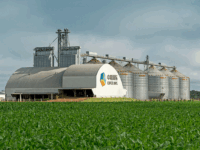
In exchange for allowing up to 49,000 Chinese EVs into the market annually, China has agreed to lower tariffs on Canadian canola seed to a combined rate of approximately 15%, down from previous levels as high as 84%. This deal provides a blueprint for how nations might navigate the transition to green energy while protecting agricultural interests. Canada has also stipulated that by 2030, 50% of the quota must be reserved for affordable EVs priced at $35,000 CAD or less, ensuring that the trade deal directly benefits middle-class consumers.
Standardizing the “Embodied Brain”: China’s National Robot System
To support the massive influx of humanoid robotics into the industrial sector, the Chinese government has released the “Humanoid Robot and Embodied Intelligence Standard System (2026 Edition).” This framework is the country’s first top-level design covering the entire industry chain, from brain-like intelligence to safety ethics.
The system addresses the critical “structural bottleneck” of inconsistent data. Currently, the lack of standardized embodied data forces developers to duplicate work across isolated silos. By providing unified guidelines for high-torque joints and dexterous hands, the 2026 standards aim to achieve stable economies of scale, ultimately lowering the cost of humanoid units for small and medium-sized enterprises.
The Supply Chain and Retail Landscape: Subsidies and Inventory
While the macro-trends are futuristic, the day-to-day operations of the auto industry remain focused on consumer incentives and inventory management.
1. The Shenzhen Subsidy Program
In Shenzhen, a new implementation plan utilizes ultra-long special treasury funds to support vehicle trade-ins. Consumers purchasing a new energy vehicle (NEV) are eligible for an 8% purchase price subsidy, capped at 15,000 yuan. This local policy is crucial as nationwide full tax exemptions for EVs expired at the end of 2025, transitioning to a halved tax system in 2026.
2. Dealer Inventory Pressures
The latest Vehicle Inventory Alert Index (VIA) shows that while dealer pressure has eased slightly, the index remains at 56.2% in February 2026. This is above the “boom-bust” line of 50%, indicating that despite high delivery numbers, the market is facing a transition period between old and new products, leading to a temporary buildup of stock.
3. Supply Chain Expansion
Components companies are rapidly globalizing to match the footprint of their OEM clients. Wuhu Bethel Automotive Safety Systems recently established a wholly-owned subsidiary in Germany with a $1 million investment to refine its global footprint. Similarly, the signing of a strategic cooperation agreement between Jiangxi Jinxi InspireNano and Shanghai’s Anting Town showcases the continued flow of capital into high-end R&D centers within China’s automotive heartland.
Conclusion: The 2026 Paradigm Shift
The first quarter of 2026 has redefined what it means to be an “automotive company.” Xiaomi is no longer just a smartphone maker; it is a supercar designer and an ecosystem architect. Tesla is no longer just an EV maker; it is a space-faring robotics firm. And Volkswagen, having delivered its two millionth pure electric vehicle—an ID.3 produced at the Zwickau plant—remains a pillar of traditional manufacturing excellence amidst the disruption.
As we look toward the remainder of the year, the success of these companies will depend on their ability to bridge the gap between virtual concepts and physical reality. Whether it is a Vision GT racing through a simulator or a humanoid robot assembling batteries in Leipzig, the future of the car is increasingly defined by the code that runs it and the machines that build it.
Ready to take your career to the next level? Join our Online courses: ACCA, HESI A2, ATI TEAS 7 , HESI EXIT , NCLEX – RN and NCLEX – PN, Financial Literacy!🌟 Dive into a world of opportunities and empower yourself for success. Explore more at Serrari Ed and start your exciting journey today! ✨
Track GDP, Inflation and Central Bank rates for top African markets with Serrari’s comparator tool.
See today’s Treasury bonds and Money market funds movement across financial service providers in Kenya, using Serrari’s comparator tools.
photo source: Google
By: Montel Kamau
Serrari Financial Analyst
3rd March, 2026