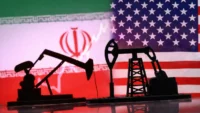
Africa’s most consequential financial relationship of the past decade may be on the verge of disruption. The military confrontation between the United States, Israel, and Iran — now entering its second week — is placing enormous fiscal pressure on Gulf economies that have, over the past ten years, become some of the continent’s most significant sources of foreign capital. As energy revenues fall, shipping routes are disrupted, and defence budgets balloon, governments in Riyadh, Abu Dhabi, and Doha are privately reassessing how much they can afford to deploy overseas — and Africa, the recipient of more than USD 100 billion in Gulf investment over the past decade, stands directly in the path of that reassessment.
The Financial Times reported, citing a senior Gulf official familiar with the discussions, that a number of Gulf countries have begun an internal review to determine whether force majeure clauses can be invoked in existing contracts, while also reviewing current and future investment commitments. The official said three of the four largest Gulf economies — Saudi Arabia, the United Arab Emirates, Kuwait, and Qatar — had held joint discussions about the financial strains the war is imposing on their budgets. The review, he said, was a precautionary measure driven by reduced income from energy, disruptions to shipping, declining tourism and aviation revenues, and a sharp increase in defence spending.
Build the future you deserve. Get started with our top-tier Online courses: ACCA, HESI A2, ATI TEAS 7, HESI EXIT, NCLEX-RN, NCLEX-PN, and Financial Literacy. Let Serrari Ed guide your path to success. Enroll today.
A War the Gulf Did Not Choose
The Gulf states occupy a uniquely vulnerable position in the current conflict. They share a region with Iran, depend on the same shipping lanes, and host US military assets that have become targets for Iranian retaliation. Yet most Gulf governments neither initiated nor endorsed the military escalation. Before the conflict began, Gulf leaders had reportedly urged Washington to delay strikes and pursue diplomacy.
The consequences of their proximity to the conflict are now materialising in real economic terms. At least ten tankers have been struck in the Gulf. The Strait of Hormuz — through which roughly one-fifth of the world’s oil and gas passes — has seen shipping grind to a near-halt. Strikes have targeted US bases, embassies, airports, hotels, and residential areas across the region. Qatar, the world’s second-largest producer of liquefied natural gas, declared force majeure this week after suspending output at its main LNG facility. Saudi Arabia’s largest oil refinery has also been hit.
Analysts at Chatham House note that while a short conflict might cause Gulf GDP to contract by roughly 1 per cent — comparable to Israel’s economic contraction during the 12-day conflict the previous summer — a more prolonged confrontation would produce a far deeper wound: output disrupted, investment postponed, and tourism curtailed. The Gulf economies account for only around 2 to 3 per cent of global GDP, but the key risk lies not in their direct economic weight but in their role as suppliers and transit points for critical global commodities — including oil, gas, and, notably, around 40 per cent of the world’s helium, used in semiconductor production.
What the Gulf Has Built in Africa
To understand the stakes for Africa, it is necessary to appreciate the scale of Gulf investment that has flowed into the continent in recent years. According to the European Council on Foreign Relations, in 2022 and 2023 alone, GCC states collectively deployed nearly USD 113 billion of foreign direct investment into Africa — exceeding their total investments over the entire preceding decade. The United Arab Emirates accounts for the largest share of the accumulated footprint, with approximately USD 59.4 billion invested across the continent, followed by Saudi Arabia with around USD 25.6 billion and Qatar with roughly USD 7.2 billion.
The capital has flowed across a wide range of sectors. Energy and infrastructure form the backbone of Gulf investment in Africa, driven by both commercial interest and strategic diplomacy. The UAE’s DP World operates ports across multiple African countries and continues to expand into new African logistics networks. Telecom companies including the UAE’s e& (formerly Etisalat) and Qatar’s Ooredoo have invested in Africa’s digital infrastructure, enhancing connectivity across the continent. Gulf sovereign wealth funds have also channelled capital into African fintech, startups, and emerging industries — including Qatar’s stake in Airtel Mobile Commerce, the mobile money division of Airtel Africa.
Mining is another critical vector. The International Holding Company, headquartered in the UAE, holds a significant stake in Zambia’s Mopani copper mines. Saudi Arabia’s Ma’aden and the kingdom’s Public Investment Fund have also pursued mining deals across the continent. Agriculture represents a further strategic priority: Saudi Arabia, the most food-import-dependent of the major Gulf economies, purchased 500,000 hectares of land in Tanzania in 2009 and has continued to deploy capital into African agricultural assets as part of its long-term food security strategy.
The Pledges Now at Risk
Beyond the existing investment stock, it is the forward-looking commitments that give the clearest picture of what Africa could lose if Gulf states are forced to retrench. These pledges, made at a time of Gulf economic confidence and strategic outreach, collectively run into the hundreds of billions of dollars.
Qatar announced in 2025 that it would commit USD 103 billion in investments across Africa over the coming years, positioning itself alongside the UAE and Saudi Arabia as one of the continent’s largest financiers. Among the specific commitments, the Democratic Republic of Congo — a major producer of minerals critical to the global energy transition — was promised USD 21 billion. Mozambique, which is positioning itself to join Qatar as a major LNG exporter, was earmarked for USD 20 billion, largely tied to the expansion of its gas sector.
The UAE has been advancing its Africa Green Investment Initiative, through which it has mobilised USD 4.5 billion for clean energy deployment, supporting more than 60 projects across solar, wind, geothermal energy, battery storage, and green hydrogen. The UAE also launched a USD 1 billion “AI for Development” initiative at the G20 summit in November 2025, aimed at supporting digital infrastructure and technology development across emerging markets including Africa. More recently, in February 2026, the UAE pledged USD 500 million in humanitarian assistance to Sudan at a US-hosted donor conference.
Saudi Arabia has been equally ambitious. In February 2026, the kingdom announced plans to increase its investments in Africa to more than USD 25 billion by 2030, including initiatives targeting digital infrastructure and artificial intelligence capabilities. Riyadh has also been exploring the development of subsea digital connectivity linking Africa with the kingdom’s western coast — a project aimed at improving data connectivity and supporting the continent’s growing digital economy.
Taken together, these commitments represent not just capital, but infrastructure, connectivity, technology, and energy projects that African governments have built their development plans around. A slowdown or withdrawal, even partial, would leave significant financing gaps at a time when many African economies are already navigating high debt-service costs and subdued growth.
One decision can change your entire career. Take that step with our Online courses in ACCA, HESI A2, ATI TEAS 7, HESI EXIT, NCLEX-RN, NCLEX-PN, and Financial Literacy. Join Serrari Ed and start building your brighter future today.
Gulf Budgets Under Pressure
The economic logic behind the potential review is straightforward, if sobering. Gulf states have built their prosperity and their overseas investment ambitions on two foundational assumptions: that their rapidly expanding cities and economies offered a safe haven in a volatile region, and that energy exports would flow uninterrupted to generate the revenues required to sustain sovereign wealth funds and development pledges.
Both assumptions are now under stress. According to reporting by Al Mayadeen citing the Financial Times, the Gulf official described the convergence of pressures: declining energy revenues from output slowdowns and disrupted shipping, a sharp drop in tourism and aviation activity, and a surge in defence spending — all consequences of a war that Gulf states neither initiated nor welcomed.
GCC sovereign wealth funds collectively manage approximately USD 5 trillion in assets, with projections estimating growth to USD 7 trillion by 2030. Saudi Arabia’s Public Investment Fund manages around USD 1.15 trillion, Abu Dhabi’s ADIA approximately USD 1.11 trillion, and the Qatar Investment Authority in excess of USD 550 billion. These are enormous pools of capital — but they are not immune to the fiscal pressures created by war. An adviser to a Gulf government told the Financial Times that the prospect of an investment pullback has already drawn attention in Washington, given that Saudi Arabia, the UAE, and Qatar had collectively pledged hundreds of billions of dollars in US investments following President Trump’s regional visit in 2025.
Oxford Economics analysts have warned that Gulf oil flows could inflict material economic damage if disrupted for a prolonged period, and that oil, gas, and aerospace and defence stocks would spike. In the broader investment landscape, the review of overseas commitments signals a pivotal strategic moment: Gulf states that had been spending years projecting outward financial power are now being forced into a defensive fiscal posture.
The Remittance Dimension
Beyond formal investment, Africa’s economic relationship with the Gulf also runs through a second, equally vital channel: remittances from the millions of African migrant workers employed across Gulf economies. This pipeline — which many African governments have come to treat as a structural source of external financing — is also under threat.
According to research by the Gulf Research Center, in 2023 total remittance flows from GCC countries to sub-Saharan Africa reached USD 28.3 billion, with the bulk originating from Saudi Arabia (USD 12.5 billion), the UAE (USD 8.2 billion), and Qatar (USD 3.7 billion). The major recipient countries include Ethiopia, Kenya, Nigeria, Ghana, Uganda, Tanzania, and Rwanda — economies for which these inflows are not supplementary but structural.
The scale of this dependency varies dramatically by country. Nigeria, which received USD 19.8 billion in remittances in 2024, represents 35 per cent of all sub-Saharan Africa’s total remittance inflows. Egypt received USD 22.7 billion — the continent’s highest total — with a large share originating from the Gulf diaspora. Morocco recorded over USD 12 billion. For smaller economies such as Somalia and Lesotho, remittances represent more than 20 per cent of GDP.
According to the ISS African Futures programme, remittance flows to Africa matched or exceeded the value of official development assistance and foreign direct investment in recent years — a statistic that underscores how central these flows have become to household livelihoods and national balance sheets alike. Projections for 2025 had been optimistic, with the African Diaspora Network suggesting total continental remittances could exceed USD 100 billion for the first time.
That trajectory now depends heavily on whether African migrant workers in the Gulf retain their jobs and their ability to send money home as regional economic conditions deteriorate. A prolonged conflict that suppresses Gulf growth, triggers layoffs in hospitality, construction, and logistics, or causes governments to impose restrictions on capital outflows could materially reduce remittance volumes — adding a second layer of economic exposure on top of the investment risk.
What This Means for African Economies
The combination of potential investment delays, cancelled pledges, and falling remittances represents a compound risk for a continent that has been consciously building its economic partnerships with Gulf states as an alternative to traditional Western and multilateral sources of finance.
Countries with the most to lose are those where specific Gulf-backed infrastructure or energy projects are already in the pipeline or early stages of implementation. Mozambique’s LNG expansion ambitions, tied significantly to Qatari capital, face particular uncertainty given that QatarEnergy has already declared force majeure on its domestic output. The DRC’s USD 21 billion in pledged Qatari investment — much of it linked to the country’s critical minerals potential — may now face delays or renegotiation.
For sub-Saharan oil producers such as Nigeria, the situation carries a double edge: higher global oil prices, if they persist, could increase export revenues, but Nigeria still relies heavily on imported refined fuels, leaving it exposed to energy price shocks and disruptions to major shipping routes including the Strait of Hormuz.
The broader strategic implication is clear. Africa’s effort to diversify its international financial relationships — drawing Gulf capital as an alternative or complement to Western-led investment — was premised on the Gulf’s stability and its capacity to project financial power outward. That premise is now being tested in real time. Gulf states, for all their accumulated wealth, are discovering that sovereign wealth cannot fully insulate an economy from the consequences of a regional war that strikes at the very infrastructure — ports, refineries, airports, shipping routes — on which their prosperity depends.
As one prominent Emirati businessman, Khalaf al-Habtoor, reflected in a public message addressed to President Trump following the outbreak of hostilities: Arab Gulf countries had contributed billions of dollars on the basis of supporting stability and development. The question now being asked in both Gulf capitals and African finance ministries is the same: where does that commitment stand when the stability itself has been shattered?
Ready to take your career to the next level? Join our Online courses: ACCA, HESI A2, ATI TEAS 7 , HESI EXIT , NCLEX – RN and NCLEX – PN, Financial Literacy!🌟 Dive into a world of opportunities and empower yourself for success. Explore more at Serrari Ed and start your exciting journey today! ✨
Track GDP, Inflation and Central Bank rates for top African markets with Serrari’s comparator tool.
See today’s Treasury bonds and Money market funds movement across financial service providers in Kenya, using Serrari’s comparator tools.
photo source: Google
By: Montel Kamau
Serrari Financial Analyst
9th March, 2026