A landmark report from the United Nations Economic Commission for Africa is set to reframe how the continent thinks about growth, industrialisation, and the digital economy. The forthcoming Economic Report on Africa 2026 (ERA 2026), titled “Growth through Innovation: Harnessing Data and Frontier Technologies for Africa’s Economic Transformation,” makes a pointed argument: Africa cannot continue to rely on expanding labour and capital inputs alone. If the continent is to make the structural leap into higher-value industries, it will need to embrace frontier technologies — from artificial intelligence and machine learning to advanced robotics and renewable energy systems — as deliberate drivers of productivity and diversification.
The report, which will be officially launched at the ECA Conference of Ministers in Tangier, Morocco, later in March 2026, offers both a diagnosis and a detailed policy prescription for a continent whose economic potential has long outpaced its structural realities.
Build the future you deserve. Get started with our top-tier Online courses: ACCA, HESI A2, ATI TEAS 7, HESI EXIT, NCLEX-RN, NCLEX-PN, and Financial Literacy. Let Serrari Ed guide your path to success. Enroll today.
The Core Problem: Growth Without Transformation
At the heart of ERA 2026 is a candid assessment of what African economic growth has — and has not — delivered in recent years. According to the ECA, much of Africa’s economic progress has been driven by factor accumulation — expanding the supply of capital and labour — rather than by sustained productivity gains. The result is that structural transformation has stalled: labour and investment have been slow to shift from low-productivity agricultural and informal activities into higher-value sectors like manufacturing and modern services.
This pattern is not unique to Africa. But on a continent where youthful demographics, abundant natural resources and growing intra-regional trade offer an unusually strong foundation for catch-up growth, the persistence of low-productivity traps is particularly costly. The report frames this gap — between what Africa’s assets should yield and what its economy is currently producing — as the central challenge that technology and innovation must help close.
Africa’s economic growth is forecast to reach 4.3 percent in 2026, supported by increased infrastructure investment, stabilising commodity prices and expanding intra-African trade. But even this relatively robust projection sits against a backdrop of persistent structural headwinds. A separate UN report, the World Economic Situation and Prospects 2026 (WESP 2026), released in January, warned that high debt-servicing costs, limited fiscal space and volatile commodity prices continue to weigh on Africa’s prospects for inclusive and sustainable growth. The ECA’s Stephen Karingi, Director of the Macroeconomics, Finance and Governance Division, described Africa’s improving outlook as fragile — a word that underscores the urgency behind ERA 2026’s innovation-focused agenda.
Frontier Technologies: The $16.4 Trillion Opportunity
The report situates Africa’s technology challenge within a rapidly shifting global landscape. According to projections first published in the UNCTAD Technology and Innovation Report 2025, the global frontier technology market — encompassing artificial intelligence, the Internet of Things, blockchain, advanced robotics and renewable energy systems — is expected to grow from $2.5 trillion in 2023 to $16.4 trillion by 2033, a near-sevenfold increase over a decade. Within that broader market, AI alone is projected to surge from $189 billion to $4.8 trillion, rising from 7 percent to 29 percent of total frontier technology market share.
These figures are not merely striking — they carry a direct warning. As the UNCTAD report notes, development is highly concentrated, with advanced economies and a small number of large corporations capturing the vast majority of AI research, development and intellectual property. Apple, Nvidia and Microsoft each carry market valuations of around $3 trillion — a combined figure rivalling the GDP of the entire African continent. In 2022, just 100 companies, predominantly based in the United States and China, accounted for 40 percent of global AI research and development spending.
For Africa, the message is stark: the window to participate meaningfully in the global technology revolution is open, but it will not remain so indefinitely. ERA 2026 argues that with its vast critical mineral reserves, abundant renewable energy potential and a youthful and growing workforce, Africa possesses the foundational assets to become a key player in that revolution — but only if deliberate investment and policy choices follow.
Data as a Strategic Economic Asset
One of the report’s distinctive contributions is its treatment of data not merely as an operational input, but as a strategic economic resource in its own right. Stronger data generation, storage and processing systems, the report argues, could enable entirely new industries and drive digital innovation across sectors — from agriculture and health to logistics and financial services.
This framing matters because Africa’s data infrastructure remains deeply underdeveloped relative to the rest of the world. Many national statistical systems lack the capacity to produce timely, high-quality economic data. Digital connectivity is uneven. Data centres are concentrated in a handful of major cities. And the continent remains heavily dependent on external platforms and systems for data storage and processing — a dependency that ERA 2026 identifies as both a vulnerability and a governance risk.
The ECA has for years worked to address this gap through its African Centre for Statistics, which supports member states in building their statistical systems and improving the availability and quality of economic and social data. ERA 2026 gives renewed urgency to that work, embedding it within a broader vision of data as the raw material for a new wave of African industrialisation.
One decision can change your entire career. Take that step with our Online courses in ACCA, HESI A2, ATI TEAS 7, HESI EXIT, NCLEX-RN, NCLEX-PN, and Financial Literacy. Join Serrari Ed and start building your brighter future today.
Manufacturing, AfCFTA and the Regional Value Chain Opportunity
ERA 2026 identifies manufacturing as the anchor of Africa’s structural transformation strategy — and it is here that the intersection of technology and trade policy becomes most concrete. The report points to technology-enabled industrial clusters, digital logistics systems and smart cross-border supply chains as the mechanisms through which African manufacturers can compete regionally and globally.
Underpinning this vision is the African Continental Free Trade Area (AfCFTA), which entered into force in 2019 and began facilitating active trade flows in January 2021. The agreement, which covers over 1.4 billion people and a combined GDP exceeding $3 trillion, represents Africa’s most ambitious economic integration initiative. The ECA projects that intra-African trade will increase by over 400 percent by 2045 if the agreement is fully implemented — a figure that underscores both the prize on offer and the distance still to be travelled.
Digital infrastructure is increasingly central to making that prize accessible. A newly launched platform — the Africa Digital Access and Public Infrastructure for Trade (ADAPT) — developed in partnership between the AfCFTA Secretariat, the Tony Blair Institute, the IOTA Foundation and the World Economic Forum, is designed to replace the continent’s fragmented, paper-based trade systems with a shared digital backbone linking identity, payments and documentation across member states. Official projections for ADAPT suggest it could double intra-African trade by 2035 and generate around $23.6 billion in annual efficiency gains, while cutting border clearance times by more than half.
ERA 2026 complements this trade infrastructure push with a call for investment in technology-enabled production clusters — industrial zones where digital tools, automation and advanced logistics systems can raise manufacturing productivity and link African producers more effectively into regional and global supply chains. The ECA has itself piloted the use of satellite imagery and artificial intelligence to monitor critical road corridor conditions across the continent, including along the LAPSSET Corridor linking Lamu, South Sudan and Ethiopia — a practical demonstration of how frontier technologies can support trade infrastructure directly.
Agriculture, Energy, Transport and Services: Sectors Already Changing
Beyond manufacturing, ERA 2026 highlights emerging and already-documented applications of frontier technologies across a range of sectors where the economic impact on African livelihoods is most direct.
In agriculture, digital precision tools, AI-powered advisory platforms and IoT-enabled sensors are improving crop yields and reducing input waste for smallholder farmers across sub-Saharan Africa. Across East Africa, for instance, solar-powered IoT devices are already helping farmers boost crop yields by up to 15 percent, while blockchain platforms are facilitating faster cross-border agricultural payments.
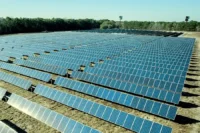
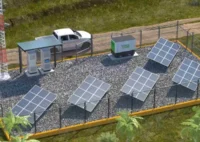
In energy, the report highlights renewable systems — particularly solar photovoltaics — as both a critical frontier technology and an enabler of the broader digital economy. Grid-connected and off-grid solar power is providing the energy foundation for digital infrastructure in areas previously excluded from centralised energy networks. In transport, AI-enabled road condition monitoring and digital logistics platforms are reducing the friction and cost of moving goods across borders — a precondition for making AfCFTA’s trade liberalisation ambitions commercially viable.
In services, automation and digital platforms are enabling new business models in financial technology, healthcare delivery and education — sectors where Africa’s demographic profile creates both enormous need and enormous opportunity. The ECA’s Africa Business Forum in February 2026, held in Addis Ababa under the theme “Financing Africa’s Future,” underscored this point: with millions of young Africans entering the labour market annually, the continent needs not just jobs but productive employment that technology can help create at scale.
The Risks: Displacement, Divides and Dependency
ERA 2026 does not present a uniformly optimistic picture of technological adoption. In a section that gives the report analytical credibility, it catalogues the risks that come with rapid frontier technology integration — and calls for deliberate governance responses to each.
Labour displacement is the most widely discussed risk. As automation and AI take over routine and some complex tasks, employment in certain sectors could contract faster than new technology-driven jobs emerge. This concern is global: the UNCTAD Technology and Innovation Report warned that AI could impact up to 40 percent of jobs globally, creating productivity gains for some while disrupting livelihoods for many others. For Africa — where large portions of the workforce remain in agriculture and informal trade — the implications require careful policy attention.
Gender and digital divides represent a second major risk. Women and rural populations are disproportionately excluded from digital systems, whether through limited device ownership, connectivity gaps or lower digital literacy. The report warns that without targeted intervention, frontier technology adoption could deepen existing inequalities rather than reduce them — concentrating gains among already-advantaged urban, male and formally employed populations.
Cybersecurity vulnerabilities and data dependency constitute a third cluster of risks. As African economies integrate more deeply into global digital systems, they become more exposed to cyber threats and more reliant on external platforms, algorithms and data infrastructure — raising questions about digital sovereignty and the governance of sensitive national data.
ERA 2026 calls for stronger regulatory frameworks and expanded institutional capacity as the primary response to these risks. The ECA’s prior work in building national-level statistical and data governance systems across Africa provides a partial foundation for this — but the scale of the challenge, and the speed of technological change, demands substantially more.
Policy Recommendations: From Vision to Investment
The report’s policy recommendations are practical and sequenced. They centre on five interconnected areas.
First, governance and institutional capacity: African governments must develop clear regulatory frameworks for frontier technology deployment, covering data protection, cybersecurity, algorithmic accountability and digital trade. Central Africa’s recent adoption of a regional digital trade policy framework, developed through the Economic Community of Central African States and supported by the ECA, offers a model for how regional regulatory harmonisation can be achieved.
Second, skills and human capital: ERA 2026 calls for expanded investment in education and training programmes targeting young people and women, with a focus on digital literacy, coding, data analysis and technology entrepreneurship. ECA Executive Secretary Claver Gatete has consistently framed this as the continent’s most fundamental investment, noting that Africa must “invest decisively in innovation, skills and data systems” so that African youth can drive and benefit from digital and green transitions.
Third, research and development: The report calls for increased investment in R&D, including through regional centres of excellence and partnerships between universities, governments and the private sector. Africa’s current R&D expenditure as a share of GDP remains far below global averages — a structural gap that limits the continent’s capacity to generate and adapt technology domestically rather than simply importing it from abroad.
Fourth, innovative financing: ERA 2026 recommends new financing instruments — including innovation bonds, blended finance vehicles and digitised domestic revenue systems — to channel capital into technology-driven sectors. This echoes the ECA’s Africa Business Forum recommendations for building more credible African capital markets that can lower borrowing costs and attract long-term investment.
Fifth, infrastructure: None of the above is possible without a dramatic expansion of energy supply, broadband connectivity, data centre capacity and transport networks. The ECA’s earlier economic report, ERA 2025, noted that Africa’s transition to renewables under AfCFTA integration could require a cumulative $22.4 billion in investment between 2025 and 2040 — a figure that illustrates both the scale of what is needed and the financing challenge that must be overcome to deliver it.
Tangier and What Comes Next
When ERA 2026 is formally launched at the 58th Session of the ECA Conference of Ministers, convening in Tangier from late March into early April, it will arrive at a moment of genuine strategic urgency for African policymakers. The global technology race is accelerating. Frontier technology investment is concentrating among a small number of advanced economies. And Africa’s window to position itself as a participant — rather than a periphery — in the digital economy is narrowing.
The report’s core argument is ultimately one of sequencing and choice. The technologies are available. The market opportunity is documented. The policy tools — governance frameworks, skills investment, regional integration, innovative financing — are identifiable. What remains is the political will and the coordinated public and private investment to move from analysis to action.
As Gatete has put it, Africa must confront what he describes as “the gap between risk perception and investment reality” on the continent. The costs of delay — foregone productivity, missed industrialisation, deepening inequality — are accumulating. The ERA 2026 report is, at its core, a detailed argument that the continent cannot afford to wait.
Ready to take your career to the next level? Join our Online courses: ACCA, HESI A2, ATI TEAS 7 , HESI EXIT , NCLEX – RN and NCLEX – PN, Financial Literacy!🌟 Dive into a world of opportunities and empower yourself for success. Explore more at Serrari Ed and start your exciting journey today! ✨
Track GDP, Inflation and Central Bank rates for top African markets with Serrari’s comparator tool.
See today’s Treasury bonds and Money market funds movement across financial service providers in Kenya, using Serrari’s comparator tools.
photo source: Google
By: Montel Kamau
Serrari Financial Analyst
9th March, 2026