Africa’s financial landscape is undergoing a rapid transformation, driven by mobile technology, a young population, and an increasing demand for faster, cheaper, and more accessible financial services. Yet despite this progress, one major challenge remains unresolved: the inefficiency of traditional payment systems, especially for cross-border transactions.
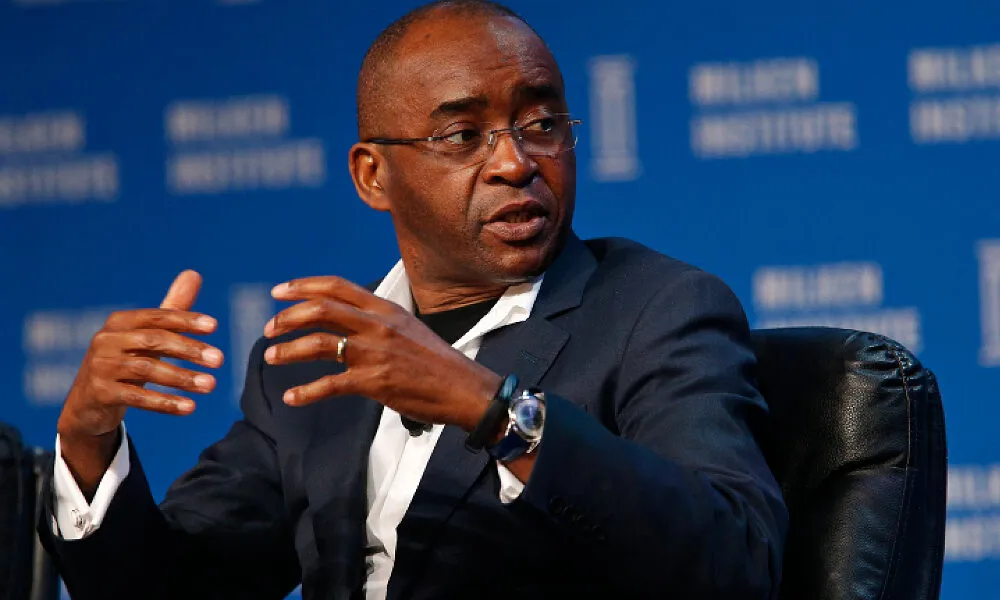
In a move that could reshape how money moves across the continent, Circle Internet Group Inc. has partnered with Cassava Technologies, the digital infrastructure firm founded by Zimbabwean billionaire Strive Masiyiwa, to accelerate the adoption of stablecoins in Africa. At the center of this partnership is USDC, a dollar-backed digital currency that is increasingly being positioned as an alternative to traditional financial rails.
By integrating USDC into Cassava’s Sasai platform, which already serves millions of users across more than 30 African markets, the partnership aims to reduce transaction costs, eliminate friction, and significantly speed up payment settlement. More importantly, it represents a strategic alignment between global fintech infrastructure and Africa’s rapidly evolving digital economy.
Markets move fast; don’t get left behind. We’ve paired the Serrari Group Market Index with a curated Marketplace and a comprehensive Wealth Builder Course to ensure you have the data—and the skills—to act on it.
What the Circle–Cassava Partnership Involves
At its core, the agreement is about integration and expansion.
Circle, one of the world’s most prominent stablecoin issuers and a recently listed U.S. fintech company, will embed its USDC stablecoin into the Sasai ecosystem. Sasai already supports a wide range of financial services, including mobile wallets, remittances, and enterprise payments. By adding USDC into this framework, the platform effectively gains access to a new financial layer—one that operates on blockchain infrastructure rather than traditional banking systems.
For users, this means transactions that currently take days could settle in minutes. For businesses, it opens up new possibilities in cross-border trade, treasury management, and digital commerce.
Strive Masiyiwa has framed the partnership as a step toward unlocking broader economic opportunities, emphasizing its potential to drive financial inclusion while supporting business growth across the continent.
Why Stablecoins Are Gaining Ground in Africa
The rise of stablecoins in Africa is not happening in isolation. It is a response to very specific structural challenges within the continent’s financial systems.
One of the most persistent issues is the high cost of sending money across borders. On average, sending $200 costs around 7.9% globally, and in sub-Saharan Africa, this figure can exceed 8.78%. For individuals and businesses alike, these costs create a significant barrier to economic activity.
At the same time, traditional banking infrastructure has struggled to keep pace with the continent’s digital growth. While mobile money has revolutionized domestic payments, cross-border transactions remain slow, expensive, and fragmented.
Stablecoins offer a potential solution.
Because they operate on blockchain networks, stablecoins can facilitate near-instant settlement without relying on intermediaries. In theory, this allows transactions to be completed faster and at a fraction of the cost.
Market analysis suggests that stablecoin-based transfers could reduce fees by as much as 85%, a figure that highlights the disruptive potential of this technology.
The Role of USDC in the Digital Economy
USDC, the stablecoin at the center of this partnership, is designed to maintain a one-to-one value with the U.S. dollar. Each unit is backed by dollar reserves, making it a relatively stable digital asset compared to more volatile cryptocurrencies.
This stability is particularly important in markets where local currencies are subject to fluctuations or shortages. In countries such as Nigeria, where access to U.S. dollars can be limited, USDC has emerged as a preferred store of value.
Data from 2024 shows that stablecoins accounted for 43% of all crypto transaction volume in sub-Saharan Africa, underscoring their growing importance. In Nigeria alone, crypto activity reached nearly $22 billion, with a significant portion of users holding stablecoins as a hedge against currency depreciation.
In this context, USDC is not just a payment tool—it is also a financial instrument that addresses real economic needs.
Context is everything. While you follow today’s updates, use the Serrari Group Market Index and Marketplace to spot emerging shifts. Need to sharpen your edge? Our Wealth Builder Course turns these insights into a professional-grade strategy.
Cassava Technologies: Building a Digital Infrastructure Ecosystem
Cassava Technologies is positioning itself as more than just a regional telecom or infrastructure provider.
The company has been expanding aggressively across Africa, building capabilities in digital payments, cloud services, and more recently, artificial intelligence through partnerships supported by Nvidia technology.
By integrating USDC into Sasai, Cassava is effectively layering blockchain-based financial services on top of its existing infrastructure. This move aligns with a broader strategy of creating a comprehensive digital ecosystem that can support everything from consumer payments to enterprise solutions.
The partnership with Circle also gives Cassava a global dimension, connecting African markets to international financial networks in a way that traditional systems have struggled to achieve.
Why This Matters
The significance of this partnership goes beyond the immediate benefits of faster and cheaper payments.
First, it represents a step toward solving one of Africa’s most persistent economic challenges: inefficient cross-border payments. By reducing costs and improving speed, stablecoins could unlock new opportunities for trade, particularly within the framework of the African Continental Free Trade Area (AfCFTA).
Second, it highlights the growing importance of digital infrastructure in shaping economic development. As financial services move online, the ability to integrate new technologies becomes a key competitive advantage.
Third, it signals increasing institutional confidence in stablecoins. What was once seen as a niche segment of the crypto market is now being adopted by major players as a legitimate financial tool.
For Circle, the partnership provides a strategic entry point into one of the fastest-growing digital markets in the world. For Cassava, it reinforces its ambition to become a leading technology and financial services platform across Africa.
Risks and Challenges
Despite its potential, the partnership faces several challenges that could influence its success.
One of the most significant is regulatory uncertainty. Stablecoins operate at the intersection of finance and technology, and regulatory frameworks across Africa are still evolving. Changes in policy could impact how these assets are used and integrated into financial systems.
There is also the issue of trust and adoption. While stablecoins are gaining traction, they are still not fully understood by many users. Building confidence will require education, transparency, and consistent performance.
Another key risk is currency and monetary policy tension. Governments may be cautious about widespread adoption of dollar-backed stablecoins, as they could reduce demand for local currencies and complicate monetary policy.
Technology risk must also be considered. While blockchain systems are generally reliable, they are not immune to disruptions, cyber threats, or operational challenges.
Finally, there is execution risk. Integrating USDC into the Sasai platform at scale will require seamless technical implementation, strong user experience design, and effective coordination between the two companies.
A Critical Perspective: Opportunity vs Dependency
While stablecoins offer clear advantages, it is important to question whether their widespread adoption could create new dependencies.
By relying on dollar-backed digital assets, African economies may become more exposed to external financial systems. This could limit the development of local currency solutions and increase vulnerability to global financial shifts.
At the same time, stablecoins could complement existing systems rather than replace them. The challenge will be finding the right balance between innovation and sovereignty.
Looking Ahead: The Future of Payments in Africa
The Circle–Cassava partnership is part of a broader trend toward digital, decentralized financial systems.
As mobile penetration continues to rise and digital infrastructure improves, the demand for efficient payment solutions is likely to grow. Stablecoins could play a central role in this transformation, particularly in cross-border transactions and digital commerce.
At the same time, the success of such initiatives will depend on collaboration between private companies, regulators, and financial institutions. Building a sustainable ecosystem requires more than technology—it requires trust, stability, and clear governance.
Conclusion
The partnership between Circle and Cassava Technologies marks a significant moment in the evolution of Africa’s financial landscape. By integrating USDC into the Sasai platform, the two companies are attempting to address long-standing challenges in payments, while positioning themselves at the forefront of digital finance.
The potential benefits are clear: lower costs, faster transactions, and greater financial inclusion. However, the path forward is not without obstacles. Regulatory uncertainty, adoption challenges, and broader economic implications will all play a role in shaping the outcome.
As the global financial system continues to evolve, Africa stands at a critical juncture. The choices made today—by companies, regulators, and users—will determine how the continent participates in the next phase of financial innovation.
Your financial future isn’t something you wait for, it’s something you build.
The real question is: when do you begin?
Move beyond simply staying informed.
Navigate the markets with clarity—track trends through the Serrari Group Market Index, uncover opportunities in the Serrari Marketplace, and build practical knowledge with our Curated Wealth Builder Course.
Stay connected to what truly matters.
Get daily insights on macro trends and financial movements across Kenya, Africa, and global markets—delivered through the Serrari Newsletter.
Growth opens doors.
Advance your career through professional programs including ACCA, HESI A2, ATI TEAS 7 , HESI EXIT , NCLEX – RN and NCLEX – PN, Financial Literacy!🌟—designed to move you forward with confidence.
See where money is flowing—clearly and in real time.
Track Money Market Funds, Treasury Bills, Treasury Bonds, Green Bonds, and Fixed Deposits, alongside global and African indexes, key economic indicators, and the evolving Crypto and stablecoin landscape—all within Serrari’s Market Index.