South Africa’s leading brands have collectively surged in value by 12% to R771 billion in 2026, signalling a corporate sector growing in confidence as the country transitions from stabilisation into more sustained economic recovery. The findings, published in the Brand Finance South Africa 100 2026 report, reflect improved energy supply, easing inflation, stronger investor sentiment, South Africa’s removal from the FATF grey list, and the first S&P Global sovereign credit rating upgrade in nearly two decades. MTN retains the top spot as the country’s most valuable brand for the 13th consecutive year. PEP is the fastest-growing brand, up 76%, while Checkers holds firm as the strongest brand by Brand Strength Index. Boxer and new entrant Savanna are among the most compelling stories of the year, and five brands debut in the ranking for the first time, including the Johannesburg Stock Exchange and SANRAL. Across the ranking, 82 of the 100 brands increased in value, with an average uplift of 16%.
Key Overview
- Total brand value of South Africa’s Top 100 rose 12% to R771 billion in 2026
- 82 of 100 brands increased in value, with an average uplift of 16%
- Banking sector total brand value rose to R198.3 billion, driven by digital innovation
- MTN retains the top spot for the 13th consecutive year at R50.9 billion
- Vodacom grew 9% to R47.9 billion; Standard Bank up 19% to R45 billion
- Checkers is South Africa’s strongest brand with a BSI score of 96.9/100 and AAA+ rating
- PEP is the fastest-growing brand, up 76% to R5.8 billion, driven by fintech expansion
- Boxer brand value rose 55% to R3.8 billion, now worth more than parent Pick n Pay
- Savanna cider debuted at 13th with a brand value of R19.1 billion; sold in over 60 countries
- Five new entrants: JSE, Valterra Platinum, Oros, Savanna, and SANRAL
- South Africa removed from FATF grey list in October 2025 after 33 months of reform
- S&P upgraded SA’s foreign-currency rating from BB- to BB — the first upgrade in nearly 20 years
Markets move fast; don’t get left behind. We’ve paired the Serrari Group Market Index with a curated Marketplace and a comprehensive Wealth Builder Course to ensure you have the data—and the skills—to act on it.
A Recovery Written in Brand Value
Brand value is, at its core, a measure of commercial trust. When consumers and investors consistently choose, pay for, and remain loyal to a brand, that intangible loyalty converts into financial value — the net economic benefit a brand owner would achieve by licensing the brand in the open market, as Brand Finance defines it. By that measure, 2026 is South Africa’s strongest year in recent memory.
The combined value of the country’s Top 100 brands reached R771 billion — up from R688.6 billion in 2025, when banking, retail, and telecoms already accounted for more than 62% of total brand value. The 12% year-on-year gain is not merely a number — it arrives at a moment when the broader economic environment in South Africa has shifted perceptibly. Improvements in energy supply following years of load-shedding disruption, easing inflation, and increased investor confidence have collectively created a more favourable operating environment for business.
Jeremy Sampson, Chairman of Brand Finance Africa, framed the significance of the findings directly: “South Africa’s leading brands continue to demonstrate remarkable resilience and consistency. In a period of gradual economic recovery, it is clear that strong brands are not only benefiting from improved conditions but are actively shaping them. Brands that have invested in trust, innovation, and customer relevance over time are now best positioned to convert opportunity into sustained growth.”
The Macro Backdrop: FATF Exit, S&P Upgrade, and Renewed Confidence
The brand value results do not exist in an economic vacuum. Behind the headline number lies a set of structural shifts that have materially altered South Africa’s risk profile and attractiveness to investors — and, by extension, the operating environment for its largest brands.
Most significantly, South Africa was formally removed from the FATF grey list on 24 October 2025, ending 33 months of enhanced monitoring that began when the Financial Action Task Force placed the country on its list of jurisdictions with strategic gaps in anti-money laundering and counter-financing of terrorism frameworks. The exit, confirmed after South Africa addressed all 22 items in the FATF action plan and passed a follow-up on-site assessment in July 2025, effectively reduces friction in cross-border payments, lowers compliance overhead for international transactions, and signals to global investors that South Africa’s financial integrity architecture now meets the global benchmark.
The grey list removal was followed within weeks by an S&P Global sovereign credit rating upgrade, the first in nearly two decades. South Africa’s foreign-currency rating moved from BB- to BB with a positive outlook, reflecting improving fiscal trajectory and the reduction of contingent liabilities tied largely to Eskom’s performance improvements. According to South Africa’s National Treasury, the country is one of just three nations globally to secure an S&P upgrade in 2025 — a distinction that carries weight among global capital allocators. South Africa was also removed from the EU’s high-risk country list in January 2026, compounding the improvement in international standing.
Together, these developments constitute a meaningful pivot in sentiment — and brand value, which tracks investor and consumer trust as much as revenue performance, has responded accordingly.
MTN: A 13-Year Reign Built on Data and Fintech
At the top of the ranking, MTN’s position as South Africa’s most valuable brand has become a structural fixture of the corporate landscape. The company retains first place for the 13th consecutive year with a brand value of R50.9 billion — a consistent achievement that reflects both the breadth of its pan-African footprint and the depth of its strategic evolution from a traditional telecoms operator into a digital and fintech platform.
MTN’s brand performance reflects continued growth in data services and fintech platforms, alongside sustained investment in network infrastructure and digital connectivity. This aligns with a broader industry trajectory: MTN and Vodacom together command more than 70% of mobile service revenue in South Africa, and Mastercard’s minority stake has valued MTN’s fintech arm at USD 5.2 billion, underscoring investor appetite for scaled digital finance platforms on the continent. MTN’s fintech revenue jumped 59.1% year-on-year in H1 2024, and the group has processed $4.4 billion in cross-market remittances through its MoMo platform, with $1.7 billion disbursed in loans.
Vodacom strengthened its position as the second most valuable brand, growing 9% to R47.9 billion. Growth was supported by geographic expansion into markets such as Egypt and Ethiopia, and increasing adoption of digital financial services including VodaPay, M-Pesa, and Vodafone Cash. Vodacom’s fintech operation generated R34 billion in annual revenue, processing 42.6 billion transactions with a transaction value peaking at $450.8 billion — evidence of the scale these telecoms platforms have achieved in financial services across the continent.
Context is everything. While you follow today’s updates, use the Serrari Group Market Index and Marketplace to spot emerging shifts. Need to sharpen your edge? Our Wealth Builder Course turns these insights into a professional-grade strategy.
Banking Dominates the Value Rankings
The banking sector continues to anchor South Africa’s brand landscape with exceptional strength. Total banking brand value rose to R198.3 billion in 2026, driven by digital innovation, improved lending conditions, and expanding service offerings. Five of the country’s top ten brands are banks — a consistent reflection of the sector’s central role in consumers’ daily financial lives and in the country’s broader economic engine.
Standard Bank climbed to third place overall, with brand value growing 19% to R45 billion, driven by strong performance in corporate and investment banking and continued technology investment. In March 2026, Standard Bank also became an official partner of Bafana Bafana and Banyana Banyana ahead of the 2026 FIFA World Cup, reinforcing its national presence. First National Bank ranked fourth with brand value up 19% to R34.8 billion, followed by Absa at fifth, up 12% to R30.6 billion. Both continue to benefit from strong customer engagement and rising digital adoption across their platforms.
Capitec’s emergence into the top ten for the first time is a particularly noteworthy development. It reflects the continued momentum of newer-generation banking players whose approach to mass-market, digital-first service delivery has reshaped South Africa’s retail banking landscape. Capitec now serves more than 25 million clients, accounting for over half of South Africa’s adult population — a client base built on simplicity, low fees, and accessibility that has become the benchmark challenger banks across the region are chasing.
Checkers: The Strength Behind the Strength
While brand value rankings tend to capture attention, the Brand Strength Index (BSI) — which measures the effectiveness of a brand’s performance on intangible metrics relative to competitors — tells a different story about Checkers.
Checkers retains its position as South Africa’s strongest brand with a BSI score of 96.9 out of 100 and an elite AAA+ rating. This metric reflects a powerful combination of premium positioning, innovation, and convenience, underpinned by an ecosystem of digital platforms and loyalty programmes that have created deep consumer lock-in. Clicks and Pick n Pay rank second and third respectively in brand strength, reinforcing retail’s dominant position in consumer trust metrics.
Across the entire Top 20, brands maintained an average BSI score of 83 with AAA ratings — a stability that Brand Finance characterises not as stagnation but as embedded resilience. In an increasingly uncertain global environment, this structural brand equity is a strategic advantage, enabling leading brands to withstand market volatility and convert opportunity into sustained value growth when conditions allow.
PEP: Retail Meets Fintech at Scale
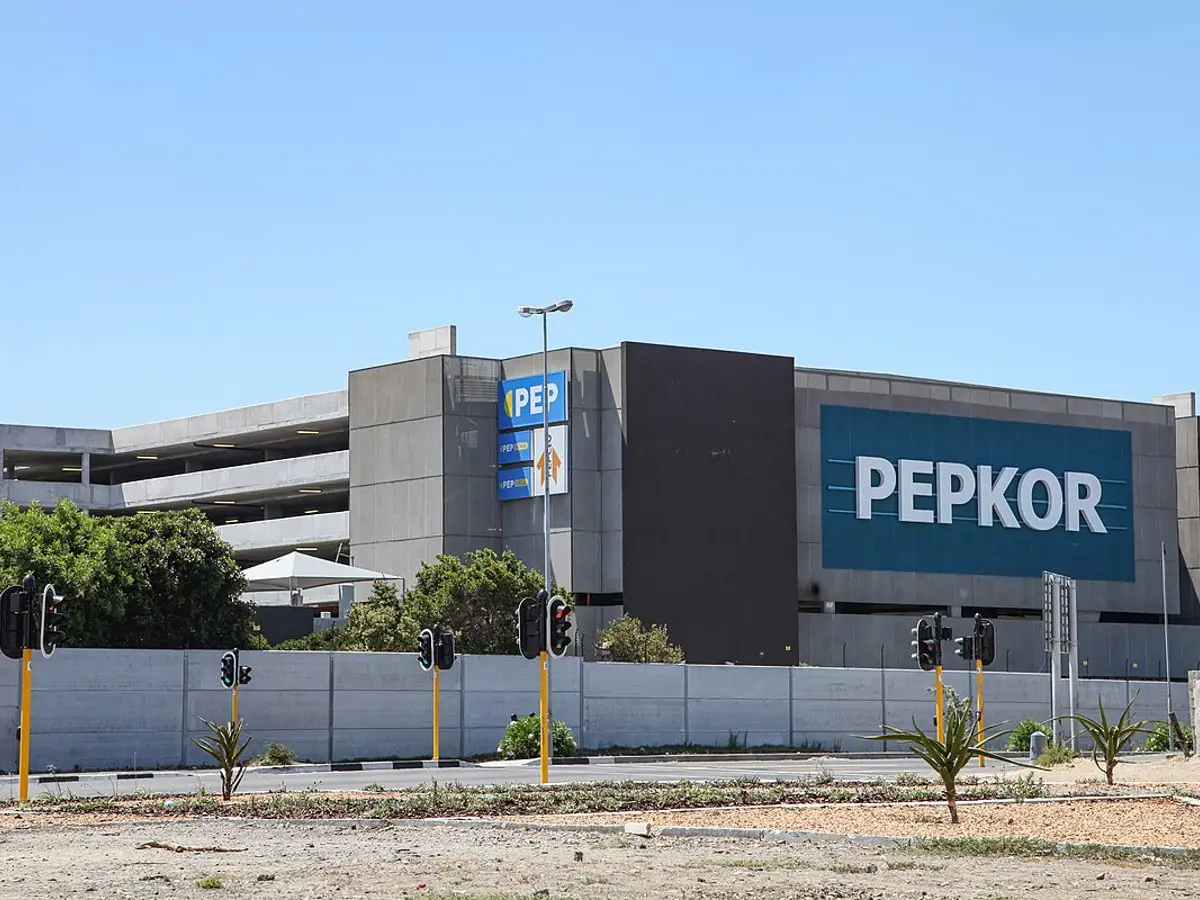
The most dramatic brand value growth story of 2026 belongs to PEP, which saw its brand value surge 76% to R5.8 billion — a rise that reflects a fundamental shift in what PEP actually is. No longer simply a discount clothing retailer, PEP has evolved into a broader financial and digital services platform serving South Africa’s lower-income consumer base at extraordinary scale.
The transformation is being driven through Pepkor’s fintech division, whose revenue rose 31% to R16.6 billion in the year through September 2025, accounting for 17% of group sales. Pepkor has secured regulatory clearance from the South African Reserve Bank’s Prudential Authority to establish a full banking presence, following its acquisition of Cloudbadger, a fintech software platform that will underpin the coming venture’s technology architecture. Expected to trade as Pep Bank, the new offering would operate from within Pepkor’s network of more than 5,000 stores — a physical distribution advantage that exceeds the combined branch networks of Capitec, Standard Bank, Absa, and Nedbank. The group already processes more than two million money transfers, four million bill payments, and 22 million cash withdrawals every month through its existing channels.
Pepkor’s entry into banking, alongside Shoprite’s expansion into financial services and newer institutions such as OM Bank, is beginning to reshape competitive dynamics in South Africa’s retail banking sector — which generated R140 billion in profit in the 12 months to December 2024.
Boxer: Worth More Than Its Parent
Among the brands to watch in 2026, Boxer’s story stands out as perhaps the most striking. The discount grocery chain — a subsidiary of Pick n Pay — saw its brand value rise 55% to R3.8 billion, and in one of the more remarkable comparisons to emerge from this year’s report, Boxer is now worth more than its parent company. As Jeremy Sampson noted in a CNBC Africa interview, this inversion underscores the strength of value-oriented retail formats in a constrained consumer environment where affordability and proximity to underserved markets are rewarded with loyalty.
Boxer’s growth has been driven by a disciplined operating model focused on simplicity, affordability, and penetration into communities that more premium grocery formats do not reach. Following its partial IPO and continued physical expansion, Boxer is increasingly positioned as a major force in South Africa’s discount retail segment — and its brand metrics suggest the trajectory is far from finished.
New Entrants Reflect a Changing Landscape
Five brands debut in the Brand Finance South Africa 100 ranking in 2026, each offering a distinct lens on the country’s evolving commercial and institutional landscape. Among them, Savanna cider, with a brand value of R19.1 billion, ranks the highest on debut at 13th place and comes in as the 10th strongest brand with a BSI score of 90.6 out of 100. Launched in 1996 by the Distell Group, Savanna has become a globally recognised icon, sold in over 60 countries — its debut in the ranking reflects the belated recognition of an asset that has long been part of South African cultural identity.
The Johannesburg Stock Exchange enters the ranking for the first time, as does SANRAL — the South African National Roads Agency Limited — whose inclusion reflects a striking institutional transformation. SANRAL was once largely invisible to the public consciousness; its emergence as a trusted institution has been built through targeted community engagement, deepening public understanding of the agency’s role, and sustained effort to build genuine buy-in around its mandate. The entry of Valterra Platinum and Oros completes the cohort of new entrants, pointing to the breadth of South Africa’s brand landscape beyond the traditional banking and telecoms pillars.
Looking Ahead: Brand as an Economic Lever
South Africa’s Brand Finance 2026 report carries a broader message that extends beyond individual brand rankings. In a slow-growth economy that has averaged roughly 1% annual growth over the last 13 years — with analysts now projecting 1.7–1.8% for 2026 — the private sector’s ability to generate brand value represents one of the clearest available measures of productive confidence.
Brands create jobs, generate tax revenues, drive demand, and act as ambassadors for the nation, as Brand Finance Africa has consistently argued in its annual assessments of South African brand performance. The R771 billion combined value of the Top 100 is not merely an accounting exercise — it represents the commercial trust accumulated through investment decisions, product innovation, customer service, and institutional integrity over years and decades. That trust, embedded in brands that have survived power crises, grey listings, and global uncertainty, is proving durable.
The results come with a caveat: the research was completed before the recent escalation of geopolitical tensions in the Middle East, which have introduced new uncertainty into the global economic outlook. South Africa, as a commodity exporter with ties to global capital markets, is not insulated from those pressures. How the country’s leading brands navigate the coming months will test the resilience of the brand equity these rankings celebrate.
For now, however, the trajectory is clear — upward, broad-based, and accelerating for those willing to innovate.
Your financial future isn’t something you wait for—it’s something you build.
The real question is: when do you begin?
Move beyond simply staying informed.
Navigate the markets with clarity—track trends through the Serrari Group Market Index, uncover opportunities in the Serrari Marketplace, and build practical knowledge with our Curated Wealth Builder Course.
Stay connected to what truly matters.
Get daily insights on macro trends and financial movements across Kenya, Africa, and global markets—delivered through the Serrari Newsletter.
Growth opens doors.
Advance your career through professional programs including ACCA, HESI A2, ATI TEAS 7 , HESI EXIT , NCLEX – RN and NCLEX – PN, Financial Literacy!🌟—designed to move you forward with confidence.
See where money is flowing—clearly and in real time.
Track Money Market Funds, Treasury Bills, Treasury Bonds, Green Bonds, and Fixed Deposits, alongside global and African indexes, key economic indicators, and the evolving Crypto and stablecoin landscape—all within Serrari’s Market Index.