The Common Market for Eastern and Southern Africa (COMESA) has emerged as the undisputed engine of investment on the African continent, capturing approximately 67% of all foreign direct investment (FDI) flowing into Africa in 2024. FDI inflows into the 21-member bloc surged by 154% to reach a historic $65 billion — a record-breaking milestone announced at the second COMESA Investment Forum 2026 held in Nairobi alongside the Kenya International Investment Conference (KIICO 2026). The surge was anchored by Egypt’s landmark Ras El Hekma development deal but was underpinned by broad-based investor confidence across the region. Project finance nearly doubled to $79 billion, greenfield investments exceeded $77 billion, and Kenya unveiled $2.9 billion in signed deals creating over 63,000 jobs. Regional leaders used the forum to chart a 2026–2030 strategy focused on value-added sectors, digital infrastructure, and deeper economic integration.
Key Overview
- FDI into COMESA surged 154% to $65 billion in 2024, an all-time high for the bloc
- COMESA captures ~67% of all FDI flows into Africa
- Global FDI share doubled from 2% to 4%; share of developing-economy FDI rose from 3% to 7%
- Project finance nearly doubled to $79 billion — 80% of Africa’s total project finance value
- Greenfield investments reached $77 billion, the second-highest in COMESA’s history
- Egypt’s Ras El Hekma $35 billion mega-deal was the single largest driver of growth
- Excluding Ras El Hekma, FDI still grew 16%, reflecting region-wide investor confidence
- Construction investment surged fivefold; renewable energy FDI rose 67%; health and education up 130%
- Kenya signed 20 deals worth over $2.9 billion at KIICO 2026, projected to create 63,000 jobs
- COMESA’s combined GDP exceeds $1 trillion across 21 member states
Markets move fast; don’t get left behind. We’ve paired the Serrari Group Market Index with a curated Marketplace and a comprehensive Wealth Builder Course to ensure you have the data—and the skills—to act on it.
COMESA Commands Two-Thirds of Africa’s Foreign Investment
The Common Market for Eastern and Southern Africa is rapidly transforming its position on the global investment map, and the numbers tell a striking story. Accounting for approximately 67% of all foreign direct investment inflows into Africa, the bloc — which stretches from Tunisia in the north to Eswatini in the south — recorded a 154% surge in FDI in 2024, reaching an all-time high of $65 billion. This came even as global FDI flows contracted by 11% during the same period, making COMESA’s ascent all the more remarkable.
The findings were presented at the second COMESA Investment Forum 2026, convened in Nairobi on March 26 under the patronage of Kenyan President William Ruto, organised in partnership with the Government of Kenya’s Ministry of Trade, Investments and Industry and Kenya Investment Authority (KenInvest). Heba Salama, Chief Executive Officer of COMESA’s Regional Investment Agency (RIA), delivered the headline figures at the forum’s opening session, drawing on data from the jointly produced COMESA Investment Report 2025, prepared in collaboration with UN Trade and Development (UNCTAD).
“FDI inflows into COMESA member states recorded a historic surge, reaching USD 65 billion despite global economic challenges,” Salama said, attributing the growth to rising investor confidence and large-scale catalytic projects across member states.
A Surge That Defied Global Headwinds
What makes COMESA’s 2024 FDI performance so significant is the global context in which it occurred. According to UNCTAD’s analysis, global FDI flows declined by 11% in 2024, placing COMESA’s record-breaking growth in sharp relief. The bloc’s share of global FDI inflows doubled from 2% to 4%, while its share of investment directed to developing economies jumped from 3% to 7%.
Across the African continent, total FDI inflows surged 75% in 2024 to reach $97 billion, according to UNCTAD’s World Investment Report 2025. With COMESA absorbing $65 billion of that total, the bloc’s dominance over the continent’s investment landscape is clear. For comparison, the Southern African Development Community (SADC) recorded 34% FDI growth, while the East African Community (EAC) saw a more modest 12% increase — underscoring COMESA’s outsized momentum.
Beyond FDI, the region witnessed international project finance nearly double to $79 billion, representing 80% of Africa’s total project finance value in 2024. Greenfield investment — the establishment of entirely new foreign business operations — remained robust, with announced projects reaching $77 billion, marking the second-highest level in COMESA’s history. The bloc captured two-thirds of all greenfield investment value across the African continent.
European and North American investors continue to hold the largest share of FDI stock in COMESA, led by the Netherlands and the United States, with Dutch investments concentrated in Egypt and Libya, the UK focused on Egypt and Mauritius, and China emerging as an increasingly significant investor across the DRC, Ethiopia, Kenya, and Zambia.
Context is everything. While you follow today’s updates, use the Serrari Group Market Index and Marketplace to spot emerging shifts. Need to sharpen your edge? Our Wealth Builder Course turns these insights into a professional-grade strategy.
The Ras El Hekma Effect: Egypt’s Mega-Deal and What Lies Beneath
No account of COMESA’s 2024 FDI surge is complete without examining the Ras El Hekma development project in Egypt — the single largest foreign investment deal in the region’s recent history. In early 2024, Abu Dhabi-based investment company ADQ signed a $35 billion agreement to develop the Ras El Hekma Peninsula — a 170-million-square-metre coastal area located approximately 350 kilometres northwest of Cairo — into a world-class Mediterranean destination encompassing tourism facilities, a free zone, residential, commercial, and recreational spaces.
ADQ acquired the development rights for $24 billion, with an additional conversion of $11 billion in deposits committed to investments across Egypt. The Egyptian government retained a 35% stake in the project, which is expected to attract over $150 billion in total investments over its lifetime. According to Egypt’s Investment and Foreign Trade Minister, FDI flows into projects in Egypt jumped from around $10 billion in 2023 to a record $46.1 billion in 2024, with Ras El Hekma as the primary catalyst.
The Ras El Hekma megaproject is also projected to contribute approximately $25 billion annually to Egypt’s GDP and create around 750,000 jobs, with cumulative investments expected to reach $110 billion by 2045.
Yet the story extends well beyond one mega-deal. The COMESA Investment Report 2025 makes clear that even excluding the Ras El Hekma transaction, FDI inflows into COMESA would still have grown by 16% — a rate that outpaced all other major regional economic communities on the continent and signals genuine, broad-based improvement in investor sentiment. Richard Bolwijn, Director of Investment Research at UNCTAD, described 2024 as “an exceptional year of record growth despite global slowdown,” highlighting a strategic opportunity to enhance resilience through diversification, digital infrastructure investment, and deeper regional integration.
The five countries absorbing the lion’s share of these flows — Egypt, Ethiopia, Uganda, the Democratic Republic of Congo, and Kenya — together accounted for 90% of COMESA’s total FDI inflows, pointing to a concentration challenge the bloc’s policymakers are now openly addressing.
Sectoral Shifts: Construction Booms, Agriculture Lags
The COMESA Investment Report 2025 reveals pronounced sectoral variation in where investment is flowing, with both encouraging trends and notable gaps. Construction emerged as the standout growth sector, recording nearly a fivefold increase in investment, driven predominantly by large-scale activity in Egypt. Basic metals investment rose by 71%, reflecting strong demand from manufacturing and infrastructure development.
Energy and gas supply sectors saw a 22% increase in FDI, retaining their position as the top FDI recipient within COMESA. The energy transition is gaining momentum: renewable energy investment grew by 67%, reinforcing COMESA’s emergence as an attractive hub for clean energy projects, particularly in Egypt, Tunisia, Rwanda, and Malawi, which led the performance in international project finance for grid expansion and renewable energy. Social sector investments also showed strong momentum, with health and education investment rising by 130% — albeit from a low base — as private capital increasingly tracks demographic and development imperatives.
However, the report flags significant investment gaps in critical areas. Technology-related flows showed considerable volatility: ICT investment dropped by 55% after a strong 2023, while extractive industry FDI fell 61%. More concerning for long-term food security and sustainability, agrifood investment fell by 34%, water and sanitation investment declined by a steep 76%, and transport infrastructure investment dropped by 54% — all sectors requiring urgent and targeted policy attention.
Intra-regional investment also remains a persistent weakness. Only 3% of announced greenfield projects during the 2020–2024 period originated from within COMESA itself — well below the African average of 7% — reflecting the continued dominance of extra-regional capital and the limited integration of investment flows within the bloc.
Kenya’s $2.9 Billion Investment Moment at KIICO 2026
On the sidelines of the COMESA Investment Forum, Kenya delivered its own investment milestone. The Kenya International Investment Conference (KIICO 2026) opened on March 25 with President William Ruto announcing 20 signed deals valued at over $2.9 billion — significantly surpassing the conference’s original target of mobilising more than $2 billion in new commitments. The deals are projected to create more than 63,000 direct jobs across 10 counties, spanning agriculture, mining, manufacturing, healthcare, ICT, real estate, and energy.
Agriculture and agro-processing attracted approximately $890 million in investment, aimed at expanding value-addition and supporting smallholder farmers in rice, sugar, and horticulture — projected to generate more than 27,000 jobs. Headline agriculture deals included Tana Bliss Kenya’s $300 million integrated rice and irrigation project and Tana River Sugar Company’s $285 million modern sugar milling facility. The manufacturing sector attracted $600 million across eight deals in fertiliser production, textiles, solar panel manufacturing, plastics recycling, and glass bottle manufacturing — with strong export linkages under AfCFTA and AGOA frameworks.
In mining, Australia-based NGX Limited’s Buru Rare Earth Elements project will inject $350 million in Kericho, unlocking new mineral value chains. Real estate attracted $630 million, led by the Mombasa Creekside Gardens project at $380 million and Nairobi Belle Vue Arch at $250 million — representing significant Gulf-linked capital into Kenya’s two largest cities. Healthcare also drew key private sector investment: Balmer Healthcare committed $200 million in Uasin Gishu, Bounty Management Global committed $60 million in Nairobi, and RVL Healthcare Ltd committed $50 million.
Investors hailed from the United States, United Kingdom, United Arab Emirates, China, India, and South Korea, reinforcing Kenya’s position as a gateway into East and Central Africa. Notably, Kenya’s FDI inflows in 2025 already grew by over 15%, exceeding $2 billion for the first time, up from $1.78 billion the previous year — a trajectory the deals announced at KIICO 2026 are designed to sustain.
President Ruto also announced a suite of policy reforms to strengthen Kenya’s investment climate, including plans to zero-rate VAT in strategic sectors, introduce the Business Laws Amendments Bill 2026 to reduce red tape, accelerate the development of 4,500 acres of special economic zones, and fully digitise the One-Stop Investment Centre by end of 2026.
New Tools to Unlock Regional Investment
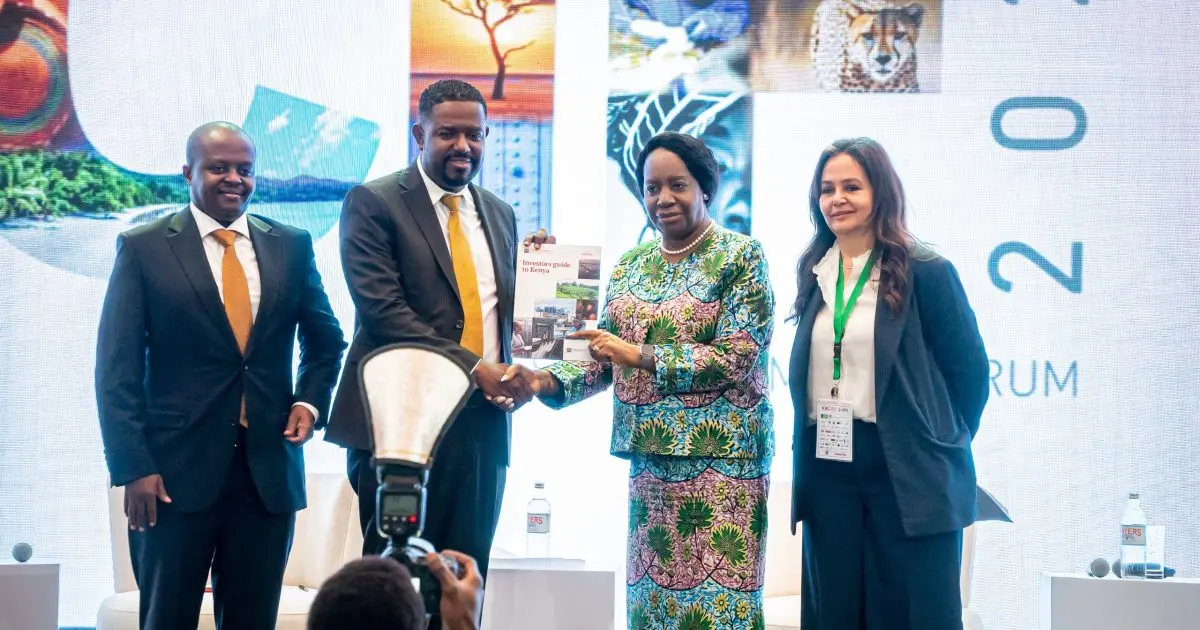
A key outcome of the COMESA Investment Forum was the launch of two digital investment facilitation tools. Kenya unveiled the Investor’s Guide to Kenya, providing comprehensive insights into the country’s investment landscape, priority sectors, and regulatory framework. Simultaneously, COMESA launched its interactive Investment Map — a digital platform designed to showcase bankable projects and investment opportunities across all member states, providing investors with a single consolidated view of where to deploy capital across the region.
Speaking at the forum, Kenya’s Principal Secretary for Investment Promotion, Abubakar H. Abubakar, made clear that the tools alone will not be sufficient without deeper structural reform. “Market size alone is insufficient. We must dismantle non-tariff barriers, harmonize standards, streamline customs processes, and align regulatory frameworks. We must make regional integration a lived reality, enabling investors to operate across borders as easily as within one country,” he urged delegates.
John Mwendwa, CEO of Invest Kenya, reinforced the pivot from country-level investment promotion toward a regional approach, emphasising the combined power of COMESA’s diverse member states. “Picture this: a single market of 600 million people, hungry for integration,” Mwendwa told 82 delegates from 16 COMESA countries and a significant contingent of international investors. “From Kenya’s tech-savvy youth powering fintech unicorns, to Zambia’s mineral wealth, to Egypt’s manufacturing strength. This is not a distant vision. It is a regional engine already in motion.”
The Road to 2030: Integration, Value Addition, and Human Capital
COMESA’s leaders used the forum to map out the bloc’s strategic priorities for the 2026–2030 period. Heba Salama stressed that sustaining momentum requires a focus on three interlocking pillars: strengthening value-added productive sectors, expanding digital infrastructure, and investing in human capital through education, skills development, and healthcare.
The UNCTAD report backing the forum’s findings also called for a more inclusive and diversified investment approach across the region. It urged policymakers to expand investment beyond a handful of dominant economies, and highlighted the role of SMEs as natural drivers of intra-regional integration, recommending targeted policy measures to unlock their cross-border investment potential and develop deeper regional value chains.
With 21 member states and a combined GDP exceeding $1 trillion, COMESA’s membership — spanning Burundi, Comoros, the Democratic Republic of Congo, Djibouti, Egypt, Eritrea, Eswatini, Ethiopia, Kenya, Libya, Madagascar, Malawi, Mauritius, Rwanda, Seychelles, Somalia, Sudan, Tunisia, Uganda, Zambia, and Zimbabwe — represents one of the most diverse and resource-rich economic blocs in the world.
The challenge ahead is clear: converting record FDI headlines into broadly shared development gains. Investment remains concentrated in a handful of countries and sectors, intra-regional capital flows remain low, and critical sectors such as agriculture, water, and transport continue to attract less capital than they need. But the momentum of 2024, the strategic tools launched in Nairobi, and the political will on display at KIICO 2026 signal that COMESA is entering its most consequential period yet as an investment destination.
Your financial future isn’t something you wait for—it’s something you build.
The real question is: when do you begin?
Move beyond simply staying informed.
Navigate the markets with clarity—track trends through the Serrari Group Market Index, uncover opportunities in the Serrari Marketplace, and build practical knowledge with our Curated Wealth Builder Course.
Stay connected to what truly matters.
Get daily insights on macro trends and financial movements across Kenya, Africa, and global markets—delivered through the Serrari Newsletter.
Growth opens doors.
Advance your career through professional programs including ACCA,HESI A2,ATI TEAS 7,HESI EXIT ,NCLEX – RNandNCLEX – PN, Financial Literacy!🌟—designed to move you forward with confidence.
See where money is flowing—clearly and in real time.
Track Money Market Funds, Treasury Bills, Treasury Bonds, Green Bonds, and Fixed Deposits, alongside global and African indexes, key economic indicators, and the evolving Crypto and stablecoin landscape—all withinSerrari’s Market Index.