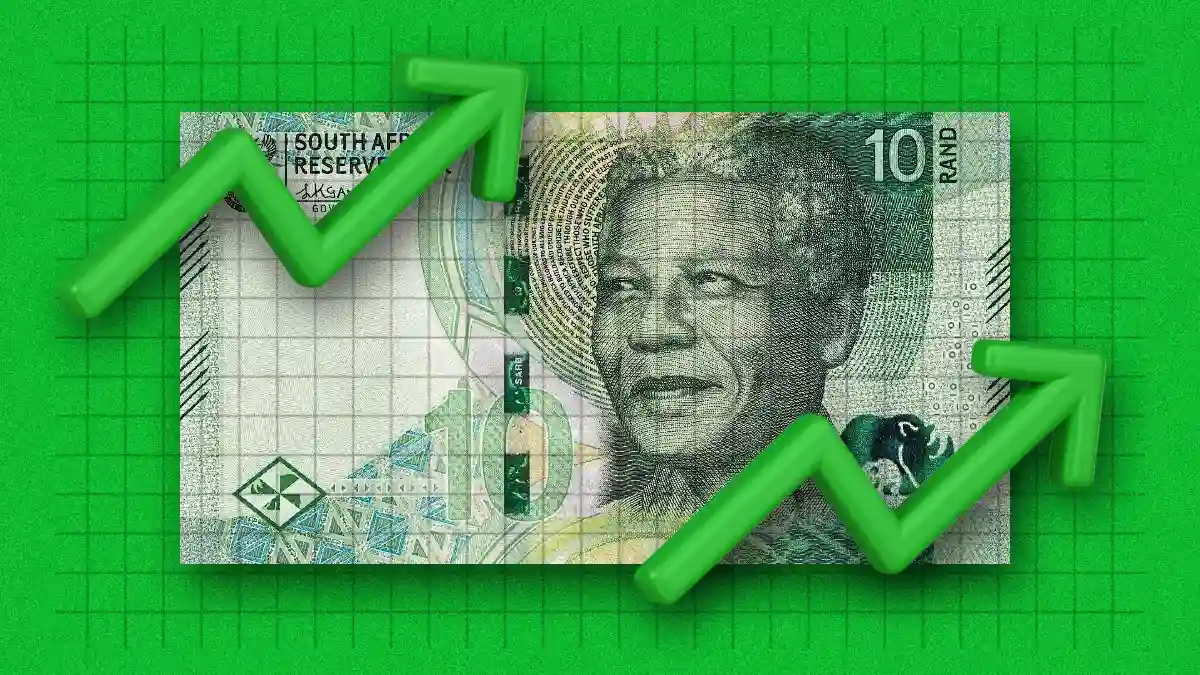
South Africa’s National Treasury sold 805 million rand in inflation-linked bonds maturing in 2033, 2050, and 2058 at its weekly auction, even as the rand traded largely flat at 17.12 against the US dollar. The South African Reserve Bank held its benchmark policy rate steady at 6.75%, citing the need for caution amid persistent inflation pressures and fragile GDP growth dynamics. Meanwhile, the benchmark 2035 government bond yield rose sharply by 19.5 basis points to 9.185%, and the JSE Top-40 index fell 1.2%, reflecting investor unease. The broader backdrop — shaped by geopolitical uncertainty in the Middle East and a delicate domestic balancing act between inflation containment and economic growth — underscores the complexity of South Africa’s current macroeconomic moment.
Key Overview
- Bonds Sold: 2033, 2050 and 2058 inflation-linked bonds
- Total Auction Value: R805 million (~$46.97 million)
- Rand Rate (at 1447 GMT): 17.12 per US dollar
- Previous Close: 17.1150
- SARB Policy Rate: 6.75% (unchanged)
- 2035 Bond Yield: 9.185% (+19.5 basis points)
- JSE Top-40 Movement: Down 1.2%
- Key Risk Factor: Middle East geopolitical developments
- Primary Domestic Tension: Inflation containment vs. GDP growth
A Market Walking a Fine Line
There are weeks in financial markets that look quiet on the surface but carry significant signals beneath. South Africa’s latest bond auction week is one of them. On a Friday that saw the rand hold steady, the Johannesburg Stock Exchange soften, and the South African Reserve Bank maintain its policy rate with a cautionary tone, the data collectively tells a story that deserves far more attention than the headline numbers suggest.
The Treasury’s sale of 805 million rand — approximately $46.97 million — in inflation-linked bonds across three maturities: 2033, 2050, and 2058, is not simply a routine weekly operation. It is a window into how the South African government is managing its debt obligations in an environment defined by elevated inflation, a currency that remains acutely sensitive to global risk sentiment, and a central bank that is explicitly trying to thread a needle between two competing macroeconomic imperatives. Get the balance wrong in either direction, and the consequences — for the rand, for borrowing costs, and for growth — could be material.
Understanding what happened this week, and why it matters, requires placing these numbers inside a much broader frame: the history of South African monetary and fiscal policy, the structural vulnerabilities of the rand, the significance of the Reserve Bank’s rate decision, and the growing complexity of a global environment shaped by geopolitical shocks that South Africa can neither control nor fully insulate itself from.
Markets move fast; don’t get left behind. We’ve paired the Serrari Group Market Index with a curated Marketplace and a comprehensive Wealth Builder Course to ensure you have the data—and the skills—to act on it.
Historical Context: South Africa’s Long Road Through Monetary Complexity
South Africa’s monetary policy history is, in many ways, a story of a country perpetually navigating between domestic economic need and the unforgiving discipline of global capital markets.
The South African Reserve Bank formally adopted an inflation targeting framework in 2000, setting a target band of 3% to 6% for consumer price inflation. This framework was designed to anchor expectations, improve policy credibility, and create a stable macroeconomic environment that could attract foreign investment and sustain growth. For most of the 2000s, the framework delivered reasonable results. Inflation stayed broadly within target, the rand — while volatile — maintained a functional relationship with fundamentals, and South Africa was rewarded with inclusion in major global bond indices, including the Citigroup World Government Bond Index, which brought billions of dollars in passive foreign capital flows into the domestic bond market.
Then came a series of structural shocks that gradually eroded that stability. The global financial crisis of 2008 exposed South Africa’s vulnerability to external demand shocks. The commodity supercycle that had buoyed government revenues through royalties and export earnings began to fade after 2011. Energy supply became a chronic constraint as Eskom, the state power utility, descended into a cycle of mismanagement, debt accumulation, and load-shedding that imposed an enormous and lasting tax on productive capacity across the economy.
By the mid-2010s, South Africa’s fiscal position had deteriorated meaningfully. Government debt as a share of GDP, which had been below 30% in 2009, climbed steadily toward and then past 70% over the following decade. Credit rating agencies responded. In 2017, S&P Global and Fitch downgraded South Africa’s sovereign debt to sub-investment grade — so-called junk status — triggering outflows from investors whose mandates required them to hold only investment-grade bonds. The rand, which had already been weakening for years, bore much of the adjustment pressure.
Inflation proved stubborn in this environment. South Africa is a price-taking economy in global commodity markets, meaning that oil price movements, food price shifts driven by global agricultural dynamics, and exchange rate depreciation all feed directly into consumer prices. The SARB was repeatedly forced to raise rates during periods of rand weakness and inflation overshoot, even when the domestic growth picture argued for looser monetary conditions. The tension between inflation targeting and growth support — the very tension that ETM Analytics flagged in its commentary this week — is not new. It is, in fact, the defining tension of South African monetary policy for the better part of two decades.
The current episode, with the Reserve Bank holding its policy rate at 6.75% while explicitly acknowledging the need to balance inflation containment with the GDP growth dynamic, is the latest iteration of a challenge that has no clean solution.
The Bond Auction: What the Numbers Actually Signal
The Treasury’s decision to sell inflation-linked bonds across three maturities — 2033, 2050, and 2058 — rather than conventional fixed-rate instruments is itself a meaningful strategic choice. Inflation-linked bonds, whose principal and interest payments adjust in line with the consumer price index, serve a specific function in a government’s debt management toolkit. They allow the Treasury to issue debt at lower nominal coupon rates, because investors accept lower upfront yields in exchange for protection against inflation eroding their real returns. From the government’s perspective, this reduces near-term interest payments — a genuine fiscal benefit when debt servicing costs are already consuming a large share of the national budget.
But the issuance of inflation-linked bonds also signals something about how the government perceives its own inflation trajectory. When a government issues instruments that tie its future debt repayments to inflation outcomes, it is effectively expressing confidence that inflation will remain sufficiently contained to make those instruments cheaper than conventional bonds over the long run. If inflation were to spike dramatically and remain elevated, inflation-linked bonds become far more expensive for the issuer than conventional fixed-rate debt.
The fact that the 2058 maturity was included in this auction is particularly notable. Issuing 33-year inflation-linked debt requires a very particular kind of investor — one with long-duration liability matching needs, such as pension funds and insurance companies — and it requires that investors have sufficient confidence in South Africa’s long-term fiscal and monetary credibility to commit capital for three decades. The fact that the auction cleared, even in a week of elevated market tension, suggests that demand from domestic institutional investors with long-duration mandates remains intact, even if foreign appetite is more variable.
That said, the simultaneous rise in the 2035 benchmark government bond yield by 19.5 basis points to 9.185% tells a more cautious story. A yield rise of that magnitude in a single session indicates that bond investors are demanding more compensation to hold South African government paper — a sign of either rising inflation expectations, concerns about fiscal sustainability, or a broader risk-off shift driven by global factors. At 9.185%, South Africa’s benchmark bond yield sits at a level that reflects genuine risk premium, not merely a liquidity discount.
The Reserve Bank’s Decision: Caution as Policy
The South African Reserve Bank’s decision to hold its policy rate at 6.75% on Thursday was widely expected, but the language accompanying the decision carries weight that goes beyond the rate itself.
The SARB’s explicit framing — that caution was needed — is a central bank communicating carefully to multiple audiences simultaneously. To inflation hawks, it signals that the Bank is not complacent about price pressures and has no intention of loosening prematurely. To growth advocates, who have argued that elevated rates are suppressing credit extension, consumer spending, and business investment in an already fragile economy, it offers no immediate relief but stops short of signalling further tightening.
ETM Analytics captured the difficulty of this position precisely. The SARB, in their assessment, will need to “constantly walk a fine line between containing inflation expectations and not disrupting the country’s GDP growth dynamic.” This is not merely financial commentary. It is an accurate description of a structural policy trap that has few clean exits.
South Africa’s GDP growth has been chronically underwhelming for a decade. Pre-pandemic growth rates consistently underperformed sub-Saharan African peers and fell well short of the levels needed to reduce unemployment — which has remained above 30% by the broad definition for several years. High interest rates reduce consumer borrowing capacity and increase the cost of business credit, both of which suppress near-term economic activity. But cutting rates prematurely, in an environment where inflation remains above the midpoint of the target band and the rand is vulnerable to external shocks, risks currency depreciation that feeds directly into import price inflation and ultimately into the consumer price index.
The SARB’s inflation targeting mandate provides a clear nominal anchor, but it does not make the trade-offs any easier. In a country where fuel, food, and administered prices — electricity, water, municipal tariffs — account for a disproportionately large share of the consumer price basket, the central bank has limited ability to influence the primary drivers of inflation through interest rate policy. It can, however, influence inflation expectations — the forward-looking beliefs of households, businesses, and financial market participants about where prices are headed. Keeping those expectations anchored near the target band midpoint is arguably the most important output of the SARB’s communication strategy, and every rate decision, and every word in the accompanying statement, is calibrated toward that goal.
The Rand: Risk-Sensitive and Geopolitically Exposed
The rand’s behaviour on the day of the auction — essentially flat at 17.12 against the dollar, barely moved from the previous close of 17.1150 — might initially suggest a market in equilibrium. But the driver of that stability is worth examining carefully.
Market commentary on the day attributed the rand’s steadiness to investors tracking Middle East developments, specifically following US President Donald Trump’s decision to postpone strikes on Iran’s energy infrastructure. That geopolitical context is directly relevant to the rand for a specific and well-understood reason: the rand is one of the world’s most risk-sensitive currencies, consistently exhibiting high correlation with global risk sentiment and commodity price movements.
When geopolitical tensions threaten oil supply — as any escalation in the Middle East inherently does — global risk appetite typically deteriorates. Investors reduce exposure to emerging market assets, including the rand, in favour of safe-haven currencies such as the US dollar, Swiss franc, and Japanese yen. Oil price spikes simultaneously increase South Africa’s import bill, widen the current account deficit, and add directly to domestic fuel price inflation. The combination is doubly negative for the rand and for the SARB’s inflation management task.
The temporary reprieve offered by Trump’s decision to delay action on Iran’s energy infrastructure therefore explains the rand’s relative stability on this particular day. But it also highlights how exposed the currency remains to decisions made in foreign capitals by foreign leaders, based on considerations that have nothing to do with South Africa’s domestic fundamentals. This is a chronic and inescapable vulnerability for a currency that is liquid enough to attract international speculative flows but too small to absorb them without meaningful price impact.
South Africa’s current account position adds another dimension to this vulnerability. The country has historically run current account deficits, meaning it relies on capital inflows — foreign direct investment, portfolio investment in equities and bonds, and other financial flows — to finance the gap between what it earns from exports and what it spends on imports. When global risk sentiment deteriorates and those capital inflows reverse, the rand depreciates. When the rand depreciates, import prices rise, inflation climbs, and the SARB faces renewed pressure to keep rates elevated even when the growth picture would argue for cuts. The cycle is self-reinforcing in ways that are difficult to break without sustained improvements in the current account position or significant strengthening of South Africa’s domestic growth drivers.
Context is everything. While you follow today’s updates, use the Serrari Group Market Index and Marketplace to spot emerging shifts. Need to sharpen your edge? Our Wealth Builder Course turns these insights into a professional-grade strategy.
The JSE Decline: Equities Reflect the Broader Mood
The JSE Top-40 index’s 1.2% decline on the same day adds texture to the picture. Equity markets and bond markets are pricing the same underlying reality from different vantage points, and when both deteriorate simultaneously — falling equities and rising bond yields — it typically signals a broader loss of confidence rather than a simple sector rotation or profit-taking exercise.
South Africa’s equity market is heavily weighted toward resources companies and financials, both of which are sensitive to global commodity prices and domestic interest rate conditions respectively. A 1.2% decline in the Top-40 in a single session, while not catastrophic, reflects the same risk-off sentiment that was keeping the rand’s stability dependent on geopolitical news flow rather than domestic fundamentals.
For retail investors in South Africa, the combined signals from the bond market, the currency, and the equity index this week paint a consistent picture: markets are repricing risk upward, demanding more compensation to hold South African assets, and watching global developments with an attentiveness that leaves little room for complacency.
Risks to Consider
Several distinct risk categories deserve attention for investors monitoring South African assets.
Geopolitical transmission risk is real and immediate. The Middle East situation that temporarily steadied the rand remains unresolved. Any escalation — whether in the form of direct military action affecting Iranian oil infrastructure, Houthi attacks on Red Sea shipping lanes, or broader regional conflict — could send oil prices sharply higher, compress global risk appetite, and trigger rand weakness and inflation pressure simultaneously. South Africa has no policy lever to offset this channel other than reserve intervention, which is limited in scale.
Fiscal sustainability risk remains a medium-term concern. South Africa’s debt-to-GDP trajectory has stabilised at elevated levels, but stabilisation is not improvement. Interest payments on government debt now consume a share of the national budget that leaves limited fiscal space for growth-enhancing spending on infrastructure, education, and healthcare. If growth disappoints relative to Treasury projections — a recurring pattern over the past decade — the fiscal arithmetic deteriorates further, debt issuance increases, and bond yields rise, creating a feedback loop that becomes progressively harder to manage.
Rate policy misjudgement risk runs in both directions. If the SARB cuts too soon and inflation reaccelerates, the resulting rand weakness could require sharper future rate increases to restore credibility, at significant cost to growth. If the SARB holds rates too long, suppressed credit growth and consumer spending could entrench the low-growth equilibrium that is itself a source of fiscal and social stress. There is no risk-free path.
Structural reform delivery risk remains the deepest long-term concern. South Africa’s growth potential depends on resolving structural constraints — energy supply, logistics infrastructure, skills development, and the regulatory environment for private investment. Progress has been made on energy, with the privatisation of electricity generation gradually reducing load-shedding frequency. But the pace of reform has been uneven, and investor confidence in the reform trajectory remains fragile.
Challenges Ahead
Beyond catalogued risks, there are operational and institutional challenges that will shape South Africa’s macroeconomic trajectory over the next several years.
Balancing the inflation-growth trade-off will require consistent, credible communication from the SARB over an extended period. Any perception that the Bank is sacrificing its inflation mandate to support growth — or conversely, that it is indifferent to the growth costs of its policy stance — risks damaging the credibility that is itself the most valuable asset a central bank possesses.
Debt management in a rising yield environment is a genuine fiscal challenge. As the 2035 benchmark yield approaches 9.2%, new debt issuance and refinancing of maturing obligations becomes more expensive. The Treasury’s reliance on domestic institutional investors — pension funds, insurance companies, and banks — to absorb government bond supply means that higher yields impose real costs on the retirement savings of South African households.
Currency management without capital controls remains a persistent challenge. South Africa maintains an open capital account, meaning it cannot restrict inflows or outflows of foreign capital without triggering the kind of investor reaction that would dwarf any short-term benefit. This means the rand will continue to be subject to global sentiment shifts that have no direct connection to domestic policy decisions.
Looking Ahead: What Markets Will Be Watching
In the months ahead, several developments will be particularly important for South African financial markets.
The trajectory of global oil prices and Middle East geopolitics will remain a primary external variable. Any sustained oil price increase above $90 per barrel would likely trigger rand weakness, fuel price increases, and renewed inflation pressure — forcing the SARB to reconsider its rate path.
Domestically, the next Consumer Price Index releases will be closely watched for evidence of whether inflation is converging toward the SARB’s target band midpoint or proving stickier than anticipated. Electricity tariff increases, food price dynamics, and rand pass-through into import prices are the key channels to monitor.
The SARB’s next Monetary Policy Committee meeting will be scrutinised for any shift in the balance of risks assessment — any hint that cuts might be brought forward, or alternatively, that the hold-for-longer stance is becoming entrenched.
South Africa’s bond market, with its combination of high nominal yields and active inflation-linked issuance, continues to offer meaningful real returns for long-duration investors who can accept the associated risks. But those risks — geopolitical, fiscal, currency, and policy — are neither small nor declining. For investors navigating this market, the lesson of this week’s auction data is the same lesson South Africa’s economic managers have been learning for years: in this environment, there is no such thing as a routine Friday.
The real question is: when do you begin?
Move beyond simply staying informed.
Navigate the markets with clarity—track trends through the Serrari Group Market Index, uncover opportunities in the Serrari Marketplace, and build practical knowledge with our Curated Wealth Builder Course.
Stay connected to what truly matters.
Get daily insights on macro trends and financial movements across Kenya, Africa, and global markets—delivered through the Serrari Newsletter.
Growth opens doors.
Advance your career through professional programs including ACCA, HESI A2, ATI TEAS 7 , HESI EXIT , NCLEX – RN and NCLEX – PN, Financial Literacy!🌟—designed to move you forward with confidence.
See where money is flowing—clearly and in real time.
Track Money Market Funds, Treasury Bills, Treasury Bonds, Green Bonds, and Fixed Deposits, alongside global and African indexes, key economic indicators, and the evolving Crypto and stablecoin landscape—all within Serrari’s Market Index.