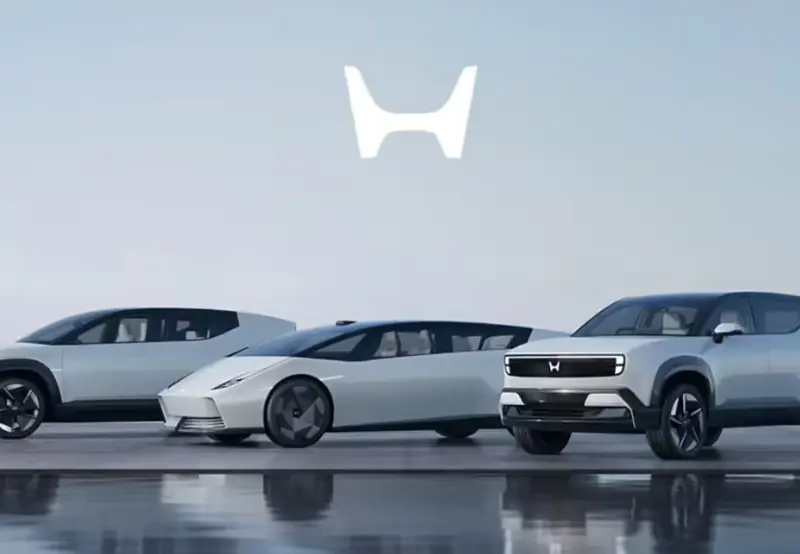
Japanese automaker Honda Motor Co. has cancelled the development of three electric vehicle models that were planned for the North American market, marking a significant shift in the company’s electrification strategy as it confronts growing financial pressures and changing global market dynamics.
The decision affects the Honda 0 SUV, Honda 0 Saloon, and the Acura RSX electric vehicle, models that had been positioned as part of Honda’s next-generation electric vehicle lineup for the U.S. market.
Honda had first introduced the vehicles as part of its ambitious electrification plans, showcasing the models during the 2025 Consumer Electronics Show (CES) as a preview of its future EV portfolio.
However, the company now says that evolving market conditions — including tariffs imposed by the United States, slowing EV demand, and intensifying competition from Chinese automakers — have forced it to reassess its investment priorities.
The cancellation represents one of the most significant strategic adjustments in Honda’s electrification program in recent years and reflects broader challenges facing legacy automakers as they navigate the global transition toward electric mobility.
Markets move fast; don’t get left behind. We’ve paired the Serrari Group Market Index with a curated Marketplace and a comprehensive Financial Literacy Course to ensure you have the data—and the skills—to act on it.
Challenging Business Environment
Honda said the decision to halt development of the three EV models was driven largely by a rapidly changing business environment that has created financial pressures across the company’s automotive operations.
In particular, the company pointed to the impact of U.S. tariff policies, which it said have significantly affected its gasoline and hybrid vehicle business.
These tariffs have increased costs across supply chains and affected profitability in key markets, placing Honda’s overall automobile business under strain.
According to the company, the situation has pushed its automotive division into what it described as “an extremely challenging earnings environment.”
Honda also noted that the slowdown in EV adoption in certain markets, particularly the United States, has complicated its electrification strategy.
While electric vehicles remain a central part of the global push to decarbonize transportation, consumer demand has been more uneven than many automakers initially expected.
High vehicle prices, limited charging infrastructure in some regions and changing government incentives have contributed to a more gradual adoption curve for EVs.
For Honda, continuing the development of the three electric models under these conditions would have required substantial additional investment with uncertain returns.
Growing Competition From China
Another factor influencing Honda’s decision is the rapid rise of Chinese electric vehicle manufacturers, which have expanded aggressively into global markets in recent years.
China’s EV industry has developed quickly thanks to strong government support, advanced battery manufacturing capacity and the emergence of new technology-driven automotive companies.
These companies have been able to introduce highly competitive EV models with advanced software features and attractive pricing, putting pressure on established automakers around the world.
Honda acknowledged that it has struggled to respond quickly to this competitive landscape, particularly in Asia where consumer preferences have increasingly shifted toward vehicles with integrated software ecosystems, connectivity features and advanced driver-assistance technologies.
In China, the world’s largest automotive market, domestic EV manufacturers have gained significant market share as customers gravitate toward innovative vehicle designs and technology platforms.
Honda said that allocating significant resources to EV development has also affected its ability to maintain competitiveness in some Asian markets, further complicating its strategic positioning.
Significant Financial Impact
The cancellation of the three EV models is expected to have a major impact on Honda’s financial results for the fiscal year ending March 2026.
The company anticipates operating expenses ranging between 820 billion yen and 1.12 trillion yen related to its strategic restructuring.
In addition, losses from equity-method investments in China are projected to reach between 110 billion and 150 billion yen, reflecting challenges faced by the company’s joint ventures in the region.
Honda also expects special losses of between 340 billion and 570 billion yen in its non-consolidated financial results.
These losses stem largely from asset impairments, development costs and expenses associated with halting the production and launch of the cancelled EV models.
Overall, Honda estimates that the total financial impact of reassessing its electrification strategy could reach up to 2.5 trillion yen over time.
Despite these potential losses, the company said it will maintain its current forecast for dividends per share, signaling its commitment to delivering stable returns to shareholders.
Hybrid Vehicles Take Center Stage
As part of the strategic shift, Honda plans to place greater emphasis on hybrid vehicle technology, which combines internal combustion engines with electric power systems.
Hybrid vehicles have seen renewed demand in several global markets as consumers look for improved fuel efficiency without relying entirely on charging infrastructure.
For many drivers, hybrids represent a practical middle ground between traditional gasoline vehicles and fully electric models.
Honda has already developed a well-established hybrid technology platform and plans to strengthen its lineup of hybrid vehicles across key markets including the United States, Japan and India.
The company also indicated that it will continue developing next-generation hybrid systems that improve fuel efficiency while reducing emissions.
Industry analysts say this strategy reflects a broader trend among global automakers that are adopting a multi-path approach to electrification, balancing EV development with hybrid and plug-in hybrid technologies.
Such strategies allow companies to respond more flexibly to changing market conditions while maintaining progress toward long-term decarbonization goals.
Context is everything. While you follow today’s updates, use the Serrari Market Index and Marketplace to spot emerging shifts. Need to sharpen your edge? Our Financial Literacy Course turns these insights into a professional-grade strategy.
Global EV Market Facing Adjustments
Honda’s move comes amid a period of adjustment within the global electric vehicle industry.
Although EV adoption continues to grow worldwide, the pace of growth has slowed in some regions compared with earlier projections.
Several factors have contributed to this shift, including:
- Reduced government incentives for EV purchases in some countries
- Rising interest rates affecting vehicle financing
- Higher battery costs
- Consumer concerns about charging infrastructure
At the same time, competition within the EV sector has intensified as both traditional automakers and new technology-focused companies race to capture market share.
As a result, some legacy car manufacturers have begun recalibrating their EV plans to balance long-term electrification goals with near-term financial performance.
Honda’s decision to cancel the three EV models highlights the complexities involved in transitioning from traditional automotive technologies to fully electric mobility.
Industry-Wide Strategic Shifts
Honda is not alone in adjusting its electrification plans as the global automotive industry navigates a period of rapid change.
Several other established automakers have recently delayed, scaled back or restructured EV investments as they reassess market demand, production costs and long-term profitability. While electric vehicles remain central to future mobility strategies, companies are increasingly adopting more flexible timelines for their transition.
The shift toward electric mobility requires enormous capital investment in battery technology, manufacturing facilities, supply chains and entirely new vehicle platforms. For manufacturers that have historically relied on internal combustion engines, this transition represents one of the most significant industrial transformations in automotive history.
Some automakers are therefore pursuing more gradual electrification strategies, placing greater emphasis on hybrid and plug-in hybrid technologies while continuing to invest in long-term EV development.
This balanced approach allows manufacturers to maintain profitability, manage technological risks and adapt to evolving consumer preferences and regulatory environments as the global automotive market continues to evolve.
Technology and Innovation Pressures
Another key challenge for legacy automakers has been the growing importance of software and digital technology in modern vehicles.
Many new EV manufacturers have adopted a software-first approach, integrating advanced digital features, connectivity systems and autonomous driving capabilities directly into their vehicles. These technologies allow cars to receive over-the-air updates, improve performance remotely and provide drivers with increasingly personalized digital experiences.
Such innovations have become major selling points for consumers, particularly in technologically advanced markets such as China, where buyers often prioritize smart features, digital ecosystems and connected mobility services.
Honda acknowledged that shifting consumer expectations toward software-driven mobility solutions have made it more difficult for traditional automakers to compete with newer EV companies that were built around digital platforms from the start.
To address these challenges, the company is expected to invest more heavily in digital technologies, vehicle software platforms and mobility services as part of its evolving automotive strategy, while continuing to strengthen its competitiveness in both electric and hybrid vehicle segments.
Outlook: Honda to Reveal Updated Strategy
Despite cancelling the three EV models, Honda emphasized that it remains committed to electrification as part of its long-term corporate strategy.
The company said it will continue to explore new electric vehicle development while strengthening its hybrid portfolio and improving operational efficiency.
Honda also plans to reorganize its strategic framework in order to better respond to rapid changes in the automotive industry.
Further details regarding the company’s mid- to long-term strategy for its automobile business are expected to be announced during a press conference scheduled for May 2026.
Industry observers will be watching closely to see how Honda positions itself within the evolving electric vehicle landscape.
The company’s latest move illustrates the difficult balance that traditional automakers must strike between investing in future technologies and maintaining financial stability in the present.
As global markets continue to shift and competition intensifies, Honda’s revised strategy may provide insight into how legacy manufacturers navigate the complex transition toward cleaner and more technologically advanced mobility solutions.
Don’t just read the news—navigate it. Track trends with the Serrari Group Market Index, discover your next move in the Serrari Marketplace, and master the “how” with our Financial Literacy Course.
Photo Source: Google
By: Rosemary Wambui
16th March 2026