The Trump administration has launched a major legal challenge against California’s ambitious vehicle emissions regulations, escalating a long-running dispute between federal authorities and the state over the future of clean transportation in the United States.
The lawsuit, filed by the U.S. Departments of Justice and Transportation, targets California’s efforts to limit pollution from vehicle tailpipes and accelerate the transition toward zero-emission vehicles. Federal officials argue that California’s regulations effectively impose an illegal electric vehicle mandate on automakers and violate federal law governing fuel economy standards.
The case specifically challenges rules implemented by the California Air Resources Board (CARB) that require automakers to steadily increase the share of zero-emission vehicles sold in the state. At the center of the dispute are California’s Advanced Clean Cars II regulations, which aim to eliminate the sale of new gasoline-powered vehicles by 2035.
Federal officials contend that these rules improperly regulate fuel economy—an area they say falls under federal authority.
“The Justice Department has filed suit to stop California from imposing an illegal electric vehicle mandate through what are effectively state-specific mileage requirements for car manufacturers,” the Justice Department said in a statement announcing the lawsuit.
According to the federal government, such policies create regulatory fragmentation that undermines national standards for vehicle manufacturing.
Markets move fast; don’t get left behind. We’ve paired the Serrari Group Market Index with a curated Marketplace and a comprehensive Financial Literacy Course to ensure you have the data—and the skills—to act on it.
The Legal Argument Behind the Lawsuit
At the core of the lawsuit is a debate over how much authority states have to regulate vehicle emissions and fuel economy.
The Justice Department claims that California’s emissions rules effectively impose fuel-economy requirements on automakers, something federal law prohibits individual states from doing.
In its filing, the federal government argues that California’s approach creates “a patchwork of inconsistent regulations” that complicate compliance for automakers operating across multiple states.
Officials say the rules increase costs for manufacturers and ultimately raise prices for consumers.
Attorney General Pam Bondi said the administration believes the state’s policies impose unnecessary burdens on the automotive industry.
“Oppressive, expensive electric-vehicle mandates drive up costs for American consumers and violate federal law,” Bondi said in a statement.
The lawsuit seeks a court order declaring California’s zero-emission vehicle mandates unlawful and preventing the state from enforcing them.
California’s Longstanding Authority on Air Pollution
California’s vehicle emissions standards have historically been stricter than federal rules due to the state’s severe air pollution problems.
For decades, the Clean Air Act has granted California a unique authority allowing it to request waivers from the U.S. Environmental Protection Agency (EPA) to implement tougher emissions standards than those set at the federal level.
This special status was originally granted because of California’s longstanding battle with smog and air quality challenges, particularly in cities such as Los Angeles.
Since the Clean Air Act was introduced in the 1970s, the EPA has granted California more than 100 waivers allowing the state to implement its own vehicle emissions regulations.
These waivers have allowed California to act as a policy pioneer for vehicle emissions standards in the United States.
Importantly, other states are allowed to adopt California’s rules if they choose. As a result, California’s policies have a national impact.
Currently, 17 states and the District of Columbia follow California’s vehicle emissions standards, significantly influencing the direction of the U.S. auto market.
Because California accounts for roughly one out of every eight new vehicles sold in the United States, its regulations can shape the strategies of global automakers.
California Pushes Back Against Federal Lawsuit
California officials have strongly criticized the federal government’s lawsuit, arguing that the state has both the legal authority and environmental responsibility to pursue stricter vehicle emissions policies.
A spokesperson for California Governor Gavin Newsom said the state will continue defending its clean transportation policies.
“While the Trump administration surrenders the future of the auto industry to China, California will continue competing globally to win the clean-vehicle market,” the spokesperson said.
“This lawsuit is meritless, and we’re not backing down from this fight.”
Newsom has repeatedly emphasized that California’s emissions policies are necessary to address climate change and protect public health.
In previous statements, the governor has criticized federal rollbacks of climate policies, arguing that they would leave the United States dependent on outdated fossil-fuel technologies.
He warned that reversing clean vehicle standards could slow innovation and undermine progress toward cleaner transportation.
A Long-Running Policy Battle
The lawsuit represents the latest chapter in a years-long political and legal battle over vehicle emissions standards.
President Donald Trump has consistently opposed California’s aggressive climate policies, particularly the state’s push to accelerate the transition to electric vehicles.
During his first presidential term, Trump revoked California’s waiver authority under the Clean Air Act, preventing the state from enforcing stricter emissions standards.
That authority was later reinstated in 2022 by President Joe Biden, allowing California to continue implementing its clean-vehicle regulations.
However, tensions between the federal government and California have remained high.
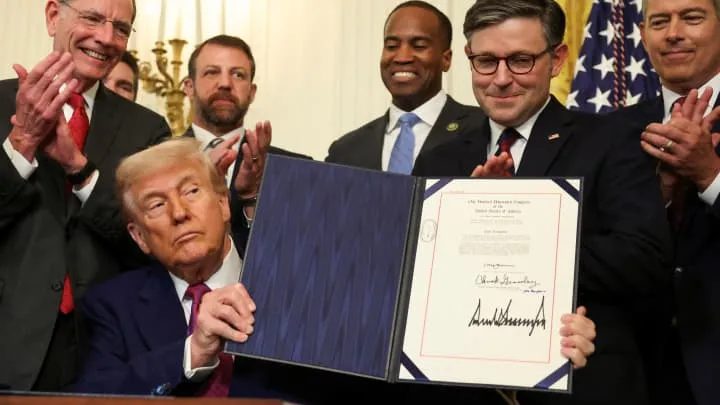
Last year, President Trump signed legislation overturning California’s rule requiring the phase-out of gasoline-powered cars by 2035.
California responded by filing lawsuits challenging the federal government’s actions.
The current lawsuit now reverses that dynamic, with the federal government taking legal action against California’s remaining emissions standards.
Context is everything. While you follow today’s updates, use the Serrari Market Index and Marketplace to spot emerging shifts. Need to sharpen your edge? Our Financial Literacy Course turns these insights into a professional-grade strategy.
The Role of the Advanced Clean Cars II Program
At the center of the dispute is the Advanced Clean Cars II program, which California adopted in 2022 as part of its broader climate strategy.
The regulation requires automakers to gradually increase the share of zero-emission vehicles (ZEVs) sold in the state each year.
Under the rule:
- 35% of new car sales must be zero-emission by 2026
- 68% must be zero-emission by 2030
- 100% of new vehicle sales must be zero-emission by 2035
These targets are designed to accelerate the adoption of electric vehicles and reduce greenhouse gas emissions from transportation, which is the largest source of emissions in California.
Supporters of the policy argue that it is necessary to meet the state’s climate goals and improve air quality.
Opponents, however, say the rules impose unrealistic requirements on automakers and could increase vehicle prices for consumers.
Rising Gas Prices Add Political Pressure
The lawsuit comes at a time when gasoline prices are rising sharply across the United States, adding another layer of political tension to the debate.
According to the American Automobile Association (AAA), gasoline prices in California averaged $5.37 per gallon, significantly higher than the national average of $3.60 per gallon.
Prices have risen approximately 56 cents per gallon in California and 35 cents nationally within the past week.
The increases come amid geopolitical tensions following the U.S. and Israeli attacks on Iran, which have pushed global oil prices higher.
Some analysts say the timing of the lawsuit is politically significant.
Dan Farber, faculty director of the Center for Law, Energy and the Environment at the University of California, Berkeley, said the legal challenge comes at a moment when Americans are particularly sensitive to fuel prices.
“It’s ironic that they’re doing this just at the time when people are most worried about gas prices,” Farber said.
California officials argue that expanding access to electric vehicles could help shield consumers from volatile gasoline prices in the long run.
California’s Electric Vehicle Market Continues to Grow
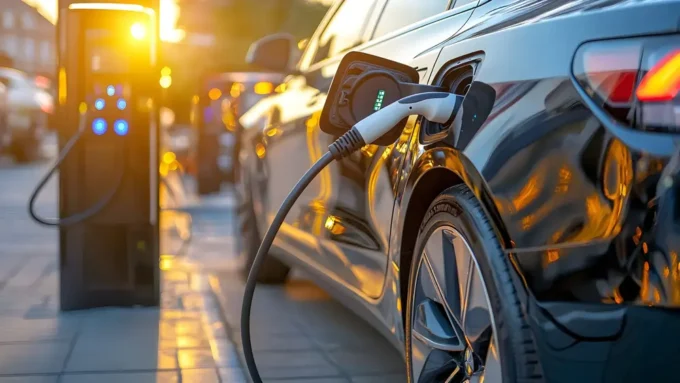
Despite the legal battle, California remains the largest market for electric vehicles in the United States.
According to the governor’s office, Californians purchased 124,755 zero-emission vehicles in the third quarter of 2025, representing roughly 30% of all new vehicle sales during that period.
This marks the highest quarterly EV sales share ever recorded in the state.
Overall, California has recorded more than 2.5 million cumulative zero-emission vehicle sales, according to the California Energy Commission.
The state’s aggressive clean-vehicle policies have played a key role in accelerating EV adoption.
Automakers have increasingly focused their EV launches on California due to the state’s large consumer base and supportive policy environment.
National Implications for the Auto Industry
The outcome of the lawsuit could have far-reaching implications for the U.S. auto industry and climate policy.
If the federal government succeeds in blocking California’s emissions rules, it could significantly slow the adoption of electric vehicles across the United States.
Because many states follow California’s standards, the ruling could affect vehicle regulations in nearly one-third of the U.S. auto market.
Automakers would also gain greater regulatory certainty by dealing with a single national standard instead of multiple state-level policies.
However, environmental groups argue that weakening California’s authority could undermine efforts to reduce emissions from transportation.
Transportation accounts for roughly 28% of total greenhouse gas emissions in the United States, making it one of the most critical sectors for climate action.
Outlook: A Defining Legal Battle for U.S. Climate Policy
The lawsuit sets the stage for what could become one of the most significant legal battles over climate regulation in the United States.
At stake is not only California’s authority to set vehicle emissions standards but also the broader direction of U.S. transportation policy.
Legal experts expect the case to move through federal courts and potentially reach the U.S. Supreme Court, given its implications for federal-state regulatory authority.
For now, both sides appear prepared for a prolonged fight.
California officials say they will continue defending the state’s climate policies, while the Trump administration argues that national regulatory consistency is necessary for the automotive industry.
As the legal battle unfolds, the case will likely shape how the United States balances environmental regulation, consumer costs and industrial competitiveness in the transition toward cleaner transportation.
Don’t just read the news—navigate it. Track trends with the Serrari Group Market Index, discover your next move in the Serrari Marketplace, and master the “how” with our Financial Literacy Course.
Photo Source: Google
By: Rosemary Wambu
16th March 2026