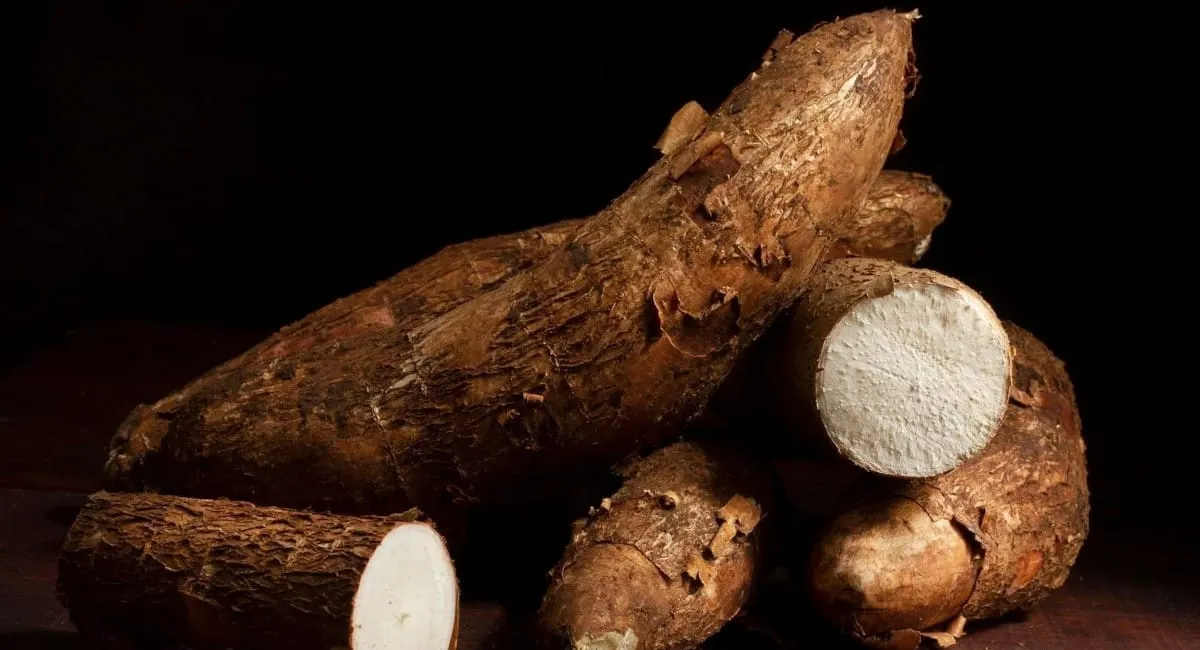
Nigeria’s Federal Government has taken a decisive step toward rerouting the country’s energy future through one of its most abundant and under-exploited agricultural assets — cassava. The Federal Ministry of Budget and Economic Planning has officially commenced the process of scaling up the production of Fuel Grade Ethanol (FGE) for blending with Premium Motor Spirit (PMS), deploying the crop not just as food, but as a strategic instrument to reduce the country’s crushing petrol import bill, stabilize the naira, and anchor a new bio-based industrial economy.
The announcement came during a capacity-building workshop held in Nasarawa State between March 11 and 12, 2026, which served as the most recent in a series of zonal rollouts of the Cassava Bioethanol Value Chain Development Project — a flagship initiative under President Bola Ahmed Tinubu’s Renewed Hope Agenda. The project has been quietly but steadily gaining momentum since regional workshops began in the Northwest in February 2026, and now covers the North Central zone.
Markets move fast; don’t get left behind. We’ve paired the Serrari Group Market Index with a curated Marketplace and a comprehensive Financial Literacy Course to ensure you have the data—and the skills—to act on it.
The Scale of the Problem: Nigeria’s Import Dependency
To understand why this initiative matters, one must first reckon with the full weight of Nigeria’s fuel import burden. Despite being Africa’s largest oil producer, the country has for decades been unable to refine enough of that crude to meet domestic demand, forcing it to spend tens of billions of naira importing refined petroleum products.
According to Nairametrics, citing National Bureau of Statistics data, Nigeria spent N1.28 trillion on fuel imports in the third quarter of 2025 alone — a decline from the N2.3 trillion recorded the previous quarter, but still an enormous drain. For the full year 2024, the country spent N15.4 trillion on fuel imports, a figure that placed extreme pressure on foreign exchange reserves and was a key driver of naira volatility. The trend stretches back years: from N4.56 trillion in 2021 to N7.71 trillion in 2022, the import bill has moved in one direction.
Data from the Nigerian Midstream and Downstream Petroleum Regulatory Authority (NMDPRA) show that Nigeria’s petrol consumption averaged 56.9 million litres per day in February 2026. While this represents a slight decline from 60.2 million litres in January — partly due to growing output from the Dangote Refinery — the country has spent years in a position where close to half of its fuel needs were met through imports.
The Federal Government estimates that implementing the cassava bioethanol value chain project could allow Nigeria to save more than N3 trillion in foreign exchange annually through ethanol blending in PMS. That figure alone explains why the Ministry of Budget and Economic Planning — not a body typically associated with agriculture — is leading this charge.
Cassava: Nigeria’s Untapped “White Gold”
Nigeria is the world’s largest producer of cassava, accounting for roughly 20% of global output. In 2023, the country produced approximately 62.7 million metric tons of the root crop, far ahead of the Democratic Republic of Congo, Thailand, Ghana, and Brazil. In 2025, that figure is estimated to have climbed to around 65.2 million metric tons, representing close to a fifth of world production.
Yet for a country that grows more cassava than any other on Earth, Nigeria has been paradoxically importing cassava derivatives. According to the Central Bank of Nigeria, the country spends an estimated $600 million annually importing cassava-derived products, even as yields per hectare remain far below those of competing nations — averaging just 8 tonnes per hectare, compared to over 35 tonnes per hectare in Brazil and China.
This gap between production potential and industrial application is precisely what the Cassava Bioethanol Value Chain Development Project is designed to close. The initiative seeks to reposition cassava — often described by government officials as Nigeria’s “white gold” — as a catalyst not just for food security, but for industrialization and energy transition.
“This workshop is more than a training session,” Minister of Budget and Economic Planning Abubakar Atiku Bagudu said at the earlier Northwest zone workshop in Birnin Kebbi. “It is a strategic gathering designed to ensure that Nigeria no longer just grows cassava to eat, but grows cassava to power our nation.”
What the Project Actually Does
The technical architecture of the initiative is more sophisticated than a simple crop-to-fuel pipeline. At its core, it involves blending anhydrous ethanol — derived from cassava starch — with PMS at a ratio that would initially move Nigeria toward an E10 standard, meaning a 10% ethanol blend in petrol. Under the National Biofuels Policy adopted in 2007, Nigeria had already set this as a long-term blending target, but implementation stalled for years. The current initiative represents a renewed, more structured effort to actually achieve it.
The Nasarawa workshop placed particular emphasis on reducing post-harvest losses — a critical operational challenge. According to the Ministry, post-harvest losses currently account for a 40% efficiency leak in the cassava value chain, largely because the window between harvest and processing is too wide, causing starch degradation before the tubers can be converted. The proposed solution involves deploying strategic aggregation hubs and rapid processing technologies to minimize this window and preserve the starch integrity needed to meet ASTM (American Society for Testing and Materials) specifications for anhydrous ethanol.
The pilot phase of the project, as outlined by the Ecofin Agency, includes the creation of a 20-hectare biotechnology industrial park, shared between universities and research centres, where high-yield cassava varieties — notably the TME 419 hybrid, known for disease resistance and high starch content — will be cultivated under controlled conditions to demonstrate the viability of a private sector-led approach.
Beyond ethanol production itself, the Ministry is promoting a circular economy framework under the National Bio-Economy Policy. The value chain encompasses:
- High-quality cassava starch for industrial use and export
- Carbon dioxide captured during fermentation, which can be repurposed for food and beverage applications
- Animal feed derived from distillery grains, ensuring that virtually no part of the processed cassava is wasted
The initiative also targets a doubling of national cassava production over five years — from roughly 62 million tons to 120 million tons — driven by mechanization, biotechnology, and improved resource mobilization to ensure sufficient raw material supply.
A Multi-Stakeholder Machine
The project operates through what officials describe as a Triple-Helix framework, bringing together the government, academia and research institutions, and the private sector. Technical partner Bassay Global Tech & Services Limited has been involved since the early regional workshops, and the initiative has drawn participation from institutions including the National Agency for Food and Drug Administration and Control (NAFDAC), the Federal Ministry of Agriculture and Food Security, the Raw Materials Research and Development Council, and state governments across the North Central zone.
At the Nasarawa workshop, the Permanent Secretary of the Ministry of Budget and Economic Planning, Dr. Deborah Odoh, affirmed the Ministry’s commitment to ensuring that policy coordination and monitoring are aligned with the national development framework — a signal that this is not a one-off event but a sustained institutional commitment.
The Director General of NAFDAC, Prof. Mojisola Christiana Adeyeye, also conveyed the agency’s commitment to the secondary by-products of the cassava value chain — a significant endorsement given NAFDAC’s role in regulating substances entering both the food and industrial supply chains.
Meanwhile, the Technical Adviser to the Benue State Governor on Food Security and Agriculture, Ms. Ochanya Okoh, highlighted that Benue State — one of Nigeria’s leading cassava-producing states — is positioned to significantly expand its output as part of this initiative. That buy-in from state-level actors is crucial: cassava production spans 24 of Nigeria’s 36 states, and successful scale-up will require coordinated action far beyond Abuja.
Context is everything. While you follow today’s updates, use the Serrari Market Index and Marketplace to spot emerging shifts. Need to sharpen your edge? Our Financial Literacy Course turns these insights into a professional-grade strategy.
The Broader Energy Context: Dangote, Imports, and the Forex Squeeze
The cassava bioethanol initiative does not exist in isolation. It is unfolding against the backdrop of Nigeria’s most significant downstream energy transition in decades — one defined by the gradual ramp-up of the Dangote Petroleum Refinery and the NMDPRA’s recent decision to suspend the issuance of new petrol import licences for the second consecutive month, citing adequate domestic supply.
In February 2026, the Dangote Refinery supplied an average of 36.5 million litres of petrol per day to the domestic market, while imports fell to just 3 million litres daily — the lowest recorded in over a year. This marks a structural turning point after years of import dependence. However, Nigeria’s fuel demand remains well above what any single source can satisfy in the near term, making the bioethanol blending strategy a complementary tool rather than a substitute for domestic refining.
The government’s logic is straightforward: if ethanol derived from locally grown cassava can substitute even 10% of the petrol consumed daily, the forex savings are substantial, the agricultural value chain expands, rural incomes rise, and the country’s carbon footprint falls. For a government still grappling with naira volatility partly driven by the legacy of the 2023 fuel subsidy removal, the appeal of a domestically anchored fuel additive is both economic and political.
Farmer Empowerment at the Core
Perhaps the most politically resonant dimension of the initiative is its stated focus on smallholder farmers. The Minister has repeatedly emphasized that the project targets over 14 million smallholder farmers, enabling them to transition from subsistence farming into active participants in an industrial value chain. This matters in a country where agriculture employs roughly 35% of the workforce, and where rural incomes have been squeezed by inflation, currency depreciation, and the downstream effects of the fuel subsidy removal.
The National President of the All Farmers Association of Nigeria (AFAN), Muhammad Magaji, described the initiative as a transformative opportunity for farmers, noting that cassava’s potential extends beyond food security to renewable energy and economic prosperity. For communities in Benue, Nasarawa, and the wider North Central zone — areas that have long supplied cassava to food markets without seeing significant industrial uplift — the promise of a structured value chain with guaranteed off-take represents a meaningful economic shift.
Prof. Olumuyiwa Jayeoba, President of the Association of Deans of Agriculture in Nigerian Universities, who has addressed several of these workshops, frames bio-economy as “the sustainable use of renewable biological resources, biological knowledge, science, technology, and innovation to produce goods, services and energy across sectors.” He has argued that bio-economy has the capacity to bring many people out of poverty, improve energy security, and strengthen food security simultaneously — precisely the convergence Nigeria needs.
What Has to Go Right
The initiative is ambitious, and experts have noted that Nigeria has attempted bioethanol programs before with limited results. Under a 2017 Memorandum of Understanding, NNPC signed an agreement with the Ondo State Government to establish a cassava-based biofuel plant in Okeluse — a project that never fully materialized.
For this iteration to succeed, several conditions must hold: post-harvest infrastructure must be deployed at scale; hybrid cassava varieties like TME 419 must be widely multiplied and distributed; private sector off-takers must commit to long-term procurement agreements; and blending mandates must be enforced at the PMS distribution level.
The Ministry’s emphasis on translating workshop resolutions into “measurable outputs and sustainable impacts” is a recognition that intent and execution have diverged in previous agricultural value chain programs. The involvement of NAFDAC, state governments, and research institutions under a formal Triple-Helix structure suggests a more institutionally robust approach than past efforts.
A Vision Worth Fuelling
Nigeria stands at a genuinely consequential juncture. With cassava production already at over 62 million tons annually and the Dangote Refinery beginning to reshape the downstream market, the conditions for a functioning bioethanol blending program are more favorable than they have been at any previous point.
If the N3 trillion in annual forex savings projected by the government can be realized even partially, the macroeconomic impact on the naira and on Nigeria’s current account would be significant. Beyond the numbers, the initiative represents a coherent attempt to solve multiple national challenges — energy import dependency, rural unemployment, agricultural underutilization, and naira instability — through a single integrated value chain rooted in a crop Nigeria already grows better than anywhere else on Earth.
As Minister Bagudu put it at the first zonal workshop: “We are not just building factories. We are building a future where Nigeria becomes a global hub for bio-resources.”
Whether that future materializes will depend less on the ambition of the workshops, and more on the discipline of implementation that follows them.
Don’t just read the news—navigate it. Track trends with the Serrari Group Market Index, discover your next move in the Serrari Marketplace, and master the “how” with our Financial Literacy Course.
Photo Source: Google
By: Montel Kamau
Serrari Financial Analyst
13th March, 2026