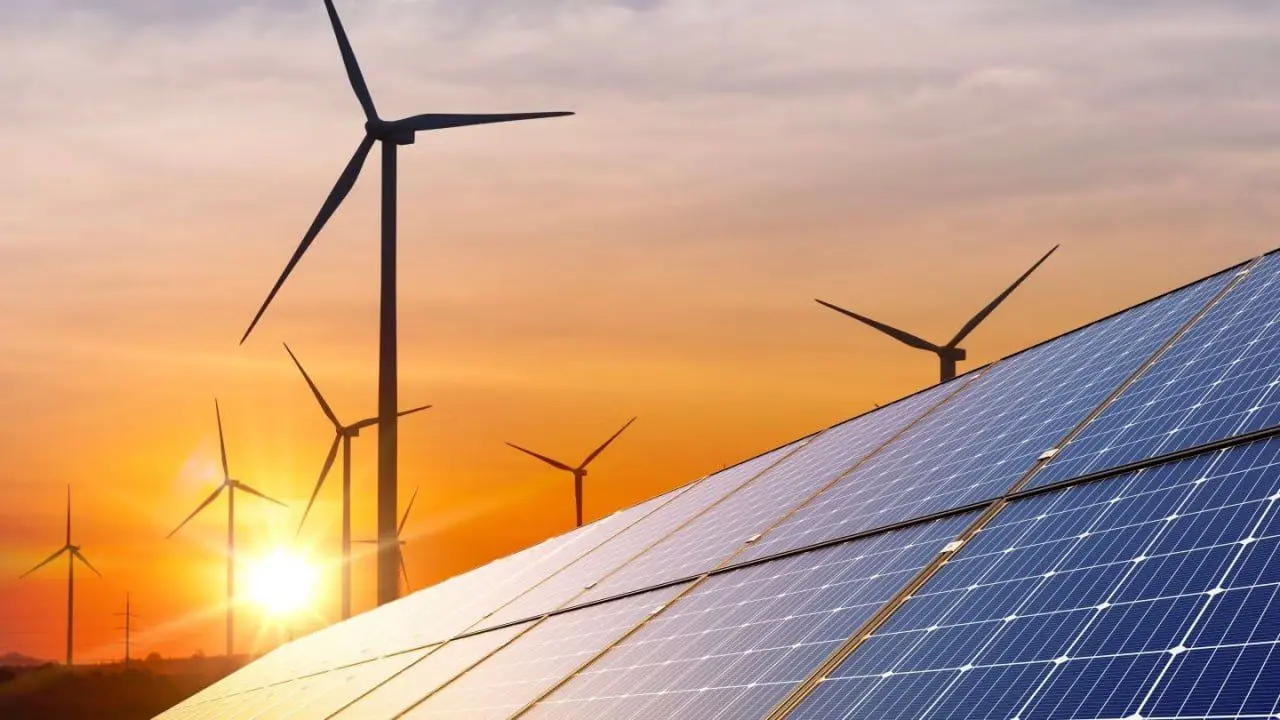
Tunisia’s Ministry of Industry, Energy and Mines has launched a tender for the development of a 300 megawatt (MW) solar power plant coupled with a 150 MW / 540 megawatt-hour battery energy storage system (BESS).
The project will be built near Kébili, a town in southern Tunisia located in the Nefzaoua region, and will occupy an estimated 400 hectares of land.
The planned hybrid facility is expected to become Tunisia’s first solar project integrated with a large-scale battery storage system, marking an important step in the country’s efforts to modernize its electricity infrastructure and expand renewable energy capacity.
Under the tender process, independent power producers (IPPs) interested in developing the project must register by May 8, 2026, while full bid submissions must be delivered by October 14, 2026.
The solar and storage project will be developed under a concession agreement, allowing private sector developers to design, build and operate the facility while supplying electricity to the national grid.
Government officials say the project is part of Tunisia’s broader national renewable energy development programme aimed at increasing the share of renewable energy in the country’s electricity mix.
Build the future you deserve. Get started with our top-tier Online courses: ACCA, HESI A2, ATI TEAS 7, HESI EXIT, NCLEX-RN, NCLEX-PN, and Financial Literacy. Let Serrari Ed guide your path to success. Enroll today.
Hybrid Solar and Battery System to Strengthen Grid Stability
The inclusion of battery storage alongside solar generation reflects a growing trend in renewable energy projects globally.
Solar power production fluctuates depending on weather conditions and time of day. Battery storage systems allow excess electricity generated during peak sunlight hours to be stored and released later when demand increases or solar production declines.
The 150 MW / 540 MWh battery storage component planned for the Kébili project will therefore help stabilize electricity supply while improving the reliability of renewable energy generation.
Energy analysts say hybrid solar and storage systems are becoming increasingly important as countries expand renewable energy capacity.
By pairing solar power plants with battery storage, electricity grids can integrate larger volumes of intermittent renewable energy while maintaining stable supply.
For Tunisia, which has long relied heavily on fossil fuels and imported energy, such projects represent a critical step toward diversifying the country’s energy sources.
Tunisia’s Renewable Energy Expansion Gains Momentum
Tunisia has gradually accelerated its renewable energy ambitions in recent years as it seeks to reduce dependence on imported fuels and improve long-term energy security.
The government has set ambitious national targets to increase the share of renewable electricity.
Under current plans, Tunisia aims to generate:
- 35 percent of electricity from renewable sources by 2030
- 50 percent of electricity from renewable sources by 2035
Achieving these targets will require the deployment of more than 5 gigawatts (GW) of additional renewable capacity in the coming decade.
Solar energy is expected to play a central role in this expansion due to Tunisia’s favorable climate conditions and high solar irradiation levels.
Recent Solar Projects Move Tunisia Toward 1 GW Capacity
Tunisia’s solar sector has already experienced significant growth in recent years.
In December 2025, Dubai-based renewable energy developer Amea Power commissioned a 120 MW solar project in Tunisia, which currently represents the largest operational solar power plant in the country.
According to data from the Africa Solar Industry Association (AFSIA), Tunisia had 728.8 MW of operational solar capacity prior to the completion of the Amea Power project.
With the new plant now online, Tunisia is moving closer to surpassing the 1 gigawatt solar capacity milestone, a key benchmark for renewable energy development.
The government has also continued issuing licenses for additional projects.
Earlier in March 2026, Tunisia approved four new utility-scale solar projects with a combined capacity of 500 MW.
These projects were selected under a broader 1.7 GW renewable energy tender programme aimed at accelerating the country’s energy transition.
Larger Renewable Energy Tender Pipeline
The Kébili solar and battery storage project is only one component of Tunisia’s expanding renewable energy pipeline.
In December 2025, the government announced plans to launch tenders for more than 2.3 GW of renewable energy projects during 2026.
The package includes:
- 2 GW of wind energy capacity
- 350 MW of additional solar power projects
Officials say these tenders will play a critical role in helping Tunisia reach its long-term renewable energy targets.
The government is also expected to continue launching additional renewable tenders beyond 2026 as part of its national energy strategy.
Tunisia’s Renewable Energy Policy Origins
Tunisia’s modern renewable energy policy framework began taking shape in 2009 with the launch of the “Plan Solaire Tunisien” (Tunisian Solar Plan).
The initiative aimed to deploy approximately 4.7 gigawatts of renewable energy capacity by 2030, including solar photovoltaic power plants and solar water heating systems.
At the time, Tunisia’s electricity system relied heavily on fossil fuels, particularly natural gas used for power generation.
The solar plan marked the government’s first comprehensive effort to diversify the country’s energy mix and reduce dependence on imported fuels.
One decision can change your entire career. Take that step with our Online courses in ACCA, HESI A2, ATI TEAS 7, HESI EXIT, NCLEX-RN, NCLEX-PN, and Financial Literacy. Join Serrari Ed and start building your brighter future today
Energy Law Reform Opened Market to Private Investors
A major milestone in Tunisia’s renewable energy journey occurred in 2015 when parliament passed a new energy law allowing independent power producers (IPPs) to develop renewable energy projects.
The legislation created a legal framework for private sector participation in renewable energy generation.
However, progress was initially slow due to regulatory delays and challenges related to project approvals and power purchase agreements.
The state-owned utility STEG (Société Tunisienne de l’Électricité et du Gaz) retained a dominant role in the electricity sector, which slowed the entry of private developers.
Nevertheless, the law marked an important turning point by establishing the legal basis for large-scale renewable investment.
Early Renewable Tenders Launched After 2017
Following the regulatory reforms, Tunisia began launching renewable energy tenders starting in 2017.
These early calls for projects included both solar photovoltaic and wind power developments.
Initial tenders targeted approximately 270 MW of renewable capacity, although project implementation proceeded gradually.
Despite these efforts, Tunisia’s renewable energy capacity remained relatively limited for several years.
Renewable Capacity Growth Accelerated After 2020
By 2021, Tunisia had installed only around 400 MW of renewable energy capacity, with the majority coming from wind power and smaller contributions from solar and hydropower.
At the same time, the country continued to rely heavily on imported energy.
According to government statistics, approximately 48 percent of Tunisia’s energy needs were imported in 2022, largely in the form of natural gas used for electricity generation.
This reliance on imported fuel created both economic and energy security challenges.
As a result, renewable energy development gained renewed urgency.
Renewables Seen as Key to Energy Security
Tunisia’s renewable energy push is driven not only by climate goals but also by economic and strategic considerations.
Reducing dependence on imported natural gas could help stabilize electricity prices and improve energy security.
Renewable projects can also attract international investment and support the development of new energy infrastructure.
International developers, including companies from Europe, the Middle East and Asia, have increasingly shown interest in Tunisia’s renewable energy market.
Solar energy is particularly attractive due to the country’s high solar radiation levels, which allow for efficient electricity generation.
Growing Regional Competition in Renewable Energy
Tunisia is not alone in expanding renewable energy development.
Across North Africa, several countries have launched large-scale renewable energy programmes.
Morocco, for example, has developed some of the region’s largest solar projects, including the Noor solar complex, while Egypt has built large photovoltaic projects such as the Benban Solar Park.
As renewable technology costs continue to decline, governments across the region are accelerating investments in solar and wind power.
Tunisia’s latest tender reflects this broader regional shift toward cleaner energy systems.
Outlook
Tunisia’s decision to launch a tender for a 300 MW solar project paired with battery storage highlights the country’s increasing commitment to renewable energy development.
The project represents an important milestone because it introduces large-scale battery storage into Tunisia’s solar infrastructure, helping address one of the key challenges of renewable energy integration.
As Tunisia continues expanding its renewable energy pipeline through new tenders and private sector partnerships, solar and wind power are expected to play an increasingly important role in the country’s electricity system.
If the government successfully implements its renewable energy strategy, Tunisia could significantly reduce its reliance on imported fossil fuels while improving energy security and lowering greenhouse gas emissions.
With new solar and wind projects already planned for the coming years, the country appears poised to accelerate its transition toward a more diversified and sustainable energy mix.
Ready to take your career to the next level? Join our Online courses: ACCA, HESI A2, ATI TEAS 7 , HESI EXIT , NCLEX – RN and NCLEX – PN, Financial Literacy!🌟 Dive into a world of opportunities and empower yourself for success. Explore more at Serrari Ed and start your exciting journey today! ✨
Track GDP, Inflation and Central Bank rates for top African markets with Serrari’s comparator tool.
See today’s Treasury bonds and Money market funds movement across financial service providers in Kenya, using Serrari’s comparator tools.
Photo Source: Google
By: Rosemary Wambui
10th March 2026