Stablecoins have experienced extraordinary growth and mainstream adoption throughout 2025 and into 2026, transitioning from niche cryptocurrency products toward integral infrastructure for cross-border settlements and international commerce. The Bloomberg reporting on stablecoin transaction volumes indicates that stablecoin transaction volumes rose to record $33 trillion in 2025, representing a 72% increase from the previous year and establishing stablecoins as meaningful payment infrastructure. The magnitude of transaction volumes processed through stablecoins demonstrates that cryptocurrency-based settlement mechanisms are no longer theoretical future infrastructure but rather functioning systems processing substantial real-world economic transactions. The achievement of such high transaction volumes validates the utility of stablecoin-based settlement and provides evidence that blockchain-based payment systems offer advantages sufficient to overcome inertia in existing payment systems.
Build the future you deserve. Get started with our top-tier Online courses: ACCA, HESI A2, ATI TEAS 7, HESI EXIT, NCLEX-RN, NCLEX-PN, and Financial Literacy. Let Serrari Ed guide your path to success. Enroll today.
The global stablecoin market capitalization expanded by 50% during 2025, growing from $205 billion in January to $306 billion by November. The expansion of total stablecoin market capitalization reflects both increased adoption and the accumulation of additional balances within stablecoin-based systems. The rapid growth in stablecoin market capitalization during a period when cryptocurrency markets experienced weakness elsewhere suggests that stablecoins are emerging as the “killer app” for cryptocurrency and blockchain technology. The practical utility of stablecoins for payment and settlement appears to be generating sustained demand independent of broader cryptocurrency speculation cycles.
The TRM Labs assessment of stablecoin adoption indicates that stablecoins became cryptocurrency’s first mainstream use case in 2025, with adoption extending beyond cryptocurrency traders toward traditional finance participants, merchants, and consumers. The transition toward mainstream use outside cryptocurrency communities represents important validation of stablecoin utility and the beginning of potential scale in settlement infrastructure. The expansion beyond cryptocurrency specialists toward broader user bases suggests that stablecoins have achieved sufficient usability and stability to appeal to non-specialist populations. The mainstream adoption trend is expected to accelerate throughout 2026 as merchants, financial institutions, and consumers gain familiarity with stablecoin-based settlement.
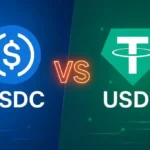
The market dominance by two primary stablecoins, USDT and USDC, has created clear winners in the stablecoin market and raised important questions regarding the sustainability of dominance by these two competitors. The Tether USDT with approximately 60% of the overall stablecoin market closed Q3 2025 with a market capitalization of $175 billion, while Circle’s USDC with approximately 25% of the overall stablecoin market cap settled at $73.4 billion. The concentration of stablecoin market share among two competitors reflects the importance of network effects and liquidity concentration in payment and settlement systems. The dominance of USDT and USDC has created barriers to entry for competing stablecoin projects seeking to challenge the established leaders.
The transaction volume metrics reveal different competitive positions compared to market capitalization metrics, with USDC recording $18.3 trillion in transaction volume while USDT recorded $13.3 trillion during 2025. The relatively higher transaction volume for USDC despite smaller market capitalization suggests higher velocity of USDC tokens and potentially better positioning as a settlement layer compared to USDT. The higher transaction velocity may reflect greater adoption by institutional participants and integration into payment infrastructure, suggesting that USDC has achieved positioning as a more serious settlement tool compared to USDT. The competitive differentiation between transaction volumes and market capitalization suggests that future competitive positioning may shift toward USDC or other stablecoins focused on settlement infrastructure rather than speculation.
The characteristics of USDT and USDC reflect different strategies with USDT emphasizing liquidity and reach while USDC emphasizes transparency and institutional trust. USDT’s larger market capitalization and broader trading availability reflect its longer history and greater adoption among retail cryptocurrency traders and exchange platforms. USDC’s positioning emphasizing transparency through monthly audited reports and reserves held in cash and U.S. Treasuries appeals to institutional investors and risk-conscious participants requiring high-quality assurance. The competitive differentiation in positioning suggests that both stablecoins can successfully coexist, with USDT maintaining market share among retail participants and USDC gaining positioning among institutional and institutional-adjacent users.
The regulatory approval of the GENIUS Act in July 2025 established a clearer framework for stablecoin issuers and created legitimacy for stablecoin operations within the U.S. financial system. The regulatory clarity provided by the GENIUS Act has enabled stablecoin issuers to expand operations and pursue institutional banking relationships with greater confidence. The regulatory framework has also reduced uncertainty regarding the potential for adverse regulatory actions that might disrupt stablecoin operations. The regulatory clarity is expected to support continued stablecoin growth throughout 2026 as institutions gain confidence in the sustainability and legitimacy of stablecoin operations.
The adoption of stablecoins in real estate transactions provides compelling evidence of practical utility extending beyond pure financial services into complex commercial transactions. The early adoption of USDC or USDT in real estate transactions reflects the speed of execution, reduced risk, and unlocking of global liquidity enabled by stablecoin-based settlement. The ability to complete real estate transactions more rapidly and with global buyer access without traditional banking delays represents substantial improvements over traditional settlement processes. The successful adoption of stablecoins in real estate is expected to catalyze adoption across other industries and commercial transactions seeking similar settlement efficiency benefits.
The interaction between stablecoins and the traditional Treasury market has created important considerations regarding financial stability and the relationship between cryptocurrency-based systems and traditional financial infrastructure. The academic research on stablecoins and Treasury market examines how substantial stablecoin holdings of Treasury securities could affect market dynamics and interest rate transmission. The accumulation of substantial Treasury holdings by stablecoin issuers creates important linkages between cryptocurrency systems and government bond markets, potentially affecting market functioning. The financial stability implications of large stablecoin Treasury holdings and the relationship between stablecoin operations and government bond markets remain important areas of regulatory focus and academic research.
One decision can change your entire career. Take that step with our Online courses in ACCA, HESI A2, ATI TEAS 7, HESI EXIT, NCLEX-RN, NCLEX-PN, and Financial Literacy. Join Serrari Ed and start building your brighter future today.
The outlook for stablecoins through 2026 suggests continued growth and increasing integration into traditional financial infrastructure and commercial transactions. The regulatory clarity, institutional participation, and demonstrated practical utility provide foundation for sustained stablecoin adoption and expansion of use cases. The achievement of $33 trillion in annual transaction volumes and 50% growth in market capitalization during 2025 suggests that stablecoins are emerging as legitimate financial infrastructure rather than speculative vehicles. The expected continuation of these trends throughout 2026 suggests that stablecoins will become increasingly important components of financial infrastructure and settlement systems across multiple jurisdictions and industries. However, the concentration of market share among USDT and USDC and the regulatory focus on stablecoin stability create ongoing challenges for smaller competitors and important considerations for long-term financial stability.
The integration of stablecoins into banking and financial infrastructure has accelerated as institutions have recognized the operational efficiency benefits. Banks and payment processors have begun integrating stablecoin settlement capabilities into their operations, enabling faster processing of international payments and reduced settlement costs. The adoption by major payment networks including Visa has created legitimacy and demonstrated compatibility with existing financial infrastructure. The integration opportunities extend across trade finance, supply chain payments, and investment settlement applications where stablecoin advantages are particularly pronounced. The continued integration is expected to support sustained growth and expanding use cases for stablecoins throughout 2026.
The relationship between stablecoin price stability and the underlying reserve assets has remained critical for maintaining investor confidence. The commitment by stablecoin issuers to maintain one-to-one redemption capabilities has required careful management of reserve composition and adequacy. The increased transparency and regulatory oversight of reserve holdings has strengthened confidence in stablecoin stability. However, the potential for rapid redemption requests during periods of market stress could test the ability of issuers to meet redemption demands without significant disruption. The stress-testing and contingency planning by stablecoin issuers have improved preparation for such scenarios, but risks remain regarding the sustainability of stability during extreme market conditions.
The cross-border payment applications of stablecoins have created particularly compelling advantages compared to traditional payment systems. The speed of stablecoin-based international payments reducing settlement time from days to minutes represents revolutionary improvement in payment efficiency. The reduction in intermediaries required for international payment processing has reduced costs and improved transparency. The ability of individual participants to directly transact without reliance on correspondent banking relationships has democratized access to international payment capabilities. The advantages in cross-border payments are expected to drive continued adoption of stablecoins for international commerce throughout 2026.
The merchant adoption of stablecoins for transaction settlement has accelerated as technology providers and payment processors have integrated stablecoin capabilities. The ability of merchants to receive payments in stablecoins and immediately settle to fiat currencies has reduced operational friction. The reduction in payment settlement costs through stablecoin utilization has created attractive value propositions for merchants operating internationally. The continued merchant adoption is expected to drive transaction volumes and market expansion throughout 2026.
The consumer awareness and understanding of stablecoins has improved substantially as financial institutions and payment providers have educated customers. The simplification of stablecoin access through traditional banking channels and payment apps has reduced technical barriers for non-specialist consumers. The educational initiatives by institutions and community leaders have supported adoption among broader populations. The continued efforts to improve consumer understanding and accessibility are expected to support sustained adoption growth.
The integration of stablecoins with smart contracts and decentralized applications has created sophisticated financial capabilities beyond simple payment and settlement. The use of stablecoins as collateral for lending and borrowing activities in decentralized finance has expanded stablecoin utility. The tokenization of value through stablecoins has enabled new financial applications and business models. The continued development of stablecoin-based applications is expected to expand use cases and market relevance throughout 2026.
Ready to take your career to the next level? Join our Online courses: ACCA, HESI A2, ATI TEAS 7 , HESI EXIT , NCLEX-RN and NCLEX-PN, Financial Literacy! 🌟 Dive into a world of opportunities and empower yourself for success. Explore more at Serrari Ed and start your exciting journey today! ✨
Track GDP, Inflation and Central Bank rates for top African markets with Serrari’s comparator tool.
See today’s Treasury bonds and Money market funds movement across financial service providers in Kenya, using Serrari’s comparator tools.
Photo Source: Google
By: Montel Kamau
Serrari Financial Analyst
9th March, 2026