Africa’s investment landscape is undergoing a profound transformation in March 2026. A convergence of large-scale resource deals, development finance institution activity, surging demand for digital infrastructure, and the deepening of domestic capital markets is creating what many analysts are calling a genuine structural inflection point — a moment where sentiment is moving decisively from cautious observation to active capital deployment. This is not simply another growth narrative: it is a fundamentally different investment story from the commodity-driven cycles that have characterised African markets for decades.
The distinction matters. In previous cycles, Africa’s investment attractiveness rose and fell almost entirely in line with global commodity prices. When oil, copper, or gold boomed, capital flowed in. When they fell, capital fled. What is different about the 2026 cycle is the diversification of investment drivers: technology infrastructure, financial services innovation, green energy transition capital, and industrial resource processing are each independently attracting significant investor attention, creating a more resilient and multi-faceted investment case for the continent.
Build the future you deserve. Get started with our top-tier Online courses: ACCA, HESI A2, ATI TEAS 7, HESI EXIT, NCLEX-RN, NCLEX-PN, and Financial Literacy. Let Serrari Ed guide your path to success. Enroll today.
Nigeria’s $1.3 Billion Minerals and Alumina Deal
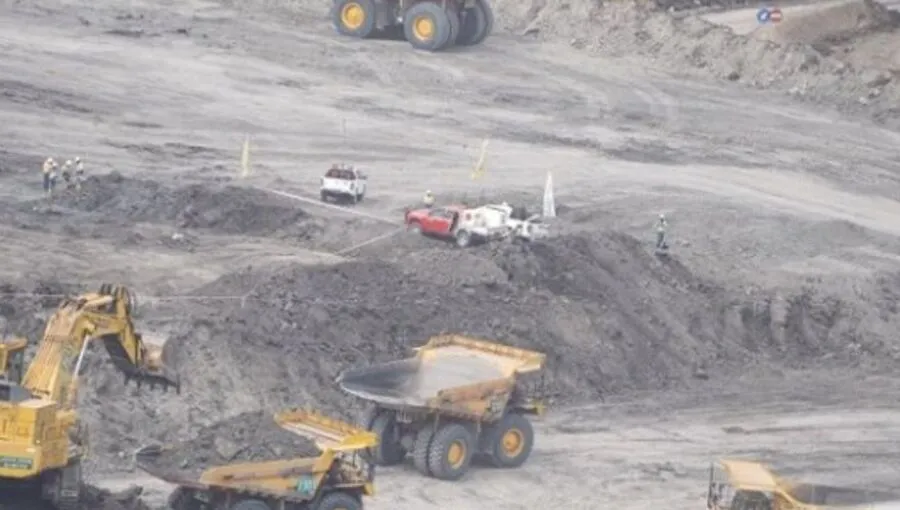
Nigeria has signed one of the most significant resource-sector investment agreements in West Africa in recent years. The government has inked a $1.3 billion deal with the Africa Finance Corporation (AFC) for an alumina refinery and nationwide mineral mapping programme. The deal is structured in three interconnected components: the construction of a world-class alumina refinery that will process Nigerian bauxite into alumina for export; the launch of a comprehensive nationwide mineral exploration and mapping programme to establish a rigorous quantification of Nigeria’s full resource endowment; and the creation of a dedicated investment vehicle designed to fast-track the commercialisation of exploration findings into producing mines.
The strategic logic is straightforward but significant. Nigeria is one of Africa’s largest bauxite producers, yet historically it has exported the raw ore at minimal value, with all of the processing and manufacturing value-addition occurring offshore in Europe, Asia, and North America. By developing domestic refining capacity, Nigeria can capture the substantial premium between raw bauxite and processed alumina, which typically commands two to three times the price of unprocessed ore. The alumina can then serve either as an export product in its own right or as feedstock for downstream aluminium smelting — a further step up the value chain that would generate even greater economic returns.
The deal also sends an important signal to international investors about the direction of Nigerian industrial policy under the current administration. By partnering with a pan-African development finance institution rather than a single foreign bilateral investor, Nigeria is seeking to ensure that the benefits of the investment are retained on the continent and that the governance structure reduces the risk of the resource curse dynamics that have historically plagued large extractive sector investments in Nigeria.
Deal Value: $1.3 billion
Key Partner: Africa Finance Corporation (AFC)
Focus: Alumina refinery, mineral mapping, exploration investment vehicle
Strategic Goal: Value addition and domestic processing of Nigerian bauxite
African Capital Markets Are Moving Again
A pivotal new analysis published this week argues that Africa’s capital markets are experiencing a genuine structural revival after a period of stagnation. The drivers of this revival are multiple: improvements in market infrastructure and regulatory frameworks, the growing sophistication of African institutional investors (particularly pension funds, whose total assets under management are now estimated at over $1.8 trillion across the continent), and the emergence of technology-enabled platforms that are dramatically lowering the barriers to participation for retail investors.
The implications for capital formation and economic development are potentially far-reaching. A deeper, more liquid capital market enables businesses to access long-term financing at lower cost, reduces dependence on foreign capital flows that can be volatile and pro-cyclical, and creates a domestic savings mobilisation mechanism that can channel household and institutional savings into productive investment. For Africa — which historically has relied heavily on external financing for infrastructure and development — the development of deep domestic capital markets is a structural priority of the first order.
Analysts, fintech founders, and retail traders are increasingly treating 2026 as a defining year for African capital markets. The trading renaissance narrative is backed by structural data: trading volumes on key African exchanges have risen materially in the past 12 months, foreign portfolio investment inflows have recovered from the lows of 2023-2024, and the pipeline of new listings and debt issuances across the continent is the strongest it has been in several years.
One decision can change your entire career. Take that step with our Online courses in ACCA, HESI A2, ATI TEAS 7, HESI EXIT, NCLEX-RN, NCLEX-PN, and Financial Literacy. Join Serrari Ed and start building your brighter future today.
AfDB Backs Tech Startups in French-Speaking Africa
The African Development Bank Group (AfDB) has approved a €6.5 million investment in the Saviu II Fund, a vehicle supporting technology startups at the seed phase and early institutional fundraising stages in French-speaking Central and West Africa. The investment is designed to address one of the most persistent structural gaps in Africa’s tech ecosystem: the scarcity of early-stage venture capital in francophone African markets, which have historically lagged their anglophone counterparts in attracting startup investment despite a large and growing population of technically educated young entrepreneurs.
The Saviu II Fund will target technology companies in fintech, agritech, edtech, and healthcare technology — sectors where digital solutions can address fundamental development challenges at scale across francophone Africa. The AfDB’s participation alongside private venture capital investors serves an important signalling function, providing development finance legitimacy that encourages other institutional investors to co-invest and raises the profile of francophone African startups in the broader global venture capital ecosystem.
This investment fits within a broader AfDB strategy of using targeted financial instruments — blended finance, guarantees, and direct equity investments — to mobilise private capital in frontier markets where risk perceptions remain elevated. The ability to leverage a relatively modest initial investment into a larger pool of capital from the private sector is the core value proposition of development finance institutions in the African innovation economy.
AfDB Investment in Saviu II: EUR 6.5 million
Target Stage: Seed phase and early institutional fundraising
Geographic Focus: French-speaking Central and West Africa
Target Sectors: Fintech, Agritech, Edtech, Health Tech
Data Centres: Africa’s Digital Infrastructure Investment Decade
Africa’s data centre market is entering what industry analysts are describing as its most consequential decade of expansion. A comprehensive new report published by Zawya examines the structural growth opportunities and energy constraints facing Africa’s data centre sector, painting a picture of an industry that is growing rapidly but whose growth is consistently constrained by the continent’s most persistent infrastructure deficit: reliable electricity supply.
Demand for data centre capacity is surging across Africa, driven by the rapid digitalisation of economies, the explosive growth of mobile data consumption, the cloud migration of African businesses, and the increasing adoption of AI-powered services that require significant computational infrastructure. The major hyperscale cloud providers — Microsoft Azure, Google Cloud, and Amazon Web Services — have all made or announced significant investments in African data centre capacity in recent years, validating the long-term demand story.
The investment opportunity in African data centre infrastructure is being pursued by a sophisticated mix of investors: specialist data centre operators with global portfolios, infrastructure-focused private equity funds, sovereign wealth funds from the Gulf Cooperation Council seeking diversification, and development finance institutions. Total committed and announced investments in African data centre capacity in 2025 and 2026 are estimated to exceed $3 billion — a figure that represents both the scale of the opportunity and the accelerating pace of capital mobilisation.
Ready to take your career to the next level? Join our Online courses: ACCA, HESI A2, ATI TEAS 7 , HESI EXIT , NCLEX – RN and NCLEX – PN, Financial Literacy!🌟 Dive into a world of opportunities and empower yourself for success. Explore more at Serrari Ed and start your exciting journey today! ✨
Track GDP, Inflation and Central Bank rates for top African markets with Serrari’s comparator tool.
See today’s Treasury bonds and Money market funds movement across financial service providers in Kenya, using Serrari’s comparator tools.
photo source: Google
By: Montel Kamau
Serrari Financial Analyst
4th March, 2026