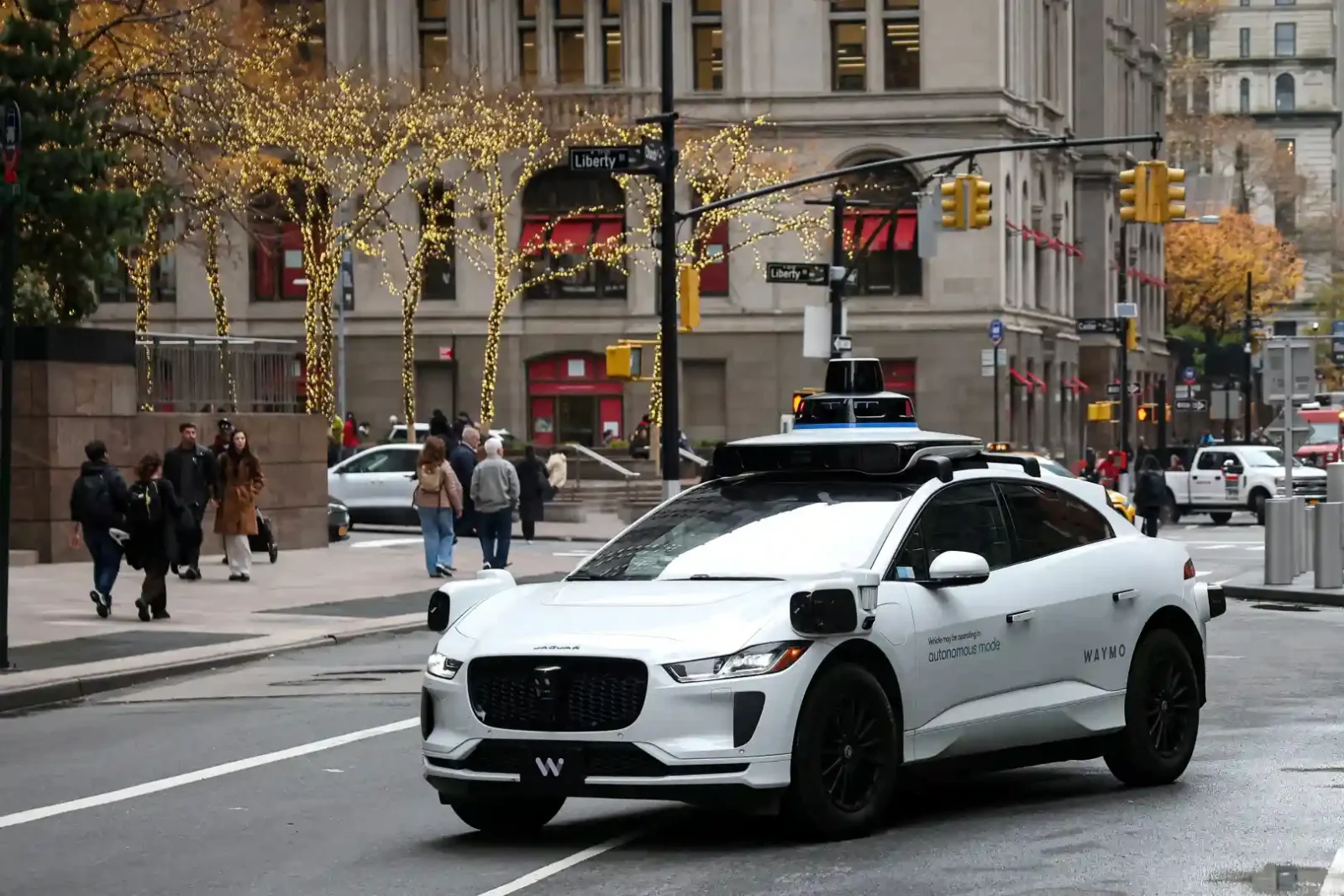
Alphabet Inc.’s autonomous driving subsidiary Waymo is positioning itself for unprecedented growth with a nearly finalized $16 billion funding round that would value the robotaxi company at approximately $110 billion. The massive capital injection represents more than double the company’s $45 billion valuation from its Series C round just four months earlier in October 2024, signaling robust investor confidence in the commercialization of autonomous vehicle technology.
The parent company Alphabet is expected to contribute approximately $13 billion to the autonomous driving firm, demonstrating the tech giant’s continued strategic commitment to what many analysts view as a transformative mobility platform. The remaining $3 billion will come from a consortium of notable investors including new participants Sequoia Capital, DST Global, and Dragoneer Investment Group, according to sources familiar with the matter. Existing backers Andreessen Horowitz and Abu Dhabi sovereign fund Mubadala are also participating in the round, broadening Waymo’s external capital base and potentially setting new benchmarks for private-market autonomous vehicle valuations.
The funding round could potentially close as early as February 2026, positioning Waymo to accelerate its ambitious expansion plans across multiple markets. When contacted by media outlets, a company spokesperson emphasized the firm’s trajectory: “While we don’t comment on private financial matters, our trajectory is clear: with over 20 million trips completed, we are focused on the safety-led operational excellence and technological leadership required to meet the vast demand for autonomous mobility.”
Build the future you deserve. Get started with our top-tier Online courses: ACCA, HESI A2, ATI TEAS 7, HESI EXIT, NCLEX-RN, NCLEX-PN, and Financial Literacy. Let Serrari Ed guide your path to success. Enroll today.
Rapid Revenue Growth and Market Expansion
Waymo’s financial performance has shown remarkable momentum, with the company reportedly generating more than $350 million in annual recurring revenue, reflecting rising demand for its robotaxi service as it expands to new cities and forges strategic partnerships. The Mountain View, California-based company has crossed significant operational milestones, including more than 2 million fully autonomous miles driven weekly and over a quarter of a million rides provided each week.
The autonomous vehicle company currently operates fully autonomous ridehailing services without human safety monitors in six major U.S. metropolitan areas, including the San Francisco Bay Area, Los Angeles, Phoenix, Austin, Atlanta, and most recently Miami, where service launched in January 2026. Additionally, Waymo has established partnerships with ride-hailing giants, offering rides through Uber Technologies Inc.’s app in Austin and Atlanta, providing seamless integration with existing consumer mobility platforms.
The company has announced aggressive expansion plans for 2026, with robotaxi services planned for numerous additional American cities including Dallas, Denver, Detroit, Houston, Las Vegas, Nashville, Orlando, San Antonio, San Diego, and Washington D.C. Beyond U.S. borders, Waymo is preparing for its first international deployment, with plans to launch commercial service in London in 2026 and ongoing testing in Tokyo to learn local traffic patterns.
To support this rapid scaling, Waymo is significantly expanding its fleet capacity. The company, in partnership with manufacturing partner Magna, is expanding its Arizona production facility to double production capacity and build more than 2,000 vehicles by the end of 2026. The facility will begin assembling the company’s next-generation robotaxi on Zeekr’s RT platform, with stated goals of building tens of thousands of fully autonomous vehicles annually in the coming years.
Competitive Landscape and Market Dynamics
The autonomous vehicle market is experiencing a period of intense competition and rapid technological advancement. According to Goldman Sachs Research, the number of robotaxis on U.S. roads is projected to increase from more than 1,500 vehicles currently operating commercially to approximately 35,000 across the country by 2030, generating an estimated $7 billion in annual revenue and capturing roughly 8% of the U.S. rideshare market.
Waymo faces growing competition from several well-funded rivals. Tesla Inc., led by CEO Elon Musk, has entered the robotaxi market with its own service and limited autonomous operations in Austin, though these currently require safety monitors. During a recent appearance at the World Economic Forum in Davos, Musk stated that Tesla’s robotaxis will be “widespread” in the U.S. by the end of 2026, though analysts remain skeptical given the company’s history of overpromising on autonomous vehicle timelines.
Amazon.com Inc.’s Zoox represents another formidable competitor with its purpose-built robotaxi featuring no driver controls. The unique, bidirectional vehicle has been operating on the Las Vegas Strip and recently began offering free driverless rides to select users in San Francisco. Zoox plans to launch paid commercial service in both San Francisco and Las Vegas in 2026, with chief technology officer Jesse Levinson asserting that the company believes it will create a multi-hundred-billion-dollar company just from moving people around.
On the global stage, Chinese competitors pose an increasingly significant challenge. Baidu’s Apollo Go robotaxi service has achieved scale comparable to Waymo, reportedly surpassing 250,000 weekly driverless rides as of October 2025. The service operates robotaxis in several major Chinese cities and is working to expand internationally to Abu Dhabi, Dubai, the United Kingdom, and Germany in 2026. Through November 2025, Apollo Go had received 17 million robotaxi ride orders and logged 240 million kilometers, including 140 million fully autonomous miles.
Industry analysts suggest the global autonomous vehicle market is poised for explosive growth. Market research indicates the global autonomous vehicle market was valued at $364.08 billion in 2026 and is expected to reach nearly $5,439.46 billion by 2035, expanding at a robust compound annual growth rate of 34.84%. The robotaxi segment specifically is projected to grow even more dramatically, with some forecasts suggesting the market could reach $693.84 billion by 2033, growing at a CAGR of 86%.
One decision can change your entire career. Take that step with our Online courses in ACCA, HESI A2, ATI TEAS 7, HESI EXIT, NCLEX-RN, NCLEX-PN, and Financial Literacy. Join Serrari Ed and start building your brighter future today.
Technological Approach and Safety Performance
Waymo’s technological approach distinguishes it from many competitors. Unlike Tesla, which relies on a camera-only system, Waymo employs a comprehensive sensor suite including LiDAR (light detection and ranging), radar, and cameras paired with powerful onboard computing to navigate complex urban environments. This multi-sensor approach, while more costly, is designed to provide redundant safety systems and more robust perception capabilities in diverse conditions.
The company has published extensive safety data demonstrating the effectiveness of its technology. According to peer-reviewed research, Waymo’s robotaxis experienced 81% fewer injury-causing crashes compared to average human drivers. The company’s data shows its autonomous vehicles are involved in 0.8 crashes per 1 million miles resulting in injury, compared to 3.96 crashes per 1 million miles for human drivers—meaning human drivers are five times more likely to be involved in an accident causing injury.
Recently, Waymo achieved another significant operational milestone by launching freeway routes in Phoenix, San Francisco, and Los Angeles for riders who opt in, marking an important expansion of the operational design domain beyond urban streets. The company is gradually extending freeway trips to more riders and locations over time, addressing a critical capability for serving sprawling metropolitan areas like Houston and Dallas.
Regulatory Challenges and Safety Scrutiny
Despite its technological achievements, Waymo faces ongoing regulatory scrutiny and safety concerns that could impact its expansion timeline. Most recently, the U.S. National Highway Traffic Safety Administration (NHTSA) opened an investigation after a Waymo self-driving vehicle struck a child near an elementary school in Santa Monica, California, on January 23, 2026. The incident occurred during normal school drop-off hours when the child ran across the street from behind a double-parked SUV.
According to Waymo, the vehicle’s technology immediately detected the individual as they emerged from behind the stopped vehicle and braked hard, reducing speed from approximately 17 mph to under 6 mph before contact was made. The child sustained minor injuries. The company stated that its peer-reviewed model suggests a fully attentive human driver in the same situation would have made contact with the pedestrian at approximately 14 mph, though federal investigators are examining whether the autonomous vehicle exercised appropriate caution given its proximity to the school and the presence of young pedestrians.
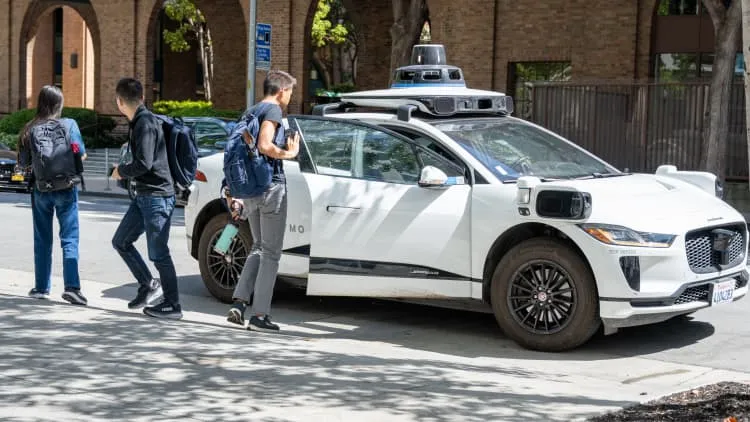
This investigation follows another ongoing federal probe into Waymo’s behavior around school buses. The National Transportation Safety Board initiated an investigation in January 2026 after reports that Waymo robotaxis illegally passed stopped school buses in Austin, Texas, at least 19 times since the start of the school year. The Austin Independent School District had demanded that Waymo halt operations during school bus hours until safety concerns could be resolved, but the company declined.
These incidents highlight the complex regulatory landscape autonomous vehicle companies must navigate. The United States currently operates under a patchwork of federal, state, and local regulations governing autonomous vehicles. Some states, particularly in the Republican-dominated Sun Belt, have adopted more favorable regulatory frameworks, while others, especially in Democratic-led states like Massachusetts, Washington, and New York, have been slower to provide clear pathways for commercial robotaxi deployment.
Investment Significance and Future Outlook
The prospective $110 billion valuation, anchored primarily by Alphabet’s participation, signals strong institutional confidence in the long-term unit economics of driverless ride-hailing despite the still-evolving regulatory and competitive landscape. For Alphabet investors, Waymo’s scale now matters significantly. A $110 billion valuation would place Waymo among the most valuable private tech firms in the world.
Alphabet CEO Sundar Pichai has indicated that Waymo will “meaningfully” contribute to Alphabet’s financials as soon as 2027, suggesting the autonomous driving subsidiary could soon transition from a cost center to a significant revenue generator for the parent company. This timeline aligns with the company’s aggressive expansion plans and the broader industry trajectory toward commercial viability.
The funding announcement comes as autonomous vehicle technology reaches an inflection point. Industry observers note that while fully autonomous robotaxis were once considered a technical moonshot, companies like Waymo have demonstrated that the technology can operate reliably at commercial scale. The company has logged more than 125 million fully autonomous miles on public roads, providing a massive dataset for continuous improvement of its AI systems.
However, significant challenges remain. The capital-intensive nature of the business requires substantial ongoing investment in vehicle acquisition, maintenance infrastructure, charging stations, and remote operation centers. Gross margins for vertically integrated autonomous vehicle operators could reach 40-50% over the next three to five years, according to Goldman Sachs Research, but achieving profitability at scale will require efficient operations across expanding geographic footprints.
Consumer acceptance also represents a critical factor. While survey data from The Verge found that 45% of respondents overall believed robotaxi services were safe compared to 37% against, the percentages were notably higher in cities where Waymo already operates at 54% for and 32% against. This suggests that firsthand exposure to autonomous vehicles significantly increases public comfort levels, potentially creating a virtuous cycle as services expand.
The timing of Waymo’s funding round also reflects broader market dynamics. As traditional automakers and technology companies pour billions into autonomous vehicle development, first-mover advantages in key markets become increasingly valuable. Waymo’s head start in commercial operations—it began testing autonomous vehicles on U.S. roads in 2012—has allowed it to accumulate operational experience and refine its technology through real-world deployments that competitors are only now beginning to replicate.
Looking ahead, the success of Waymo’s expansion strategy will depend on multiple factors: the company’s ability to navigate diverse regulatory environments, maintain its safety record as it scales operations, manage the capital-intensive requirements of fleet growth, and compete effectively against well-funded rivals with different technological approaches. The $16 billion funding round provides the resources to pursue these objectives aggressively, but execution will ultimately determine whether Waymo can fulfill investor expectations of creating a transformational mobility platform.
As the autonomous vehicle industry transitions from experimental deployments to mainstream commercial operations, Waymo’s massive funding round signals that institutional investors are betting heavily on driverless technology reshaping urban transportation within the next decade. Whether these bets pay off will shape not only the future of mobility but also the broader trajectory of artificial intelligence applications in safety-critical systems.
A2, ATI TEAS 7 , HESI EXIT , NCLEX – RN and NCLEX – PN, Financial Literacy!🌟 Dive into a world of opportunities and empower yourself for success. Explore more at Serrari Ed and start your exciting journey today! ✨
Track GDP, Inflation and Central Bank rates for top African markets with Serrari’s comparator tool.
See today’s Treasury bonds and Money market funds movement across financial service providers in Kenya, using Serrari’s comparator tools.
photo source: Google
By: Montel Kamau
Serrari Financial Analyst
2nd February, 2026