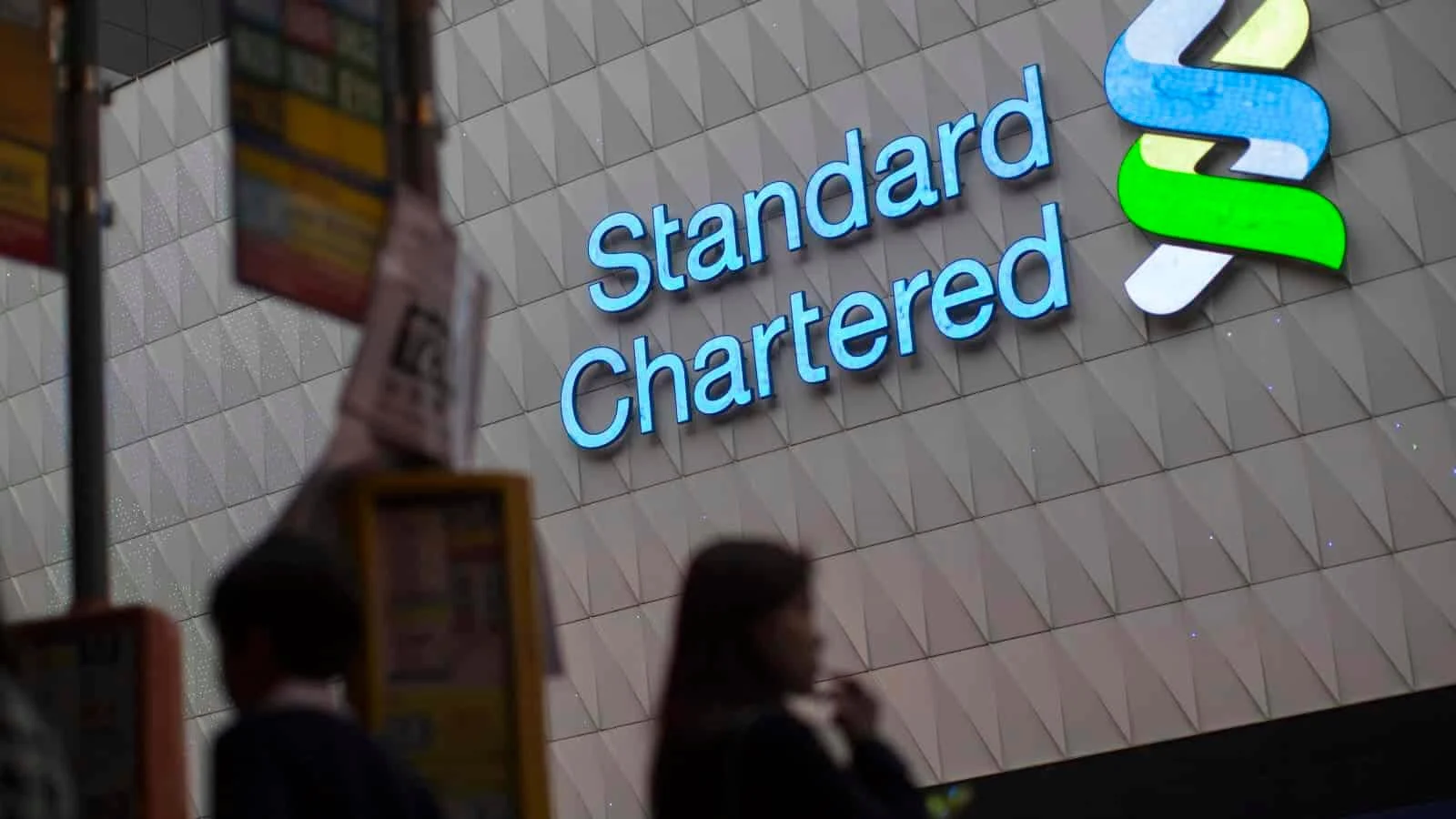
The banking sector in Kenya has long served as a critical engine of economic activity and financial intermediation, channeling savings into productive investments and facilitating the commercial transactions that sustain economic growth. In an environment characterized by macroeconomic uncertainties, elevated inflation in prior periods, and shifting monetary policy, the performance of leading financial institutions provides crucial signals about underlying economic health and sectoral resilience.
Standard Chartered Bank Kenya’s FY2025 financial results, announced on March 20, 2026, reflect a banking organization that has not merely weathered challenging conditions but has positioned itself to capture emerging opportunities within Kenya’s evolving financial landscape. The bank’s reported KES 12.4 billion net profit demonstrates the capacity of well-managed, operationally excellent financial institutions to deliver consistent returns despite economic headwinds.
These results deserve careful analysis not only for what they reveal about Standard Chartered’s operational performance but for the broader implications they carry regarding Kenya’s banking sector, the effectiveness of monetary policy transmission, and the trajectory of financial intermediation in the East African region.
Markets move fast; don’t get left behind. We’ve paired the Serrari Group Market Index with a curated Marketplace and a comprehensive Wealth Builder Course to ensure you have the data—and the skills—to act on it.
Profitability in Context: Understanding the Achievement
Achieving net profits of KES 12.4 billion in an operating environment characterized by substantial challenges represents a significant accomplishment. The figure gains additional significance when examined against the backdrop of Kenya’s monetary policy trajectory and the macroeconomic conditions that have shaped bank performance over the reporting period.
The Central Bank of Kenya has pursued an aggressive easing cycle, implementing multiple consecutive interest rate reductions designed to stimulate credit growth and support economic activity. While these policy actions serve important macroeconomic objectives, they simultaneously compress the interest margins that banks depend upon to generate profits. The spread between lending rates and deposit rates inevitably narrows when policy rates decline, presenting a fundamental profitability challenge for financial institutions.
Despite this structurally challenging environment, Standard Chartered Kenya has maintained profitability at robust levels. This achievement reflects several factors: disciplined credit risk management that has limited loan loss provisions; operational efficiency that keeps cost-to-income ratios competitive; and strategic positioning within higher-margin business segments including investment banking, wealth management, and foreign exchange services.
The bank’s ability to sustain profitability amid margin compression suggests effective management of the tradeoff between volume growth and unit profitability. Rather than attempting to maintain margins by raising lending rates and depressing credit demand, the bank appears to have expanded credit volumes while accepting lower per-unit profits, a strategy that positions it well for sustained competitive advantage.
The Broader Banking Sector Backdrop
Standard Chartered Kenya’s performance must be understood within the context of the broader Kenyan banking sector’s recent trajectory. Kenya’s banking system has undergone substantial consolidation and rationalization over the past decade, with weaker institutions exiting the market and stronger banks gaining market share. This evolutionary process has resulted in a more concentrated, more professionally managed banking sector with higher capital ratios and more sophisticated risk management practices.
The sector has also benefited from Kenya’s status as a regional financial hub and the Central Bank’s commitment to maintaining banking system stability through rigorous prudential supervision. Banks operating within Kenya’s regulated environment face capital adequacy requirements, loan classification standards, and corporate governance requirements that are largely aligned with international best practices.
However, the banking sector has not been insulated from broader economic challenges. Kenya’s macroeconomic environment has been characterized by fiscal pressures, elevated public debt, and the economic impacts of external shocks. In this environment, bank profitability and asset quality have been under pressure, and strategic management of both credit risk and operational efficiency have become paramount.
Standard Chartered Kenya’s results provide evidence that well-managed institutions can navigate this environment successfully, maintaining profitability while supporting economic activity through credit provision. This has implications for the sector more broadly, suggesting that the consolidation and professionalization trend is yielding benefits in the form of enhanced resilience.
Interest Income and Margin Dynamics
The fundamental building block of bank profitability is interest income—the net of interest earned on loans and investments and interest paid on deposits and borrowings. In an environment of declining interest rates, managing this income stream requires careful balance between pricing and volume.
Standard Chartered Kenya appears to have managed this dynamic effectively by expanding credit volumes into segments where the bank maintains competitive advantages or pricing power. Consumer lending, commercial real estate financing, and trade finance all represent segments where the bank has developed substantial expertise and market positioning, allowing it to maintain acceptable spreads even in a declining rate environment.
The bank’s cost of deposits is particularly important in determining net interest margins. Larger, more established banks with strong deposit franchises can access funding at lower costs than smaller competitors, a competitive advantage that becomes more pronounced during periods of monetary easing when deposit rates fall sharply. Standard Chartered Kenya’s status as a major regional banking group with substantial retail and institutional deposit bases provides a structural cost advantage.
Moreover, the bank’s engagement in more complex financial services, including structured products, derivatives, and foreign exchange services, generates fees and non-interest income that supplements the earnings base when interest margins are compressed. This diversification of income streams provides a hedge against margin compression.
Non-Interest Income and Fee-Based Earnings
Beyond interest income, banks generate revenues through fees and commissions charged for various services: payment processing, wealth management, investment banking advisory, asset management, and foreign exchange services. These fee-based revenue streams often provide higher margins than traditional lending and are not directly compressed by monetary policy easing.
Standard Chartered Kenya, as part of the global Standard Chartered Group, maintains considerable expertise in investment banking and capital markets services. The bank is well-positioned to benefit from corporate financing activity, merger and acquisition advisory, and securities issuance. During 2025, Kenya saw substantial corporate refinancing activity and government bond issuances, providing opportunities for investment banking fees.
The bank’s wealth management capabilities represent another significant fee source, particularly given Kenya’s growing class of high-net-worth individuals accumulating substantial financial assets. Wealth management services command fees ranging from 0.5% to 2% of assets under management annually, providing consistent, relatively stable revenue.
Foreign exchange services represent another substantial fee opportunity, particularly for a banking group with global reach and exposure to multiple currency markets. Kenya’s position as an East African trade hub generates continuous demand for currency conversion and hedging services, allowing banks like Standard Chartered Kenya to generate substantial FX-related revenues.
Context is everything. While you follow today’s updates, use the Serrari Group Market Index and Marketplace to spot emerging shifts. Need to sharpen your edge? Our Wealth Builder Course turns these insights into a professional-grade strategy.
Credit Quality and Loan Loss Provisions
The quality of bank loans—the probability that borrowers will repay amounts owed—fundamentally determines long-term profitability and stability. Economic downturns, rising unemployment, and declining business profitability all deteriorate credit quality and force banks to increase reserves for likely credit losses, directly reducing reported profits.
During 2025, Kenya’s credit environment faced headwinds from sluggish economic growth in certain sectors and challenges in specific industries. However, the overall system remained relatively stable, with loan loss provisions across the banking sector remaining within reasonable parameters relative to loan portfolios.
Standard Chartered Kenya’s ability to maintain robust profitability alongside appropriate loan loss provisioning suggests effective credit risk management. The bank maintains experienced loan officers, sophisticated credit analysis processes, and disciplined underwriting standards. The bank also maintains credit concentration limits, geographic diversification, and sector diversification that limit exposure to any single source of credit deterioration.
The bank’s provision coverage ratios—the level of reserves maintained relative to non-performing loans—remain within prudent ranges, suggesting that management’s assessment of credit risk is realistic and that the bank is not underproviding for likely losses or overproviding to create future earnings cushions.
Operational Efficiency and Cost Management
The ratio of operating expenses to operating revenues—the cost-to-income ratio—provides a metric for operational efficiency. Lower ratios indicate that banks are generating more revenue per unit of cost, a characteristic of operationally efficient institutions.
In an environment where revenues are compressed by monetary easing, operational efficiency becomes even more critical. Banks that fail to reduce costs proportionately to revenue declines see net interest margins compress dramatically, threatening profitability. Conversely, banks that maintain disciplined cost management and leverage technology to automate routine processes can sustain profitability even in challenging revenue environments.
Standard Chartered Kenya has invested substantially in technology infrastructure, including online and mobile banking platforms that reduce the marginal cost of serving customers. The bank has also rationalized its physical branch network, consolidating operations where economically efficient while maintaining customer accessibility through alternative delivery channels.
The bank’s alignment with the global Standard Chartered Group provides access to shared technology platforms, operational practices, and compliance infrastructure, allowing the bank to achieve economies of scale that would be difficult for a standalone institution to achieve. This positioning within a global financial institution confers substantial operational advantages.
Capital Adequacy and Regulatory Positioning
Banks operate under capital requirements established by prudential regulators designed to ensure that financial institutions maintain adequate buffers to absorb losses while protecting depositors and maintaining financial stability. Kenya’s Central Bank maintains capital adequacy requirements for all regulated banks, including minimum ratios of capital to risk-weighted assets.
Standard Chartered Kenya maintains strong capital ratios substantially above regulatory minima, providing considerable capacity for business expansion and loss absorption. The bank’s capital adequacy positions it favorably relative to sector peers and provides regulators with confidence in the bank’s resilience to adverse scenarios.
Strong capital positions also provide strategic flexibility. Banks with excess capital can return funds to shareholders through dividends or share buybacks, can pursue strategic acquisitions to expand market position, or can expand credit supply to support economic growth. Standard Chartered Kenya’s capital strength positions the institution to pursue any of these strategies as opportunities arise.
Dividend and Shareholder Returns
Standard Chartered Kenya’s profitability ultimately creates value for shareholders, the equity holders who bear the ultimate risks of banking operations. The bank’s dividend policy seeks to balance shareholder returns with the need to retain earnings to support growth and maintain capital adequacy.
The FY2025 results likely generated dividend payments to shareholders, providing returns to the investor base. These dividends represent rewards to shareholders who accepted the risks inherent in banking sector investment and potentially support Kenya’s broader investment community by generating returns for institutional investors including pension funds and insurance companies.
Monetary Policy and Banking Sector Implications
The Central Bank of Kenya’s monetary easing cycle reflects judgments about appropriate monetary policy given inflation, economic growth, and employment outcomes. While rate cuts benefit borrowers and stimulate economic activity, they compress bank margins and reduce profitability.
However, monetary easing can also benefit banks through secondary channels. Lower interest rates typically boost asset values—bonds and stocks appreciate when discount rates decline—which can generate gains on securities holdings. Lower rates also stimulate credit demand as borrowing becomes more affordable, potentially driving loan volume growth that offsets margin compression.
Standard Chartered Kenya’s continued profitability despite the easing cycle suggests that the bank has benefited from these secondary effects or has effectively managed its business mix to maintain acceptable profitability. This positioning reflects credit both on management and on the appropriate calibration of monetary policy by the Central Bank.
Regional and Continental Positioning
Standard Chartered Kenya operates within the context of Standard Chartered Group, one of the world’s largest banking organizations with substantial operations throughout Asia, Africa, and the Middle East. This global positioning provides Standard Chartered Kenya with access to capital, expertise, and business opportunities that would be unavailable to a purely domestic bank.
The bank’s role as an international banking hub within Kenya—facilitating flows of capital between Kenya and global financial markets—positions it as a critical infrastructure element within Kenya’s financial system. The bank’s continued profitability and strength reinforces Kenya’s position as a regional financial center.
Forward Outlook and Sector Implications
Standard Chartered Kenya’s strong FY2025 results provide evidence of sector resilience and suggest that Kenya’s banking system is well-positioned to support continued economic development. As monetary policy potentially normalizes and economic growth accelerates, banking sector profitability may expand further.
The bank’s demonstrated operational excellence, strong capital position, and effective risk management position it well to capitalize on emerging opportunities. Whether through expansion of credit provision to underserved market segments, geographic expansion within the East African region, or development of new financial services, Standard Chartered Kenya appears positioned for continued success.
For Kenya’s broader economy, the strength of the banking sector represented by institutions like Standard Chartered Kenya provides confidence that the financial infrastructure exists to support development objectives and facilitate the mobilization of capital required for continued economic growth.
Your financial future isn’t something you wait for—it’s something you build.
The real question is: when do you begin?
Move beyond simply staying informed.
Navigate the markets with clarity—track trends through the Serrari Group Market Index, uncover opportunities in the Serrari Marketplace, and build practical knowledge with our Curated Wealth Builder Course.
Stay connected to what truly matters.
Get daily insights on macro trends and financial movements across Kenya, Africa, and global markets—delivered through the Serrari Newsletter.
Growth opens doors.
Advance your career through professional programs including ACCA, HESI A2, ATI TEAS 7 , HESI EXIT , NCLEX – RN and NCLEX – PN, Financial Literacy!🌟—designed to move you forward with confidence.
See where money is flowing—clearly and in real time.
Track Money Market Funds, Treasury Bills, Treasury Bonds, Green Bonds, and Fixed Deposits, alongside global and African indexes, key economic indicators, and the evolving Crypto and stablecoin landscape—all within Serrari’s Market Index.