











The Organisation for Economic Cooperation and Development has finalised a landmark agreement on international corporate taxation, but the deal comes with a significant caveat that has drawn sharp criticism from tax transparency advocates: large US-based multinational corporations will be exempt from the 15 percent global minimum tax that the framework was designed to enforce.
The agreement, approved and adopted by 147 members of the OECD/G20 Inclusive Framework on 5 January 2026, represents a fundamental shift in how the international tax system will treat American companies compared to their foreign counterparts. The deal establishes what negotiators call a “side-by-side system” that effectively allows US multinationals to remain subject only to American tax rules while being shielded from the global minimum tax provisions that will apply to companies headquartered elsewhere.
Build the future you deserve. Get started with our top-tier Online courses: ACCA, HESI A2, ATI TEAS 7, HESI EXIT, NCLEX-RN, NCLEX-PN, and Financial Literacy. Let Serrari Ed guide your path to success. Enroll today.
The Trump Administration’s Victory

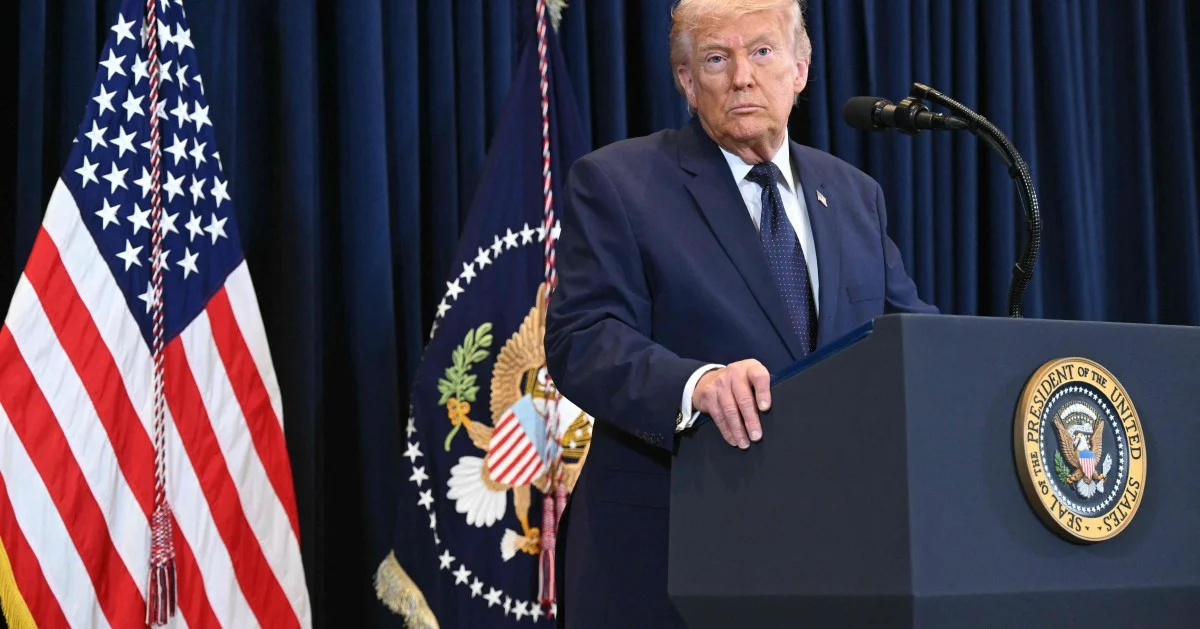
US Treasury Secretary Scott Bessent hailed the agreement as a triumph for American economic sovereignty. In a statement released by the Treasury Department, Bessent declared the deal “a historic victory in preserving US sovereignty and protecting American workers and businesses from extraterritorial overreach.”
The Treasury Department emphasised that the agreement protects the value of US research and development credits and other congressionally approved incentives for investment and job creation. “This side-by-side agreement recognizes the tax sovereignty of the United States over the worldwide operations of US companies and the tax sovereignty of other countries over business activity within their own borders,” the Treasury statement noted.
OECD Secretary-General Mathias Cormann characterised the agreement as a “landmark decision in international tax co-operation” that enhances tax certainty, reduces complexity, and protects tax bases. However, the framing of the deal as a mutual compromise belies the fundamental concession that other nations made to accommodate American demands.
Origins of the Global Minimum Tax
The current agreement represents a dramatic evolution from the framework initially negotiated in 2021. That original deal emerged from years of negotiations through the OECD’s Base Erosion and Profit Shifting (BEPS) project, which was launched in 2013 to combat tax avoidance by multinational corporations.
The BEPS initiative addressed how companies were shifting profits to low-tax jurisdictions, eroding global tax revenues. After extensive negotiations involving more than 130 countries, the OECD Global Tax Deal was finalised in October 2021. The framework introduced two pillars: Pillar One would reallocate taxing rights to ensure that large multinational corporations pay taxes where their customers are located, while Pillar Two introduced a 15 percent global minimum tax designed to reduce profit shifting and tax competition among jurisdictions.
Former Treasury Secretary Janet Yellen was instrumental in securing the 2021 agreement. The Biden Administration concluded that multilateral engagement would be necessary to forestall what officials described as a “race to the bottom” on corporate tax rates. The US Treasury, under Secretary Yellen, actively supported Pillar Two as part of President Biden’s efforts to prevent harmful tax competition and secure revenue needed for domestic priorities.
The 2021 deal aimed to stop multinational corporations, including technology giants like Apple and consumer brands like Nike, from using accounting and legal manoeuvres to shift earnings to low- or no-tax havens. Those havens are typically places like Bermuda and the Cayman Islands, where the companies actually conduct little or no actual business operations.
Trump’s Day One Rejection
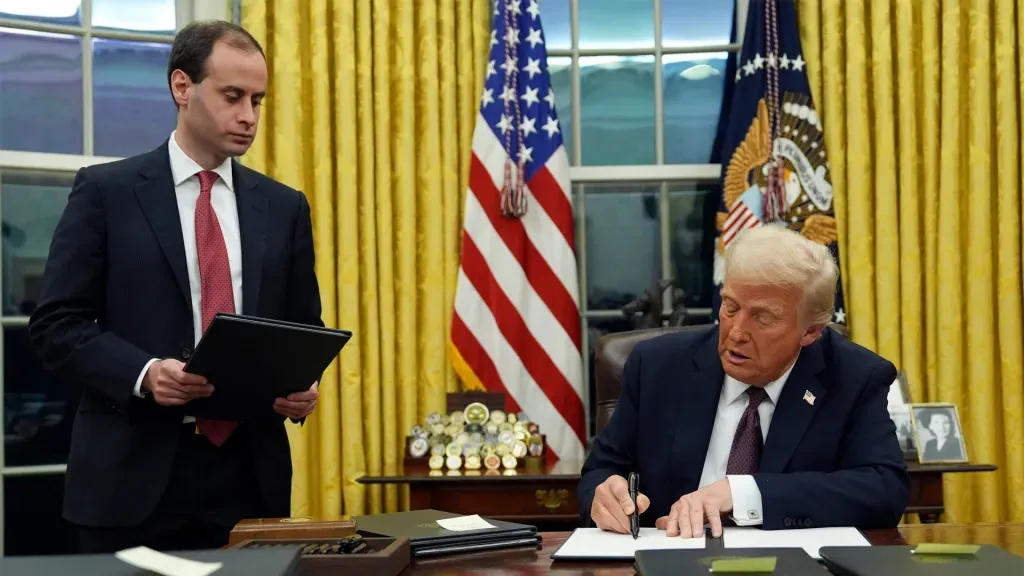
The trajectory of the global minimum tax changed dramatically when Donald Trump returned to the White House. On his first day back in office in January 2025, President Trump issued an executive order stating that the OECD Global Tax Deal “has no force or effect in the United States” and directing the Treasury secretary to notify the OECD that any commitments made by the prior administration were null and void.
The memorandum explicitly stated the administration’s view that American “economic competitiveness” and “sovereignty” are enhanced by clarifying that the Global Tax Deal has no force or effect in the United States. The executive order instructed the Secretary of the Treasury to notify the OECD that any commitments made by the “prior administration” on behalf of the United States in respect of the Global Tax Deal have no force or effect absent an act of Congress.
The Trump administration’s concerns focused particularly on the Undertaxed Profits Rule (UTPR), one of the key enforcement mechanisms in Pillar Two. The UTPR allows a country to collect tax from a company if both its parent jurisdiction and the local country are not charging at least a 15 percent rate. US officials argued this provision represented extraterritorial overreach into American tax policy.
Congressional Pressure and Retaliatory Threats
The Trump administration’s negotiating leverage was significantly enhanced by actions in Congress. In May 2025, the House of Representatives overwhelmingly passed The One Big Beautiful Bill, which included retaliatory countermeasures against any foreign government that imposed what Republicans characterised as unfair taxes on US businesses.
Senate Finance Committee Chair Mike Crapo and House Ways and Means Committee Chair Jason Smith celebrated the finalised agreement in a joint statement, declaring: “Today marks another significant milestone in putting America First and unwinding the Biden Administration’s unilateral global tax surrender.”
The Congressional Research Service had previously analysed the implications of Pillar Two for US tax policy, finding that about 69 percent of the foreign profits of US multinationals are located in eight identified tax haven jurisdictions and in “stateless entities and other countries” generally subject to low or no local taxes. This concentration of profits in low-tax jurisdictions was precisely what the global minimum tax was designed to address.
Republicans argued that the original deal negotiated by the Biden administration would make the US less competitive in a global economy. They pointed to estimates from the Joint Committee on Taxation that suggested the United States stood to lose over $120 billion in tax revenues under certain scenarios of the OECD framework. The United States produces 24 percent of global economic output, yet 48 percent of companies in scope under OECD Pillar One are American, and US employers represent 64 percent of profits that could potentially be reallocated.
One decision can change your entire career. Take that step with our Online courses in ACCA, HESI A2, ATI TEAS 7, HESI EXIT, NCLEX-RN, NCLEX-PN, and Financial Literacy. Join Serrari Ed and start building your brighter future today.
The Side-by-Side System Explained
The agreement reached this week establishes what the OECD calls a “side-by-side system” that creates safe harbours available to tax jurisdictions with domestic and worldwide tax regimes that “have and maintain similar policy objectives, overlapping scope, and a complementary policy impact” aligned with Pillar Two aims.

Under this framework, US companies will not be subjected to Pillar Two’s Income Inclusion Rule and its Undertaxed Profits Rule, two elements strongly opposed by the Treasury Department. Companies eligible to elect the side-by-side safe harbour will be insulated from these provisions if their headquarter country has eligible domestic and worldwide tax systems, provides a foreign tax credit for qualified domestic minimum top-up taxes, and has enacted its eligible domestic and worldwide tax systems before 1 January 2026.
The US argues that its existing tax framework already achieves the objectives of the global minimum tax. The US minimum corporate tax regime comprises four core elements: controlled foreign corporation deemed income inclusion under Subpart F, net controlled foreign corporation tested income (formerly known as GILTI), the Corporate Alternative Minimum Tax, and the Base Erosion and Anti-Abuse Tax (BEAT).
However, preliminary OECD economic analysis indicates that US-parented multinationals would have an estimated average effective tax rate of 13.8 percent to 16.9 percent under GLOBE implementation—suggesting that many would fall below the 15 percent threshold if measured using the OECD’s methodology.
Transparency Groups Sound the Alarm
Tax transparency advocates have reacted to the amended agreement with alarm. The FACT Coalition, a tax transparency nonprofit, warned that the deal fundamentally undermines years of progress on international corporate taxation.
“This deal risks nearly a decade of global progress on corporate taxation only to allow the largest, most profitable American companies to keep parking profits in tax havens,” said Zorka Milin, policy director at the FACT Coalition. The organisation noted that a “safe harbour” shielding American companies from taxation under certain elements of the Pillar Two framework was set to expire at the end of 2025, and that the new agreement modifies and extends this safe harbour, effectively exempting American companies from the global minimum tax.
FACT points to research indicating that American corporations continue to book significant profits in tax havens despite existing US tax rules. According to research cited by the organisation from the EU Tax Observatory, around one-half of US multinationals’ total foreign profits are booked in tax havens.
Tax watchdogs argue the minimum tax was supposed to halt an international race to the bottom for corporate taxation that has led multinational businesses to book their profits in countries with low tax rates. The exemption for US companies, critics argue, creates a two-tiered system where American multinationals enjoy advantages that their foreign competitors do not.
Business Community Response
Not all reactions have been negative. The business community, which had expressed concerns about the compliance burden of the Pillar Two rules, welcomed the agreement. The National Foreign Trade Council described the announcement as “a crucial step forward in the long path toward securing a more certain international tax framework.”
“This move recognizes that tax systems which accomplish the goals of BEPS are on par with the Pillar Two global minimum tax and should therefore coexist with the international framework,” the NFTC stated. The organisation also welcomed the appropriate treatment of non-refundable credits and other tax incentives, which has long been a priority of the US business community.
The Investment Company Institute similarly praised the agreement, noting that “the safe harbours contained within the framework align with Congress and the administration’s efforts to protect US business interests overseas from duplicative minimum foreign taxes.” The organisation added that the new OECD framework forestalls the need for the US to employ a retaliatory tax, which could have discouraged foreign investment in US equities through funds.
Implications for Global Tax Policy
The agreement has significant implications for the future of international tax cooperation. Without an agreement, the Trump administration’s opposition to the global tax deal would have left multinational companies’ 2026 tax strategies in limbo, potentially triggering a damaging trade war over taxation.
The OECD package also introduced an effective tax rate safe harbour for multinationals, allowing a simplified income calculation based on financial accounting data for businesses that can demonstrate they do not have top-up tax liabilities in Pillar Two jurisdictions. This safe harbour will be in place for multinationals in all jurisdictions from 2027, allowing companies to avoid complex and expensive calculations.
The group also agreed to extend a transitional country-by-country reporting safe harbour to the end of 2027, to allow for a smooth implementation of the simplified effective tax rate safe harbour. The temporary safe harbour was due to expire at the end of 2026 and allows companies to use information they already share with governments for tax transparency to calculate their global minimum tax liabilities.
European Reaction and Implementation Challenges

The European Union, which has already implemented Pillar Two through a directive requiring all member states to apply the rules, faced difficult choices in accommodating the US demands. Some observers have suggested that the EU has effectively capitulated to US demands, though officials frame the agreement as a pragmatic compromise.
Implementation of the side-by-side system presents challenges. The UK has already warned that it may not be able to implement any changes in its law until 2027, and there is some controversy over whether the EU has the authority to make the changes without opening up the current Pillar Two directive or violating anti-discrimination rules.
The deal also leaves open questions about whether other countries might seek to leverage similar safe harbours for themselves, potentially further eroding the effectiveness of the global minimum tax framework.
Looking Ahead
The finalised agreement represents both a continuation of international tax cooperation and a significant departure from the original vision of a truly global minimum tax. While nearly 150 countries remain committed to the framework, the exemption for US companies—home to many of the world’s largest and most profitable multinationals—fundamentally alters the calculus.
For developing countries, many of which had hoped the global minimum tax would help them capture more revenue from multinational operations within their borders, the deal may prove disappointing. Some African nations had criticised the OECD-led minimum tax process for being dominated by wealthy countries and argued that global taxation rules should instead be agreed upon at the United Nations level.
As countries move to implement the agreement, attention will turn to whether the framework can achieve its stated goals of reducing profit shifting and tax competition when the world’s largest economy has effectively opted out of full participation. The coming years will determine whether the side-by-side system represents a workable compromise or a fundamental weakening of international efforts to ensure multinational corporations pay their fair share of taxes.
Ready to take your career to the next level? Join our Online courses: ACCA, HESI A2, ATI TEAS 7 , HESI EXIT , NCLEX – RN and NCLEX – PN, Financial Literacy!🌟 Dive into a world of opportunities and empower yourself for success. Explore more at Serrari Ed and start your exciting journey today! ✨
Track GDP, Inflation and Central Bank rates for top African markets with Serrari’s comparator tool.
See today’s Treasury bonds and Money market funds movement across financial service providers in Kenya, using Serrari’s comparator tools.
photo source: Google
By: Montel Kamau
Serrari Financial Analyst
6th January, 2026
Article, Financial and News Disclaimer
The Value of a Financial Advisor
While this article offers valuable insights, it is essential to recognize that personal finance can be highly complex and unique to each individual. A financial advisor provides professional expertise and personalized guidance to help you make well-informed decisions tailored to your specific circumstances and goals.
Beyond offering knowledge, a financial advisor serves as a trusted partner to help you stay disciplined, avoid common pitfalls, and remain focused on your long-term objectives. Their perspective and experience can complement your own efforts, enhancing your financial well-being and ensuring a more confident approach to managing your finances.
Disclaimer: This article is for informational purposes only and does not constitute financial advice. Readers are encouraged to consult a licensed financial advisor to obtain guidance specific to their financial situation.
Article and News Disclaimer
The information provided on www.serrarigroup.com is for general informational purposes only. While we strive to keep the information up to date and accurate, we make no representations or warranties of any kind, express or implied, about the completeness, accuracy, reliability, suitability, or availability with respect to the website or the information, products, services, or related graphics contained on the website for any purpose. Any reliance you place on such information is therefore strictly at your own risk.
www.serrarigroup.com is not responsible for any errors or omissions, or for the results obtained from the use of this information. All information on the website is provided on an as-is basis, with no guarantee of completeness, accuracy, timeliness, or of the results obtained from the use of this information, and without warranty of any kind, express or implied, including but not limited to warranties of performance, merchantability, and fitness for a particular purpose.
In no event will www.serrarigroup.com be liable to you or anyone else for any decision made or action taken in reliance on the information provided on the website or for any consequential, special, or similar damages, even if advised of the possibility of such damages.
The articles, news, and information presented on www.serrarigroup.com reflect the opinions of the respective authors and contributors and do not necessarily represent the views of the website or its management. Any views or opinions expressed are solely those of the individual authors and do not represent the website's views or opinions as a whole.
The content on www.serrarigroup.com may include links to external websites, which are provided for convenience and informational purposes only. We have no control over the nature, content, and availability of those sites. The inclusion of any links does not necessarily imply a recommendation or endorsement of the views expressed within them.
Every effort is made to keep the website up and running smoothly. However, www.serrarigroup.com takes no responsibility for, and will not be liable for, the website being temporarily unavailable due to technical issues beyond our control.
Please note that laws, regulations, and information can change rapidly, and we advise you to conduct further research and seek professional advice when necessary.
By using www.serrarigroup.com, you agree to this disclaimer and its terms. If you do not agree with this disclaimer, please do not use the website.
www.serrarigroup.com, reserves the right to update, modify, or remove any part of this disclaimer without prior notice. It is your responsibility to review this disclaimer periodically for changes.
Serrari Group 2025