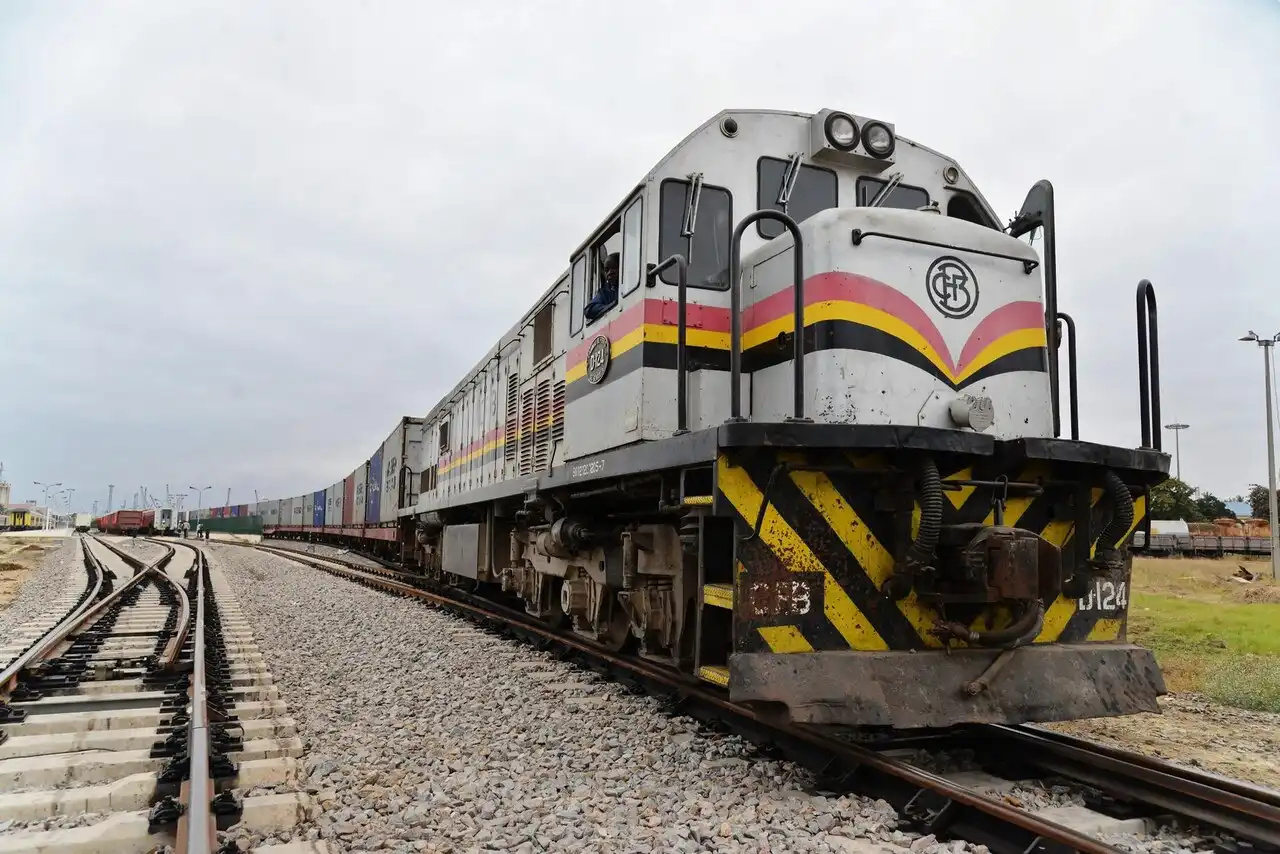
The United States International Development Finance Corporation has finalized a $553 million loan with the Lobito Atlantic Railway consortium for the refurbishment of Angola’s strategic rail line, marking a watershed moment in Washington’s efforts to secure access to critical minerals while countering China’s deepening economic presence across Africa. The loan agreement, signed at a ceremony in Washington on Wednesday, represents the culmination of negotiations initially disclosed in 2024 and positions the Lobito Corridor as arguably the most significant US infrastructure investment on the African continent in recent decades.
The DFC loan, combined with $200 million from the Development Bank of Southern Africa, will finance the rehabilitation of approximately 1,300 kilometers of rail tracks connecting the mineral-rich Democratic Republic of Congo border to Angola’s Atlantic coast port of Lobito. The project is expected to increase transportation capacity tenfold to 4.6 million metric tons annually while reducing the cost of transporting critical minerals by up to 30%, addressing longstanding infrastructure deficits that have hampered regional trade and mineral exports for decades.
Build the future you deserve. Get started with our top-tier Online courses: ACCA, HESI A2, ATI TEAS 7, HESI EXIT, NCLEX-RN, NCLEX-PN, and Financial Literacy. Let Serrari Ed guide your path to success. Enroll today.
The Strategic Imperative: Securing Critical Mineral Supply Chains
The high-profile Lobito Corridor project sits at the intersection of multiple strategic imperatives driving US foreign policy toward Africa in the 2020s. As DFC CEO Scott Nathan stated during President Biden’s December visit to Angola: “DFC’s significant investments along the Lobito Corridor are fostering sustainable economic development and advancing key U.S. strategic interests”, encapsulating Washington’s dual objectives of promoting African development while securing American strategic interests in an era of intensifying great power competition.
Central Africa is extraordinarily rich in resources essential to US industries, including minerals critical for technology and defense applications. The Democratic Republic of Congo, which will be directly linked to the Atlantic through the Lobito Corridor, produces approximately 70% of the world’s cobalt—a mineral essential for electric vehicle batteries, consumer electronics, and various defense applications. The DRC also ranks as the second-largest producer of copper globally, with substantial reserves of tantalum and other strategic minerals increasingly important for advanced manufacturing, renewable energy systems, and military hardware.
Zambia, the other key origin point for minerals that will transit the Lobito Corridor, contains substantial copper deposits that have historically made it one of Africa’s leading copper exporters. The concentration of copper and cobalt in this region—often referred to as the African Copperbelt—makes the transportation infrastructure connecting these landlocked mining areas to global markets a matter of strategic importance far exceeding local economic considerations.
The global race for critical minerals has intensified dramatically as the world transitions toward electrification, renewable energy, and digitalization. Demand for these minerals is surging, driven by rapid expansion of electric vehicles, battery storage systems, solar and wind infrastructure, 5G networks, and advanced computing. Growing demand for cobalt, in particular, has raised concerns that production capacity may struggle to keep pace, making reliable transportation infrastructure for existing production increasingly critical.
Countering Chinese Dominance in African Critical Minerals
The explicit strategic context for the Lobito Corridor is Washington’s determination to reduce dependence on Chinese-controlled supply chains for critical minerals. As the DFC stated directly: “DFC’s investments help secure reliable supply chains and prevent monopolization by China and other strategic competitors”, articulating in unusually frank language the geopolitical dimensions of the railway project.
China has spent more than two decades consolidating its position in African critical minerals through a combination of mining investments, infrastructure financing, and strategic partnerships with resource-rich governments. In 2020, China imported nearly 90% of its cobalt from the DRC, while Chinese companies currently own or hold stakes in fifteen of the DRC’s nineteen cobalt mines. In the DRC alone, 80% of copper mines are Chinese-owned, giving Beijing enormous leverage over global supplies of these strategic materials.
Beyond mining extraction, China dominates the refining and processing stages of critical mineral supply chains even more comprehensively. The International Energy Agency reports that China is the leading refiner in 19 out of 20 important strategic minerals, with an average market share of 70%. This downstream control provides China with structural advantages that extend far beyond mine ownership, as raw ores must pass through Chinese-controlled processing facilities regardless of their origin or ultimate destination.
China’s Belt and Road Initiative, launched in 2013, has established significant economic inroads in many African nations through investments in transportation, infrastructure, and energy. In the mineral-rich Central African region specifically, China has constructed railways, ports, and other infrastructure that serve dual purposes of facilitating mineral exports while expanding Chinese economic and political influence. In 2023, China’s copper-related projects were worth just over $2 billion in the DRC and nearly $2 billion in Botswana, with other large metallurgical projects collectively accounting for over $1 billion more across the continent.
The problem facing US policymakers, as they see it, is that decades of under-investment in African mining infrastructure and commercial relationships have left the United States heavily dependent on supply chains dominated by a strategic competitor. The world’s F-35 fighter jets, electric vehicle batteries, and wind turbines all rely on critical minerals including rare earths, cobalt, and lithium—many of which are found in Africa but currently flow primarily through Chinese-controlled processing and distribution networks.
The Lobito Atlantic Railway Consortium: Structure and Operations
The Lobito Atlantic Railway operates under a 30-year concession granted by the Angolan government in 2022. The consortium bringing together diverse international capabilities includes Portugal’s Mota-Engil, one of Europe’s largest construction and infrastructure companies; commodities trading giant Trafigura, which brings extensive experience in mineral logistics and marketing; and rail operator Vecturis SA, which provides railway management expertise.
This partnership structure combines international trading expertise, engineering capabilities, and railway operations experience in ways designed to address the multiple dimensions of reviving a degraded infrastructure asset. The consortium has committed to investing $455 million in Angola and $100 million in the DRC, demonstrating private sector confidence in the route’s commercial viability beyond the development finance provided by the DFC and DBSA.
The railway being rehabilitated—the historic Benguela line—was originally constructed during the colonial era beginning in 1899 and once served as a vital artery for mineral exports from Central Africa to the Atlantic. However, the line was largely destroyed during Angola’s devastating civil war that raged from 1975 to 2002, with infrastructure suffering from poor maintenance, inadequate investment, and conflict damage that rendered large sections inoperable or highly unreliable.
A previous Chinese-financed reconstruction suffered from what has been described as “poor construction and upkeep,” leading to “rundown stations, malfunctioning safety systems, offline servers and frequent derailments” that limited the line’s utility for commercial traffic. The new rehabilitation under LAR management aims to upgrade infrastructure to international standards while ensuring open access to all paying customers regardless of nationality or business affiliation—a pointed contrast with allegations that Chinese infrastructure projects have sought to restrict access to Western businesses.
The agreement underscores the United States’ commitment to advance strategic infrastructure that promotes regional trade, mutual economic growth, and long-term U.S.-Africa cooperation, the DFC emphasized in its statement, positioning the project within a broader narrative of partnership rather than purely extractive resource relationships.
One decision can change your entire career. Take that step with our Online courses in ACCA, HESI A2, ATI TEAS 7, HESI EXIT, NCLEX-RN, NCLEX-PN, and Financial Literacy. Join Serrari Ed and start building your brighter future today.
Expanding the Corridor: Zambia and DRC Extensions
While the $553 million DFC loan finances rehabilitation of the existing Angolan rail line and Lobito port facilities, the full vision for the Lobito Corridor extends far beyond Angola’s borders. The project involves construction of 515 kilometers of new rail lines in Zambia and another 315 kilometers in the Democratic Republic of Congo that will connect to the existing Benguela line, creating an integrated transportation corridor spanning three countries.
The Lagos-based Africa Finance Corporation, which serves as lead developer of the corridor project, has sought proposals from contractors for construction of the Zambia leg of the new railway after completing a feasibility study. The developers plan to finalize more financing deals by the end of 2026, according to senior AFC officials, indicating that the project remains in relatively early stages despite the headline-grabbing loan announcement.
When fully completed, the Lobito Corridor will provide significantly improved access to global markets for landlocked mineral producers in Zambia and the DRC, potentially transforming export logistics that have historically relied on far longer and more costly routes. Current mineral transportation from the Copperbelt typically involves heavy-duty trucks traveling for weeks or even months over poor roads to reach ports in South Africa or Tanzania, creating enormous costs, delays, and logistical complexities that undermine the competitiveness of Central African mineral production.
The completed corridor would cut transportation times dramatically while reducing costs, making Central African copper and cobalt more competitive in global markets while potentially enabling development of marginal deposits that are currently economically unviable due to transportation constraints. Beyond minerals, the corridor is expected to diversify its cargo profile to include sulfur imports for mining operations and other general cargo, enhancing economic sustainability and serving multiple sectors across the region.
China’s Countermove: The $1.4 Billion TAZARA Rehabilitation
As the United States moved forward with Lobito Corridor financing, China has not remained passive in the face of this strategic challenge to its dominant position in Central African mineral logistics. China Civil Engineering Construction Corporation announced earlier in 2025 that it would invest $1.4 billion to rehabilitate the rival Tanzania-Zambia railway (TAZARA), which uses Tanzanian ports on the Indian Ocean to ship out minerals from the same Copperbelt region targeted by the Lobito Corridor.
The TAZARA line, completed in 1976 with substantial Chinese support during the Mao era, has long been a symbol of China-Africa cooperation but had fallen into severe disrepair after decades of insufficient maintenance and investment. Under the new 30-year concession agreement signed in September 2025, CCECC will invest $ billion in track rehabilitation and $400 million for procurement of 32 new locomotives and 762 new wagons, substantially increasing freight and passenger transport capacity.
The 1,860-kilometer TAZARA line connects Zambia’s Copperbelt region to the Tanzanian port of Dar es Salaam, providing a crucial connection for copper and cobalt shipments to the Indian Ocean. By refurbishing this alternative route, China is positioning itself to maintain access to Central African minerals even if the US-backed Lobito Corridor succeeds in capturing significant market share of Atlantic-bound mineral traffic.
The TAZARA rehabilitation represents a significant boost to China’s lending to Africa, which had hit a 20-year low in 2022 after peaking in previous years, suggesting Beijing views competition over mineral transportation corridors as sufficiently strategic to justify renewed infrastructure financing despite broader Belt and Road Initiative retrenchment.
The competing visions create a situation where Zambian and Congolese mineral producers may ultimately benefit from having multiple improved transportation options linking their mines to global markets, potentially providing leverage to negotiate better terms with both corridor operators. However, it also highlights how Central African nations have become focal points in broader great power competition, with implications for their foreign policy autonomy and bargaining power.
Regional Implications and Development Opportunities
For Angola, the Democratic Republic of Congo, and Zambia, the Lobito Corridor represents both significant opportunities and complex challenges. These countries now find themselves at the center of a new global competition, with Western and Chinese interests vying for influence and access. This dynamic has profound implications for their foreign policy choices, economic development strategies, and ability to capture value from their natural resource endowments.
On one hand, the surge in foreign investment and infrastructure development offers genuine chances to leverage mineral resources for broader national development. The Lobito Corridor project is expected to generate significant local income in Angola, with total local procurement of goods and services expected to reach more than $350 million within the first five years. The project is also expected to create more than 1,000 new full-time jobs for Angolans, growing the existing railway workforce from 434 to more than 1,500 employees.
Mpho Mokwele, Group Executive for Transacting at DBSA, emphasized that the bank views “the strategic value as not simply being the rail line itself, but rather the creation of an efficient intermodal system specifically designed to maximize the throughput capacity of the region”. This holistic vision extends beyond merely transporting raw ores to encompassing potential development of processing facilities, special economic zones, manufacturing operations utilizing regional mineral resources, and service industries supporting mining and transportation sectors.
The corridor may have significant impact across multiple sectors by creating jobs and attracting investments in agriculture, services, and digital connectivity, with planned digital infrastructure components including advanced telecommunications along the route that could provide broader economic benefits through improved connectivity extending beyond mineral logistics.
However, African nations also face risks of remaining locked into roles as exporters of unprocessed raw materials rather than capturing value-added stages of mineral supply chains. At present, 77% of Africa’s resources are exported in raw material state, with refining and processing occurring elsewhere—primarily in China but also in Europe and other industrialized regions. Changing this pattern requires coordinated policy decisions, investment in industrial capacity, and stronger regional integration that have often proven elusive.
The Lobito Corridor is thus a test case for whether Africa can turn its mineral wealth into broad-based development or whether it will remain entangled in the new geopolitics of critical minerals, with outcomes depending on the ability of African states to assert agency, build institutional capacity, and demand equitable shares of value created from their resources.
A Transformative Moment in US-Africa Relations
The Lobito Corridor financing represents a fundamental shift in American engagement strategy toward Africa after decades of relative under-investment in commercial infrastructure. During his early December visit to Angola, President Biden pledged an additional $600 million to the Lobito Corridor project, bringing the United States’ total commitment to $4 billion and overall investment by all participants to approximately $6 billion.
The project is designed to minimize financial risk to participating African nations through its financing structure, contrasting with debt-heavy Belt and Road Initiative projects that have generated controversy over sustainability and sovereignty concerns in multiple African countries. By emphasizing DFC lending to private sector consortiums rather than government-to-government loans, the United States is attempting to demonstrate an alternative development finance model.
However, significant questions remain about implementation and long-term viability. As one expert observed, Washington has really played up this investment project, but it has yet to lay one inch of railway, cautioning that “we should all expect there to be a serious learning curve” as American development institutions navigate complexities they have not regularly confronted for decades.
The transition from the Biden to Trump administration also introduces uncertainty about sustained US commitment to the project. The Biden administration emphasized partnerships with African governments and multilateral cooperation through forums like the G7’s Partnership for Global Infrastructure and Investment, while Trump’s previous record suggests preference for more transactional approaches. Whether the new administration maintains support for the Lobito Corridor or shifts priorities remains to be seen, though the strategic imperatives driving the project transcend partisan politics.
Conclusion: The Railway as Metaphor for Shifting Global Power Dynamics
The $553 million DFC loan for Angolan railway rehabilitation, while technically focused on infrastructure, ultimately represents far more than steel rails and rolling stock. It embodies a broader realignment of global economic geography, the intensifying competition for resources essential to technological and military supremacy, and African nations’ efforts to navigate great power competition while maximizing benefits from their natural endowments.
With approximately $10 billion in total investment pledges from the United States, European Union, African Development Bank, and private sector consortia, the Lobito Corridor investment represents a significant commitment to securing critical mineral supply chains essential for the global energy transition and advanced manufacturing. Whether this investment translates into sustainable development for Angola, Zambia, and the DRC—or merely represents a new chapter in resource extraction dynamics—will become clear only as the project moves from financing announcements to actual operations.
The coming years will reveal whether competing infrastructure investments from the United States and China ultimately benefit Central African nations through improved transportation options and regional integration, or whether these countries find themselves caught between rival systems seeking to extract resources while offering limited value capture opportunities. The railway tracks being laid and rehabilitated across Central Africa are not merely transportation infrastructure—they are physical manifestations of the global competition that will shape the 21st century economic and strategic landscape.
Ready to take your career to the next level? Join our Online courses: ACCA, HESI A2, ATI TEAS 7 , HESI EXIT , NCLEX – RN and NCLEX – PN, Financial Literacy!🌟 Dive into a world of opportunities and empower yourself for success. Explore more at Serrari Ed and start your exciting journey today! ✨
Track GDP, Inflation and Central Bank rates for top African markets with Serrari’s comparator tool.
See today’s Treasury bonds and Money market funds movement across financial service providers in Kenya, using Serrari’s comparator tools.
Photo source: Google
By: Montel Kamau
Serrari Financial Analyst
19th December, 2025