The situation is compounded by growing profitability pressures revealed in Q2 results for many banks. This could hinder their ability to generate internal capital, especially as a mild US recession is projected for early 2024. Additionally, concerns are emerging regarding the asset quality of some banks’ commercial real estate portfolios.
Earlier this year, the US regional banking sector faced heightened scrutiny following the collapses of Silicon Valley Bank and Signature Bank. The ensuing panic spread to Europe, culminating in the emergency rescue of Credit Suisse by domestic rival UBS.
Moody’s cautioned that banks holding substantial unrealized losses not reflected in their regulatory capital ratios might still be susceptible to sudden market or consumer confidence losses in a high-interest rate environment.
With the Federal Reserve recently raising its benchmark borrowing rate to a 5.25%-5.5% range, Moody’s anticipates an exacerbation of banks’ asset-liability management risks. As the Federal Reserve’s policy rate rises and banking system reserves decrease, deposit levels are also shrinking due to ongoing Quantitative Tightening (QT).
Amid these changes, Moody’s emphasized that interest rates are likely to remain elevated until inflation falls within the Federal Reserve’s target range. This, in turn, will exert additional pressure on banks’ fixed-rate assets.
Moody’s pointed out that regional banks face greater risks due to their relatively low regulatory capital. Institutions with a higher proportion of fixed-rate assets on their balance sheets are more constrained in terms of profitability, capital growth, and lending capacity.
As the US potentially heads into a mild recession, Moody’s analysts warned of intensified risks, with worsened asset quality and potential capital erosion.
Although stress on US banks has been largely centered on funding and interest rate risks stemming from tightened monetary policies, Moody’s anticipates a looming deterioration in asset quality.
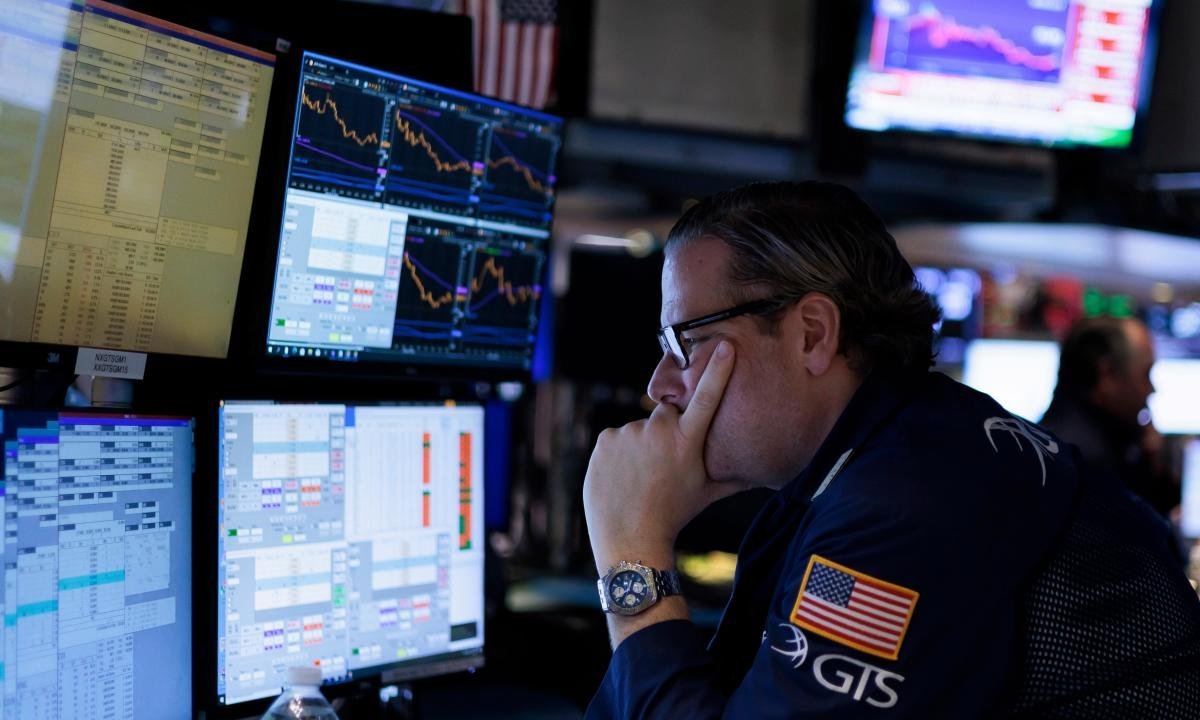
The S&P 500 Banks index experienced a decline of 2.6%, and the KBW Regional Banking index dropped by 3.1%. Market dynamics resulted in a ratio of 3.76 declining issues to every advancer on the NYSE and a ratio of 2.28 on the Nasdaq.
In trading, big banks like Goldman Sachs and Bank of America experienced declines of 2.9% and 3.2%, respectively, while Bank of New York Mellon and U.S. Bancorp lost 2.4% and 2.5%.
On the broader market, the S&P index saw five new 52-week highs and 16 new lows, with the Nasdaq recording 19 new highs and 148 new lows.
August 8, 2023
Delino Gayweh
Serrari Financial Analyst
photo source Google