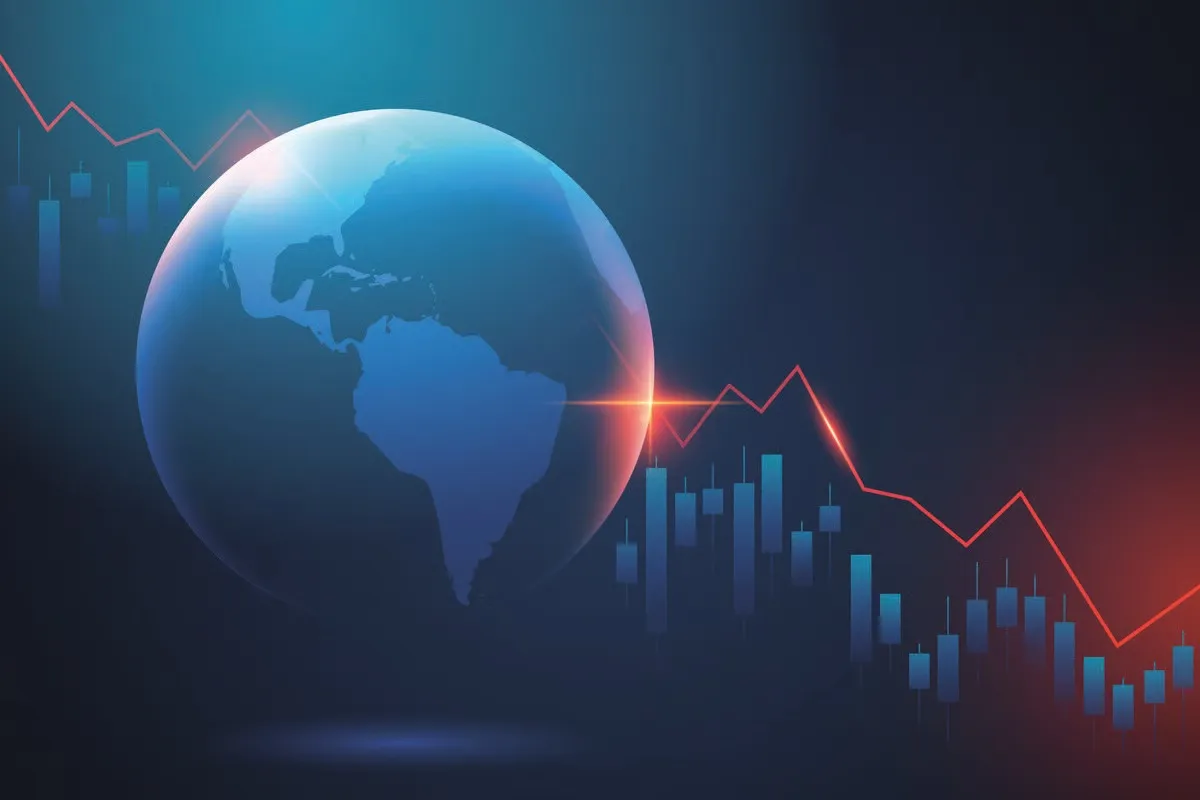
The global economy is projected to grow by just 2.7% in 2026, marking a modest deceleration from the 2.8% estimated for 2025 and falling well short of the 3.2% pre-pandemic average that characterized the decade leading up to COVID-19, according to the United Nations’ World Economic Situation and Prospects 2026 report released on Thursday. The sobering forecast underscores a world economy struggling to regain its footing amid a confluence of challenges including escalating trade frictions, mounting debt burdens, constrained fiscal space, and persistent geopolitical uncertainties that are collectively reshaping the global economic landscape.
The report, published by the UN Department of Economic and Social Affairs in partnership with UN Trade and Development and the five UN regional commissions, paints a picture of an international economy that demonstrated unexpected resilience throughout 2025 but now faces headwinds that threaten to lock it into a prolonged period of sluggish expansion. While solid consumer spending and easing inflation helped sustain activity in many major economies during the past year, underlying structural weaknesses persist, raising concerns among policymakers and economists about the durability of the current growth trajectory.
Build the future you deserve. Get started with our top-tier Online courses: ACCA, HESI A2, ATI TEAS 7, HESI EXIT, NCLEX-RN, NCLEX-PN, and Financial Literacy. Let Serrari Ed guide your path to success. Enroll today.
Resilience Gives Way to Caution
During 2025, the global economy proved more resilient than many anticipated, weathering sharp increases in U.S. tariffs that had initially triggered widespread concern about potential disruptions to international commerce. This resilience was supported by several factors: consumers maintaining spending levels despite elevated prices, businesses front-loading shipments ahead of anticipated tariff implementations, and central banks gradually easing monetary policy as inflation pressures moderated. However, UN officials caution that this apparent strength may prove temporary, with the full impact of higher tariffs and elevated macroeconomic uncertainties expected to become more evident throughout 2026.
“A combination of economic, geopolitical and technological tensions is reshaping the global landscape, generating new economic uncertainty and social vulnerabilities,” said United Nations Secretary-General António Guterres. “Many developing economies continue to struggle and, as a result, progress towards the Sustainable Development Goals remains distant for much of the world.”
The report notes that a partial easing of trade tensions helped limit the most severe disruptions to international commerce during 2025. Despite the tariff shock, global economic activity proved resilient, supported by front-loaded shipments, inventory accumulation, and solid consumer spending amid monetary easing and broadly stable labor markets, according to the UN Department of Economic and Social Affairs. However, continued macroeconomic policy support is expected to cushion rather than eliminate the impact of higher tariffs, with growth in trade and overall activity likely to moderate in the near term.
Regional Economic Outlook: Uneven and Modest
The global growth projection masks significant regional variations, with some economies demonstrating relative resilience while others grapple with particularly challenging conditions. Economic growth in the United States is projected at 2.0% in 2026, compared to 1.9% in 2025, supported by monetary and fiscal easing. However, a softening labor market is expected to weigh on momentum, with inflation likely remaining above the Federal Reserve’s 2% target through much of the year before gradually moderating as tariff effects wane and housing costs stabilize.
The European Union faces a more challenging outlook, with economic growth forecast at 1.3% in 2026, down from 1.5% in 2025. Higher U.S. tariffs and ongoing geopolitical uncertainty, particularly related to energy security and the continuing war in Ukraine, are expected to dampen exports and overall economic activity. The region’s growth is forecast to recover modestly to 1.6% in 2027, driven by resilient consumer spending and gradual improvements in business confidence.
Japan’s economy is expected to expand by a modest 0.9% in 2026, compared with 1.2% in 2025, as a modest domestic recovery partly offsets weaker external conditions. Private consumption is expected to recover gradually, but exports—particularly of automobiles—will likely remain constrained by higher United States tariffs and policy uncertainties affecting key trading partners.
In the Commonwealth of Independent States and Georgia, growth is projected at 2.1% in 2026, mostly unchanged from 2025, as the war in Ukraine continues to exact a significant toll on macroeconomic conditions across the region.
Asia Remains Growth Engine Despite Headwinds
Asia continues to serve as the primary engine of global growth, though the region is not immune to the broader challenges affecting the international economy. In East Asia, growth is projected at 4.4% in 2026, down from 4.9% in 2025 as the boost from front-loaded exports fades. The region’s largest economy, China, is expected to grow by 4.6% in 2026 and 4.5% in 2027, slightly lower than the estimated 4.9% expansion in 2025.
The UN report notes that a temporary easing of trade tensions with the United States—including targeted tariff reductions and a one-year trade truce—has helped stabilize confidence in China, while policy support is expected to sustain domestic demand and cushion external headwinds. However, structural challenges including demographic headwinds, high corporate debt levels, and ongoing property sector adjustments continue to pose medium-term risks.
South Asia maintains a relatively robust growth trajectory, with the region forecast to expand by 5.6% in 2026, easing slightly from 5.9% in 2025. India leads the regional performance with a projected 6.6% expansion in 2026 and 6.7% in 2027, driven by resilient consumption and substantial public investment. The UN estimates India’s growth at 7.4% for 2025, supported by strong domestic demand that should largely offset the adverse impact of higher United States tariffs.
Inflation across South Asia fell sharply in 2025, enabling most central banks to ease policy, though average consumer price inflation is projected to edge up to 8.7% in 2026, masking wide differences across countries in the region.
Developing Regions Face Mounting Challenges
In Africa, output is projected to grow by 4.0% in 2026, marginally up from 3.9% in 2025, before edging up to 4.1% in 2027. However, the modest headline figures obscure significant challenges, as high debt burdens and climate-related shocks pose substantial risks to economic stability and development prospects. The report singles out stronger economic performances expected in Bangladesh, Ethiopia, and Tanzania, though prospects for many low-income and vulnerable countries remain less favorable.
Western Asia’s GDP is expected to grow by 4.1% in 2026, up from 3.4% in 2025, yet the region remains acutely exposed to geopolitical tensions and security risks that could derail economic progress. The ongoing conflicts and political uncertainties affecting several countries in the region continue to weigh on investment and business confidence.
Latin America and the Caribbean face a broadly resilient but modest outlook, with output expected to expand by 2.3% in 2026, slightly down from 2.4% in 2025, before edging up to 2.5% in 2027. The region’s performance reflects moderate growth in consumer demand and a mild recovery in investment, though structural challenges including high informality, limited infrastructure, and vulnerability to commodity price fluctuations continue to constrain potential growth.
Trade Momentum Fading, Investment Subdued
Global trade, which proved surprisingly resilient in 2025 with 3.8% expansion despite elevated policy uncertainty and rising tariffs, faces a marked deceleration in 2026. The expansion in 2025 was driven by the front-loading of shipments early in the year as businesses sought to get ahead of tariff implementations, as well as robust growth in services trade which partially offset weakness in goods trade. However, momentum is expected to ease significantly, with trade growth projected to slow to just 2.2% in 2026 as temporary drivers fade and trade barriers and policy uncertainty persist.
For the global shipping industry, the outlook is particularly sobering. The temporary tailwinds from tariff-driven front-loading are disappearing, leaving ports, carriers, and shipbuilders exposed to trade fragmentation and policy volatility. Without stronger multilateral cooperation to address these challenges, the maritime sector faces the prospect of subdued cargo volumes and constrained investment for an extended period.
Investment growth has remained similarly subdued across most regions, weighed down by geopolitical tensions, tight fiscal conditions, and elevated borrowing costs. While monetary easing and targeted fiscal measures have supported investment in some economies, overall capital formation has been disappointing. Notably, rapid advances in artificial intelligence have fueled pockets of strong capital spending in a few large markets, particularly in data center infrastructure and semiconductor manufacturing capacity. However, the report cautions that the potential gains from AI, when realized, are likely to be unevenly distributed, risking a widening of existing structural inequalities between and within countries.
Inflation Moderating But Prices Remain Elevated
The report provides some positive news on the inflation front, noting that headline inflation declined from 4.0% in 2024 to an estimated 3.4% in 2025 and is projected to slow further to 3.1% in 2026. While overall inflation has moderated from the peaks reached in 2022, elevated price levels continue to weigh heavily on real incomes, particularly for low-income households who spend a larger share of their budgets on essentials.
“Even as inflation recedes, high and still rising prices continue to erode the purchasing power of the most vulnerable,” said Li Junhua, United Nations Under-Secretary-General for Economic and Social Affairs. “Ensuring that lower inflation translates into real improvements for households requires safeguarding essential spending, strengthening market competition, and tackling the structural drivers of recurring price shocks.”
Unlike the globally synchronized surge in inflation of previous years, inflation trends have become more uneven across countries and sectors, shaped by recurring supply bottlenecks amid rising geopolitical and climate-related risks. Policymakers face an increasingly complex inflation landscape, where supply-side risks call for a more coordinated and forward-looking approach that goes beyond traditional monetary policy tools.
The report emphasizes that monetary policy remains central to inflation management but needs to work in concert with credible fiscal frameworks and targeted social measures to protect vulnerable groups. Sectoral policies also play a crucial role by expanding productive capacity and strengthening supply chains, especially in food, energy, and logistics—sectors that have been particularly prone to price volatility in recent years.
One decision can change your entire career. Take that step with our Online courses in ACCA, HESI A2, ATI TEAS 7, HESI EXIT, NCLEX-RN, NCLEX-PN, and Financial Literacy. Join Serrari Ed and start building your brighter future today.
Fiscal Constraints and Debt Burdens
High debt levels and borrowing costs are constraining policy space, especially for many developing economies that were already struggling with debt sustainability before the pandemic and have seen their situations deteriorate further. The report highlights that 3 billion people live in countries that spend more on interest payments than on health or education—a stark illustration of how debt burdens are crowding out critical social and development spending.
Financial conditions have eased somewhat amid monetary loosening and improved sentiment in financial markets, but risks remain elevated given stretched valuations, particularly in sectors linked to rapid advances in artificial intelligence. The combination of high debt levels, elevated borrowing costs, and limited fiscal space is narrowing the room for policy maneuver in many countries, particularly those in the developing world that face the dual challenge of promoting growth while maintaining debt sustainability.
Call for Renewed Multilateralism
The UN report underscores that navigating an era of trade realignments, persistent price pressures, and climate-related shocks will demand deeper global coordination and decisive collective action at a time when geopolitical tensions are rising, policies are becoming more inward-looking, and impetus towards multilateral solutions is weakening. Sustained progress will depend on rebuilding trust, strengthening predictability, and renewing the commitment to an open, rules-based multilateral trading system.
In this context, the report highlights the significance of the Sevilla Commitment, the outcome document from the Fourth International Conference on Financing for Development held in Sevilla, Spain, in June-July 2025. The Sevilla Commitment, adopted by consensus by nearly all UN member states, offers a forward-looking blueprint to strengthen multilateral cooperation, reform the international financial architecture, and scale up development finance.
The Fourth International Conference on Financing for Development concluded with 130 initiatives turning the Sevilla Commitment into action through concrete steps to boost investment in sustainable development, address the debt crisis afflicting many of the world’s poorest countries, and give developing countries a stronger voice in the international financing architecture. The agreement represents a remarkable consensus among more than 190 nations committed to action for a fairer, safer future, achieved despite the United States dropping out of negotiations.
Delivering on the Sevilla Commitment’s key priorities—including clearer debt workout modalities, expanded concessional and climate finance, enhanced domestic resource mobilization, and reforms to make the international tax system more equitable—is essential to reducing systemic risks and fostering a more stable and equitable global economy. The commitment charts a path to close the $4 trillion annual financing gap for achieving the Sustainable Development Goals in developing countries.
Technology’s Double-Edged Impact
The report pays particular attention to the role of technological change, especially artificial intelligence, in shaping future economic prospects. While AI has the potential to drive productivity gains and economic growth, the benefits are likely to be concentrated in a relatively small number of countries and sectors that have the infrastructure, skills, and capital to deploy these technologies at scale.
This concentration of AI-driven growth raises concerns about widening inequalities both between advanced and developing economies and within countries themselves. Without deliberate policy interventions to ensure broader access to the benefits of AI—through investments in education and digital infrastructure, support for technology transfer, and measures to prevent winner-take-all market dynamics—the technology could exacerbate existing disparities rather than serve as a force for inclusive growth.
The pockets of strong capital spending related to AI development, while contributing to overall investment figures in countries like the United States and China, do relatively little to address the investment drought affecting many other sectors and regions. For the global economy as a whole, a more balanced pattern of investment—one that includes infrastructure, human capital, and productive capacity across a broader range of countries and sectors—would be more conducive to sustained and inclusive growth.
Climate and Development Nexus
Climate-related challenges feature prominently in the UN’s economic assessment, both as a drag on current growth and as a critical consideration for future development trajectories. Climate-related shocks, from extreme weather events to longer-term shifts in agricultural productivity, are imposing mounting costs on many economies, particularly in vulnerable regions such as parts of Africa, South Asia, and the Caribbean.
These climate impacts intersect with the financing challenges highlighted in the Sevilla Commitment. Many of the countries most affected by climate change are also those facing the most severe debt burdens and the tightest fiscal constraints, creating a vicious cycle where climate adaptation and mitigation needs compete with debt service and basic social spending for scarce public resources.
The report emphasizes that addressing climate challenges while promoting sustainable development will require mobilizing climate finance at unprecedented scale—a key objective of the Sevilla Commitment—alongside reforms to the international financial architecture that make it easier for vulnerable countries to access the resources they need on terms they can afford.
Policy Implications and Path Forward
The World Economic Situation and Prospects 2026 report delivers a clear message to policymakers: the global economy is at a crossroads. Without stronger policy coordination, both nationally and internationally, today’s pressures risk locking the world into a lower-growth path that falls short of what is needed to address pressing challenges from poverty and inequality to climate change and technological disruption.
At the national level, the report calls for policies that combine fiscal prudence with strategic investments in areas that can drive productivity growth and expand economic opportunity. This includes investments in education and skills development, digital and physical infrastructure, research and development, and climate adaptation and mitigation. It also requires tax and regulatory frameworks that encourage productive investment while ensuring that the benefits of growth are broadly shared.
Internationally, the imperative is to reverse the drift toward fragmentation and protectionism that has characterized recent years. This means working to restore and strengthen the rules-based multilateral trading system, ensuring that international economic institutions are responsive to the needs and perspectives of all countries, and mobilizing the finance needed to support sustainable development, particularly in the poorest and most vulnerable countries.
The Sevilla Commitment provides a framework for much of this international action, but its success will depend on whether countries follow through on their commitments with concrete actions and resources. The commitment includes provisions for enhanced debt relief mechanisms, expanded concessional lending, reforms to international tax cooperation, and scaled-up climate finance—all of which are essential to creating the conditions for sustained and inclusive global growth.
Outlook for 2027 and Beyond
Looking beyond 2026, the UN projects that global growth will edge up to 2.9% in 2027, still below the pre-pandemic average but representing a modest improvement over the 2026 forecast. This projected pickup assumes that some of the temporary headwinds affecting growth in 2026—particularly those related to trade policy uncertainty—will moderate, and that monetary easing will increasingly feed through to support investment and consumption.
However, this slightly more optimistic medium-term outlook is contingent on several factors falling into place: trade tensions not escalating further, inflation continuing to moderate without requiring renewed monetary tightening, debt situations in vulnerable countries not deteriorating to the point of triggering widespread crises, and climate-related shocks not intensifying beyond current trends.
None of these assumptions can be taken for granted, and the risks to the outlook appear tilted to the downside. A renewed escalation of trade tensions, a resurgence of inflation requiring tighter monetary policy, debt crises in major emerging economies, or severe climate-related disruptions could all push global growth below the already-modest projected levels.
Conclusion: Fragile Foundations
The UN’s World Economic Situation and Prospects 2026 report paints a picture of a global economy operating on fragile foundations. While the system has demonstrated resilience in the face of significant shocks, that resilience appears to be weakening, and the margin for error is shrinking. Subdued investment, tight fiscal space, high debt burdens, and weakening multilateral cooperation are all eroding the economy’s capacity to absorb future shocks and to generate the robust growth needed to address pressing global challenges.
For businesses, investors, and policymakers, the message is clear: expectations should be recalibrated to a world of persistently slower growth, elevated uncertainty, and mounting structural challenges. Success in this environment will require adaptability, resilience, and—especially at the international level—a renewed commitment to cooperation and collective action.
The 2.7% growth forecast for 2026 may prove accurate, or it may be revised as events unfold. What is certain is that without concerted efforts to address the underlying weaknesses highlighted in the UN report—from trade fragmentation and investment shortfalls to debt sustainability and climate vulnerabilities—the global economy is unlikely to return to the more robust growth rates that prevailed before the pandemic. The challenge for the international community is to recognize this reality and respond with the urgency and ambition that the moment demands.
As the world moves through 2026 and beyond, the dual imperatives of fostering sustainable economic growth and addressing pressing global challenges from climate change to inequality will only intensify. The frameworks and commitments—from the Sevilla Commitment to national development strategies—are in place. What remains is the political will to implement them fully and the wisdom to recognize that in an interconnected world, prosperity cannot be built on fragmentation and isolation, but only through cooperation and shared purpose.
Ready to take your career to the next level? Join our Online courses: ACCA, HESI A2, ATI TEAS 7 , HESI EXIT , NCLEX – RN and NCLEX – PN, Financial Literacy!🌟 Dive into a world of opportunities and empower yourself for success. Explore more at Serrari Ed and start your exciting journey today! ✨
Track GDP, Inflation and Central Bank rates for top African markets with Serrari’s comparator tool.
See today’s Treasury bonds and Money market funds movement across financial service providers in Kenya, using Serrari’s comparator tools.
photo source: Google
By: Montel Kamau
Serrari Financial Analyst
12th January, 2026