Ukrainian President Volodymyr Zelensky has declared a state of emergency for Ukraine’s energy sector as temperatures plummeted to minus 20 degrees Celsius in Kyiv and ongoing Russian missile and drone attacks continue to devastate the nation’s critical infrastructure. The declaration comes as hundreds of thousands of residents across the capital and beyond endure prolonged periods without electricity, heating, or running water during one of the harshest winters the country has experienced during nearly four years of full-scale war.
The energy crisis has reached unprecedented proportions, with experts describing the current situation as having no precedent worldwide according to Oleksandr Kharchenko, director of Ukraine’s Energy Research Center. The combination of a large centralized heating system, subzero temperatures, and widespread destruction caused by Russian strikes on energy infrastructure has created what Kyiv Mayor Vitali Klitschko termed “the most difficult energy situation” the capital has faced since Russia launched its full-scale invasion in February 2022.
Build the future you deserve. Get started with our top-tier Online courses: ACCA, HESI A2, ATI TEAS 7, HESI EXIT, NCLEX-RN, NCLEX-PN, and Financial Literacy. Let Serrari Ed guide your path to success. Enroll today.
Russia launched a devastating combined attack on Ukraine’s energy infrastructure between January 8 and 9, deploying 242 drones and 36 missiles including cruise, ballistic, and intermediate-range ballistic weapons. The barrage represented one of the most intensive strikes against Ukrainian infrastructure since the war began, deliberately targeting power generation and distribution facilities across multiple regions.
According to Ukraine’s Air Force, the attack included 22 cruise missiles launched from the Black Sea, 13 Iskander-M and S-400 ballistic missiles fired from Russia’s Bryansk Oblast, and 242 drones of various types launched from multiple locations including Kursk, Oryol, Millerovo, and temporarily occupied Crimea. Ukrainian air defense systems managed to destroy or suppress 226 drones and intercept 18 missiles, but the sheer volume of incoming weapons overwhelmed defenses in critical areas.
The strike left approximately 70 percent of Kyiv without power for several hours and knocked out heating to about 6,000 apartment buildings—roughly half of all residential structures in the capital—affecting nearly two million people. As of January 14, approximately 400 buildings remained without electricity and 800 buildings lacked heating, according to Mayor Klitschko.
Energy infrastructure in Kharkiv, Zaporizhzhia, and Dnipropetrovsk oblasts was also heavily damaged in the coordinated assault. The attacks killed at least four people in Kyiv, including Serhiy Smoliak, a 56-year-old emergency medic who died responding to survivors at a suburban apartment building hit by a drone when Russian forces executed a “double-tap” attack—striking the same location twice to target first responders.
International Condemnation and UN Warning
UN Under-Secretary-General for Political Affairs Rosemary DiCarlo told the Security Council that Russia has intensified its systematic attacks targeting Ukraine’s energy infrastructure as temperatures plummet far below freezing. The strikes have killed and injured scores of civilians and deprived millions of electricity, heating, and water for prolonged periods, with the impact felt most acutely by older people, children, and those with limited mobility.
Ukraine’s security service characterized Russia’s systematic attacks on energy infrastructure during winter as crimes against humanity, citing hundreds of documented strikes nationwide. The deliberate targeting of civilian energy infrastructure during extreme cold weather conditions represents what Ukrainian officials describe as Moscow’s attempt to “weaponize winter” and break civilian morale through forced deprivation of basic necessities.
DiCarlo emphasized that attacks on civilians and civilian infrastructure violate international humanitarian law, stating they are “unacceptable, unjustifiable, and must stop immediately.” The European Union’s top foreign policy envoy condemned the attacks as “escalatory and unacceptable,” noting that Russian President Vladimir Putin’s reply to diplomatic overtures has been “more missiles and destruction.”
Emergency Response Measures
Following a special cabinet meeting on Wednesday, President Zelensky announced the establishment of a round-the-clock task force to coordinate repair work and support affected communities. The newly appointed Energy Minister Denys Shmyhal, who secured parliamentary approval as First Deputy Prime Minister and Minister of Energy after an initial rejection, will oversee efforts to support citizens under the emergency measures.
“The consequences of Russian strikes and worsening weather conditions are severe,” Zelensky wrote in a statement posted on his Telegram channel. “Repair crews, energy companies, municipal services, and the State Emergency Service of Ukraine continue to work around the clock to restore electricity and heating. Many issues require urgent resolution.”
The emergency declaration includes several priority measures to address the crisis. First, the government will procure vital energy equipment and resources from abroad to replace damaged installations. Second, officials will “ensure maximum deregulation” of all processes for connecting backup energy equipment to networks for the duration of the emergency, streamlining bureaucratic procedures that have historically slowed crisis response.
Third, Ukraine is working to significantly increase electricity imports from neighboring European countries to compensate for damaged domestic generation capacity. Zelensky also ordered a review of nighttime curfew regulations to allow residents better access to humanitarian assistance points during extreme cold weather, potentially relaxing the current midnight curfew in the capital.
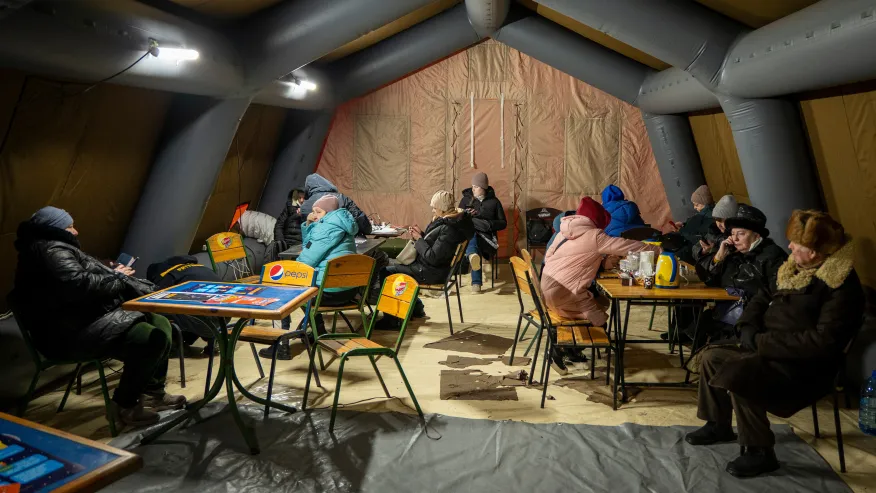
The government has dramatically expanded the number of emergency help points around Kyiv to provide heat and power for residents. More than 1,200 heated safe spaces are currently operating in the capital, alongside 68 additional heating points set up by emergency services and humanitarian partners. These facilities offer temporary refuge for residents whose homes lack heat, providing hot meals, charging stations for electronic devices, and warm spaces where people can spend daylight hours.
Unprecedented Energy Crisis
Energy experts and officials have characterized the current crisis as without parallel in modern history. Oleksandr Kharchenko of Ukraine’s Energy Research Center explained that the capital confronts a dangerous combination of factors: a large centralized heating system, subzero temperatures reaching minus 15 degrees Celsius, and widespread destruction caused by Russian strikes on energy infrastructure.
“There has never been a more difficult energy situation in Kyiv,” Kharchenko told Bihus media in an interview. He noted that attacks on energy facilities at these temperatures in a city dependent on centralized heating are unprecedented globally. The centralized nature of Kyiv’s heating system, a Soviet-era legacy, creates particular vulnerability—damage to key nodes can cascade through the network, affecting thousands of buildings simultaneously.
Deputy Energy Minister Mykola Kolisnyk warned that Russia is “going all in” to destroy Ukraine’s energy system, launching attacks with intervals of no more than five days. “We see that the enemy is going all-in, spending all its forces and means to destroy the energy system,” Kolisnyk said, noting the unprecedented intensity and frequency of strikes designed to prevent meaningful repair work.
To prevent irreversible damage to pipelines in freezing temperatures forecast to reach minus 23 to minus 25 degrees Celsius, utility services were forced to drain water from heating systems in most homes. This technical necessity in emergency cold weather conditions means heat restoration will only be possible after full repair work is completed and when temperatures moderate—a particularly cruel reality for residents facing the coldest winter nights.
The broader impact extends well beyond heating systems. Supermarket chains Novus and Silpo announced closures of some stores in the capital due to the energy crisis, while Kyiv authorities replaced the city’s electric tram service with buses as power shortages made maintaining streetcar operations impossible. These cascading effects demonstrate how energy infrastructure damage ripples through every aspect of urban life.
DTEK’s Permanent Crisis Mode
DTEK, Ukraine’s largest private energy provider, operates in what its CEO Maxim Timchenko describes as permanent crisis mode due to Russian attacks on the grid. The company, which currently provides power for approximately 5.6 million Ukrainians, has faced relentless targeting since the full-scale invasion began.
Timchenko, who has led DTEK since its founding in 2005, told the BBC that Russia has repeatedly targeted the company’s energy grid with “waves of drones, cruise and ballistic missiles.” The intensity of strikes has been so frequent, he explained, that “we just don’t have time to recover” between attacks. This continuous assault prevents the systematic rebuilding required to restore full capacity, trapping the energy sector in a cycle of partial repairs and renewed damage.
At its worst point in summer 2024, approximately 90 percent of DTEK’s thermal power generation capacity was destroyed by Russian missiles and drones. While the company has managed to restore some capacity during brief respites in the attacks, facilities close to the front line continue to sustain the majority of ongoing damage. The uncertainty about exactly how much capacity has been restored remains a closely guarded secret to avoid providing Moscow with insight into the efficacy of its campaign.
The company’s experience illustrates the broader challenge facing Ukraine’s energy sector. Over the past three years, heat generation capacity nationwide has decreased by 40 percent according to reports from Ukraine’s Accounting Chamber for 2024. The reports documented that even primary repair and restoration work on critical facilities is being carried out with an average 18-month delay from scheduled timelines.
DTEK’s response has included pivoting toward renewable energy as a strategic priority, not merely for environmental reasons but because wind and solar installations prove much harder to destroy than centralized thermal power plants. The company has continued building new renewable energy and battery storage projects even within 70 miles of the front line, demonstrating remarkable determination to diversify Ukraine’s energy mix under extreme duress.
Political Tensions and Peace Negotiations
The energy emergency unfolds against a backdrop of complex diplomatic maneuvering around potential peace negotiations. U.S. President Donald Trump, who has positioned himself as a mediator seeking to end the nearly four-year conflict, made striking comments to Reuters on Wednesday suggesting Ukraine bears primary responsibility for stalled peace talks.
When asked why negotiations have not yet resolved the conflict, Trump responded simply: “Zelensky.” He told the news agency that Ukraine “is less ready to make a deal” than Russian President Vladimir Putin, an assessment that drew immediate approval from the Kremlin. Spokesman Dmitry Peskov told reporters: “President Putin and the Russian side remain open [to talks].”
The American and Ukrainian leaders are both expected to attend the World Economic Forum in Switzerland next week, though Trump suggested no formal plans have been arranged for them to meet. The absence of scheduled bilateral discussions raises questions about the immediate prospects for meaningful diplomatic progress, even as the humanitarian crisis on the ground intensifies.
Trump’s characterization of the negotiating positions sparked controversy, particularly given the timing as Ukrainian civilians suffer through massive infrastructure attacks and life-threatening cold. Critics note that Russia’s continued massive strikes on civilian infrastructure—which violate international humanitarian law—demonstrate Moscow’s strategy of using winter as a weapon rather than genuine interest in peace negotiations.
One decision can change your entire career. Take that step with our Online courses in ACCA, HESI A2, ATI TEAS 7, HESI EXIT, NCLEX-RN, NCLEX-PN, and Financial Literacy. Join Serrari Ed and start building your brighter future today.
Political Friction Within Ukraine
The energy crisis has also exposed political tensions within Ukraine’s leadership. President Zelensky publicly criticized Kyiv Mayor Vitali Klitschko, a frequent political rival, for what he characterized as insufficient preparation and response to the infrastructure attacks. “Little was done in the capital,” Zelensky said in his regular video address. “In recent days I have seen little intensity [of work] – and this must change now. Decisions are required.”
Klitschko pushed back sharply against the criticism, dismissing Zelensky’s remarks as baseless and insulting to thousands of municipal workers laboring around the clock to keep the city functioning. The mayor noted that heating had been restored to almost all affected buildings and emphasized that support centers are operating 24 hours a day to assist residents.
The public clash reflects longstanding political tensions between the two leaders, who have regularly clashed over governance issues throughout the war. Klitschko has previously criticized what he describes as Zelensky’s increasingly authoritarian approach to governance, while the president has questioned the efficiency of Kyiv’s municipal administration compared to other Ukrainian cities.
Analysts note that such political infighting, while perhaps inevitable in any democratic system, risks undermining public confidence during a national crisis. The spectacle of Ukrainian leaders trading accusations while citizens endure life-threatening conditions due to Russian attacks can demoralize the public and potentially complicate unified national messaging to international partners.
Regional Impact Beyond Kyiv
While Kyiv has received significant attention due to its status as the capital, Russian attacks on energy infrastructure have not been limited to the city. Last week, Ukrainian officials reported that more than one million people in south-eastern Ukraine spent hours without heating and water supplies as a result of Russian air strikes on regional energy facilities.
The January 13 follow-up attack targeted energy infrastructure in Kharkiv, Zaporizhzhia, Odesa, Sumy, and Donetsk oblasts, demonstrating Russia’s systematic campaign to degrade Ukraine’s energy grid across the entire country rather than focusing on a single region. This geographic dispersal of attacks forces Ukraine to spread limited air defense resources across vast territory, making comprehensive protection impossible.
In western Ukraine near the Polish border, Russia used its Oreshnik intermediate-range ballistic missile—only the second time this nuclear-capable weapon has been deployed in the conflict—to strike energy and residential facilities in the Lviv region. The use of such a sophisticated and powerful missile so close to NATO territory represents what analysts characterize as an attempt to intimidate Ukraine’s European allies from providing continued support.
Humanitarian Response and International Aid
The United Nations and humanitarian partners are mobilizing a significant response to the crisis. According to UN estimates, 10.8 million people in Ukraine currently need humanitarian assistance. On Tuesday, the UN and partners launched a $2.31 billion humanitarian appeal for 2026 to support 4.12 million people facing the most severe needs, with energy access and winter preparedness representing major priorities.
Civilians continue to flee frontline areas under dangerous conditions, particularly from the Donetsk region where Russian ground offensives compound the challenges created by infrastructure attacks. Many arrive in safer areas requiring immediate shelter, medical care, and winter assistance including warm clothing, blankets, and access to heated spaces.
International partners have provided substantial equipment to help Ukraine repair damaged infrastructure and protect critical facilities. European nations have supplied backup generators, transformers, and other electrical equipment, while also accepting increased electricity exports to Ukraine to compensate for reduced domestic generation capacity. However, the pace of infrastructure destruction continues to outstrip repair efforts.
Humanitarian access to affected areas remains constrained by ongoing combat operations and the danger posed by unexploded ordnance around damaged facilities. Repair crews working to restore power and heating face significant risks from potential follow-up strikes, as Russia has demonstrated willingness to target emergency responders attempting to assist wounded civilians or repair critical infrastructure.
Resilience and Adaptation
Despite the severe challenges, Ukrainian resilience continues to manifest in remarkable ways. Social media posts document residents improvising heating solutions using candles and makeshift brick stoves, creating warm microclimates within otherwise freezing apartments. Others share images of people making coffee and heading to work despite lacking electricity or heating, determined to maintain normalcy amid extraordinary hardship.
Community networks have activated to support vulnerable populations, with neighbors checking on elderly residents and families with young children to ensure they have access to warm spaces and hot meals. Volunteer organizations have mobilized to provide transportation to heating centers for those unable to walk long distances in extreme cold, while restaurants and cafes with backup generators have opened their doors to residents seeking refuge from freezing homes.
The “invincibility centers”—humanitarian facilities established across Ukraine to provide emergency services during power outages—have become crucial lifelines for communities facing prolonged blackouts. These centers offer not only heat and electricity for charging devices but also psychological support and social connection during what can be isolating and demoralizing experiences.
Educational institutions have adapted schedules to account for power availability, with some schools shifting to remote learning during peak blackout periods while others have installed generators to maintain in-person instruction. Universities have modified examination schedules and adjusted deadlines to accommodate students struggling with unreliable electricity and internet access.
Long-term Energy Security Challenges
The current crisis underscores fundamental questions about Ukraine’s energy future and the need for comprehensive transformation of the sector. The centralized, Soviet-era infrastructure that still provides the backbone of Ukraine’s energy system has proven catastrophically vulnerable to targeted attacks, creating existential risks when critical nodes are damaged or destroyed.
Energy experts and government officials increasingly recognize that post-war reconstruction must prioritize decentralized, resilient energy systems that can withstand attacks and maintain service even when portions of the network are damaged. This vision includes expanded renewable energy generation, distributed battery storage, microgrid development, and enhanced interconnections with European energy networks.
The European Union has signaled willingness to support Ukraine’s energy transition as part of broader reconstruction efforts. European Commission President Ursula von der Leyen announced plans for 60 billion euros to be earmarked for defense and 30 billion euros for budget support, with energy security representing a significant component of the assistance package.
However, the immediate challenge of surviving the current winter and maintaining basic services for millions of people must take precedence over long-term planning. The state of emergency declaration provides legal authority to expedite critical decisions and procure necessary equipment without lengthy bureaucratic procedures, but the fundamental constraint remains the limited availability of specialized equipment and the time required for complex repairs under combat conditions.
Strategic Implications
Russia’s systematic campaign against Ukraine’s energy infrastructure represents a deliberate strategy to inflict maximum civilian suffering during winter months, creating internal pressure on the Ukrainian government to accept unfavorable peace terms. By depriving millions of heat, light, and water during the coldest season, Moscow aims to break civilian morale and undermine international support by creating a humanitarian catastrophe.
The strategy has precedents in Russia’s approach to previous conflicts, including its campaign in Syria where systematic destruction of infrastructure and essential services formed a core component of the military strategy. However, Ukraine’s significantly stronger air defenses and larger territory create different dynamics, preventing the total collapse that Russia has sought while still inflicting substantial damage.
The energy crisis also complicates Ukraine’s military operations, as the diversion of air defense resources to protect civilian infrastructure inevitably reduces coverage for military installations and combat zones. This creates difficult strategic choices about prioritizing protection for power plants versus ammunition depots, command centers, or troop concentrations.
International observers note that Russia’s willingness to conduct massive strikes on civilian infrastructure even while discussing potential peace negotiations demonstrates the fundamental bad faith underlying Moscow’s diplomatic posturing. The continued attacks suggest Russia seeks not a negotiated settlement but rather Ukraine’s capitulation under duress—a distinction with profound implications for how Western nations should approach mediation efforts.
Looking Forward
As Ukraine enters what may prove to be the most difficult winter of the entire war, the state of emergency declaration represents both acknowledgment of the severity of the crisis and determination to mobilize all available resources for response. The coordination headquarters established for Kyiv, the expedited procurement processes, and the increased electricity imports all aim to prevent the catastrophic scenario of complete grid collapse during sustained extreme cold.
However, success depends on variables largely outside Ukrainian control, including the intensity and frequency of future Russian attacks, weather conditions through the remainder of winter, and the speed with which international partners can deliver critical equipment and support. The resilience of Ukraine’s energy workers, emergency responders, and general population will be tested as never before in coming weeks.
The crisis also highlights the interconnected nature of modern warfare, where attacks on civilian infrastructure can prove as strategically significant as conventional military operations. Russia’s ability to project power through long-range missiles and drones while remaining relatively immune to similar Ukrainian attacks creates asymmetric vulnerabilities that complicate Ukraine’s defensive calculations.
For the millions of Ukrainians enduring this winter without reliable heat, electricity, or water, the state of emergency brings some hope that accelerated response measures may provide relief. But the fundamental reality remains stark: as long as Russia continues to target civilian energy infrastructure with massive missile and drone barrages, Ukraine will struggle to maintain basic services for its population during the coldest months of the year.
The international community faces critical decisions about how to respond to what Ukrainian and UN officials characterize as systematic violations of international humanitarian law. Whether increased air defense capabilities, tougher sanctions on Russia, or other measures can alter the strategic calculus remains to be seen. What seems certain is that Ukrainian civilians will continue to pay a heavy price for Russia’s weaponization of winter through deliberate destruction of the infrastructure that makes modern life possible.
Ready to take your career to the next level? Join our Online courses: ACCA, HESI A2, ATI TEAS 7 , HESI EXIT , NCLEX – RN and NCLEX – PN, Financial Literacy!🌟 Dive into a world of opportunities and empower yourself for success. Explore more at Serrari Ed and start your exciting journey today! ✨
Track GDP, Inflation and Central Bank rates for top African markets with Serrari’s comparator tool.
See today’s Treasury bonds and Money market funds movement across financial service providers in Kenya, using Serrari’s comparator tools.
photo source : Google
By: Montel Kamau
Serrari Financial Analyst
16th January, 2026