The United Arab Emirates is positioning itself for another year of impressive economic expansion, with government projections indicating that the national economy will grow by more than 5% during 2026, while non-oil sectors are expected to achieve growth exceeding 5.5%. This performance underscores the nation’s successful economic diversification strategy and reinforces its position as one of the fastest-growing economies globally.
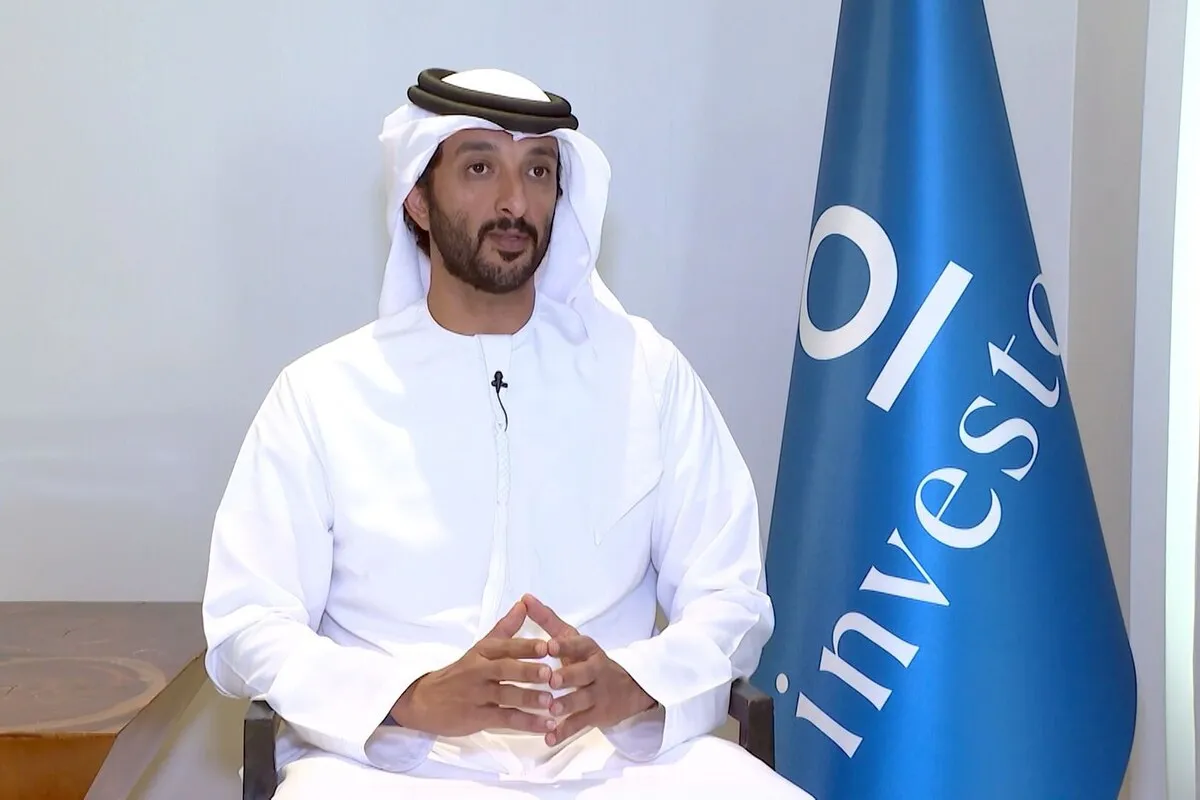
Minister of Economy and Tourism Abdulla bin Touq Al Marri made these projections on February 12, 2026, during the Investopia Partners event held in Abu Dhabi, emphasizing that the UAE economy continues to achieve strong and accelerated growth, supported by clear leadership vision, flexible and advanced legislation, and a globally competitive business environment. The minister’s statements to the Emirates News Agency (WAM) highlighted that non-oil sectors are projected to account for 78% of the country’s GDP, reflecting both the resilience of the national economy and the diversity of its growth drivers.
Build the future you deserve. Get started with our top-tier Online courses: ACCA, HESI A2, ATI TEAS 7, HESI EXIT, NCLEX-RN, NCLEX-PN, and Financial Literacy. Let Serrari Ed guide your path to success. Enroll today.
International Institutions Validate UAE’s Economic Strength
The UAE’s growth trajectory has received validation from multiple international financial institutions. The World Bank forecasts the UAE economy to expand by 5% in 2026, rising to 5.1% in 2027, according to its latest Global Economic Prospects report. This projection significantly outpaces the anticipated global growth rate of 2.6% in 2026, positioning the UAE as a standout performer in an otherwise subdued global economic environment.
Standard Chartered has been even more bullish, recently upgrading its forecast for UAE GDP growth in 2026 to 5%, up from a previous estimate of 4%. The bank cited sustained momentum driven by robust trade activity, ample banking-sector liquidity, and continued strength in non-oil industries as key factors supporting this upgraded outlook.
According to Rola Abu Manneh, CEO of UAE, Middle East and Pakistan at Standard Chartered, “The UAE continues to stand out globally, with the economy on course to achieve potential-level growth for a second consecutive year in 2026.” The country’s growth is forecast to significantly outpace major economies including China (4.6%), the United States (2.3%), and the euro area (1.1%).
Non-Oil Sectors: The Engine of Economic Transformation
The remarkable performance of the UAE’s non-oil sectors represents the culmination of decades of strategic diversification efforts. The non-oil economy started 2026 on particularly strong footing, with the seasonally adjusted S&P Global UAE Purchasing Managers’ Index climbing to 54.9 in January—the highest level in 11 months. This robust reading indicates sharp improvement in the health of the non-oil private sector, with new business marking substantial increases.
The volume of sales at non-oil businesses increased at the fastest level recorded in 22 months, demonstrating what industry analysts describe as “a solid turnaround in the pace of growth since the middle of last year.” Firms surveyed attributed the jump in business activity to stimulated economic conditions in sectors such as real estate and technology, alongside rising levels of domestic client demand and positive reactions to new products and services.
According to estimates from the UAE Central Bank, the Emirates’ economy grew 5% in 2025, driven by 4.9% growth in the non-oil sector and 5.4% growth in hydrocarbons. Growth is projected to accelerate to 5.2% in 2026, driven by stronger expansion in both hydrocarbon and non-oil sectors.
David Owen, senior economist at S&P Global Market Intelligence, noted that “UAE’s non-oil economy started the year on a solid footing, as new orders increased steeply, prompting firms to lift output and sharply expand their purchases.” The improving economic conditions are also reflecting in purchasing data, with input buying across the non-oil sector expanding at the sharpest rate in six-and-a-half years in January as businesses stockpiled to meet their rising order book requirements.
Financial Sector Leads the Charge
The UAE’s financial sector is expanding across all dimensions. Banks are exceptionally liquid, with deposit growth outpacing loan growth in 2025, giving UAE banks the lowest loan-to-deposit ratio in the Gulf Cooperation Council and substantial capacity to lend. Private-sector credit was growing at approximately 9% year-on-year by mid-2025, a clear sign of strong business confidence and robust demand for financing.
In 2026, local banks are positioned to increase lending not only domestically—supporting small and medium-sized enterprises, consumers, and project finance—but also across borders. With UAE interbank rates lower than some neighboring countries, banks see opportunities to fund projects in markets like Saudi Arabia, further expanding their regional footprint.
Beyond traditional banking, Dubai is solidifying its status as a comprehensive financial hub. The emirate’s stock markets and the Dubai International Financial Centre have attracted record listings and fund inflows, while new regulations for fintech, digital assets, and venture capital are spurring innovation. Insurance and asset management are also emerging as growth areas as the population and corporate activities continue to expand.
Business Formation Reaches New Heights
One of the most striking indicators of the UAE’s economic vitality is the explosive growth in business formation. Minister bin Touq highlighted the significant increase in the number of companies registered in the national economic register, which surged from around 650,000 companies five years ago to more than 1.45 million at present. This represents growth of 118.7% compared to the end of the first half of 2021.
Approximately 250,000 new companies were established in 2025 alone, underscoring the country’s attractiveness to businesses and investments from around the world. The UAE has attracted around 760,000 companies since the issuance of the Commercial Companies Law in September 2021 through the end of 2025. Minister bin Touq expressed expectations that the number of companies will reach two million by 2031, demonstrating the government’s confidence in continued strong business formation.
Small and medium-sized enterprises owned by UAE nationals have grown by 63% over the past five years, reflecting both the success of entrepreneurship promotion programs and the increasing sophistication of the local business ecosystem. The year 2025 also witnessed the registration of approximately 37,794 national and international trademarks, with trademark registrations increasing by 74% over four years—a clear indicator of the vitality and attractiveness of the business environment for investment.
Legislative Reforms Enhance Competitiveness
The UAE’s economic success is underpinned by continuous legislative innovation. Minister bin Touq explained that the positive economic performance is driven by the country’s clear strategic vision and the continuous updating of economic legislation and policies. Over the past years, more than 40 laws and regulations governing the business ecosystem have been updated, contributing to facilitating business operations and enhancing the competitiveness of the investment environment.
One of the most significant recent reforms is the Commercial Companies Law amendments introduced under Federal Decree-Law No. (20) of 2025, which took effect on January 1, 2026. These amendments are designed to simplify how companies operate, increase corporate flexibility, and embed governance tools familiar to businesses accustomed to international best practices.
The amendments introduce several groundbreaking provisions. For the first time, mainland limited liability companies can now issue multiple classes of shares with differentiated rights, including variations in voting, dividends, redemption, or liquidation priorities. This reform brings venture capital-style structuring into the UAE mainland environment, supporting investors, startups, family businesses, and growth-stage companies.
Perhaps most significantly, the law now allows companies to transfer their registration between emirates, free zones, and financial free zones while maintaining the company’s original legal personality, contracts, and obligations, without the need for re-establishment or liquidation. This unprecedented flexibility enables businesses to adapt their structures as they grow and evolve, without the traditional barriers that would have required complete corporate restructuring.
The total number of company registrations and licenses in the UAE is expected to increase by 10 to 15% within the first year of implementing these new amendments, according to government projections. This anticipated surge reflects the market’s positive reception of the reforms and confidence in the UAE’s commitment to maintaining a business-friendly environment.
Tourism Sector Shows Exceptional Growth
The UAE tourism sector has delivered robust and distinguished performance, with its contribution to the national GDP rising dramatically to 15% in 2025, compared to just 6% in 2021. This represents a total value of AED 291 billion, reflecting exceptional growth of nearly 216% over four years.
The tourism expansion has been supported by strategic investments in luxury hospitality, cultural events, and global sporting activities. Emirates and Etihad Airlines sustain a vast tourism network, while visa reforms such as the Golden Visa and multiple-entry permits have made travel easier and more attractive for international visitors.
Dubai, Abu Dhabi, and Ras Al Khaimah continue to attract millions of visitors annually, benefiting from world-class infrastructure and a diverse array of attractions. The tourism sector’s expansion has also created significant employment opportunities and spurred development in related industries including retail, hospitality, food and beverage, and entertainment.
Trade Activity Accelerates
The UAE’s role as a global trade hub is expected to strengthen further in 2026 due to ongoing shifts in global supply chains. According to Standard Chartered Global Research, the UAE’s foreign trade is projected to reach the $1 trillion milestone by late 2026, with the Asia-UAE corridor accounting for roughly one-third of overall trade volumes.
In 2024, UAE non-oil trade soared nearly 15% to about AED 3 trillion ($817 billion), reinforcing the UAE’s critical role as the central hub connecting Asia, Africa, and Europe. Non-oil exports account for 26.7% of GDP, driven by higher exports of gold and jewelry, while re-exports occupy a substantial part of trade activity, reaching 31.7% of GDP.
The UAE’s strategic geographic position between major markets, combined with state-of-the-art logistics infrastructure including world-class ports and airports, continues to attract multinational corporations seeking efficient distribution networks for regional and global operations.
One decision can change your entire career. Take that step with our Online courses in ACCA, HESI A2, ATI TEAS 7, HESI EXIT, NCLEX-RN, NCLEX-PN, and Financial Literacy. Join Serrari Ed and start building your brighter future today.
Regional Context and GCC Performance
At the regional level, the Gulf Cooperation Council states are projected to see growth rise to 4.4% in 2026 and 4.6% in 2027, according to World Bank projections. The UAE’s performance significantly exceeds the regional average, demonstrating the effectiveness of its diversification strategy compared to more oil-dependent neighbors.
According to the ICAEW Economic Insight Q4 2025 report produced by Oxford Economics, Saudi Arabia and the UAE are expected to anchor the Gulf region’s economic expansion in 2026, powered by robust private-sector activity, resilient domestic demand, and renewed investment momentum. The ICAEW forecasts UAE GDP to grow 5.6% in 2026 as non-oil sectors continue to expand, with tourism, trade, and financial services remaining central growth pillars.
Growth in the broader Middle East and North Africa, Afghanistan and Pakistan region is expected to reach 3.6% in 2026, improving further to 3.9% in 2027, according to World Bank estimates. This regional context underscores the UAE’s position as an economic leader and growth driver for the wider region.
International Recognition and Leadership Vision
The UAE’s economic achievements have garnered praise from international institutions. IMF Managing Director Kristalina Georgieva recently commended the UAE for its impressive diversification progress, noting that 80% of the economy now benefits from non-oil performance. She particularly highlighted the UAE’s leadership in embracing artificial intelligence and digital transformation.
“What we see also very impressive in this region is how the move towards artificial intelligence is being embraced. And I could say the UAE is now taking the lead,” Georgieva stated during recent remarks. This recognition from the IMF’s chief economist validates the UAE’s strategic approach to economic development and its focus on emerging technologies and innovation-driven growth.
Platform for Global Investment: Investopia 2026
The timing of Minister bin Touq’s economic projections at the Investopia Partners event was strategic, as the event announced the launch of Investopia 2026’s fifth flagship edition, scheduled to take place in Abu Dhabi from March 31 to April 2, 2026, under the theme “Creating Opportunities in a New Economic Era.”
The event also revealed Investopia’s strategic partners for 2026, which include major organizations such as EDGE Group, Abu Dhabi Commercial Bank, Standard Chartered, Hub71, PureHealth, and Dubai Silicon Oasis, among others. Investopia 2026 will focus on three main tracks: entrepreneurship and startups; the new economy and partnerships; and global capital and its flows.
The event featured a ministerial panel on Investopia’s new vision and strategic directions, with the session attended by Abdulla bin Touq Al Marri, Minister of Economy and Tourism and Co-Chair of Investopia’s Board of Trustees, and Mohamed Hassan Alsuwaidi, Minister of Investment and newly appointed Co-Chair of Investopia’s Board of Trustees.
Family Businesses Find New Support
The leadership’s directives to enhance ease of doing business and adopt flexible policies and legislation, particularly the Commercial Companies Law, have reinforced the UAE’s position as a global platform for family businesses that choose the country as a main headquarters to manage their investments and operations worldwide.
The new amendments allow multiple classes of shares in limited liability companies, giving families more flexibility to separate control from financial interest. This makes it easier to reward active family members with decision-making authority while still protecting the economic rights of others, reducing the risk of internal paralysis that often plagues family-owned businesses during succession transitions.
Manufacturing and Industrial Development
The UAE’s Industrial Strategy 2031, also known as Operation 300bn, aims to transform the UAE into a global manufacturing hub by investing AED 300 billion ($80 billion) by 2031. The strategy focuses on strategically identified sectors such as advanced manufacturing, technology, pharmaceuticals, defense, and aerospace.
If successful, this initiative would nearly double the manufacturing sector’s contribution to GDP from 7% to 13%, comparable to the industrial sectors of the United Kingdom or France. Manufacturing currently accounts for approximately 7-8% of GDP, driven by heavy industries such as metal processing, aluminum, construction materials, and petrochemicals, benefiting from the availability of competitively priced energy.
Labor Market Dynamics
Modeled estimates from the International Labour Organization suggest that the employment-to-population ratio will edge up to 76.2% in 2025, reflecting steady job growth, particularly among women. The unemployment rate is expected to remain low at approximately 2.1% in 2025, though women are likely to experience unemployment rates about three times higher than men.
The robust business formation and economic growth are creating substantial employment opportunities across various sectors, from high-value-added services in finance and technology to traditional sectors such as retail, hospitality, and construction.
Fiscal Position and External Accounts
The UAE maintains a strong fiscal position, with the IMF projecting GDP growth of about 4.8% in 2025 and a solid 5.0% in 2026. This strong performance contrasts sharply with some regional peers, with PwC Middle East projecting Saudi Arabia and Bahrain to run fiscal deficits of –3.7% and –9.9% of GDP, respectively, in 2026.
The UAE’s external position remains robust, with the annual current account balance estimated at 8.8% of GDP in 2024 and projected at 8.2% in 2025. Oil revenue, along with a rapidly growing real estate and tourism sector, supports the central bank in maintaining foreign reserves above seven months of imports.
Looking Ahead: Sustainable Growth Trajectory
As the UAE moves through 2026, the economic outlook remains decidedly positive. The combination of strong non-oil sector expansion, continued business formation, strategic legislative reforms, and supportive government policies creates a solid foundation for sustained economic growth.
The country’s success in diversifying away from oil dependence while maintaining fiscal strength demonstrates the effectiveness of its long-term economic strategy. With non-oil sectors now accounting for approximately 78% of GDP and projected to maintain robust growth, the UAE has successfully transformed its economic structure to be more resilient and globally competitive.
The projected 5% GDP growth and 5.5% non-oil sector expansion for 2026 are not merely statistical targets but reflections of fundamental economic transformation. From the explosive growth in business formation to the sophistication of the financial sector, from the expansion of tourism to the development of advanced manufacturing capabilities, the UAE is demonstrating that economic diversification can be achieved while maintaining high growth rates.
Minister bin Touq’s remarks at the Investopia Partners event encapsulate the UAE’s economic philosophy: “The UAE economy continues to achieve strong and accelerated growth, supported by a clear leadership vision, flexible and advanced legislation, and a globally competitive business environment.” This commitment to continuous improvement, legislative innovation, and global competitiveness positions the UAE not just for success in 2026, but for sustained prosperity in the decades ahead.
As international institutions validate these projections and global businesses continue to establish operations in the Emirates, the UAE’s trajectory as one of the world’s fastest-growing and most dynamic economies appears firmly established. The combination of strategic location, world-class infrastructure, business-friendly policies, and forward-thinking leadership creates an environment where businesses can thrive and innovation can flourish—ensuring that the UAE remains at the forefront of global economic development.
Ready to take your career to the next level? Join our Online courses: ACCA, HESI A2, ATI TEAS 7 , HESI EXIT , NCLEX – RN and NCLEX – PN, Financial Literacy!🌟 Dive into a world of opportunities and empower yourself for success. Explore more at Serrari Ed and start your exciting journey today! ✨
Track GDP, Inflation and Central Bank rates for top African markets with Serrari’s comparator tool.
See today’s Treasury bonds and Money market funds movement across financial service providers in Kenya, using Serrari’s comparator tools.
photo source: Google
By: Montel Kamau
Serrari Financial Analyst
13th February, 2026