










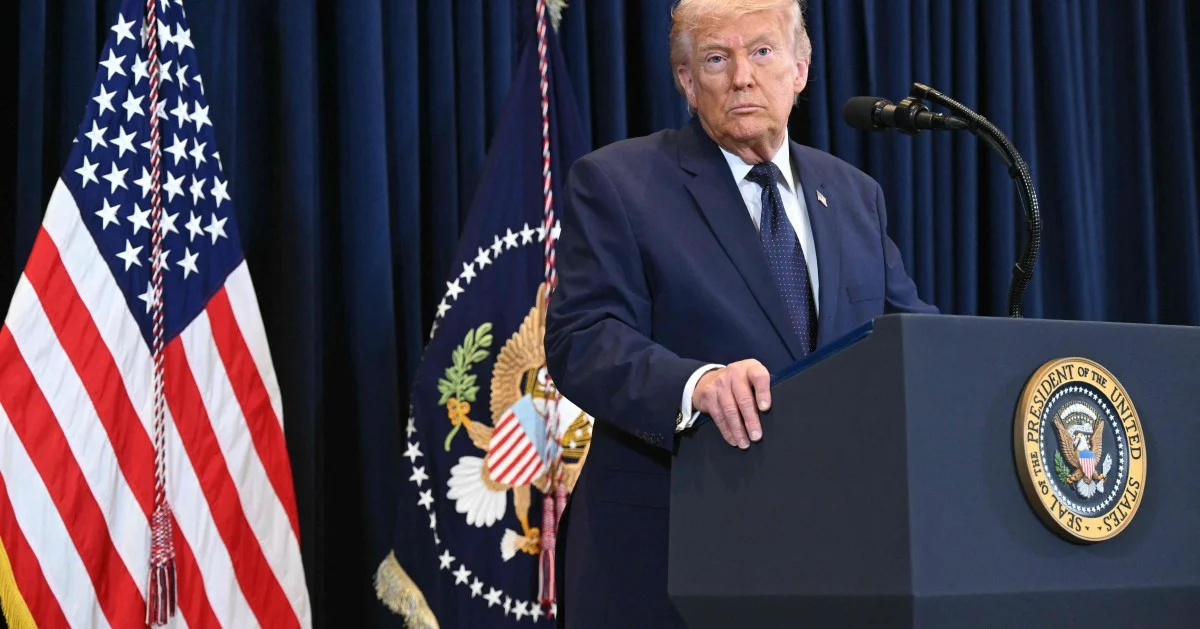
The United States has dramatically escalated its global trade offensive, launching a sweeping set of Section 301 investigations into 60 economies — including China, the European Union, India, Mexico, Canada, and the United Kingdom — over their failure to adequately ban imports of goods produced with forced labor. The move, announced Thursday by U.S. Trade Representative Jamieson Greer, marks one of the most expansive trade investigations in American history and signals Washington’s determination to rebuild its tariff strategy by other means following a landmark Supreme Court defeat.
The probes arrive just three weeks after the Supreme Court’s 6-3 ruling in Learning Resources, Inc. v. Trump struck down the administration’s sweeping “reciprocal tariffs” as unconstitutional — a decision that sent trade lawyers, foreign governments, and import-dependent businesses scrambling to assess what comes next.
Markets move fast; don’t get left behind. We’ve paired the Serrari Group Market Index with a curated Marketplace and a comprehensive Financial Literacy Course to ensure you have the data—and the skills—to act on it.
A One-Two Punch on Trade
Thursday’s action was the second major Section 301 announcement in as many days. On Wednesday, USTR Greer launched a separate set of investigations into 16 economies over what it called “structural excess capacity and production in manufacturing sectors” — essentially, accusations that trading partners are flooding global markets with government-subsidized overproduction in industries like steel, aluminum, semiconductors, solar modules, electric vehicles, and chemicals.
That first probe targeted China, the European Union, Singapore, Switzerland, Norway, Indonesia, Malaysia, Cambodia, Thailand, South Korea, Vietnam, Taiwan, Bangladesh, Mexico, Japan, and India. The USTR’s official notice singled out the automotive sectors in China and Japan, flagging a growing number of companies unable to cover operational costs. It also called out China’s EV giant BYD for “aggressively expanding” overseas manufacturing in countries including Hungary, Brazil, Thailand, and Turkey, while noting that European automotive plants were running at only 55% of capacity.
Thursday’s forced labor probes extended the list considerably further — to 60 economies — adding major partners such as Canada, the United Kingdom, Brazil, Russia, and Saudi Arabia. The full list, published by the USTR, spans countries ranging from Algeria, Angola, and Argentina to Vietnam, the UAE, and Taiwan.
Section 301: The Legal Cannon Washington Is Firing
Section 301 of the Trade Act of 1974 is one of the most powerful tools in the U.S. trade arsenal. It authorizes the USTR to investigate foreign governments’ acts, policies, or practices deemed “unreasonable,” “unjustifiable,” or “discriminatory” when they burden or restrict U.S. commerce — and to respond with tariffs, import restrictions, or withdrawal of trade concessions, all without requiring a congressional vote.
Critically, the law survived previous legal challenges during Trump’s first term, when it was used to justify tariffs of approximately 25% on a wide range of Chinese goods. That legal robustness makes it a far more durable instrument than the International Emergency Economic Powers Act (IEEPA), which the Supreme Court unanimously declared does not grant the president the authority to impose tariffs.
The forced labor investigations were launched under Section 301(b), which allows the USTR to self-initiate a probe. Once opened, the office must seek consultations with each targeted government. Written public comments are due by April 15, and public hearings are scheduled from April 28 to May 1, 2026.
After the Supreme Court: Scrambling for New Tariff Authority
The timing and breadth of these investigations cannot be understood outside the context of the February 20 Supreme Court ruling in Learning Resources, Inc. v. Trump. In a 6-3 decision authored by Chief Justice John Roberts, the court held that IEEPA — a 1977 emergency law — does not authorize the president to impose tariffs, since the power to tax imports is explicitly a congressional function under Article I of the Constitution.
The ruling invalidated both the “reciprocal tariffs” announced on “Liberation Day” in April 2025 — which had ranged from 10% for most countries to as high as 34% for China — and the immigration and fentanyl-related tariffs on Canada, China, and Mexico. According to the Tax Foundation, the IEEPA tariffs had raised approximately $160 billion through the date of the ruling and were projected to generate $1.4 trillion over the following decade.
Within hours of the decision, President Trump signed a proclamation imposing a 10% global tariff under Section 122 of the Trade Act of 1974, effective February 24 — and announced his intention to raise it to 15%. However, Section 122 tariffs carry an important restriction: they expire after 150 days unless Congress votes to extend them, placing a deadline squarely in late July 2026, just ahead of the midterm election season.
Treasury Secretary Scott Bessent has publicly stated that combining Section 122, Section 232, and Section 301 tariffs “will result in virtually unchanged tariff revenue in 2026” — a signal that the administration views these new investigations as direct substitutes for the tariffs the court struck down. According to the Brookings Institution, even without IEEPA, the average U.S. effective tariff rate — factoring in Section 232 steel and aluminum duties — stands at 9.1%, its highest level since 1946.
Context is everything. While you follow today’s updates, use the Serrari Market Index and Marketplace to spot emerging shifts. Need to sharpen your edge? Our Financial Literacy Course turns these insights into a professional-grade strategy.
The Forced Labor Dimension: Expanding Beyond Xinjiang
For years, U.S. forced labor enforcement focused primarily on China’s Xinjiang region. The Uyghur Forced Labor Prevention Act (UFLPA), signed into law by President Biden in December 2021 and enforced since June 2022, established a legal presumption that all goods produced in the Xinjiang Uyghur Autonomous Region are made with forced labor unless proven otherwise — effectively banning them unless importers can provide clear and convincing evidence to the contrary.
According to a State Department fact sheet, U.S. Customs and Border Protection enforces the UFLPA’s rebuttable presumption at ports of entry, targeting sectors including cotton, polysilicon, tomatoes, and aluminum — all of which have significant supply chains rooted in the XUAR.
A 2025 CSIS assessment found that while direct imports from Xinjiang had declined sharply, many U.S. companies continued to have exposure to Xinjiang-linked firms deeper in their supply chains — at the second, third, or even fourth tier of business relationships — meaning enforcement gaps remain significant.
The new Section 301 forced labor probes would extend the logic of the UFLPA far beyond China. Greer’s remarks made clear that the administration wants every major trading partner to adopt and actively enforce their own bans on forced-labor goods — a global standard that, as the USTR itself acknowledges, none of the 60 targeted economies has yet fully met.
“For too long, American workers and firms have been forced to compete against foreign producers who may have an artificial cost advantage gained from the scourge of forced labor,” Greer said in a statement released alongside Thursday’s announcement.
Critics Question the Scope and Timing
The sweeping breadth of the investigations has drawn pointed criticism from trade experts and former U.S. officials. Wendy Cutler, vice president at the Asia Society Policy Institute and a former deputy U.S. trade representative, warned that targeting allies alongside known bad actors could undermine the very multilateral coalition Washington needs to confront China’s industrial overcapacity problem — the subject of the Wednesday probes.
“The administration is losing an important opportunity to work with partners to address the real excess capacity problem in the world, which is China,” Cutler said. “By adding more than a dozen countries into an investigation on excess capacity, our partners will be in no mood to work with us.”
Deborah Elms, head of trade policy at the Hinrich Foundation, raised procedural concerns, calling the April 28–May 1 hearing window “unrealistically short” given the number of economies under simultaneous scrutiny. She also challenged the logic of investigating the European Union — which has enacted its own legislative framework prohibiting forced-labor goods — while sparing trading partners with far weaker enforcement records.
The Holland & Knight legal analysis of the post-IEEPA landscape noted that critics of the Section 301 approach might argue that, given statements like Bessent’s on revenue neutrality, the outcome of these investigations is effectively “predetermined” — using the form of a legal investigation to arrive at a tariff conclusion that was decided in advance.
China Diplomacy at Stake
The investigations are particularly fraught given the current diplomatic calendar. Treasury Secretary Bessent is expected to meet with his Chinese counterpart He Lifeng in Paris this weekend — a preparatory session for what is anticipated to be a meeting between President Trump and Chinese President Xi Jinping in Beijing later this month.
China’s foreign ministry spokesperson Guo Jiakun, responding to the Wednesday excess capacity probe, said Beijing opposes “all forms of unilateral tariff measures” and called the overcapacity accusation a “false proposition.” Wang Huiyao, founder of the Center for China and Globalization, a Beijing-aligned think tank, described the timing as sending “the wrong signal” ahead of the summit and called for cooperation rather than unilateral pressure.
Stephen Olson, senior visiting fellow at ISEAS-Yusof Ishak Institute and a former U.S. trade negotiator, offered a more measured assessment. While noting that “China will not view this as good news,” he suggested both sides remain committed to keeping the Trump-Xi summit on track and that the new probes were “unlikely to upset the apple cart.”
What Comes Next
The Section 301 process, once initiated, does not move quickly. After public comment periods and hearings, USTR must analyze whether the identified acts, policies, and practices burden U.S. commerce — a process that typically takes months. If findings go against the targeted economies, the U.S. could impose new tariffs, withdraw trade concessions, or negotiate bilateral deals in which partner governments agree to reform their practices in exchange for relief.
Greer has indicated he aims to conclude the inquiries before the Section 122 tariffs expire in July — a compressed timeline that suggests the administration views these probes as part of an integrated tariff strategy rather than standalone investigations.
The WilmerHale legal analysis of the post-IEEPA environment noted that Section 301 tariffs “stack” on top of existing duties — meaning that if new tariffs emerge from these probes, importers could face layered duties across multiple legal authorities simultaneously.
For businesses with global supply chains, the message from Washington is now unmistakable: the administration’s tariff ambitions did not die with the Supreme Court’s IEEPA ruling. They merely shifted to different statutory ground — ground that, for now, appears to be on firmer legal footing.
Don’t just read the news—navigate it. Track trends with the Serrari Group Market Index, discover your next move in the Serrari Marketplace, and master the “how” with our Financial Literacy Course.
Photo Source: Google
By: Montel Kamau
Serrari Financial Analyst
13th March, 2026
Article, Financial and News Disclaimer
The Value of a Financial Advisor
While this article offers valuable insights, it is essential to recognize that personal finance can be highly complex and unique to each individual. A financial advisor provides professional expertise and personalized guidance to help you make well-informed decisions tailored to your specific circumstances and goals.
Beyond offering knowledge, a financial advisor serves as a trusted partner to help you stay disciplined, avoid common pitfalls, and remain focused on your long-term objectives. Their perspective and experience can complement your own efforts, enhancing your financial well-being and ensuring a more confident approach to managing your finances.
Disclaimer: This article is for informational purposes only and does not constitute financial advice. Readers are encouraged to consult a licensed financial advisor to obtain guidance specific to their financial situation.
Article and News Disclaimer
The information provided on www.serrarigroup.com is for general informational purposes only. While we strive to keep the information up to date and accurate, we make no representations or warranties of any kind, express or implied, about the completeness, accuracy, reliability, suitability, or availability with respect to the website or the information, products, services, or related graphics contained on the website for any purpose. Any reliance you place on such information is therefore strictly at your own risk.
www.serrarigroup.com is not responsible for any errors or omissions, or for the results obtained from the use of this information. All information on the website is provided on an as-is basis, with no guarantee of completeness, accuracy, timeliness, or of the results obtained from the use of this information, and without warranty of any kind, express or implied, including but not limited to warranties of performance, merchantability, and fitness for a particular purpose.
In no event will www.serrarigroup.com be liable to you or anyone else for any decision made or action taken in reliance on the information provided on the website or for any consequential, special, or similar damages, even if advised of the possibility of such damages.
The articles, news, and information presented on www.serrarigroup.com reflect the opinions of the respective authors and contributors and do not necessarily represent the views of the website or its management. Any views or opinions expressed are solely those of the individual authors and do not represent the website's views or opinions as a whole.
The content on www.serrarigroup.com may include links to external websites, which are provided for convenience and informational purposes only. We have no control over the nature, content, and availability of those sites. The inclusion of any links does not necessarily imply a recommendation or endorsement of the views expressed within them.
Every effort is made to keep the website up and running smoothly. However, www.serrarigroup.com takes no responsibility for, and will not be liable for, the website being temporarily unavailable due to technical issues beyond our control.
Please note that laws, regulations, and information can change rapidly, and we advise you to conduct further research and seek professional advice when necessary.
By using www.serrarigroup.com, you agree to this disclaimer and its terms. If you do not agree with this disclaimer, please do not use the website.
www.serrarigroup.com, reserves the right to update, modify, or remove any part of this disclaimer without prior notice. It is your responsibility to review this disclaimer periodically for changes.
Serrari Group 2025