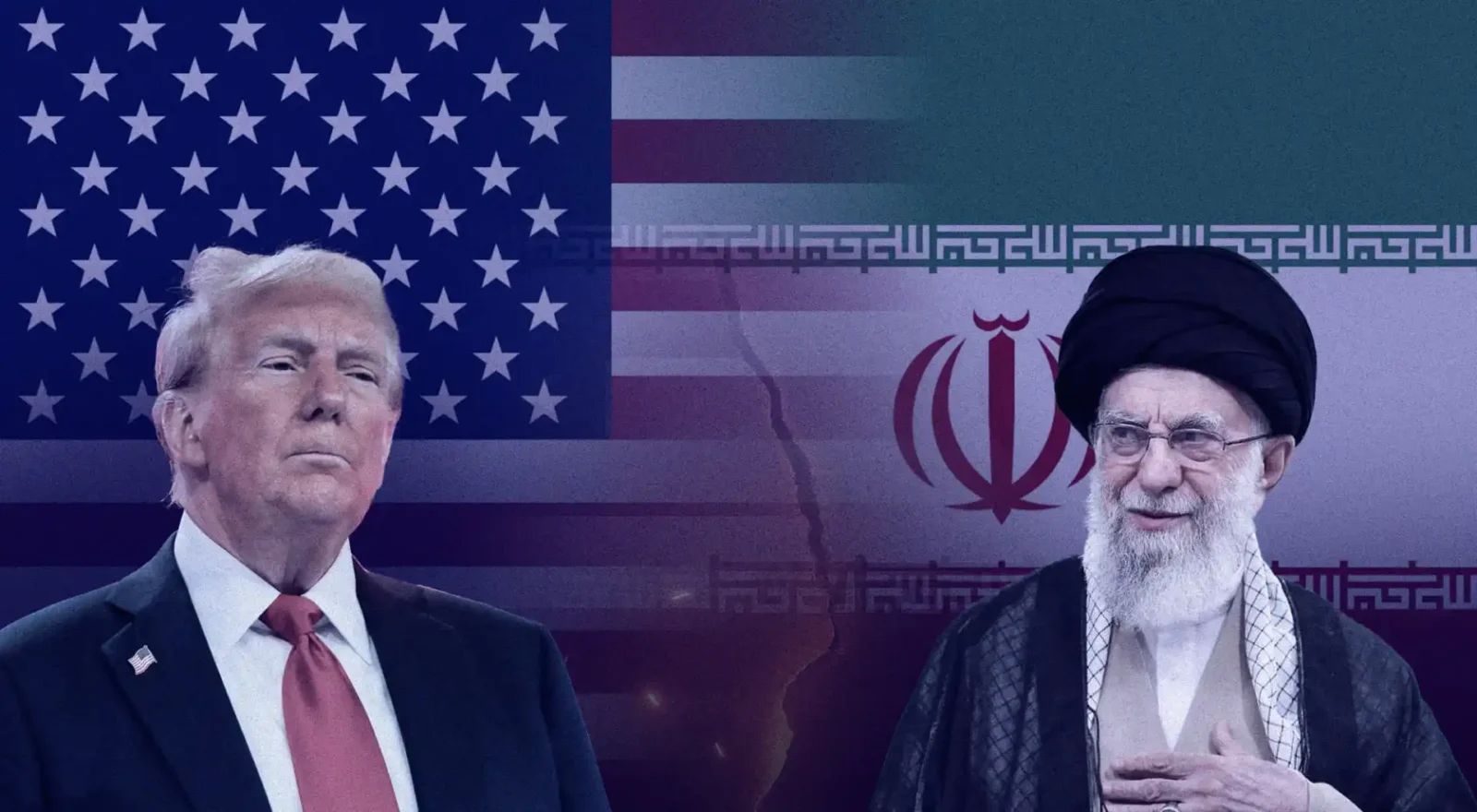
United States President Donald Trump announced Monday that any country engaging in commercial activity with Iran will face an immediate 25 percent tariff on all trade with the United States, dramatically escalating Washington’s economic pressure campaign against Tehran amid the largest anti-government demonstrations to convulse the Islamic Republic in years.
“Effective immediately, any Country doing business with the Islamic Republic of Iran will pay a Tariff of 25% on any and all business being done with the United States of America,” Trump declared on Truth Social on Monday. “This Order is final and conclusive,” he added, offering no additional details regarding implementation timelines, legal authority, or which specific trading relationships would trigger the levies.
The announcement represents the first direct economic action Trump has taken against Iran in response to a violent crackdown on protesters that U.S.-based human rights organization HRANA has documented has resulted in verified deaths of 599 people—510 protesters and 89 security personnel—since demonstrations erupted on December 28, 2025. The protests, which initially focused on devastating economic conditions including a currency collapse that saw the rial lose more than 40 percent of its value, have evolved into direct challenges to Iran’s clerical establishment and represent the most serious threat to the regime since the Islamic Revolution in 1979.
Build the future you deserve. Get started with our top-tier Online courses: ACCA, HESI A2, ATI TEAS 7, HESI EXIT, NCLEX-RN, NCLEX-PN, and Financial Literacy. Let Serrari Ed guide your path to success. Enroll today.
Major Global Economies Face Potential Tariff Exposure
The tariff directive potentially affects some of the world’s largest economies, as Iran maintains extensive trading relationships across multiple continents despite decades of international sanctions. China, Iran’s largest trading partner, imported approximately $22.4 billion in goods from Iran as of 2022 according to World Bank figures, with Chinese customs data showing $6.2 billion in exports to Iran and $2.85 billion in imports during the first eleven months of 2025 alone.
China’s commercial relationship with Iran extends far beyond publicly disclosed figures, particularly in petroleum transactions. Analysts estimate that China has accounted for more than 90 percent of Iran’s oil trade in recent years, with crude oil purchased through intermediaries to circumvent U.S. sanctions designed to choke Tehran’s petroleum industry. A CBS News investigation revealed last year that China secretly imports Iranian oil despite tight American sanctions specifically targeting this sector.
The tariff threat also extends to several U.S. allies and major trading partners. India conducted $1.68 billion in bilateral trade with Iran during fiscal year 2024-2025 according to India’s Union commerce ministry figures. The United Arab Emirates, a key American security partner in the Gulf region hosting thousands of U.S. military personnel, imported around $18 billion in goods from Iran in 2022. Additional major Iranian trading partners include Turkey, Brazil, Russia, and Iraq—economies that collectively represent trillions of dollars in global commerce.
Trump did not define what qualifies as “doing business” with Iran, leaving businesses, governments, and trade analysts uncertain about the precise scope and application of the tariff policy. The White House declined to provide additional information when approached by multiple media outlets, referring inquiries to the president’s social media post. No official documentation appeared on the White House website, nor did the administration specify the legal authority Trump would invoke to impose the tariffs or clarify whether they would apply uniformly to all of Iran’s 147 trading partners as recorded in World Bank’s most recent data from 2022.
Legal Uncertainty Compounds Implementation Questions
The announcement arrives as Trump’s broader tariff strategy faces intense legal scrutiny. The Supreme Court is currently reviewing consolidated cases challenging the president’s authority to impose sweeping import duties under the International Emergency Economic Powers Act (IEEPA)—the same legal mechanism Trump has frequently deployed throughout his second term to implement various tariff programs.
Lower courts previously ruled that Trump exceeded his constitutional authority in using IEEPA to enact both the 10 percent global tariffs and the higher “reciprocal” tariffs introduced in early April 2025. The Federal Circuit held that IEEPA does not provide sufficiently clear authorization for the president to impose unlimited tariffs, noting that “tariffs are a core Congressional power” and that no president had previously used IEEPA to impose tariffs in the statute’s 48-year history since its 1977 enactment.
During oral arguments before the Supreme Court in November 2025, justices—including Trump’s own appointees—expressed skepticism about the administration’s claims that IEEPA grants broad presidential authority to unilaterally impose tariffs. The court must resolve whether the statute’s language authorizing the president to “regulate importation” encompasses the power to levy taxes, or whether this represents an unconstitutional delegation of Congress’s exclusive power over tariffs as specified in Article I, Section 8 of the Constitution.
The pending Supreme Court decision carries enormous fiscal implications. The U.S. collected more than $133 billion in IEEPA tariff duties as of mid-December 2025, with total tariff revenue reaching approximately $195 billion in fiscal 2025 and another $62 billion in 2026 according to Treasury Department data. Hundreds of businesses have filed lawsuits aimed at recovering these duties should the Supreme Court rule the tariffs unlawful, potentially creating massive reimbursement obligations for the federal government.
The Department of Justice clarified in recent filings that if the Supreme Court determines IEEPA tariffs to be illegal and orders refunds, the administration would make reimbursements available for all levies instituted under the statute, regardless of whether specific executive orders were at issue in the consolidated cases currently under review. This includes subsequent tariffs imposed on countries including the 25 percent duties on India and 40 percent duties on Brazil.
Despite the legal uncertainty, Trump administration officials have indicated confidence in their position. Treasury Secretary Scott Bessent stated he expects a “mishmash” ruling, noting that “what is not in doubt is our ability to continue collecting tariffs at roughly the same level, in terms of overall revenues.” White House economic advisor Kevin Hassett revealed that administration officials held extensive contingency planning sessions, stating they possess “other legal authorities” that could “reproduce the deals that we’ve made with other countries” essentially immediately if the Supreme Court rules against their use of IEEPA.
Potential Impact on U.S.-China Trade Relations
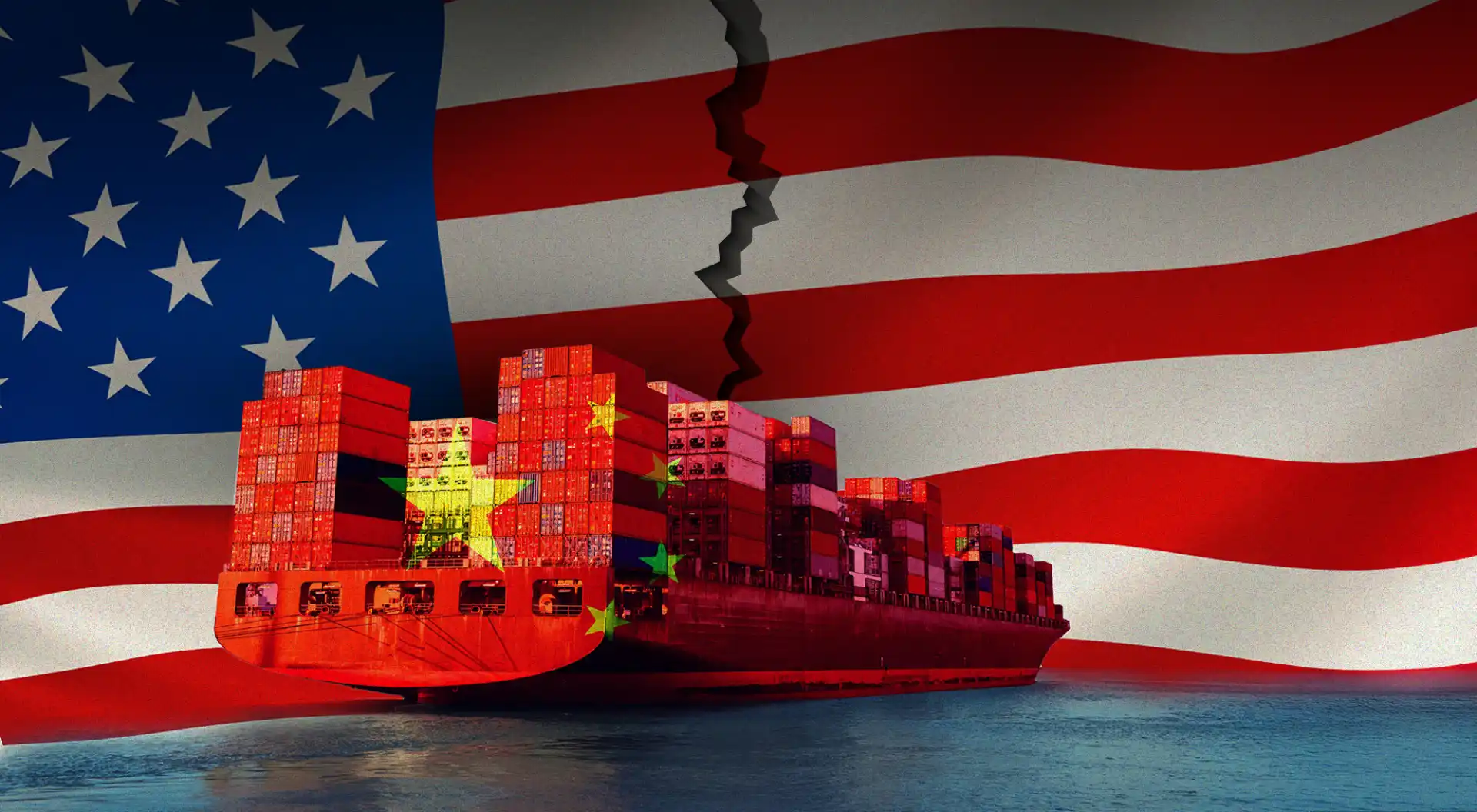
The Iran-related tariff announcement threatens to reignite tensions in the already volatile U.S.-China trade relationship. A trade war between the two nations last year roiled global markets, with Trump raising tariffs on Chinese goods to a peak of 145 percent before lengthy negotiations brought the current baseline rate to 20 percent. The new 25 percent Iran-related tariff would create a minimum 45 percent combined tariff rate on Chinese imports versus the current 20 percent baseline.
China’s embassy in Washington issued a swift response, with spokesperson Liu Pengyu stating late Monday that Beijing “firmly opposes all illicit unilateral sanctions” and would take “all necessary measure to safeguard its legitimate rights and interests.” The statement added that “tariff wars and trade wars have no winners, and coercion and pressure cannot solve problems.”
The tariff threat complicates America’s broader strategic objectives regarding Iran’s nuclear program and regional influence. Throughout his second term, Trump has employed tariffs as a diplomatic tool, previously doubling duties on goods from India to a minimum 50 percent seeking to punish New Delhi for purchasing Russian oil. He similarly threatened other countries buying Russian petroleum, including China—Russia’s largest oil customer—with comparable tariff penalties.
One decision can change your entire career. Take that step with our Online courses in ACCA, HESI A2, ATI TEAS 7, HESI EXIT, NCLEX-RN, NCLEX-PN, and Financial Literacy. Join Serrari Ed and start building your brighter future today.
Iran Protests: Largest Challenge to Clerical Rule in Decades
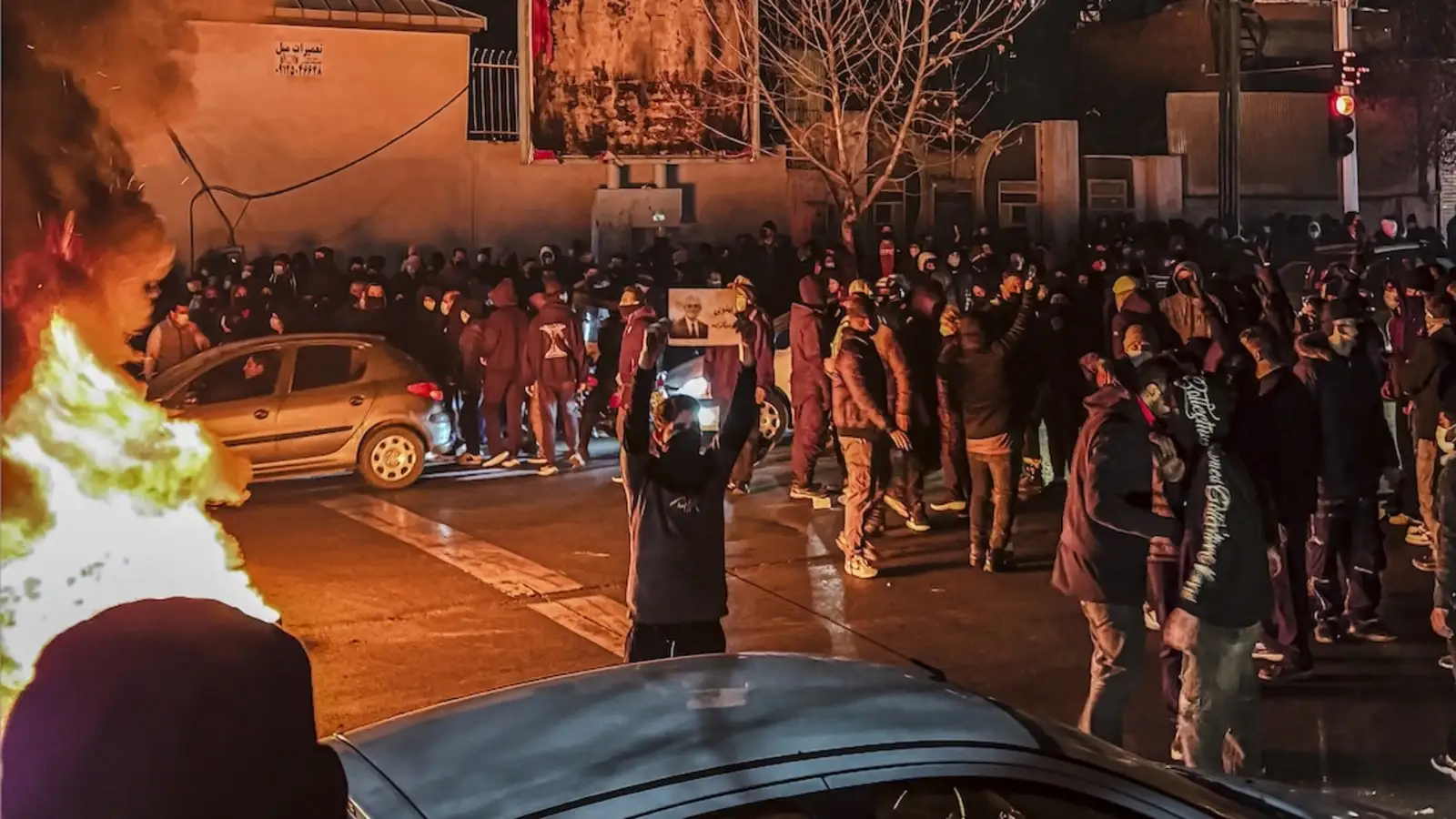
The tariff announcement coincides with the most significant challenge to Iran’s theocratic government since the 1979 Islamic Revolution. Protests erupted on December 28, 2025, initially triggered by a sharp currency collapse amid soaring inflation and chronic state mismanagement of essential services. The Iranian rial had lost more than 40 percent of its value following Israel’s 12-day conflict with Iran in June 2025—losses representing just the latest installment in a prolonged collapse that has erased nearly 90 percent of the currency’s value since the United States withdrew from the nuclear deal and reimposed sanctions.
What began as economic grievances rapidly evolved into fundamental challenges to the political system itself. Demonstrations spread across all 31 of Iran’s provinces, with protesters adopting slogans calling for the overthrow of the deeply entrenched clerical establishment. The geographic scope and persistence of the protests have led analysts to draw comparisons to the Woman, Life, Freedom movement of 2022-2023, though the current unrest has lacked a single unifying cause beyond mounting economic desperation.
Iran’s security forces have responded with lethal force. Amnesty International and Human Rights Watch documented at least 28 deaths of protesters and bystanders, including children, in 13 cities across eight provinces between December 31, 2025 and January 3, 2026 alone. Verified videos show security forces opening fire on peaceful demonstrators, with witnesses describing scenes of bodies piling up in hospitals and IRGC agents shooting “without regard for who they shot.”
Supreme Leader Ali Khamenei escalated the government’s rhetoric on January 3, declaring “rioters must be put in their place” and vowing that “we will not yield to the enemy.” The IRGC’s provincial corps in Lorestan province announced the period of “tolerance” was over, pledging to target “rioters, organizers and leaders of anti-security movements … without leniency.” Iran’s Head of the Judiciary subsequently ordered prosecutors to show “no leniency” to protesters and to expedite their trials.
Iran’s attorney general has warned that anyone participating in protests will be considered an “enemy of God”—a charge carrying the death penalty under Iranian law. More than 10,600 people have been detained over the two weeks of protests according to the Human Rights Activists News Agency, which relies on supporters inside Iran cross-checking information and has proven accurate in documenting previous periods of unrest.
The Iranian government has responded to the protests by implementing a nationwide communications shutdown, isolating the population from the outside world since Thursday. Cloudflare reported a 35 percent decrease in internet traffic from Iran, with Iranian users reporting frequent outages and slow connections that have severely hampered protesters’ ability to coordinate activities and share documentation of the crackdown with international observers.
Trump’s Escalating Threats of Military Intervention
Beyond economic measures, Trump has floated increasingly explicit threats of U.S. military intervention. In a January 2 post on Truth Social, the president indicated he would consider taking military action should protesters be killed, writing: “If Iran shots [sic] and violently kills peaceful protesters, which is their custom, the United States of America will come to their rescue. We are locked and loaded and ready to go.”
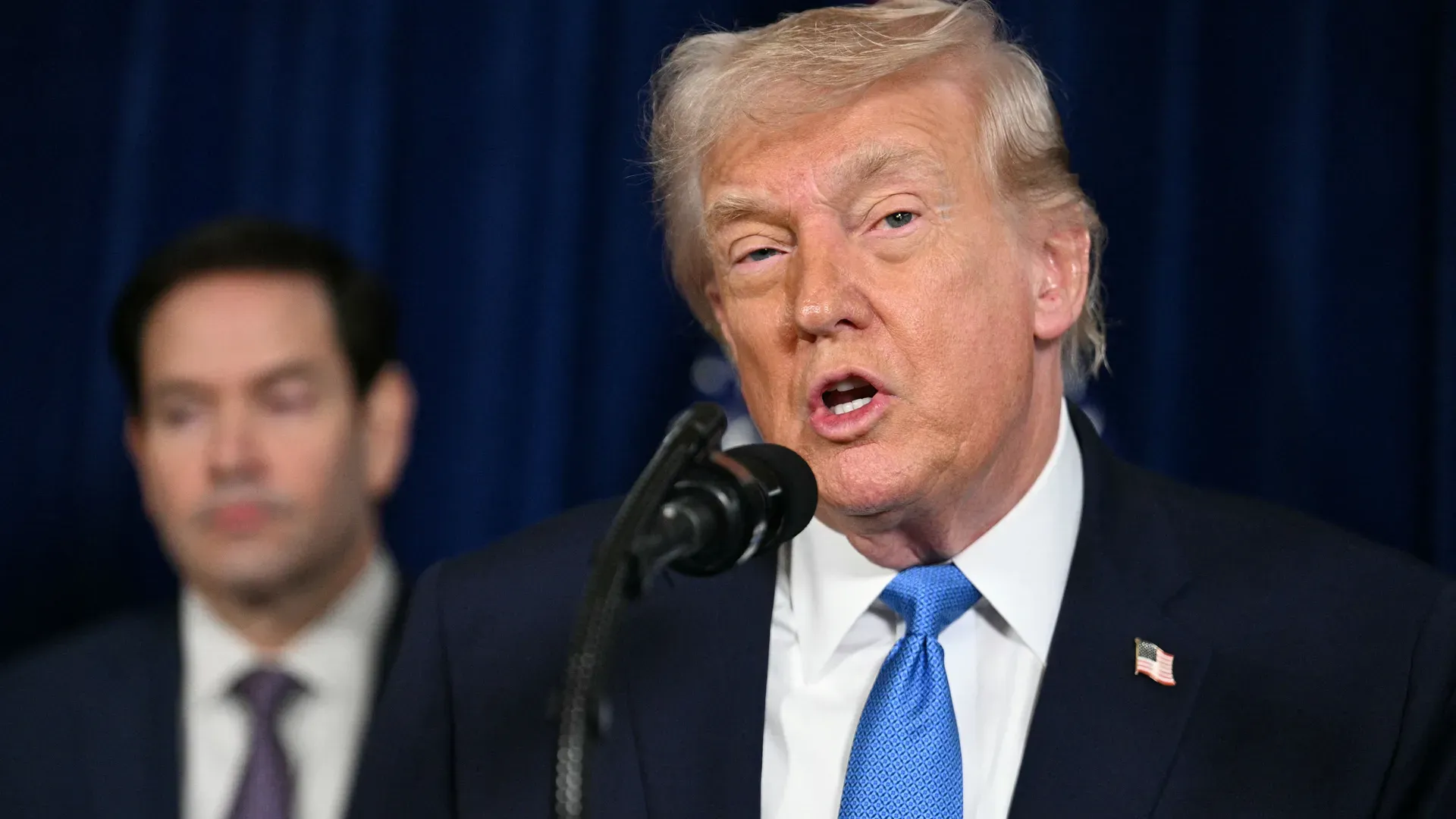
On Sunday, Trump told reporters aboard Air Force One that “the military is looking at it” and that his administration was evaluating “some very strong options.” Asked about Iran’s threats of retaliation, he responded: “If they do that, we will hit them at levels that they’ve never been hit before.”
According to two people familiar with internal White House discussions who spoke on condition of anonymity, Trump and his national security team have been weighing a range of potential responses including cyberattacks and direct strikes by either the U.S. or Israel. These deliberations occur against the backdrop of last year’s 12-day conflict in which Israel disabled much of Iran’s air defenses and the United States bombed Iranian nuclear facilities in June.
While the White House characterized the June operation as a one-off mission claiming Iran’s nuclear facilities had been “obliterated,” subsequent intelligence assessments indicated the strikes merely set the nuclear program back by months or years rather than permanently dismantling it. Intelligence reports and media investigations revealed that Iran moved quickly to rebuild its nuclear infrastructure following the attacks.
White House press secretary Karoline Leavitt emphasized Monday that while air strikes represented one of many alternatives available to Trump, “diplomacy is always the first option for the president.” Trump himself stated Sunday that his administration was in talks to set up a meeting with Tehran, asserting “I think they’re tired of being beat up by the United States” and claiming “Iran wants to negotiate.”
Iranian Government’s Mixed Signals on Diplomatic Engagement
Iranian officials have sent conflicting signals regarding their willingness to engage diplomatically with Washington. Foreign Minister Abbas Araghchi, speaking to foreign diplomats in Tehran, insisted “the situation has come under total control” while blaming Israel and the United States for inciting violence, without offering evidence to support these claims.
“That’s why the demonstrations turned violent and bloody to give an excuse to the American president to intervene,” Araghchi stated in comments carried by Al Jazeera. The Qatar-funded network has been allowed to report live from inside Iran despite the internet shutdown affecting other media outlets. However, Araghchi added that Iran remained “open to diplomacy.”
Iranian Foreign Ministry spokesman Esmail Baghaei confirmed that a communication channel to the United States remained operational, but stipulated that talks needed to be “based on the acceptance of mutual interests and concerns, not a negotiation that is one-sided, unilateral and based on dictation.” The foreign minister of Oman—which has historically served as an interlocutor between Washington and Tehran—traveled to Iran over the weekend, suggesting behind-the-scenes diplomatic efforts may be underway.
It remains profoundly unclear what Iran could promise in negotiations given Trump’s strict demands regarding both its nuclear program and ballistic missile arsenal. Tehran has consistently maintained that its missile capabilities are crucial for national defense and non-negotiable, while Trump has demanded comprehensive restrictions on both nuclear enrichment and delivery systems.
In a show of regime strength, pro-government demonstrators flooded streets on Monday in support of the theocracy. Iranian state television broadcast chants from crowds that appeared to number in the tens of thousands, shouting “Death to America!” and “Death to Israel!” alongside cries of “Death to the enemies of God!” The demonstrations represented an attempt by the government to project control and popular support amid the sustained challenge to its authority.
Iran, through its parliamentary speaker, warned Sunday that the U.S. military and Israel would be “legitimate targets” if Washington uses force to protect demonstrators, signaling that any American military intervention would likely trigger a broader regional conflict with unpredictable consequences.
Historical Context and Broader Tariff Strategy
Trump’s use of tariffs as a foreign policy instrument represents a defining feature of his second term in office. Throughout his presidency, he has “often threatened and imposed tariffs on other countries over their ties with U.S. adversaries and over trade policies that he has described as unfair to Washington,” establishing import duties as a central tool for achieving both economic and geopolitical objectives.
The International Emergency Economic Powers Act, which Trump has invoked repeatedly, grants the president authority to regulate commerce in response to “unusual and extraordinary threats” when a national emergency has been declared. Trump lawyers have argued that deep and sustained trade deficits constitute such emergencies, justifying executive action to impose tariffs without congressional approval.
Critics counter that this interpretation represents an unprecedented expansion of presidential power at the expense of constitutional checks and balances. They note that in IEEPA’s 48-year history, no president used the law to impose tariffs until Trump’s second term, arguing that accepting this novel application would fundamentally alter the separation of powers by converting what has historically been a congressional prerogative into an executive one.
The broader economic implications extend well beyond the immediate tariff revenues. If the Supreme Court strikes down IEEPA tariffs and orders refunds, the fiscal impact could be substantial. Prediction markets site Kalshi pointed to just a 28 percent probability that the court will rule in favor of the tariffs as implemented, suggesting significant uncertainty about the legal foundation underlying hundreds of billions of dollars in collected duties.
Even should the Supreme Court rule against the administration’s use of IEEPA, Trump administration officials have indicated they possess alternative legal authorities to achieve similar outcomes. These include provisions under the 1962 Trade Expansion Act, particularly Section 232 which authorizes tariffs for national security purposes, and potentially Section 122 of the Trade Act of 1974 which grants limited authority to address balance-of-payments problems.
Global Economic and Diplomatic Ramifications
The sweeping nature of Trump’s Iran tariff announcement creates complex diplomatic and economic challenges for nations seeking to maintain trade relationships with both Tehran and Washington. Countries must now weigh the economic benefits of Iranian commerce—particularly in energy markets where Iran remains a significant petroleum exporter—against the substantial costs of 25 percent tariffs on all U.S. trade.
For major economies like India, Turkey, and Brazil that maintain significant commercial ties with both Iran and the United States, the calculus is particularly difficult. These nations must determine whether to curtail Iranian trade to preserve preferential access to the vastly larger American market, attempt to negotiate exemptions from Trump’s tariff threat, or accept the economic consequences of maintaining existing commercial relationships.
The announcement also raises questions about how “doing business” with Iran will be defined and enforced. Will countries face tariffs for any commercial transaction with Iran, no matter how minimal? Will there be thresholds below which trade is permitted? How will indirect trade through intermediaries be treated? The absence of clear implementation guidance leaves these critical questions unanswered, creating uncertainty that could prove as disruptive to global commerce as the tariffs themselves.
The timing of Trump’s announcement—as Iran experiences its most severe domestic crisis in years—suggests the administration views this as a moment of maximum leverage. By threatening the economic interests of nations trading with Tehran while the Iranian government faces existential challenges to its authority, Trump appears to be attempting to accelerate the Islamic Republic’s isolation and increase pressure for either regime change or fundamental policy concessions.
Whether this strategy proves effective remains to be seen. The Islamic Republic has demonstrated remarkable resilience over four decades despite severe economic sanctions, international isolation, and periodic waves of domestic unrest. Iranian officials have consistently rejected foreign pressure as illegitimate interference, and the regime has historically rallied nationalist sentiment by portraying domestic challenges as externally orchestrated conspiracies.
As the situation continues to unfold, the international community watches to see whether Trump’s escalating pressure campaign—combining tariff threats, military posturing, and support for protesters—will precipitate fundamental change in Iran or merely deepen an already volatile regional crisis with potentially far-reaching consequences for global security and economic stability.
Ready to take your career to the next level? Join our Online courses: ACCA, HESI A2, ATI TEAS 7 , HESI EXIT , NCLEX – RN and NCLEX – PN, Financial Literacy!🌟 Dive into a world of opportunities and empower yourself for success. Explore more at Serrari Ed and start your exciting journey today! ✨
Track GDP, Inflation and Central Bank rates for top African markets with Serrari’s comparator tool.
See today’s Treasury bonds and Money market funds movement across financial service providers in Kenya, using Serrari’s comparator tools.
Photo source: Google
By: Montel Kamau
Serrari Financial Analyst
13th January, 2026