










The United States has significantly expanded its controversial visa bond program, adding Uganda, Nigeria, and 23 other nations to a list that now encompasses 38 countries whose citizens must post security deposits ranging from $5,000 to $15,000 when applying for business or tourist visas. The expansion, announced by the US State Department on Tuesday and set to take effect on January 21, 2026, represents a nearly threefold increase from the 13 countries previously covered under the pilot program launched in August 2025.
The policy, introduced under the US Visa Bond Programme, is ostensibly intended to ensure visa compliance and deter visitors from overstaying their authorized periods of admission. However, the measure has raised significant concerns over its economic impact, the substantial barriers it creates for business and tourist travelers from affected countries, and questions about whether the financial requirements amount to a de facto travel ban for many prospective visitors who cannot afford the steep deposits.
Build the future you deserve. Get started with our top-tier Online courses: ACCA, HESI A2, ATI TEAS 7, HESI EXIT, NCLEX-RN, NCLEX-PN, and Financial Literacy. Let Serrari Ed guide your path to success. Enroll today.
Comprehensive List of Affected Countries
The newly added African nations include Uganda, Burundi, Nigeria, Algeria, Angola, Benin, Cabo Verde, Côte d’Ivoire, Djibouti, Gabon, Senegal, Togo, and Zimbabwe. These countries join Botswana, Central African Republic, Gambia, Guinea, Guinea-Bissau, Malawi, Mauritania, Namibia, São Tomé and Príncipe, Tanzania, and Zambia, which were already subject to bond requirements under the initial pilot program.
From Asia, Bangladesh, Kyrgyzstan, Nepal, Tajikistan, and several Pacific island nations including Fiji, Tonga, Tuvalu, and Vanuatu were added to the list. Latin America and the Caribbean representation expanded to include Cuba, Antigua and Barbuda, Dominica, and Venezuela. The policy also covers Bhutan and Turkmenistan, which were included in earlier phases of the program.
According to the State Department’s official notice, any citizen or national traveling on a passport from one of these countries who is otherwise eligible for a B1/B2 visa must post a bond of $5,000, $10,000, or $15,000. The specific bond amount is determined at the time of the visa interview by a consular officer based on individual circumstances and perceived risk factors.
Payment Process and Compliance Requirements
Applicants must agree to the bond terms through the US Treasury Department’s online payment platform, Pay.gov, the State Department emphasized in its announcement. Critically, paying the bond does not guarantee visa approval. The State Department explicitly warned that if someone pays fees without guidance from a consular officer, those fees will not be refunded—a provision designed to prevent fraud and ensure applicants only submit bonds when directed by official US government personnel.
“Applicants must not use third-party websites to pay the bond,” the State Department cautioned in its official guidance. “The US Government is not responsible for any payments made outside its official systems.” This warning reflects concerns about potential scams targeting vulnerable applicants desperate to secure US visas.
The bond will be refunded under specific circumstances: if the visa application is denied, if the visa holder complies with all visa conditions including timely departure from the United States, or if the visa holder does not travel to the United States before the visa expires. However, if a visa holder overstays their authorized period or violates other visa conditions, the bond is forfeited to the US government.
Beyond posting the financial bond, applicants must also submit Department of Homeland Security Form I-352, the Immigration Bond form that formalizes the terms and conditions of the security deposit. Additionally, visa holders who have posted bonds must enter and exit the United States through designated ports of entry, including Boston Logan International Airport, John F. Kennedy International Airport in New York, and Washington Dulles International Airport. Failure to use these specified airports could result in denied entry or improper recording of departure, potentially triggering bond forfeiture.
Rationale: Addressing Visa Overstay Concerns
The visa bond program was launched as a pilot initiative in August 2025 with an initial group of countries. The US government maintains that the bonds are intended to deter visitors from overstaying visas issued for tourism or business purposes—a persistent challenge for US immigration authorities.
According to the Department of Homeland Security’s Entry/Exit Overstay Report for Fiscal Year 2024, certain African countries exhibit elevated overstay rates that have attracted policy attention. Nigeria, for instance, recorded a B1/B2 visa overstay rate of 5.56% and an F, M, and J visa (student and exchange visitor) overstay rate of 11.90 percent, according to White House fact sheets citing the DHS report.
Tanzania’s overstay rates stand at 8.30% for B1/B2 visas and 13.97% for student visas. Other African nations on the list face similar concerns, with some countries recording even higher overstay percentages. The White House has justified inclusion of these nations based on overstay data, combined with additional factors including security concerns, deficient vetting capabilities, and in some cases, countries’ historical failure to accept back their removable nationals for deportation.
However, critics have questioned both the accuracy of DHS overstay reports and their appropriateness as a basis for imposing financial barriers to travel. A comprehensive analysis by the National Foundation for American Policy found that DHS overstay reports contain significant flaws that make them inappropriate for denying visas or justifying broad policy changes. The DHS figures represent not actual overstays but only an upper-bound estimate of individuals DHS could not positively identify as leaving the United States, meaning they include both actual overstays and unrecorded departures where individuals left but systems failed to properly document their exit.
Trump Administration’s Hardline Immigration Policies
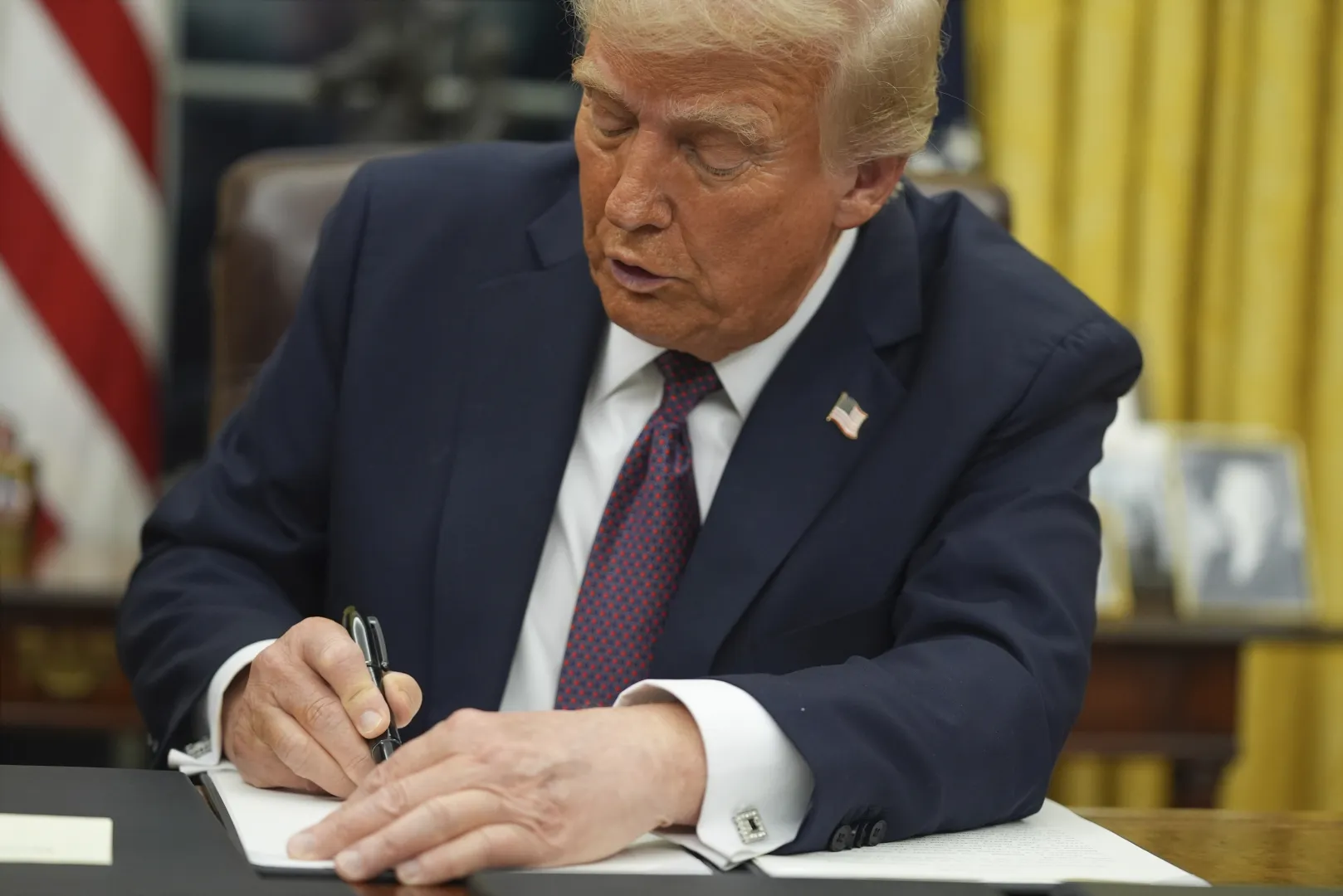
Since returning to office in January 2025, President Donald Trump has pursued an aggressively hardline immigration policy encompassing increased deportations, visa and green card revocations, expanded screening of immigrants’ social media activity and past statements, and now financial barriers through the visa bond program. The administration’s immigration enforcement has intensified dramatically compared to his first term, with policy innovations designed to reduce both legal and illegal immigration flows.
The Trump administration requires citizens from all countries subject to visa requirements to sit for mandatory in-person interviews and disclose years of social media history, along with detailed information about their families’ previous travel and living arrangements. This enhanced vetting process applies regardless of the visa category and has substantially increased both the complexity and duration of visa application processes.
In addition to the visa bond program, the Trump administration has implemented numerous other immigration policy changes including the “Trump Gold Card” program announced in September 2025, which allows foreign nationals permanent residency and a pathway to US citizenship for a $1 million investment. The administration also introduced a $100,000 fee for H-1B visas targeting high-skilled foreign workers, significantly raising costs for companies seeking to employ international talent.
The Department of Homeland Security has also expanded facial recognition requirements for non-citizens entering and leaving the United States, introduced more rigorous social media screening for tourist visa applicants, and increased scrutiny of family-based immigration applications. Collectively, these measures represent a comprehensive tightening of US immigration policy across nearly all categories of legal entry.
Economic Impact and Travel Industry Concerns
The visa bond requirement’s economic implications extend far beyond individual applicants to affect entire sectors dependent on international travel and exchange. For countries like Nigeria and Uganda, where average annual incomes remain substantially below the bond amounts, the financial barrier effectively prices out most prospective travelers.
In Nigeria, where the policy takes effect January 21, 2026, travel agencies have reported expectations of a surge in cancellations and route changes as travelers seek alternative destinations with lower financial entry barriers. Many Nigerian travelers are reportedly considering the United Kingdom, Canada, or Middle Eastern destinations as alternatives to the United States, potentially redirecting tourism and business travel flows away from American destinations.
The educational sector faces particular challenges. Students from affected countries often already struggle with the high costs of American higher education, including tuition, housing, and living expenses. Adding a potential $15,000 bond requirement—on top of visa application fees, SEVIS fees, and other expenses—creates an additional financial hurdle that may deter qualified students from pursuing American education opportunities. This could reduce diversity in American universities and potentially redirect talented students toward educational institutions in Europe, Asia, or other regions with more accessible entry requirements.
Business travel similarly faces disruption. Companies in affected nations that maintain business relationships with American partners, attend trade shows and conferences in the United States, or conduct regular business trips now must factor substantial bond costs into their travel budgets. For small and medium-sized enterprises operating on tight margins, these additional expenses may prove prohibitive, potentially reducing business-to-business connections and commercial exchanges.
Tourism from affected countries, already challenged by expensive airfare and accommodation costs for long-distance travel to the United States, faces additional discouragement. The visa bond effectively adds thousands of dollars to the upfront costs of planning a US vacation, making American destinations less competitive compared to alternatives that don’t impose similar financial requirements.
Regional Perspectives and Implementation Challenges
For Uganda, the visa bond requirement arrives amid the country’s efforts to strengthen economic ties with Western nations and promote itself as a tourism and investment destination. Uganda’s population, characterized by significant youth and economic growth potential, could find the bond requirement particularly burdensome given the country’s income levels and economic inequalities.
Zimbabwe, struggling with persistent economic challenges and currency instability, faces perhaps the steepest barriers. For Zimbabwean citizens, accumulating $5,000 to $15,000 for a visa bond—money that must be available upfront even if ultimately refunded—represents an overwhelming financial burden that effectively closes off American travel for all but the wealthiest citizens.
The differential implementation dates create additional complexity. While most newly added countries face bond requirements beginning January 21, 2026, earlier additions to the program implemented bonds at different times throughout 2025. This staggered approach creates confusion about applicability and may complicate travel planning for individuals with pending visa applications.
The requirement to enter and exit through specific designated airports presents logistical challenges as well. Travelers from Africa often connect through European or Middle Eastern hubs before reaching the United States, potentially arriving at airports not on the designated list. The restriction to Boston, New York JFK, and Washington Dulles airports—with additional facilities potentially being added—limits routing options and may increase travel costs or complexity.
Compliance Verification and Enforcement Mechanisms
The enforcement structure for visa bonds relies on integrated systems connecting consular visa issuance, US Customs and Border Protection entry/exit tracking, and Treasury Department payment processing. When a consular officer determines a bond is required during a visa interview, the applicant receives direct instructions and a specific link to submit payment through Pay.gov. Only after successful payment and submission of Form I-352 does the visa application process continue.
Upon entry to the United States, visa holders who have posted bonds are flagged in CBP systems, and their authorized period of stay is carefully monitored. When a bonded visa holder departs the United States, their exit must be properly recorded through the designated airports. If DHS systems successfully record timely departure, the bond cancellation process initiates automatically, with refunds typically processed within specified timeframes.
Cases where visa holders may have violated bond terms—by overstaying, departing through non-designated airports, or failing to have departure properly recorded—are referred to the US Attorney for the district in which the visa holder last resided. These cases may result in bond forfeiture proceedings, with the financial penalty intended to deter future violations while compensating the government for enforcement costs.
The Treasury Department maintains the financial infrastructure supporting the bond program, processing both incoming bond payments and outgoing refunds. The integration with Pay.gov ensures standardized payment processing and provides applicants with official government receipts and documentation of their bond posting.
One decision can change your entire career. Take that step with our Online courses in ACCA, HESI A2, ATI TEAS 7, HESI EXIT, NCLEX-RN, NCLEX-PN, and Financial Literacy. Join Serrari Ed and start building your brighter future today.
Controversy and Criticism
Civil rights organizations, immigration advocates, and affected governments have criticized the visa bond program as discriminatory and counterproductive. Critics argue that the policy disproportionately impacts developing nations, effectively creating a wealth-based visa system that contradicts American values of openness and equal opportunity.
The American Civil Liberties Union and other advocacy groups have characterized the bond requirement as a “de facto ban” for many prospective travelers, noting that in countries where $15,000 exceeds annual per capita income, the requirement makes American travel impossible for all but elite segments of society. This creates a class-based system where wealthier individuals can access US visas while middle-class and working-class people are effectively excluded regardless of their individual circumstances, ties to their home country, or legitimate purposes for travel.
Some African governments have expressed concern that the policy may damage diplomatic relationships and economic partnerships. The targeting of numerous African nations—24 of the 38 countries on the expanded list are from Africa—has raised questions about whether the policy reflects implicit bias rather than purely data-driven risk assessment.
Educational institutions have also voiced opposition, arguing that international students contribute significantly to American universities through tuition payments, research contributions, and cultural diversity. The additional financial barrier may reduce applications from talented students in affected countries, ultimately harming American higher education institutions and the innovative ecosystems they support.
Comparison with Travel Restrictions and Visa Suspensions
The visa bond program operates separately from but alongside other Trump administration travel restrictions. In December 2025, the administration imposed partial travel suspensions on 19 countries, including Nigeria, citing security concerns, terrorist group presence, and vetting difficulties. These suspensions affect immigrant visas as well as certain non-immigrant categories including B-1, B-2, F, M, and J visas.
For Nigeria specifically, the dual impact of both travel restrictions and visa bond requirements creates particularly stringent barriers to US travel. The administration cited the presence and operations of radical Islamic terrorist groups such as Boko Haram and Islamic State affiliates in certain parts of Nigeria as justification for enhanced screening, combined with the overstay rate data, to support both policy measures.
Unlike the partial travel suspension, which restricts visa issuance for certain categories, the visa bond program is characterized by the administration as “facilitative”—theoretically allowing visas to be issued to individuals who might otherwise be denied based solely on their country’s characteristics. However, critics note that in practice, the high cost creates exclusionary effects similar to more explicit restrictions, particularly for applicants from lower-income backgrounds.
Implementation Timeline and Procedural Details
For the 25 countries newly added to the bond requirement list, implementation begins January 21, 2026. Individuals with visa appointments scheduled on or after that date will be subject to the bond requirement if consular officers determine it necessary based on individual circumstances. Applicants with appointments before January 21 but whose visas are issued after that date may also be subject to bonds, creating uncertainty for those in the application pipeline.
The State Department has indicated that consular officers have discretion in determining both whether a bond is required and the specific amount within the $5,000-$15,000 range. This discretionary authority is intended to allow individualized assessment based on factors including the applicant’s ties to their home country, travel history, economic circumstances, and stated purpose for visiting the United States.
However, the discretionary nature of the requirement also creates potential for inconsistent application. Two similar applicants from the same country might receive different bond determinations from different consular officers or at different embassy locations, raising questions about fairness and transparency in the process.
Historical Context and Policy Evolution
The visa bond concept has roots in earlier Trump administration immigration policy initiatives. During his first term (2017-2021), the administration proposed but never fully implemented a similar visa bond program due to the COVID-19 pandemic’s dramatic reduction in international travel beginning in 2020. The current iteration represents a revival and expansion of that earlier policy vision.
The pilot program launched in August 2025 initially covered 13 countries, testing operational procedures, payment systems, compliance tracking, and refund processes. The expansion to 38 countries represents a scaling up of the pilot, suggesting the administration views initial implementation as successful and intends to potentially expand the program further to additional countries.
The program operates under authority granted by the Immigration and Nationality Act Section 221(g)(3) and a Temporary Final Rule establishing the pilot framework. The “temporary” nature of the rule means it could be modified, expanded, or potentially made permanent based on implementation results and policy objectives.
Future Trajectory and Potential Expansion
The nearly threefold expansion of the visa bond list from 13 to 38 countries raises questions about whether additional nations may be added in coming months. Reports suggest the Trump administration has considered expanding the program to potentially 36 additional countries, which would bring the total to more than 70 nations—representing a substantial portion of countries whose citizens require visas for US entry.
If implemented, such an expansion would fundamentally reshape US visa policy, transforming what began as a targeted pilot program into a widespread requirement affecting travelers from much of the developing world. The financial barriers would become a defining characteristic of US immigration policy, with significant implications for international relations, educational and cultural exchanges, business relationships, and America’s global image.
For countries currently on the list, the policy’s continuation and potential intensification depends partly on overstay rate trends. If bond requirements successfully reduce overstays from affected countries, the administration may view this as validation of the approach and justification for expansion. Conversely, if overstay rates remain elevated despite bonds, questions may arise about the policy’s effectiveness.
Implications for International Relations and Soft Power
The visa bond program carries implications beyond immigration policy into broader questions of international relations and American soft power. The United States has historically benefited from being viewed as an accessible destination for education, business, tourism, and cultural exchange. Policies that create significant barriers to entry, particularly when they disproportionately affect developing nations, potentially undermine these soft power advantages.
Countries on the bond list may view the policy as discriminatory or insulting, potentially affecting diplomatic relationships and cooperation on issues ranging from trade to security. African nations in particular, which comprise the majority of listed countries, may interpret the policy as reflecting negative perceptions of African travelers regardless of individual circumstances.
The educational sector’s concerns reflect broader worries about whether increasingly restrictive policies will redirect international talent and opportunity-seeking toward other countries with more welcoming postures. European nations, Canada, Australia, and increasingly Asian countries compete for international students, skilled workers, and business travelers. American policies that create additional barriers may provide competitive advantages to these alternative destinations.
Conclusion: Balancing Security and Accessibility
The expansion of the US visa bond program to 38 countries, requiring deposits up to $15,000 for travelers from Uganda, Nigeria, and numerous other nations, represents a significant tightening of US entry requirements under the Trump administration’s hardline immigration agenda. Justified by concerns about visa overstays and compliance, the policy creates substantial financial barriers that critics characterize as effectively excluding middle-class and working-class travelers from affected countries.
The implementation beginning January 21, 2026, affects millions of potential travelers whose countries have been added to the expanded list. For individuals, families, students, business travelers, and tourists from these nations, the bond requirement adds thousands of dollars in upfront costs to an already complex and expensive visa application process.
Whether the policy achieves its stated objective of reducing visa overstays while maintaining legitimate travel and exchange opportunities remains to be seen. The program’s effectiveness will depend on enforcement consistency, the accuracy of overstay tracking systems, and whether financial barriers actually deter potential overstayers rather than simply excluding those who would have complied with visa terms regardless.
For the affected countries and their citizens, the visa bond represents one more barrier in an increasingly challenging landscape for international mobility. As the program’s implementation proceeds and its impacts become clearer, questions about fairness, effectiveness, and America’s role as an open and accessible society will continue to drive debate about this controversial policy.
Ready to take your career to the next level? Join our Online courses: ACCA, HESI A2, ATI TEAS 7 , HESI EXIT , NCLEX – RN and NCLEX – PN, Financial Literacy!🌟 Dive into a world of opportunities and empower yourself for success. Explore more at Serrari Ed and start your exciting journey today! ✨
Track GDP, Inflation and Central Bank rates for top African markets with Serrari’s comparator tool.
See today’s Treasury bonds and Money market funds movement across financial service providers in Kenya, using Serrari’s comparator tools.
Photo source: Google
By: Montel Kamau
Serrari Financial Analyst
8th January, 2026
Article, Financial and News Disclaimer
The Value of a Financial Advisor
While this article offers valuable insights, it is essential to recognize that personal finance can be highly complex and unique to each individual. A financial advisor provides professional expertise and personalized guidance to help you make well-informed decisions tailored to your specific circumstances and goals.
Beyond offering knowledge, a financial advisor serves as a trusted partner to help you stay disciplined, avoid common pitfalls, and remain focused on your long-term objectives. Their perspective and experience can complement your own efforts, enhancing your financial well-being and ensuring a more confident approach to managing your finances.
Disclaimer: This article is for informational purposes only and does not constitute financial advice. Readers are encouraged to consult a licensed financial advisor to obtain guidance specific to their financial situation.
Article and News Disclaimer
The information provided on www.serrarigroup.com is for general informational purposes only. While we strive to keep the information up to date and accurate, we make no representations or warranties of any kind, express or implied, about the completeness, accuracy, reliability, suitability, or availability with respect to the website or the information, products, services, or related graphics contained on the website for any purpose. Any reliance you place on such information is therefore strictly at your own risk.
www.serrarigroup.com is not responsible for any errors or omissions, or for the results obtained from the use of this information. All information on the website is provided on an as-is basis, with no guarantee of completeness, accuracy, timeliness, or of the results obtained from the use of this information, and without warranty of any kind, express or implied, including but not limited to warranties of performance, merchantability, and fitness for a particular purpose.
In no event will www.serrarigroup.com be liable to you or anyone else for any decision made or action taken in reliance on the information provided on the website or for any consequential, special, or similar damages, even if advised of the possibility of such damages.
The articles, news, and information presented on www.serrarigroup.com reflect the opinions of the respective authors and contributors and do not necessarily represent the views of the website or its management. Any views or opinions expressed are solely those of the individual authors and do not represent the website's views or opinions as a whole.
The content on www.serrarigroup.com may include links to external websites, which are provided for convenience and informational purposes only. We have no control over the nature, content, and availability of those sites. The inclusion of any links does not necessarily imply a recommendation or endorsement of the views expressed within them.
Every effort is made to keep the website up and running smoothly. However, www.serrarigroup.com takes no responsibility for, and will not be liable for, the website being temporarily unavailable due to technical issues beyond our control.
Please note that laws, regulations, and information can change rapidly, and we advise you to conduct further research and seek professional advice when necessary.
By using www.serrarigroup.com, you agree to this disclaimer and its terms. If you do not agree with this disclaimer, please do not use the website.
www.serrarigroup.com, reserves the right to update, modify, or remove any part of this disclaimer without prior notice. It is your responsibility to review this disclaimer periodically for changes.
Serrari Group 2025