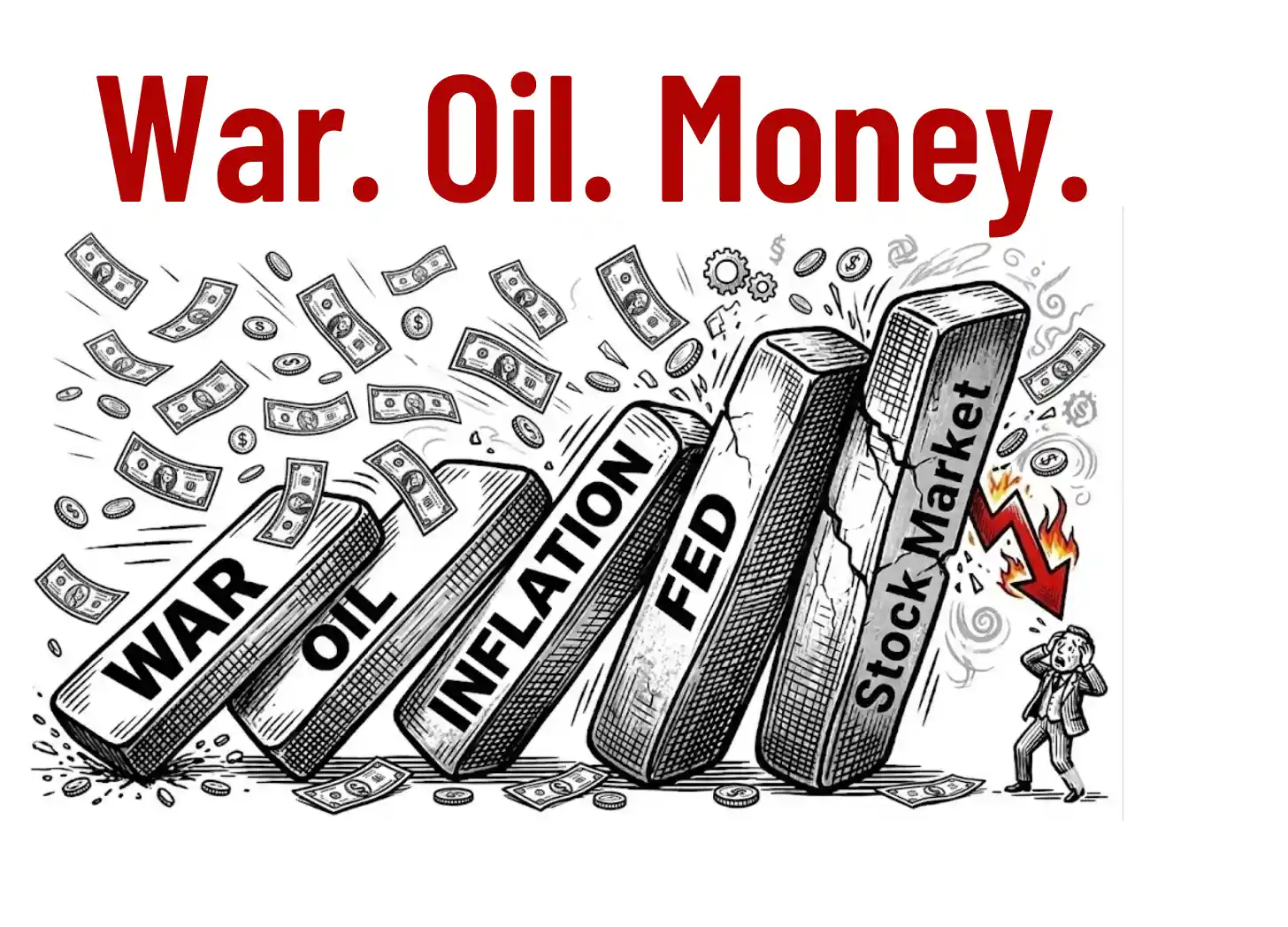












The yield on the US 10-year Treasury note climbed to around 4.24% on Thursday, touching five-week highs as oil prices resumed their rally for a second consecutive day, heightening inflationary risks and further reducing the likelihood of near-term Federal Reserve interest rate cuts. The move in the benchmark yield — which serves as the foundational discount rate for global asset pricing — reflects a bond market that is increasingly pricing in a prolonged era of elevated energy costs, even as headline inflation data for February came in broadly in line with expectations.
The surge in yields is the product of a confluence of forces: a spiralling geopolitical conflict in the Middle East that has throttled global oil flows, a coordinated but thus-far insufficient emergency release of oil reserves by major economies, fresh supply shocks from attacks on tankers in Iraqi waters, and February inflation data that, while not yet capturing the full force of the energy crisis, confirmed that price pressures remain above the Federal Reserve’s target. Together, these dynamics have cemented a picture in which the Fed has little room to ease monetary policy in the near term, pushing investors to demand higher compensation for holding longer-dated US government debt.
Markets move fast; don’t get left behind. We’ve paired the Serrari Group Market Index with a curated Marketplace and a comprehensive Financial Literacy Course to ensure you have the data—and the skills—to act on it.
Bond Market Repricing: From Calm to Concern
For much of early 2026, the US 10-year yield had been trading comfortably below 4.0%, reflecting market confidence that the Federal Reserve’s series of rate cuts in 2025 had successfully guided the economy toward a soft landing. That narrative shifted abruptly in late February with the outbreak of the US-Israeli military campaign against Iran, known as “Operation Epic Fury,” which commenced on 28 February 2026. Within days, the Strait of Hormuz — a critical maritime chokepoint through which approximately 20% of the world’s petroleum liquid consumption passes — had effectively closed to tanker traffic, triggering the largest oil supply disruption in recent history.
The response in bond markets was swift. Yields moved from a stable 4.05% in mid-February to the 4.214% peak recorded on 11 March, with the benchmark yield climbing over 7 basis points on Wednesday alone, driven by a combination of sticky inflation data and surging oil prices. By Thursday, yields extended to around 4.24%, marking the highest level in five weeks. The 30-year Treasury bond yield also climbed, adding more than 8 basis points to 4.861%, while the 2-year note reached 3.64%. The steepening of the yield curve reflects growing investor concern that inflationary pressures will prove persistent enough to keep the Fed on hold for longer than previously anticipated.
Analysts at Financial Content Markets note that the jump in yields has created a stark divide in equity markets, compressing valuation multiples for growth-sensitive sectors that rely on low discount rates, while energy and defence-linked stocks have outperformed. With Chair Jerome Powell’s term ending in May 2026, the market is also grappling with an added layer of uncertainty around future monetary policy leadership, creating what some analysts describe as a “policy vacuum” in which the Treasury market has become the primary barometer of economic health.
Oil Surges for a Second Day: The Iran War Deepens the Supply Shock
The proximate catalyst for Thursday’s yield climb was the continuation of oil’s rally. Crude prices surged for a second consecutive day as markets absorbed a cascade of bearish supply signals — from the IEA’s announcement of an emergency reserve release to Iran’s ongoing stranglehold on Hormuz shipping, through to fresh attacks on tankers in Iraqi waters.
The conflict that began on 28 February has proved devastating to global energy flows. Since US and Israeli forces launched coordinated strikes on Iran under Operation Epic Fury, Iran has responded by effectively closing the Strait of Hormuz to commercial shipping, with its Revolutionary Guard threatening to attack any vessel attempting transit. According to IEA data, an average of 20 million barrels per day of crude oil and oil products transited the strait in 2025, representing around 25% of the world’s seaborne oil trade. Export volumes through that chokepoint are now at less than 10% of pre-conflict levels, forcing Gulf producers to curtail output and creating severe dislocation in global energy supply chains.
Brent crude, the international benchmark, had surged from around $70 per barrel before the war to nearly $120 at the start of the week, before retreating somewhat following signals from President Trump and early reports of the IEA reserve release plan. Despite Wednesday’s temporary pullback, prices rebounded on Thursday as fresh supply disruptions materialised, reinforcing the view among market participants that the energy shock is far from resolved. Since the conflict began, US crude oil prices are up more than 30%, with retail gasoline prices rising more than 50 cents to a national average of around $3.57 per gallon.
The IEA’s Historic Reserve Release: A “Water Pistol, Not a Bazooka”
In an extraordinary move on 11 March, the International Energy Agency announced that its 32 member countries had unanimously agreed to release 400 million barrels of oil from their strategic reserves — the largest emergency distribution in the organisation’s history, and more than double the 182.7 million barrels released in 2022 in response to Russia’s full-scale invasion of Ukraine.
“The conflict in the Middle East is having significant impacts on global oil and gas markets, with major implications for energy security, energy affordability and the global economy,” IEA Executive Director Fatih Birol said from the agency’s Paris headquarters. “I can now announce that IEA countries have unanimously decided to launch the largest-ever release of emergency oil stocks in our agency’s history.” The United States said it would contribute 172 million barrels from the Strategic Petroleum Reserve, starting next week, while the UK committed 13.5 million barrels, South Korea pledged 22.46 million barrels, and Germany, Japan, and Austria also confirmed contributions.
However, the market’s reaction was muted at best. Brent crude rose around 4% to approximately $91 a barrel after Birol spoke, reflecting deep scepticism about whether reserve releases can substitute for the loss of live Hormuz flows. As CNN reported, with the near-blockade choking off some 15 million barrels of crude per day from global markets, the 400 million barrel release would be entirely absorbed in just 26 days. “Policy measures may have limited impact on oil prices unless safe passage through the Strait of Hormuz is assured,” JPMorgan Chase commodities analysts wrote in a research note. Francesco Pesole, a strategist at ING, described the reserve release as “a temporary measure, and only military de-escalation can drive crude sustainably lower.” Investment firm Macquarie was more blunt, calling the effort a “water pistol, not a bazooka.”
Birol himself acknowledged the fundamental limitation: “The most important thing for a return to stable flows of oil and gas is the resumption of transit through the Strait of Hormuz.”
Context is everything. While you follow today’s updates, use the Serrari Market Index and Marketplace to spot emerging shifts. Need to sharpen your edge? Our Financial Literacy Course turns these insights into a professional-grade strategy.
Iraq’s Oil Terminals Halt as Tankers Come Under Fire
Any optimism that the reserve announcement might provide was further undermined by fresh supply shocks emerging from Iraq on Wednesday evening. Two oil tankers were attacked in Iraqi waters, according to Iraq’s state oil marketer, prompting the nation’s oil terminals to suspend operations. Iraq’s State Organization for Marketing of Oil (SOMO) identified the vessels as the Marshall Islands-flagged Safesea Vishnu and the Malta-flagged Zefyros, both operating near Iraq’s Al-Faw port area close to Basra.
Iran claimed responsibility for the attacks via state media, saying an underwater drone had struck the vessels. According to OilPrice.com, the tankers could have been carrying up to 400,000 barrels of Iraqi oil and condensate combined, and the attack triggered fuel leaks into surrounding waters. One crew member was killed and 38 others were rescued. Farhan al-Fartousi, Director General of Iraq’s General Company for Ports, confirmed that oil port operations had been halted while commercial ports continued functioning.
The attack on tankers in Iraqi territorial waters marks a dangerous escalation. Iraq — which operates two key offshore export terminals, Al Basrah Oil Terminal and Khor Al Amaya Oil Terminal — is one of the world’s largest crude oil exporters, and a prolonged halt at those facilities would add materially to the global supply deficit already caused by the Hormuz blockade. The incident is at least the 14th vessel strike in recent weeks across the Persian Gulf region, underscoring the breadth and persistence of the maritime security threat. According to Al Jazeera’s live coverage, Iran has set three conditions for ending the conflict: recognition of Tehran’s legitimate rights, payment of reparations, and firm international guarantees against future aggression — conditions the US and Israel have not accepted.
February CPI: Stable, But the Energy Surge Has Yet to Register
Adding to market anxiety was the release of the February Consumer Price Index (CPI) report on Wednesday. The data showed that headline inflation rose 0.3% month-over-month, putting the 12-month inflation rate at 2.4%, according to data from the Bureau of Labor Statistics. Both figures matched the Dow Jones consensus forecast. The reading followed January’s CPI of 2.4% — itself a multi-year low — suggesting that the underlying inflation trajectory heading into the conflict was broadly favourable.
However, financial markets found little comfort in the headline figure. The February data largely predates the outbreak of the Iran war on 28 February, meaning it captures almost none of the energy price shock that has since sent oil prices soaring by more than 30%. Bond traders are looking ahead, pricing in the near-certainty that March, April, and subsequent CPI readings will show a significant uplift in energy costs filtering through to headline inflation. With oil prices remaining well above pre-war levels even after the IEA announcement, the inflation outlook has materially deteriorated in a matter of weeks — and no economic data release will fully reflect that until at least next month.
The inflation figures also remain above the Federal Reserve’s 2% target for price stability, which, combined with the energy-driven upside risk now embedded in the outlook, gives the central bank little justification to consider cutting rates at its upcoming meeting.
Federal Reserve: A Hold Widely Expected, With September Pencilled In For Any Cut
Against this backdrop, the Federal Reserve is all but certain to hold the federal funds rate steady at its meeting next week. The FOMC convenes on 17–18 March, with the policy statement scheduled for 18 March afternoon. The Fed held rates at 3.50% to 3.75% at its January meeting, pausing after three 25 basis-point cuts in the final months of 2025. That decision drew two dissents — from Governors Stephen Miran and Christopher Waller, both of whom preferred a quarter-point reduction — but the broader committee was united on the need for caution.
Markets are now pricing in virtually no chance of a cut this month. CME FedWatch data shows a 92%+ probability that the Fed holds rates at 3.50% to 3.75% at the March meeting. Traders have pared back their rate-cut expectations considerably since the outbreak of the Iran war, and currently price in only one 25 basis-point cut for all of 2026 — possibly in September — as the energy shock complicates the inflation outlook. J.P. Morgan strategists had previously indicated they did not anticipate a rate cut until summer; the conflict has if anything pushed that timeline further out.
The March FOMC meeting is also notable for including the Fed’s updated Summary of Economic Projections — the so-called “dot plot” — which will for the first time formally incorporate policymakers’ assessment of the impact of the Iran conflict and elevated oil prices on the growth and inflation outlook. Analysts and investors will scrutinise this closely for any signal that the committee has materially revised its rate path. The March meeting also takes place in the shadow of an imminent leadership transition: Powell’s term as Fed Chair expires in May 2026, with Kevin Warsh widely cited as the leading candidate for the role. Warsh is generally regarded as more hawkish on inflation, which itself has market implications for the long-term rate path.
Adding to the complexity of the Fed’s position is the classic stagflationary dilemma now confronting policymakers. Higher oil prices are simultaneously pushing inflation upward and acting as a tax on consumers and businesses, weighing on growth. Wells Fargo Investment Institute noted that “the threat of having both inflation and unemployment rising simultaneously continues to create a dilemma for the Fed’s interest rate policy.” In a stagflationary environment, cutting rates to support growth risks stoking inflation, while holding or raising rates to suppress inflation risks tipping the economy into recession. It is a challenge with few comfortable answers, and one that the Treasury market is already beginning to price.
Outlook: The Road Ahead for Yields, Oil, and Policy
The near-term trajectory for US Treasury yields is closely tied to two variables: the military situation around the Strait of Hormuz, and the degree to which the energy shock proves transitory or structural. If diplomatic progress leads to a resumption of tanker traffic through the strait, oil prices could retrace rapidly, easing inflation pressures and reopening the door for Fed easing in the second half of 2026. Trading Economics data showed that yields briefly retreated on Tuesday when President Trump suggested the conflict could end soon, with the 10-year dipping to around 4.11% — a reminder of how swiftly the macro picture could shift if geopolitical conditions improve.
However, the risk of a prolonged conflict is real. Iran’s conditions for ceasefire remain incompatible with current US and Israeli positions, and there is no timeline on renewed Hormuz transit. In a scenario where oil prices remain elevated above $100 a barrel through the spring and summer, analysts at Financial Content Markets warn that the 10-year yield could push toward a 4.50% resistance level, which would likely trigger significant rotation out of growth equities and into defensive sectors. A more painful “stagflationary” scenario — in which the Hormuz blockade persists and oil sustains above $110 — could force the Fed into the most uncomfortable monetary policy trade-off it has faced in years.
For now, bond markets have delivered their verdict: the era of cheap money that defined the post-2025 cutting cycle is on hold. The US 10-year Treasury yield, the world’s most watched financial benchmark, is sending a clear signal that the Iran war has structurally repriced the inflation outlook — and that, until the Strait of Hormuz reopens and energy markets stabilise, the Federal Reserve will have no choice but to remain on the sidelines.
Don’t just read the news—navigate it. Track trends with the Serrari Group Market Index, discover your next move in the Serrari Marketplace, and master the “how” with our Financial Literacy Course.
Photo Source: Google
By: Montel Kamau
Serrari Financial Analyst
12th March, 2026
Article, Financial and News Disclaimer
The Value of a Financial Advisor
While this article offers valuable insights, it is essential to recognize that personal finance can be highly complex and unique to each individual. A financial advisor provides professional expertise and personalized guidance to help you make well-informed decisions tailored to your specific circumstances and goals.
Beyond offering knowledge, a financial advisor serves as a trusted partner to help you stay disciplined, avoid common pitfalls, and remain focused on your long-term objectives. Their perspective and experience can complement your own efforts, enhancing your financial well-being and ensuring a more confident approach to managing your finances.
Disclaimer: This article is for informational purposes only and does not constitute financial advice. Readers are encouraged to consult a licensed financial advisor to obtain guidance specific to their financial situation.
Article and News Disclaimer
The information provided on www.serrarigroup.com is for general informational purposes only. While we strive to keep the information up to date and accurate, we make no representations or warranties of any kind, express or implied, about the completeness, accuracy, reliability, suitability, or availability with respect to the website or the information, products, services, or related graphics contained on the website for any purpose. Any reliance you place on such information is therefore strictly at your own risk.
www.serrarigroup.com is not responsible for any errors or omissions, or for the results obtained from the use of this information. All information on the website is provided on an as-is basis, with no guarantee of completeness, accuracy, timeliness, or of the results obtained from the use of this information, and without warranty of any kind, express or implied, including but not limited to warranties of performance, merchantability, and fitness for a particular purpose.
In no event will www.serrarigroup.com be liable to you or anyone else for any decision made or action taken in reliance on the information provided on the website or for any consequential, special, or similar damages, even if advised of the possibility of such damages.
The articles, news, and information presented on www.serrarigroup.com reflect the opinions of the respective authors and contributors and do not necessarily represent the views of the website or its management. Any views or opinions expressed are solely those of the individual authors and do not represent the website's views or opinions as a whole.
The content on www.serrarigroup.com may include links to external websites, which are provided for convenience and informational purposes only. We have no control over the nature, content, and availability of those sites. The inclusion of any links does not necessarily imply a recommendation or endorsement of the views expressed within them.
Every effort is made to keep the website up and running smoothly. However, www.serrarigroup.com takes no responsibility for, and will not be liable for, the website being temporarily unavailable due to technical issues beyond our control.
Please note that laws, regulations, and information can change rapidly, and we advise you to conduct further research and seek professional advice when necessary.
By using www.serrarigroup.com, you agree to this disclaimer and its terms. If you do not agree with this disclaimer, please do not use the website.
www.serrarigroup.com, reserves the right to update, modify, or remove any part of this disclaimer without prior notice. It is your responsibility to review this disclaimer periodically for changes.
Serrari Group 2025