










On the same day that President Cyril Ramaphosa delivered his State of the Nation Address, Toyota South Africa Motors (TSAM) held court with its own annual address to the nation’s motoring industry. The ninth State of the Motor Industry (SOMI) event, held on February 12, 2026 under the theme “Driving Through Disruption,” brought together industry leaders, policymakers, and media at a moment of considerable tension for South Africa’s automotive sector. The outcome was clear: Toyota intends to defend its dominant position aggressively, deploying six new energy vehicles (NEVs) in 2026, deepening a multi-pathway electrification strategy, and banking on its half-century of brand loyalty to hold off a surging wave of Chinese competitors.
The event, presided over by TSAM President and CEO Andrew Kirby and Senior Vice President of Sales and Marketing Leon Theron, confirmed that 2025 was a landmark year for the company despite the headwinds buffeting the broader South African economy. According to Engineering News, TSAM recorded its second-highest sales volume in company history in 2025, moving 148,124 units compared to 128,663 in 2024 — a remarkable 15.7% increase that outpaced even the broader market recovery. The company extended its unbroken run as South Africa’s leading vehicle brand to 46 consecutive years, maintaining a 24.8% market share. Kirby struck an optimistic note about the year ahead, predicting South Africa’s total new vehicle sales could reach 630,000 units in 2026, and expressing confidence the market would eventually exceed 700,000 — a figure not seen since 2006.
Build the future you deserve. Get started with our top-tier Online courses: ACCA, HESI A2, ATI TEAS 7, HESI EXIT, NCLEX-RN, NCLEX-PN, and Financial Literacy. Let Serrari Ed guide your path to success. Enroll today.
Six New Energy Vehicles for 2026
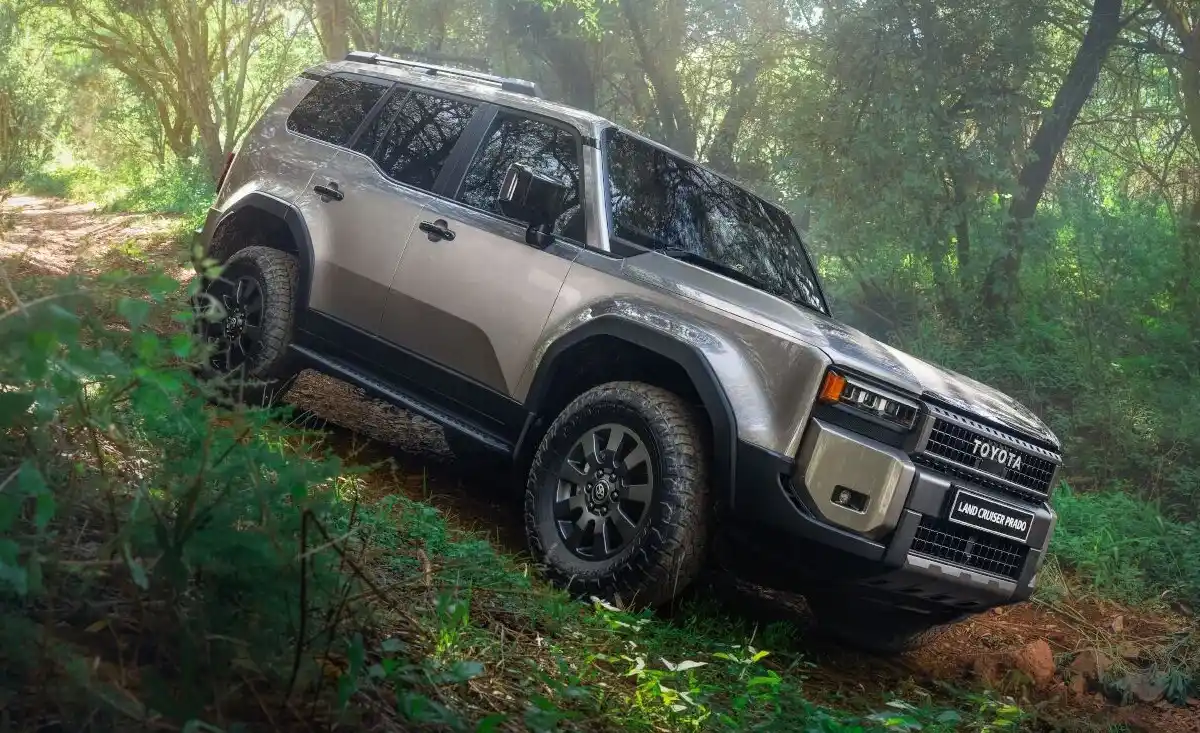
The centrepiece of TSAM’s SOMI presentation was its most ambitious NEV rollout to date. The company plans to launch six new energy vehicles across its Toyota and Lexus brands in 2026, marking the first time both marques will introduce fully battery-electric options to South African consumers. As TopAuto reported, the lineup includes the Toyota bZ4X BEV, RAV4 HEV and PHEV, Corolla Cross GR-S HEV, Land Cruiser 300 1M-HEV, Lexus RZ BEV, and Lexus RZ 600e BEV. A revived Land Cruiser FJ — a compact body-on-frame SUV sitting below the Land Cruiser 300 and Prado in the range — is also confirmed for the local market.
The bZ4X has been anticipated for several years. TSAM first confirmed it was studying the model for local introduction in 2022, and it appeared at the 2024 SOMI before being delayed to 2026. The wait appears to be over. The fully electric crossover offers an approximate driving range of 450 to 480 kilometres and is notably off-road capable — a key consideration for the South African market, where buyers often demand dual-purpose versatility. Available in front-wheel-drive and all-wheel-drive configurations, the FWD model produces 150kW while the AWD variant generates a combined 252kW across its two electric motors. The Lexus RZ 600e BEV, meanwhile, arrives as an F Sport special edition producing a maximum output of 315kW, offering performance credentials to match the electrification credentials.
The RAV4 — already the world’s best-selling vehicle nameplate — will arrive in new-energy form with a shift-by-wire transmission and the debut of a GR-Sport derivative. The Land Cruiser FJ, powered by a 2.7-litre naturally aspirated petrol four-cylinder producing 120kW and 246Nm, paired with a six-speed automatic and part-time 4WD system, is aimed at aspirational buyers who want the Land Cruiser lineage in a more urban-oriented package. According to IOL, TSAM is also in discussions with Toyota’s mother company about potentially slotting in the 2.8 GD-6 turbodiesel for South African conditions.
The Multi-Pathway Strategy: No Single Technology Wins
TSAM’s NEV expansion is not a pivot to pure electrification — it is a deliberate rejection of that idea. The company has articulated what it calls a multi-pathway strategy premised on the principle that no single technology can address every customer’s needs in a market as varied as South Africa’s. The result is a portfolio spanning hybrids (HEV), plug-in hybrids (PHEV), battery-electric vehicles (BEV), and hydrogen solutions — a combination that allows Toyota to meet buyers across a wide spectrum of infrastructure access, income levels, and driving requirements.
In support of this NEV roadmap, TSAM participates in energy diversification and mobility projects structured around three pillars: an Electric Vehicle Ecosystem, Carbon-Neutral Fuels, and a Circular Economy. The strategy aligns closely with the global Toyota Five-Brand approach first announced at the 2025 Japan Mobility Show, which positions Lexus, Toyota, GR, Century, and Daihatsu as distinct brand identities within a unified corporate strategy. Locally, the focus remains on three core brands: Toyota, Lexus, and Gazoo Racing (GR).
TSAM’s dominance of the local NEV segment is already substantial. Despite NEVs representing just 2.8% of the total South African market in 2025, Toyota and Lexus together commanded a 58% share of all NEVs sold in the country — a position built largely on the success of the Corolla Cross HEV, the clear segment leader, followed by the RAV4 and the standard Corolla. Lexus also achieved a historic milestone in 2025, posting its highest-ever share of the premium market at 3.5%, surpassing its previous record set in 2007.
Gazoo Racing Gets a Local Modification Home
Beyond the NEV lineup, Theron announced a significant development for Toyota’s performance brand. Gazoo Racing (GR) — now a separate brand entity within TSAM’s local structure — will establish a dedicated local modification facility through a new collaboration with SVR, a certified factory for Toyota-approved vehicle modifications. According to Business Explainer, the project is currently in development, with full details to be revealed in the coming months. TSAM also confirmed the launch of GR Parts, a performance accessory range to be offered through dealerships with dedicated GR Zones. “Gazoo Racing continues to elevate Toyota’s performance credentials globally,” Theron said. “The establishment of a local GR modification facility is a significant milestone, bringing world-class engineering and customisation to South African motorsport.”
One decision can change your entire career. Take that step with our Online courses in ACCA, HESI A2, ATI TEAS 7, HESI EXIT, NCLEX-RN, NCLEX-PN, and Financial Literacy. Join Serrari Ed and start building your brighter future today.
Competing on Three Fronts: Suzuki, Values, and Product
Theron took a notably combative stance towards the intensifying competitive landscape. “We are not scared of our competitors; we welcome them,” he told the SOMI audience. He outlined three pillars that have kept TSAM steady amid rising competition. The first is the strategic alliance with Suzuki, which enables Toyota to offer rebadged products sourced from India, giving the group a wider range of affordable entry-level options without diluting the Toyota brand. The second is a disciplined pricing philosophy. “We don’t play price wars; we don’t drop our prices,” Theron emphasised — a direct contrast to the aggressive discounting strategies employed by newer market entrants. The third is product breadth, underpinned by the incoming 2026 launches.
CEO Andrew Kirby also drew attention to the industry’s structural concerns, calling for revisions to the Automotive Production and Development Programme (APDP) policy to champion complete-knocked-down (CKD) competitiveness and NEV inclusion. He also called for an acceleration of the African Continental Free Trade Area (AfCFTA) agenda to help South Africa’s automotive sector diversify its export destinations and reduce its dependence on any single regional market.
The Chinese Challenge: Affordable, Fast-Moving, and Multiplying
The competitive urgency behind Toyota’s 2026 roadmap cannot be understood without reference to the accelerating rise of Chinese automotive brands in South Africa. As of 2025, there were 14 Chinese brands operating in the South African market, with more — including Changan, Deepal, and Leapmotor — confirmed to enter in 2025 and 2026. The Mail & Guardian reported that Chery and GWM ranked sixth and seventh in overall new vehicle sales in June 2025, trailing only Toyota, Suzuki, Volkswagen, Ford, and Hyundai among all brands in the country.
Chinese brands have been particularly disruptive in the NEV space. TopAuto noted that the entry price of plug-in hybrid electric vehicles in South Africa dropped by 52% during 2025 — not because of any Japanese or European initiative, but because of Chinese models such as the BYD Sealion 5 and 6, Chery Tiggo 7 CSH, and Geely E5 EM-i. Chery’s Tiggo Cross HEV, launched in June 2025, became South Africa’s most affordable hybrid at R439,900 — undercutting the Toyota Corolla Cross HEV’s R494,400 starting price. EV24 Africa also reported that plug-in hybrid sales skyrocketed 274% in 2025 as consumers sought the dual-powertrain balance between affordability and protection against load-shedding-related range anxiety.
BYD is accelerating its physical presence rapidly, growing its dealership network from 13 outlets in mid-2025 to 35 by early 2026, with plans to reach 80 dealerships by mid-2026. The brand is also planning to install between 200 and 300 public fast-charging stations across the country. Meanwhile, Chery, GWM, and Omoda & Jaecoo are conducting feasibility studies for semi-knockdown (SKD) assembly plants in South Africa — a move that would allow them to qualify for government incentives and price vehicles even more competitively. From March 2026, the South African government will offer a 150% investment subsidy for manufacturers investing in electric and hydrogen-fuelled vehicle production — a potential windfall for those willing to plant local manufacturing roots.
The strategic implication for TSAM is clear. With South Africa accounting for only 4% of global NEV model availability — far behind the EU at 40% and China at 30% — and with Chinese brands setting the pace on affordability and product variety, Toyota cannot afford further delays in its local electrification programme. The bZ4X, in particular, has been held back for years. Kirby acknowledged at SOMI that launching the brand’s first battery-electric vehicles is essential to retaining segment relevance: “It risks losing the segment to rapidly-growing Chinese brands like BYD, Chery, and GWM,” if it waits any longer, as TopAuto noted.
Deindustrialisation: The Shadow Over South Africa’s Auto Future
Against the backdrop of TSAM’s ambitious product plans, the SOMI event surfaced deeper structural concerns about South Africa’s automotive manufacturing base. AutoTrader’s SOMI analysis captured TSAM’s concerns starkly: manufacturing’s share of South Africa’s GDP has eroded from 19% in 2000 to just 13% in 2024. The country’s industrial output per worker stands at approximately $11,000 — dramatically below the G20 average of over $34,000. The Manufacturing Value Added (MVA) per capita has dropped by $80 over the past 24 years while peer economies such as Türkiye have significantly improved theirs.
Only 33% of new vehicles sold in South Africa in 2025 were locally produced — a figure the industry aims to improve. On the export side, however, there is genuine cause for optimism. South Africa exported a record 411,000 vehicles in 2025, and the industry’s export value reached R270.8 billion in 2023 before a slight correction to R268.8 billion in 2024. The South African Automotive Masterplan (SAAM) 2035 sets out ambitious targets: production of 1.4 million vehicles per year, local content rising from 39% to 60%, a doubling of the automotive supply chain workforce to approximately 240,000 jobs, and a B-BBEE Level 4 rating requirement for all incentive beneficiaries. Toyota’s push for AfCFTA acceleration and CKD policy reform is directly tied to these national objectives.
What Comes Next
Kirby hinted at additional announcements later in 2026, suggesting that a SOMI 2.0 event may be warranted before year’s end — most likely tied to developments around Toyota’s legendary Hilux bakkie, which remains South Africa’s most important single model by volume and emotional resonance. TSAM’s performance across its key segments in 2025 underlines how much ground the company has to defend: it achieved a 33% share of the light commercial vehicle segment, a 20% share in the small car category, and a commanding 61% of the SUV segment. Hino, Toyota’s truck brand, achieved Top 3 status in its segment with a 13% market share.
Taken together, the 2026 SOMI reveals a Toyota South Africa at a genuine inflection point. The product pipeline is its most electrified ever. The competitive environment is its most challenging in decades. And the structural conditions of the South African economy — sluggish 1.2% GDP growth in 2025, persistent affordability constraints, and an automotive sector navigating a complex transition from internal combustion to new energy — demand that Toyota execute flawlessly on both its product launches and its pricing discipline. After 46 consecutive years at the top, TSAM is not about to cede ground. But the road ahead, as this year’s SOMI theme acknowledged, runs squarely through disruption.
Ready to take your career to the next level? Join our Online courses: ACCA, HESI A2, ATI TEAS 7 , HESI EXIT , NCLEX – RN and NCLEX – PN, Financial Literacy!🌟 Dive into a world of opportunities and empower yourself for success. Explore more at Serrari Ed and start your exciting journey today! ✨
Track GDP, Inflation and Central Bank rates for top African markets with Serrari’s comparator tool.
See today’s Treasury bonds and Money market funds movement across financial service providers in Kenya, using Serrari’s comparator tools.
photo source: Google
By: Montel Kamau
Serrari Financial Analyst
19th February, 2026
Article, Financial and News Disclaimer
The Value of a Financial Advisor
While this article offers valuable insights, it is essential to recognize that personal finance can be highly complex and unique to each individual. A financial advisor provides professional expertise and personalized guidance to help you make well-informed decisions tailored to your specific circumstances and goals.
Beyond offering knowledge, a financial advisor serves as a trusted partner to help you stay disciplined, avoid common pitfalls, and remain focused on your long-term objectives. Their perspective and experience can complement your own efforts, enhancing your financial well-being and ensuring a more confident approach to managing your finances.
Disclaimer: This article is for informational purposes only and does not constitute financial advice. Readers are encouraged to consult a licensed financial advisor to obtain guidance specific to their financial situation.
Article and News Disclaimer
The information provided on www.serrarigroup.com is for general informational purposes only. While we strive to keep the information up to date and accurate, we make no representations or warranties of any kind, express or implied, about the completeness, accuracy, reliability, suitability, or availability with respect to the website or the information, products, services, or related graphics contained on the website for any purpose. Any reliance you place on such information is therefore strictly at your own risk.
www.serrarigroup.com is not responsible for any errors or omissions, or for the results obtained from the use of this information. All information on the website is provided on an as-is basis, with no guarantee of completeness, accuracy, timeliness, or of the results obtained from the use of this information, and without warranty of any kind, express or implied, including but not limited to warranties of performance, merchantability, and fitness for a particular purpose.
In no event will www.serrarigroup.com be liable to you or anyone else for any decision made or action taken in reliance on the information provided on the website or for any consequential, special, or similar damages, even if advised of the possibility of such damages.
The articles, news, and information presented on www.serrarigroup.com reflect the opinions of the respective authors and contributors and do not necessarily represent the views of the website or its management. Any views or opinions expressed are solely those of the individual authors and do not represent the website's views or opinions as a whole.
The content on www.serrarigroup.com may include links to external websites, which are provided for convenience and informational purposes only. We have no control over the nature, content, and availability of those sites. The inclusion of any links does not necessarily imply a recommendation or endorsement of the views expressed within them.
Every effort is made to keep the website up and running smoothly. However, www.serrarigroup.com takes no responsibility for, and will not be liable for, the website being temporarily unavailable due to technical issues beyond our control.
Please note that laws, regulations, and information can change rapidly, and we advise you to conduct further research and seek professional advice when necessary.
By using www.serrarigroup.com, you agree to this disclaimer and its terms. If you do not agree with this disclaimer, please do not use the website.
www.serrarigroup.com, reserves the right to update, modify, or remove any part of this disclaimer without prior notice. It is your responsibility to review this disclaimer periodically for changes.
Serrari Group 2025