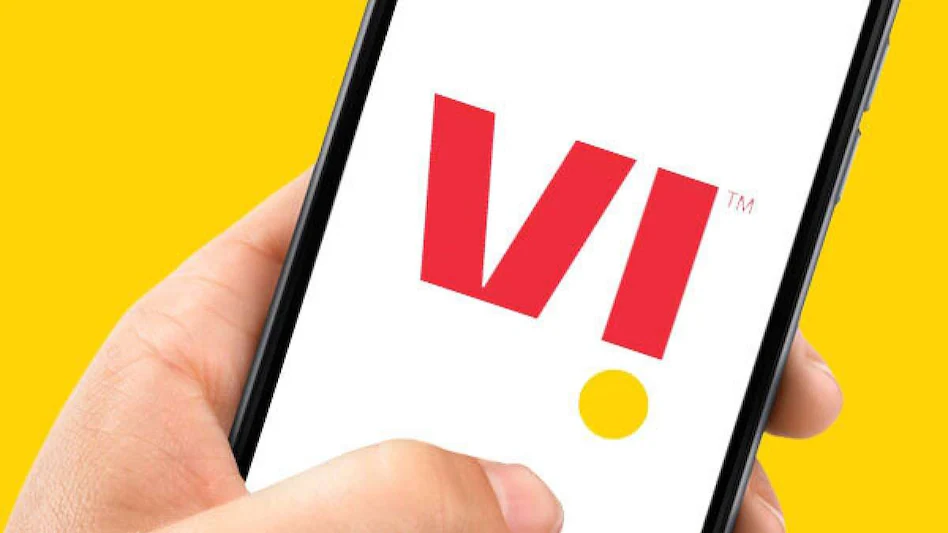
In a development that could reshape India’s telecommunications landscape, New York-based private equity firm Tillman Global Holdings (TGH) has entered advanced discussions to inject between USD 4 billion and USD 6 billion (approximately Rs 35,000 to Rs 52,800 crore) into Vodafone Idea (Vi), one of India’s most financially distressed telecom operators. According to a report published by the Economic Times on November 3, 2025, the proposed investment would see TGH assume operational control of the struggling carrier, marking a significant shift in the company’s ownership structure.
Build the future you deserve. Get started with our top-tier Online courses: ACCA, HESI A2, ATI TEAS 7, HESI EXIT, NCLEX-RN, NCLEX-PN, and Financial Literacy. Let Serrari Ed guide your path to success. Enroll today.
The Proposed Investment Structure
The ambitious investment proposal represents one of the largest potential private equity injections into India’s telecommunications sector in recent years. TGH’s plans extend beyond mere financial support—the firm is seeking to take over the promoter status from Vi’s current shareholders, the Aditya Birla Group and UK-based Vodafone Plc, according to sources familiar with the matter cited in the Economic Times report by Kiran Rathee.
Under the proposed arrangement, TGH would assume management and operational control of Vodafone Idea, bringing its considerable global telecommunications expertise to bear on the company’s turnaround efforts. The existing promoters, who have seen their stakes steadily diluted as Vi’s financial troubles have mounted, would likely reduce their holdings further to accommodate the new investor. Currently, the Aditya Birla Group holds a 9.50 percent stake in the company, while Vodafone Plc maintains a 16.07 percent shareholding.
The Indian government, which currently holds a substantial 48.99 percent stake in Vi following a debt-to-equity conversion implemented to address the company’s mounting liabilities, is expected to maintain its position as a passive minority shareholder. This government stake resulted from Vi’s conversion of deferred spectrum dues and adjusted gross revenue (AGR) liabilities into equity, a move designed to provide temporary relief to the cash-strapped operator.
Government Relief Package: The Critical Condition
The proposed investment by Tillman Global Holdings is not unconditional. Sources indicate that the deal is fundamentally contingent upon the Indian government extending a comprehensive relief package that addresses Vi’s substantial regulatory liabilities, including adjusted gross revenue (AGR) dues and spectrum payment obligations that have plagued the company for years.
“The proposal from TGH would be in conjunction with the dues being resolved. The restructuring package sought by the firm would be conditioned on its investment and its investment would be conditioned on the waiver package,” a person familiar with the discussions told the Economic Times.
Importantly, TGH is not seeking a complete waiver of Vi’s regulatory obligations. Instead, the firm is requesting a restructuring of these dues to provide the telecom operator with the financial breathing room necessary to implement a turnaround strategy. This approach suggests a pragmatic recognition of both Vi’s obligations to the government and the practical realities of the company’s ability to service its massive debt burden while simultaneously investing in network infrastructure and competing with better-funded rivals.
The Department of Telecommunications (DoT) has been actively evaluating several options to provide relief on Vi’s outstanding regulatory dues of approximately Rs 84,000 crore, which includes accumulated interest and penalties. This evaluation comes after Vodafone Idea formally expressed its inability to meet these payment obligations under the current terms.
From the government’s perspective, the situation presents a complex balancing act. “It’s not about just providing a waiver, but how can a waiver be given in conjunction with bringing investment and operational expertise,” said another person involved in the discussions, according to the report. This statement underscores the government’s desire to ensure that any relief measures result in a sustainable turnaround for the operator rather than merely postponing an inevitable collapse.
The AGR Crisis and Supreme Court Intervention
The AGR controversy has been at the heart of India’s telecommunications sector turmoil for several years. The dispute centers on the calculation of revenues on which telecom operators must pay license fees and spectrum usage charges to the government. In a landmark 2019 ruling, the Supreme Court of India sided with the Department of Telecommunications, mandating that operators include non-telecom revenues in their AGR calculations, resulting in massive retrospective liabilities for carriers.
For Vodafone Idea, the AGR dues have proven particularly devastating. The company faces repayment obligations for thousands of crores in AGR dues by the end of the current fiscal year, creating an urgent liquidity crisis. While the Supreme Court recently offered partial relief to the operator, significant uncertainty remains regarding whether the order applies to all outstanding dues or only to an additional demand of approximately Rs 9,000 crore.
The AGR crisis has fundamentally altered India’s telecom market structure. What was once a highly competitive market with multiple operators has consolidated dramatically, with Reliance Jio and Bharti Airtel emerging as the dominant players. Vodafone Idea, once a market leader following the merger of Vodafone India and Idea Cellular in 2018, has seen its subscriber base erode steadily as network quality issues and uncertainty about its future have driven customers to competitors.
Sanjiv Ahuja and TGH’s Telecom Turnaround Expertise
Central to TGH’s credibility in pursuing this investment is the track record of its chairman and chief executive, Sanjiv Ahuja, a respected figure in the global telecommunications industry. Ahuja is widely credited with orchestrating the successful turnaround of French telecom major Orange between 2003 and 2007, demonstrating his ability to revive struggling telecom operators in competitive markets.
Under Ahuja’s leadership, Orange transformed from a troubled operator into one of Europe’s most successful telecommunications companies. His approach combined aggressive cost management, network infrastructure investments, and innovative service offerings—a playbook that could potentially be applied to Vodafone Idea’s current predicament.
Tillman Global Holdings specializes in digital and energy transition infrastructure investments and has accumulated significant experience in telecommunications operations. The firm maintains investments in telecom infrastructure assets, including fiber optic networks and telecommunications towers across multiple countries, providing it with both operational expertise and potential synergies for Vi’s infrastructure needs.
TGH’s previous engagement with Vodafone Idea demonstrates the firm’s sustained interest in the Indian market. The company had conducted discussions with Vi for over a year but withdrew when the telecom operator opted to pursue a public share sale last year. However, with Vi continuing to struggle to secure adequate funding through traditional capital markets, discussions between the two parties have resumed in recent months with renewed urgency.
One decision can change your entire career. Take that step with our Online courses in ACCA, HESI A2, ATI TEAS 7, HESI EXIT, NCLEX-RN, NCLEX-PN, and Financial Literacy. Join Serrari Ed and start building your brighter future today.
Vi’s Failed Fundraising Efforts
Vodafone Idea’s recent fundraising history highlights the severity of its financial challenges. Last year, the company managed to raise Rs 24,000 crore through a combination of follow-on public offerings and preferential share issues. While significant, this amount fell short of the company’s capital requirements, and Vi notably failed to raise an additional Rs 25,000 crore in debt financing that it had planned and announced to investors and stakeholders.
This fundraising shortfall has had real consequences for Vi’s operations. The company has struggled to match the aggressive network expansion and technology upgrades pursued by its better-capitalized competitors. While Jio and Airtel have been rapidly deploying 5G networks across India, Vi has been forced to prioritize basic network maintenance and 4G coverage expansion, putting it at a competitive disadvantage in attracting high-value customers.
The company’s financial stress is reflected in its operational metrics. Vi has been losing subscribers consistently, with many customers switching to Jio or Airtel due to concerns about network quality and the company’s long-term viability. This subscriber erosion creates a vicious cycle, as reduced revenues make it even more difficult for the company to invest in network improvements that could stem customer losses.
Market Structure and Competitive Dynamics
The potential entry of Tillman Global Holdings into India’s telecommunications market comes at a critical juncture for the sector. The Indian telecom market has transformed dramatically since Reliance Jio’s disruptive entry in 2016 with rock-bottom pricing and free voice calls. That entry triggered a brutal price war that decimated profit margins across the industry and forced several smaller operators out of the market entirely.
Today, India effectively operates as a three-player market, with Jio holding the largest subscriber base, followed by Airtel, and then the distant third-placed Vodafone Idea. Some industry analysts and consumer advocates have expressed concerns that Vi’s potential exit from the market could create a duopoly situation, potentially leading to higher prices and reduced service quality for consumers due to diminished competition.
The government’s substantial equity stake in Vi complicates its decision-making regarding relief packages. On one hand, allowing Vi to fail could harm competition and potentially leave the government with worthless equity. On the other hand, providing relief to Vi could be perceived as unfair to competitors who have managed their finances more prudently and could set a precedent for future bailouts.
Infrastructure Investment Needs
Beyond resolving its immediate financial crisis, Vodafone Idea faces enormous capital expenditure requirements to remain competitive in India’s rapidly evolving telecommunications market. The deployment of 5G networks, which has become a key differentiator in attracting premium customers, requires substantial investment in both spectrum acquisition and network infrastructure.
India’s telecommunications regulator, the Telecom Regulatory Authority of India (TRAI), has been pushing for accelerated 5G deployment across the country as part of the nation’s digital transformation agenda. However, Vi’s financial constraints have largely prevented it from participating meaningfully in recent spectrum auctions, further widening the technology gap with its rivals.
Additionally, the ongoing transition to fiber-optic backhaul infrastructure and the densification of cell tower networks in urban areas require continuous capital investment. TGH’s existing investments in telecommunications infrastructure, including fiber and tower assets, could potentially provide synergies and cost efficiencies if the investment in Vi proceeds.
Timeline and Next Steps
If the government approves a restructuring plan for Vi’s regulatory dues, the TGH investment could potentially be finalized within the coming months, sources indicated. However, the complexity of the proposed arrangement—involving coordination between private investors, existing promoters, and government stakeholders—suggests that negotiations could extend longer than initially anticipated.
The deal structure would need to address multiple stakeholder interests. The government would need to craft a relief package that is defensible from both a policy and legal perspective, ensuring it does not face challenges from competitors or taxpayer advocates. Existing promoters Aditya Birla Group and Vodafone Plc would need to negotiate acceptable exit or dilution terms. And TGH would need assurances that the relief package provides sufficient runway for its turnaround strategy to succeed.
Market observers note that time is of the essence. Every quarter that passes without resolution sees Vi lose more subscribers and market share to competitors, making any eventual turnaround more difficult. The company’s vendor payments are reportedly delayed, and there have been concerns about its ability to maintain network quality standards, further eroding customer confidence.
Broader Implications for India’s Telecom Sector
The outcome of the TGH-Vi negotiations will have implications extending far beyond the immediate fate of one telecom operator. The situation effectively represents a test case for how India handles stressed assets in strategically important sectors and balances competing policy objectives around market competition, fiscal responsibility, and infrastructure development.
A successful turnaround of Vodafone Idea backed by TGH investment and government support could demonstrate that India’s telecom market can support three financially viable operators, potentially benefiting consumers through sustained competition. Conversely, if the deal fails to materialize or if Vi ultimately exits the market, it would solidify the duopoly structure and potentially change the competitive dynamics of India’s digital economy for years to come.
The telecommunications sector plays a foundational role in India’s broader digital transformation ambitions, supporting everything from digital payments and e-commerce to remote education and telemedicine services. Ensuring a healthy, competitive telecom sector is thus not merely an industry-specific concern but a matter of broader economic and social policy.
Conclusion
Tillman Global Holdings’ proposed $4-6 billion investment in Vodafone Idea represents a potential lifeline for one of India’s most troubled major corporations. However, the deal’s success hinges on the Indian government’s willingness to provide meaningful relief on AGR and spectrum dues while ensuring any such relief is tied to concrete investment commitments and operational improvements.
With Sanjiv Ahuja’s proven track record in telecom turnarounds and TGH’s infrastructure expertise, there is a plausible path forward for Vi to stabilize and eventually compete more effectively with Jio and Airtel. However, the window for action is narrowing, and the company’s continued subscriber losses and infrastructure investment gaps make each passing month more challenging.
The coming months will reveal whether the complex dance between government policy, private investment, and market dynamics can produce a sustainable solution for Vodafone Idea, or whether India’s telecommunications market is destined to become a two-player game. For millions of Vi subscribers and the broader Indian economy, the stakes could hardly be higher.
Ready to take your career to the next level? Join our Online courses: ACCA, HESI A2, ATI TEAS 7 , HESI EXIT , NCLEX – RN and NCLEX – PN, Financial Literacy!🌟 Dive into a world of opportunities and empower yourself for success. Explore more at Serrari Ed and start your exciting journey today! ✨
Track GDP, Inflation and Central Bank rates for top African markets with Serrari’s comparator tool.
See today’s Treasury bonds and Money market funds movement across financial service providers in Kenya, using Serrari’s comparator tools.
photo source: Google
By: Montel Kamau
Serrari Financial Analyst
3rd November, 2025