










Introduction: A Tariff-Financed Bailout
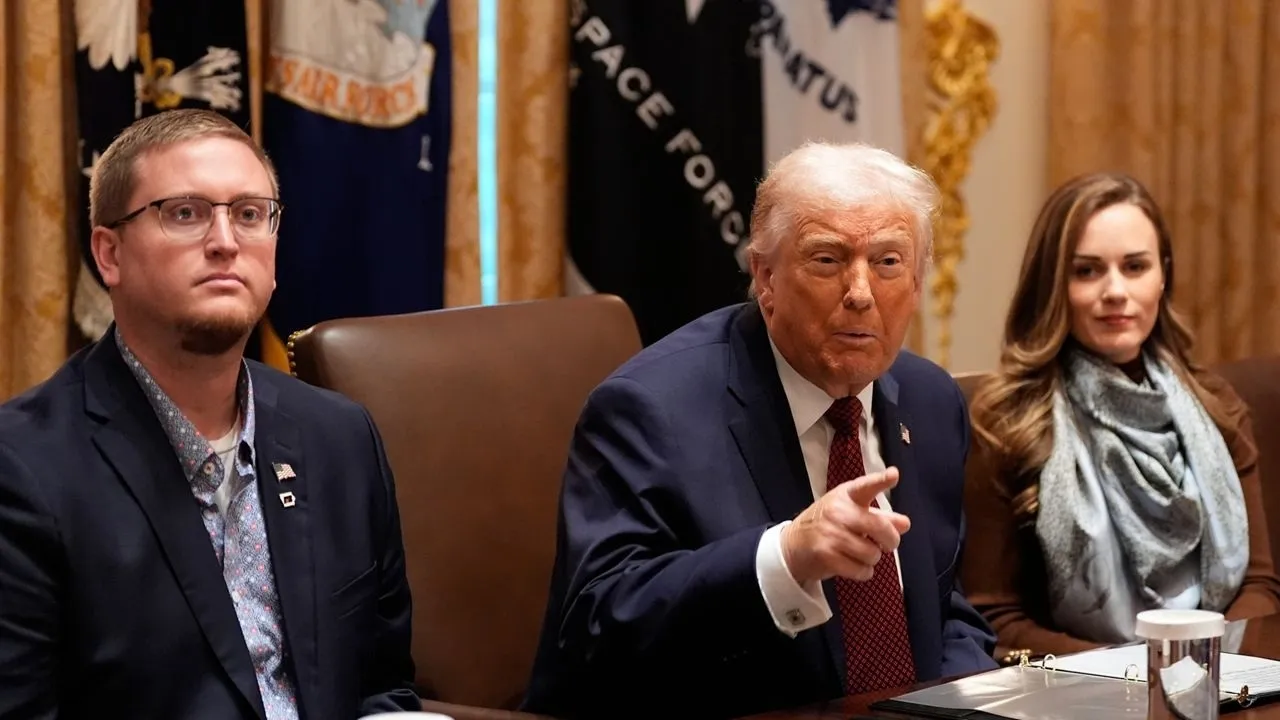
US President Donald Trump has unveiled a $12 billion farm aid package, aimed at providing immediate financial relief to American farmers grappling with low crop prices, soaring input costs, and the economic fallout from the administration’s aggressive trade policies. The announcement, made during a White House event, signaled a complex duality in the administration’s economic strategy: using high tariffs to fund agricultural bailouts while simultaneously defending the very trade actions that necessitated the aid.
The financial assistance, announced alongside Treasury Secretary Scott Bessent and Agriculture Secretary Brooke Rollins, is intended to help farmers who, according to the White House, have faced “years of unjustified trade actions” and accumulated inflation. Crucially, the aid is explicitly stated to be funded by government revenue generated from the increased US tariffs on foreign products, transforming trade policy into a direct revenue stream for domestic subsidies.
The announcement was shadowed by another escalation: concurrent with the farm aid package, the President threatened to impose an additional 5% tariff on Mexico in a dispute over water supplies owed to US farmers under a long-standing treaty. This dual action underscores the administration’s commitment to using tariffs not only as economic leverage against foreign competitors but also as a domestic political tool to placate the agricultural sector, a crucial voting bloc for the President.
Build the future you deserve. Get started with our top-tier Online courses: ACCA, HESI A2, ATI TEAS 7, HESI EXIT, NCLEX-RN, NCLEX-PN, and Financial Literacy. Let Serrari Ed guide your path to success. Enroll today.
The Farmer Bridge Assistance Program: A Temporary Fix
The core of the financial intervention is the Department of Agriculture’s new Farmer Bridge Assistance (FBA) program. Of the total $12 billion, approximately **$11 billion is earmarked for one-time payments** to producers of row crops, including corn, cotton, sorghum, soybeans, rice, cattle, wheat, and potatoes. This broad relief is modeled on FSA-reported planted acres, estimated production costs, and expected yields.
The remaining $1 billion is reserved for specialty crops like fruits and vegetables, with Agriculture Secretary Rollins noting that these funds would be held back pending further assessment of needs among specialty crop growers. Payments are calculated per acre, based on a USDA formula designed to cover a portion of modeled losses, and are capped at $155,000 per farm or individual.
The stated purpose of the FBA is to act as a “bridge” until the administration’s policies “deliver a better market environment.” Secretary Rollins emphasized that the aid “ensures American farmers can continue to plan for the next crop year” and provides the liquidity necessary for struggling producers to secure new operating loans, with the disbursement expected to be completed by February 28, 2026.
The Economic Damage: Soybeans and Sorghum in the Crosshairs
The necessity of the $12 billion bailout stems directly from the ongoing trade dispute with China, which has targeted US agricultural exports with heavy retaliatory tariffs since the President began his aggressive trade actions during his second term.
The hardest-hit commodities are sorghum and soybean—crops for which China is the greatest global importer. China is the world’s biggest market for soybeans, historically purchasing between half and two-thirds of US soybean exports [https://www.google.com/search?q=https://www.iowapublicradio.org/harvest-public-media/2025-12-08/trump-administration-will-send-12-billion-in-bailout-money-to-farmers-hurt-by-trade-war]. However, after the Trump administration imposed steep new levies on Chinese goods earlier this year, Beijing effectively shut the door on American soybean imports for months in retaliation.
According to analysis by the Center for Strategic and International Studies (CSIS), U.S. agricultural exports to China have dropped by over $6.8 billion since January 2025, representing a staggering decline of over 73 percent. While cotton and corn industries have shown some success in diversifying to new markets like Vietnam and Turkey, sectors like beef and sorghum have been largely unable to recoup their losses.
The long-term consequence is market share erosion. Economists forecast that U.S. soybean exports to China are unlikely to return to their former levels even if trade tensions fully subside, as China has accelerated its shift in supply lines to South American exporters like Brazil and Argentina to safeguard its crucial food supply against future political disputes. Treasury Secretary Scott Bessent acknowledged this reality, stating that bridge payments were necessary because “the Chinese actually used our soybean farmers as pawns in the trade negotiations.”
The financial pressure is evident across the farm belt, where farm bankruptcies rose 60% in the first half of 2025. Farmers who rent most of the land they work are in the most vulnerable position, often lacking the equity to secure necessary loans, leading producers like Iowa farmer Robb Ewoldt to consider selling non-essential machinery just to stay afloat.
One decision can change your entire career. Take that step with our Online courses in ACCA, HESI A2, ATI TEAS 7, HESI EXIT, NCLEX-RN, NCLEX-PN, and Financial Literacy. Join Serrari Ed and start building your brighter future today.
The Political and Economic Justification
The White House aggressively framed the $12 billion payment as necessary relief from past economic mismanagement. Secretary Rollins asserted that the American farm economy was “reeling from record inflation, a depleted farm safety net, and delayed disaster assistance” following the “disastrous Biden Administration policies” that preceded the current administration. This narrative attempts to recontextualize the trade dispute’s fallout as a consequence of external or inherited economic woes, rather than the tariff strategy itself.
President Trump tied the aid directly to a broader affordability push, stating, “Maximising domestic farm production is a big part of how we will make America affordable again and bring down grocery prices.” This focus on affordability comes as polls suggest Americans are increasingly concerned about rising costs, an issue the President has at times characterized as a “hoax” and a “con job” perpetrated by opponents.
Beyond financial aid, the administration also promised regulatory relief. Trump announced plans to assist farm equipment manufacturers like John Deere by slashing environmental restrictions on machinery, arguing that equipment had become “too expensive” due to these mandates. Furthermore, the administration signed an executive order directing the Justice Department and the Federal Trade Commission to investigate anti-competitive behavior in food supply chains, targeting areas like seed, fertilizer, and equipment costs.
Mixed Reaction: A Band-Aid on a Structural Wound
The reception to the $12 billion package was sharply divided, reflecting the deep economic divisions within the agricultural community. While some farmers welcomed the aid as a necessary measure for survival, others vehemently criticized it as an inadequate solution for self-inflicted injuries.
The American Farm Bureau president, Zippy Duvall, expressed cautious relief, noting that the payments could be the difference between keeping a farm open and shutting its doors. Similarly, Nicole Rolf of the Montana Farm Bureau Federation said the aid would “help them get through” until payments from the comprehensive farm safety net passed earlier in the year could kick in.
Conversely, critics argued that the aid was merely a “denigrating Band-Aid” for farmers made vulnerable by trade wars. Richard Oswald, a corn and soybean farmer in Missouri, argued the money will primarily flow to banks and suppliers to cover past operating loans, but does not address the fundamental market problems. Walter Schweitzer, president of the Montana Farmers Union, was more direct, saying that farmers’ problems “today are almost wholly caused by tariffs.” He likened the aid to only getting farmers to “the middle of the river,” arguing that significant investment is still needed to “incentivize customers to come back” once the trade wars end.
Political opposition echoed this sentiment. Senate Minority Leader Chuck Schumer (D-N.Y.) asserted that the President “wants credit for trying to fix a mess of his making” [https://www.mprnews.org/story/2025/12/08/trump-is-proposing-a-12b-aid-package-for-farmers-hit-hard-by-his-trade-war-with-china], arguing that farmers need stable markets to sell to, not a “consolation prize”.
Concurrent Escalation: The Mexico Water Tariff Threat
Adding to the environment of trade uncertainty, the White House announced a simultaneous escalation of a non-trade dispute with Mexico, threatening a new 5% tariff unless water supplies are immediately released to the US.
The dispute centers on the 1944 Water Treaty, which governs the shared use of waters from the Colorado River and the Rio Grande. Under the agreement, Mexico is required to supply a certain volume of water from the Rio Grande tributaries to the US every five years. The President claimed that Mexico has failed to meet its treaty commitments for five years, accumulating a water debt exceeding 800,000 acre-feet.
Trump used his social media platform to accuse Mexico of violating the comprehensive treaty, asserting that the deficit was seriously hurting “our beautiful Texas crops and livestock” [https://www.trtworld.com/article/1c492148062a]. He set a specific demand for Mexico to release 200,000 acre-feet of water before December 31st, warning that he had authorized documentation to impose the 5% tariff if compliance was not immediate.
Mexican President Claudia Sheinbaum responded that Mexico has complied with the treaty “to the extent water is available” amid three consecutive years of drought. This confrontation highlights the increasing use of trade penalties as leverage in disputes ranging from manufacturing supply chains to critical resource management like water allocation. The threat to impose economic measures to resolve a non-trade, bilateral resource issue is consistent with the administration’s transactional approach to foreign policy.
Conclusion: The High Stakes of Tariff Diplomacy
The announcement of the $12 billion farm aid package and the concurrent tariff threat against Mexico encapsulates the high-stakes, highly transactional nature of the current administration’s economic governance. By making aid contingent on revenue generated from tariffs, the President creates a self-sustaining cycle where trade aggression is simultaneously justified as a source of domestic stability.
While the Farmer Bridge Assistance program provides crucial, immediate liquidity for row crop producers facing historically high input costs and disastrous market losses—including a 73% plunge in exports to China—it fails to address the structural issues that threaten the long-term viability of the agricultural sector. The mixed reaction from farmers underscores a preference for stable, open markets over reliance on government handouts.
As the administration focuses on “making America affordable again,” the agricultural sector remains trapped between the volatile forces of trade war and resource scarcity. The duel with China over soybeans and the confrontation with Mexico over water both use tariffs as the primary weapon, signaling that this aggressive, tariff-based foreign policy is the new normal. The success of the FBA hinges on whether it can genuinely serve as a temporary “bridge” to a healthier market, or if the deeper economic fissures caused by the trade policies will intensify, forcing the agricultural sector to rely on ever-larger future aid packages. The outcome of the $12 billion deployment in early 2026 will be closely watched as a test of the sustainability of this tariff-funded diplomacy.
Ready to take your career to the next level? Join our Online courses: ACCA, HESI A2, ATI TEAS 7 , HESI EXIT , NCLEX – RN and NCLEX – PN, Financial Literacy!🌟 Dive into a world of opportunities and empower yourself for success. Explore more at Serrari Ed and start your exciting journey today! ✨
Track GDP, Inflation and Central Bank rates for top African markets with Serrari’s comparator tool.
See today’s Treasury bonds and Money market funds movement across financial service providers in Kenya, using Serrari’s comparator tools.
Photo source: Google
By: Montel Kamau
Serrari Financial Analyst
9th December, 2025
Article, Financial and News Disclaimer
The Value of a Financial Advisor
While this article offers valuable insights, it is essential to recognize that personal finance can be highly complex and unique to each individual. A financial advisor provides professional expertise and personalized guidance to help you make well-informed decisions tailored to your specific circumstances and goals.
Beyond offering knowledge, a financial advisor serves as a trusted partner to help you stay disciplined, avoid common pitfalls, and remain focused on your long-term objectives. Their perspective and experience can complement your own efforts, enhancing your financial well-being and ensuring a more confident approach to managing your finances.
Disclaimer: This article is for informational purposes only and does not constitute financial advice. Readers are encouraged to consult a licensed financial advisor to obtain guidance specific to their financial situation.
Article and News Disclaimer
The information provided on www.serrarigroup.com is for general informational purposes only. While we strive to keep the information up to date and accurate, we make no representations or warranties of any kind, express or implied, about the completeness, accuracy, reliability, suitability, or availability with respect to the website or the information, products, services, or related graphics contained on the website for any purpose. Any reliance you place on such information is therefore strictly at your own risk.
www.serrarigroup.com is not responsible for any errors or omissions, or for the results obtained from the use of this information. All information on the website is provided on an as-is basis, with no guarantee of completeness, accuracy, timeliness, or of the results obtained from the use of this information, and without warranty of any kind, express or implied, including but not limited to warranties of performance, merchantability, and fitness for a particular purpose.
In no event will www.serrarigroup.com be liable to you or anyone else for any decision made or action taken in reliance on the information provided on the website or for any consequential, special, or similar damages, even if advised of the possibility of such damages.
The articles, news, and information presented on www.serrarigroup.com reflect the opinions of the respective authors and contributors and do not necessarily represent the views of the website or its management. Any views or opinions expressed are solely those of the individual authors and do not represent the website's views or opinions as a whole.
The content on www.serrarigroup.com may include links to external websites, which are provided for convenience and informational purposes only. We have no control over the nature, content, and availability of those sites. The inclusion of any links does not necessarily imply a recommendation or endorsement of the views expressed within them.
Every effort is made to keep the website up and running smoothly. However, www.serrarigroup.com takes no responsibility for, and will not be liable for, the website being temporarily unavailable due to technical issues beyond our control.
Please note that laws, regulations, and information can change rapidly, and we advise you to conduct further research and seek professional advice when necessary.
By using www.serrarigroup.com, you agree to this disclaimer and its terms. If you do not agree with this disclaimer, please do not use the website.
www.serrarigroup.com, reserves the right to update, modify, or remove any part of this disclaimer without prior notice. It is your responsibility to review this disclaimer periodically for changes.
Serrari Group 2025